Alaska’s meetings, filings, and public notices, covered daily.
Alaska News

The Anchorage Assembly Public Health and Safety Committee heard a presentation from True North Recovery on a proposed peer-led behavioral health navigation center in Fairview, sparking debate over location and community impact.
Also in Alaska News
Alaska DOT&PF will hold a public meeting June 3 in Palmer to gather feedback on planned safety and capacity improvements to the Glenn Highway between Arctic Avenue and Palmer-Fishhook Road.
Where in Alaska are you?
We’ll put news from your area first. No account needed, change it anytime.
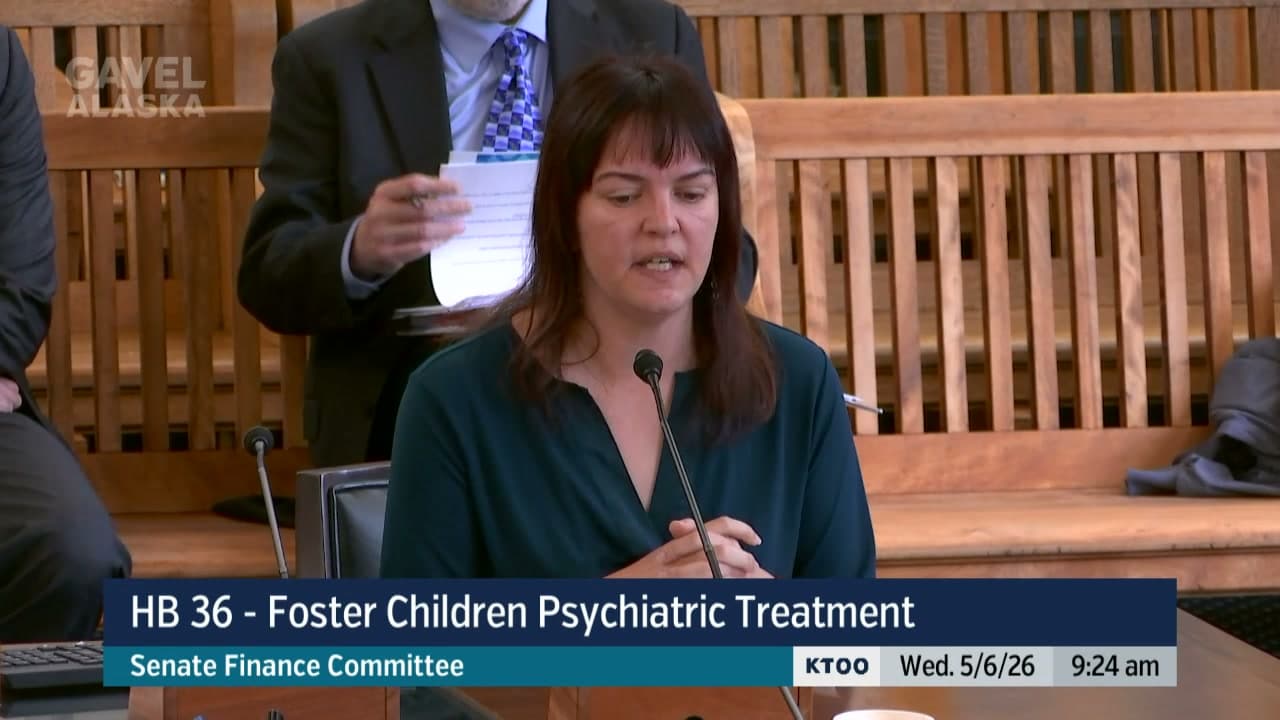
The Senate Finance Committee heard legislation Wednesday that would require judicial review within seven calendar days when foster children are placed in psychiatric hospitals, down from the current 30-day standard.

The Alaska Senate Finance Committee heard testimony on HB 133, which would impose 10.5% interest penalties when the state fails to pay nonprofits, municipalities, and tribal organizations within 30 days.

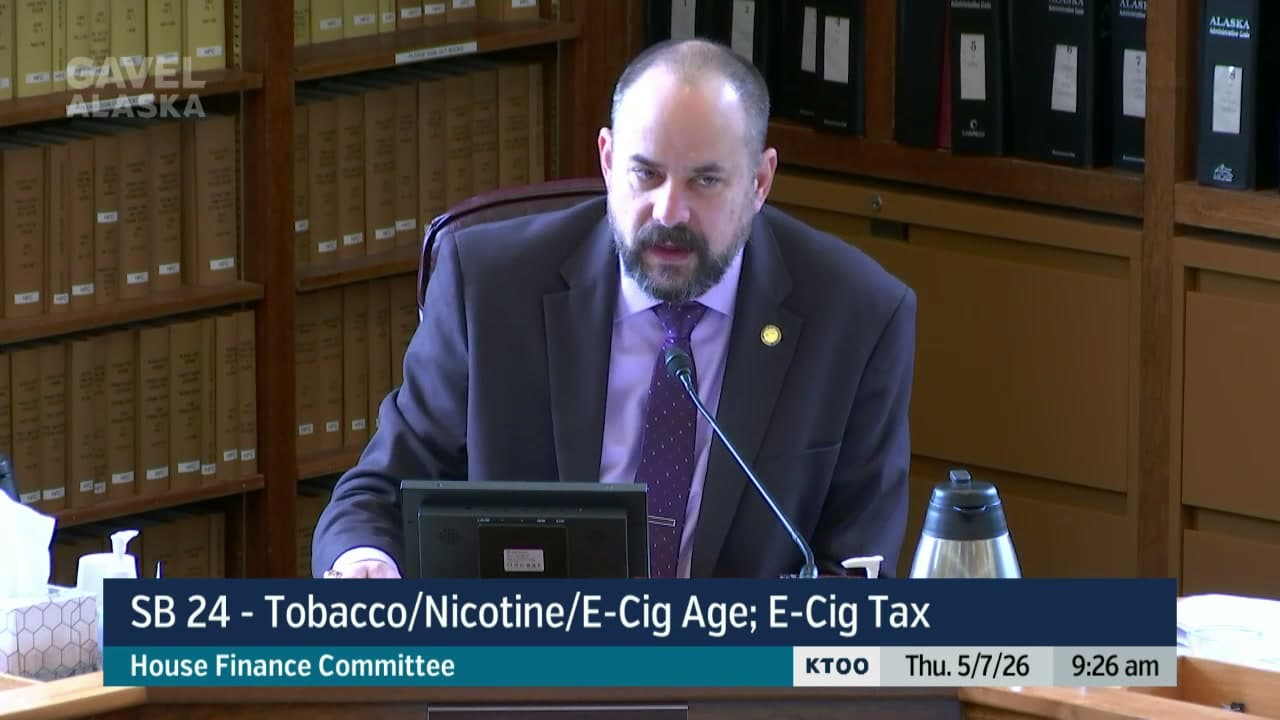
The Alaska House Finance Committee heard testimony Thursday on Senate Bill 24, which would raise the legal age to buy, sell, use and possess tobacco and e-cigarette products from 19 to 21 and establish a sales tax on vaping devices.

A fatal travel trailer fire on Burma Road in Big Lake on May 6, 2026 exposed gaps in rural fire protection coverage after area firefighters declined to respond to the incident outside established fire district boundaries.
Alaska Board of Fisheries adopted new sport fishing regulations requiring anglers to keep rockfish, lingcod and king salmon identifiable and measurable until leaving the water, effective for the 2026 season.
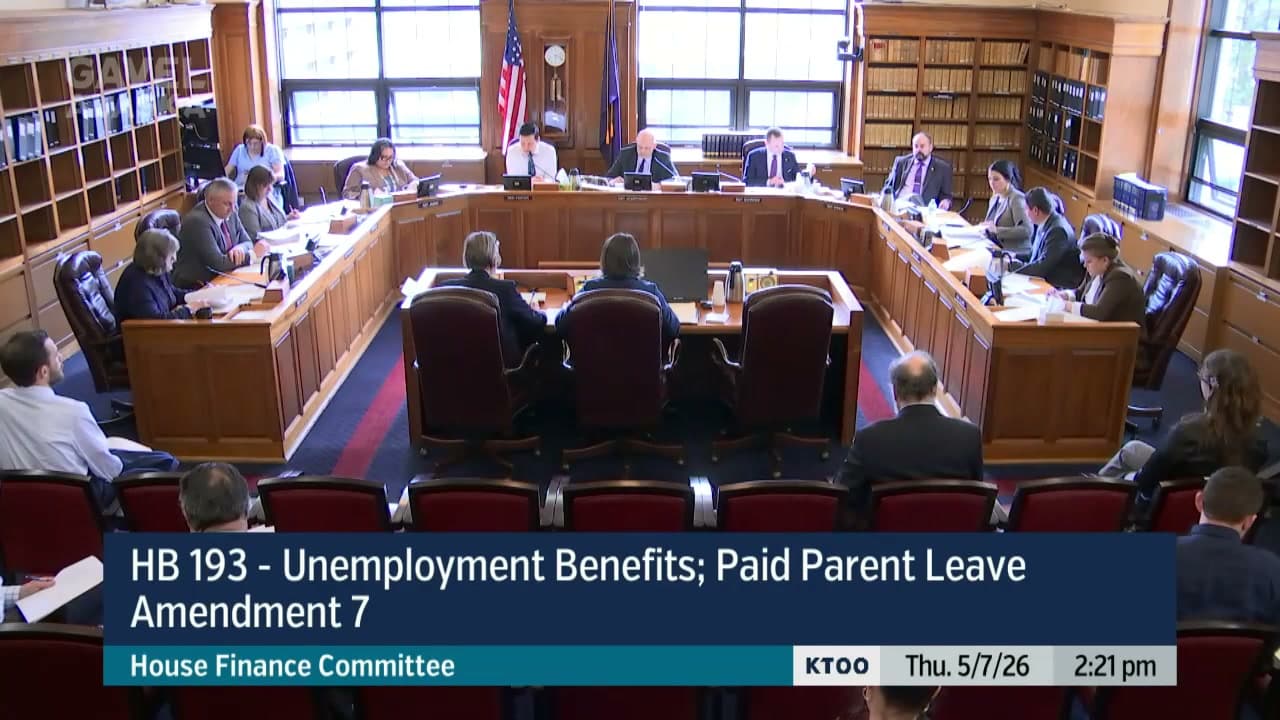
Alaska House Finance Committee amended paid parental leave legislation to reduce maximum leave from 26 to 12 weeks and cut weekly benefits from $817 to $524, while exempting businesses with fewer than 25 employees.

The Alaska Senate approved a fiscally conservative operating budget that balances at $70/barrel oil, includes $150 energy relief payments, and avoids drawing from the Constitutional Budget Reserve—contrasting sharply with the House version.

The Alaska Senate approved an operating budget Wednesday that balances at $73 per barrel oil with a $47.5 million surplus, fundamentally different from the House version that carries a $320 million deficit at $75 per barrel oil.

The Alaska House of Representatives unanimously approved legislation raising occupational disability benefits from 40% to 75% of salary for state employees injured on the job, while restoring their healthcare coverage.

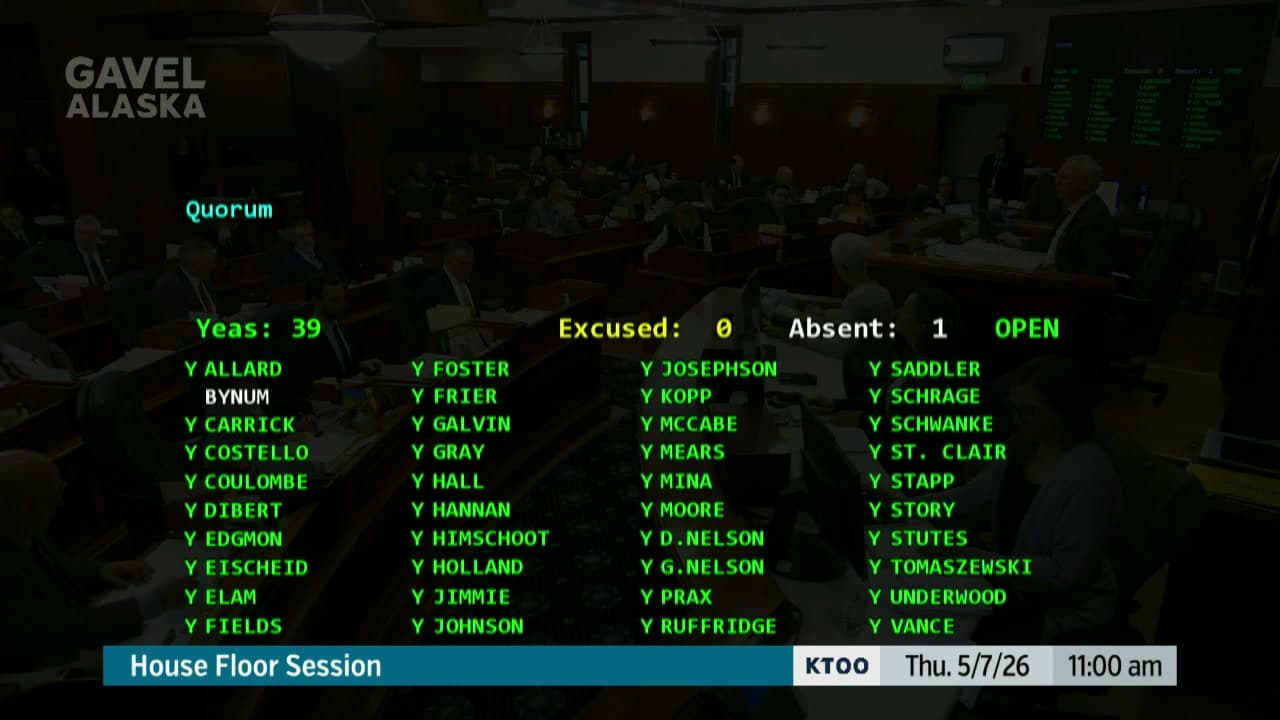
The Alaska House of Representatives voted 40-0 Thursday to recognize gold and silver specie as legal tender and exempt such transactions from borough and city sales taxes.

The House Education Committee approved House Bill 387 to create a legislative task force reviewing Alaska's 50-year-old Native language programs, but rejected amendments to add university and state education officials to the panel.
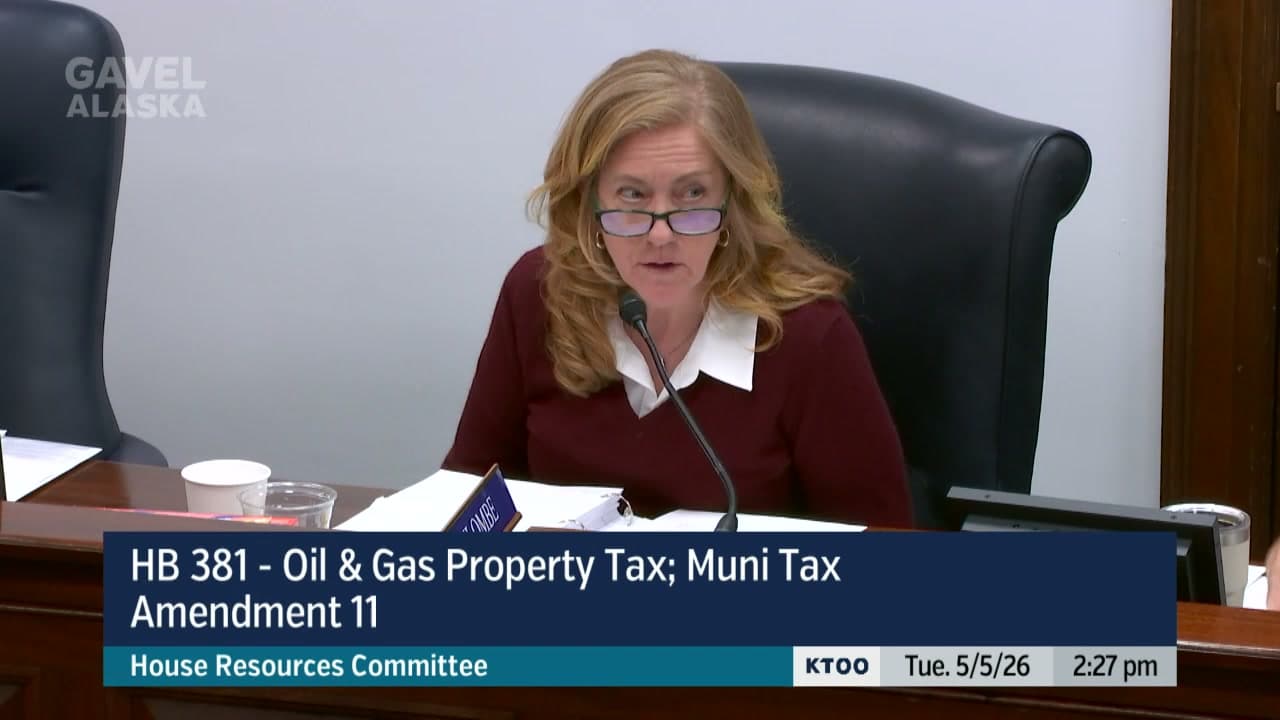
The House Resources Committee voted 7-2 to increase community impact funding for Alaska LNG pipeline municipalities to $40 million, up from the project developer's proposed $30 million, despite concerns about project economics.

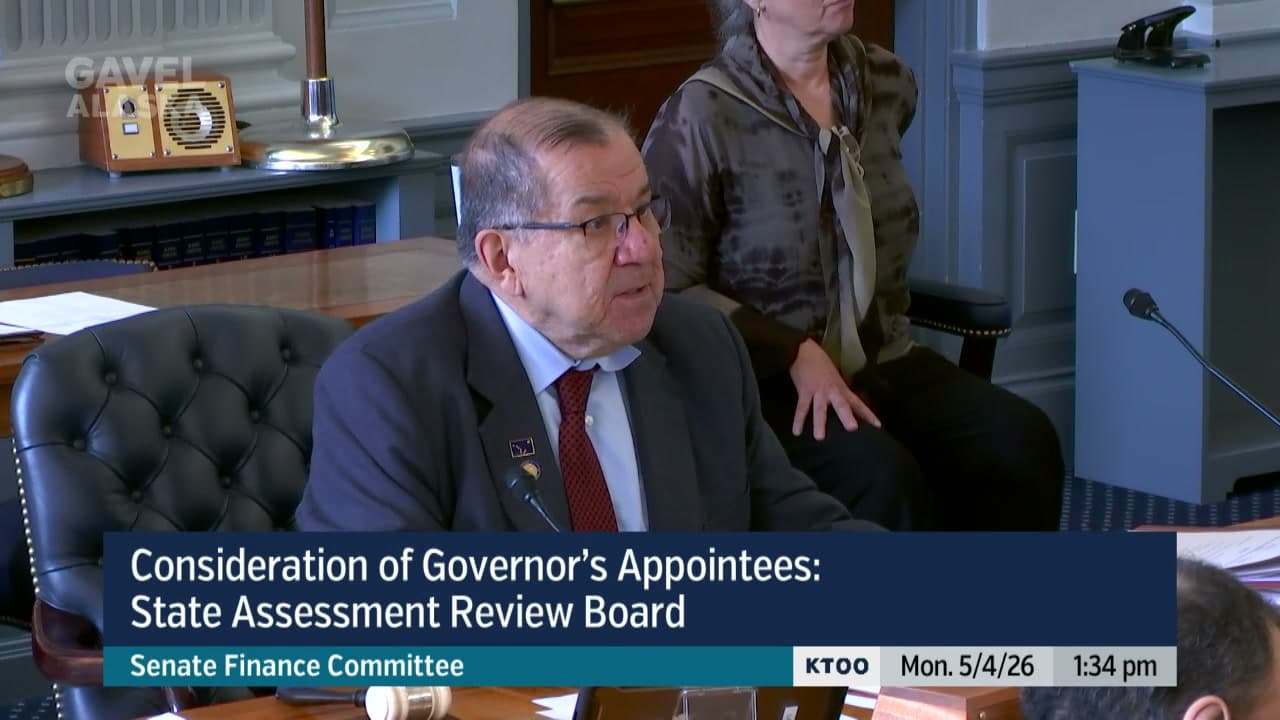
The Senate Finance Committee advanced Jana Walsheen's nomination to the State Assessment Review Board to a joint legislative session for confirmation Monday.

The Alaska Department of Health office in Kenai will close May 7 due to plumbing issues, with remote workers continuing duties and essential staff reporting as usual.
ConocoPhillips cut 12.5 percent of its North Slope workforce following its merger with Marathon Oil, prompting 243 workers to petition for union representation amid falling oil prices.
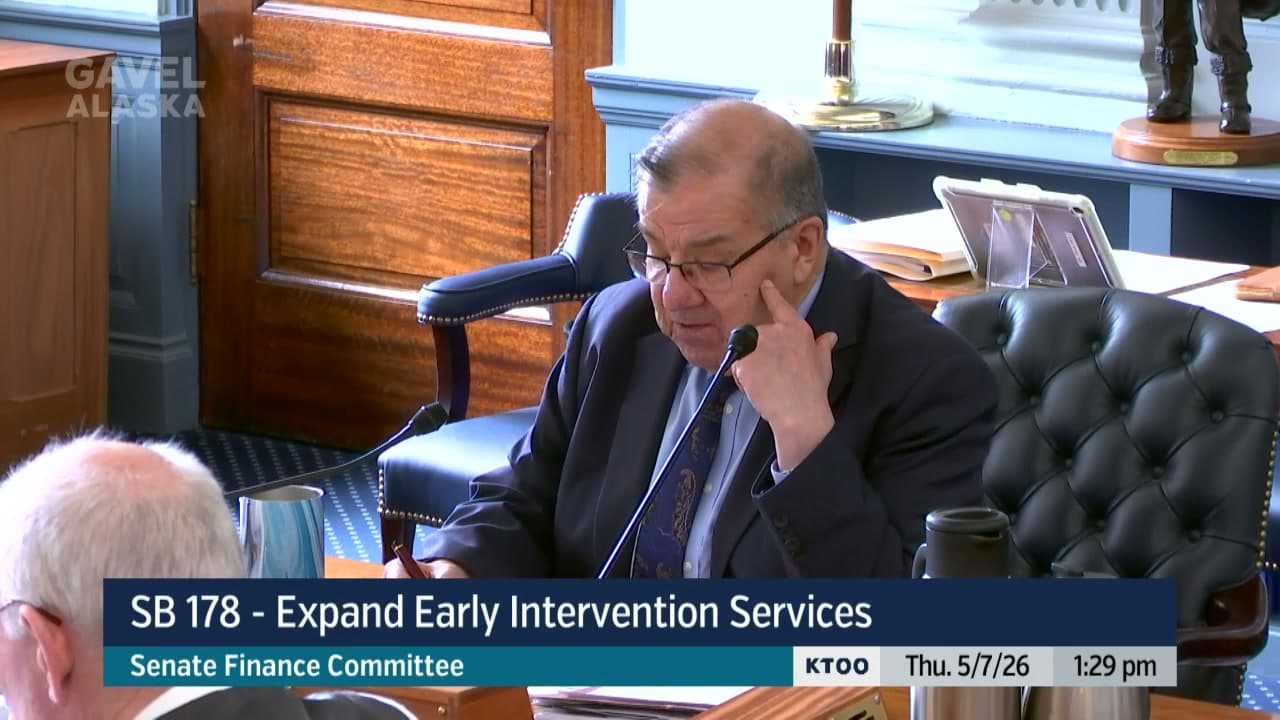
The Alaska Senate Finance Committee approved legislation Thursday to expand early intervention services for children, with amendments giving the Department of Health more time to implement required Medicaid changes.

Douglas resident Lou Logan will present on his 18-month experience building a traditional Inupiaq qayaq at the Alaska State Museum on May 16.
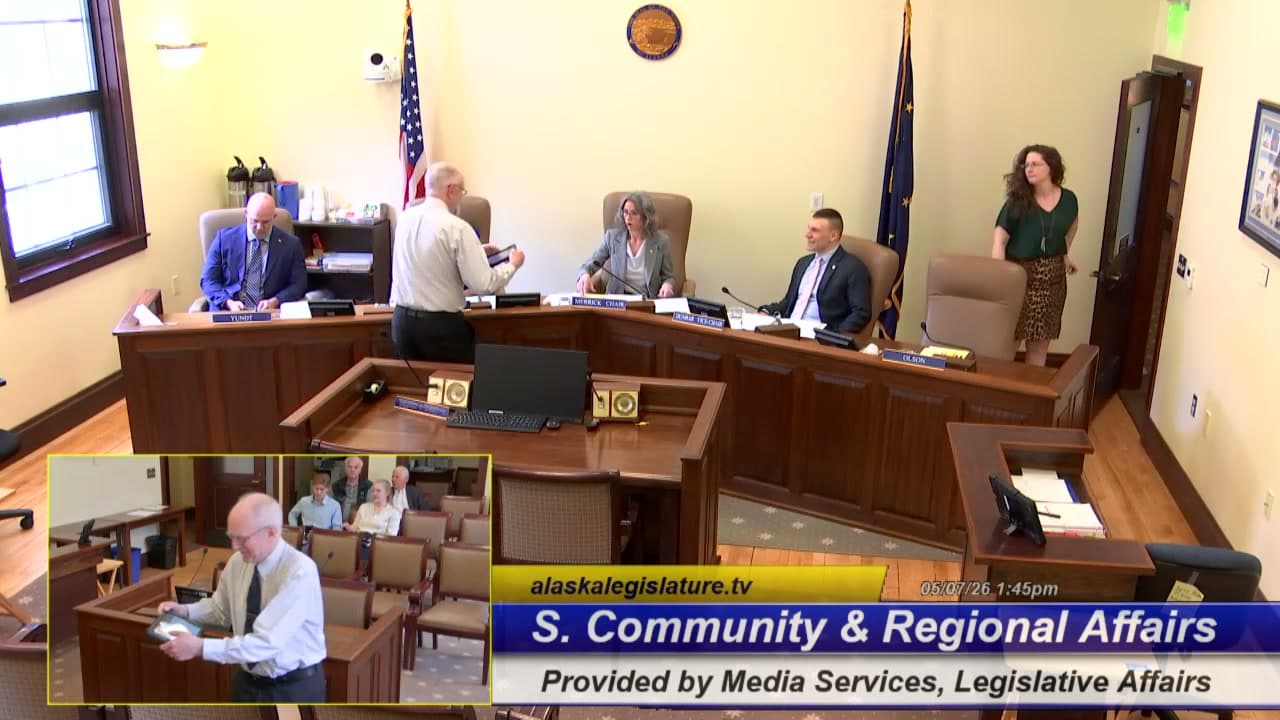
The Senate Community and Regional Affairs Committee advanced a compromise bill Thursday that limits paid sick leave for seasonal fish processors to 12 hours per month, capped at 48 hours annually, modifying voter-approved sick leave requirements.

The Department of the Interior says the conveyance moves Alaska past 96% of its statehood land entitlement. State officials are taking public comment through June 26 on access across the corridor.
Rural Alaska villages face potential fuel shortages and prices that could double to over $6 per gallon for diesel, adding $6,000 per person in annual costs as war in Iran disrupts supplies.
The Alaska House Health and Social Services Committee held a confirmation hearing Tuesday for Hannah Milkey, a 19-year-old who graduated high school in 2025 and was appointed to the State Medical Board one week earlier.

Hannah Milkey, who graduated high school in 2025 and has no medical training, was appointed to Alaska's State Medical Board one week before her confirmation hearing, prompting questions from legislators about her ability to evaluate physician disciplinary cases.

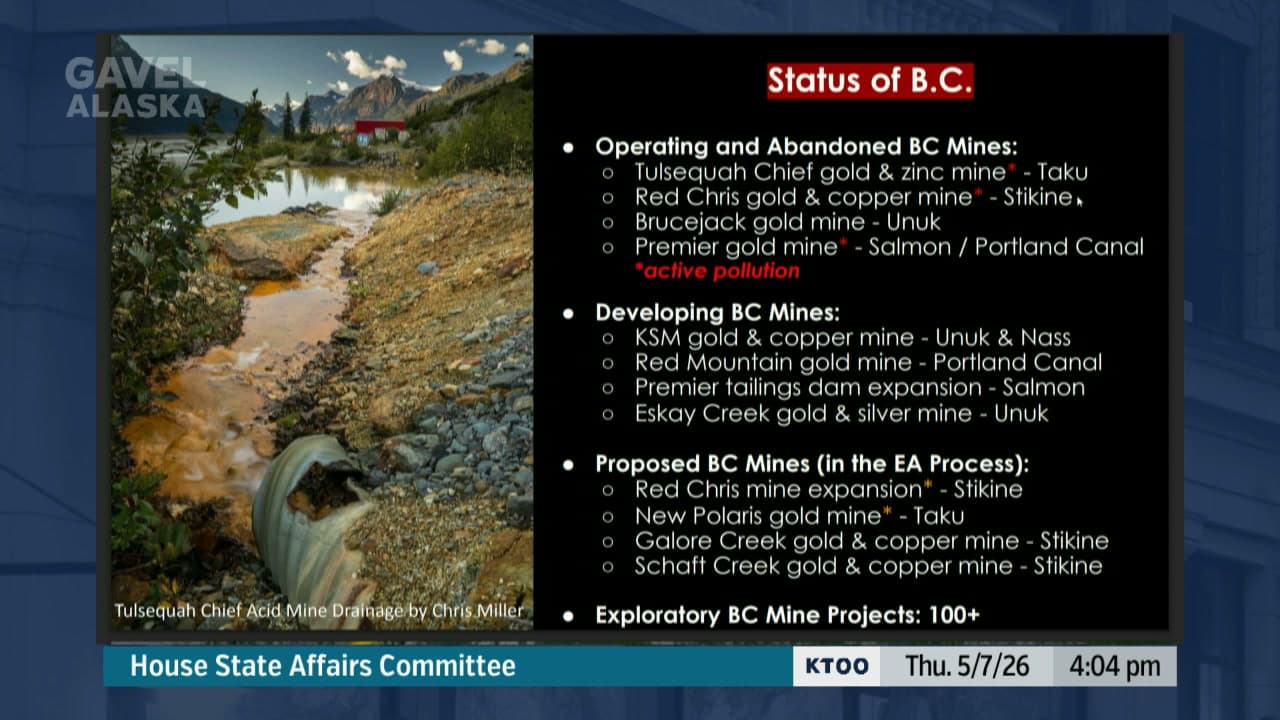
Alaska officials testified that water quality monitoring shows no pollution from British Columbia mines crossing the border, but fishing groups, tribes, and conservation organizations argued the state is not doing enough to protect Southeast Alaska's salmon rivers from upstream mining risks.

The Alaska House Finance Committee heard testimony Wednesday on Senate Bill 140, which would create a 50-50 matching grant program to address over $347 million in fire station construction needs and $22 million in renovation needs statewide.
The House Community and Regional Affairs Committee adopted a committee substitute for HB 220 that would require the Department of Natural Resources to grant easements for replacing aging utility infrastructure in state parks within 90 days, while also creating new authority for utilities to install infrastructure through parks.

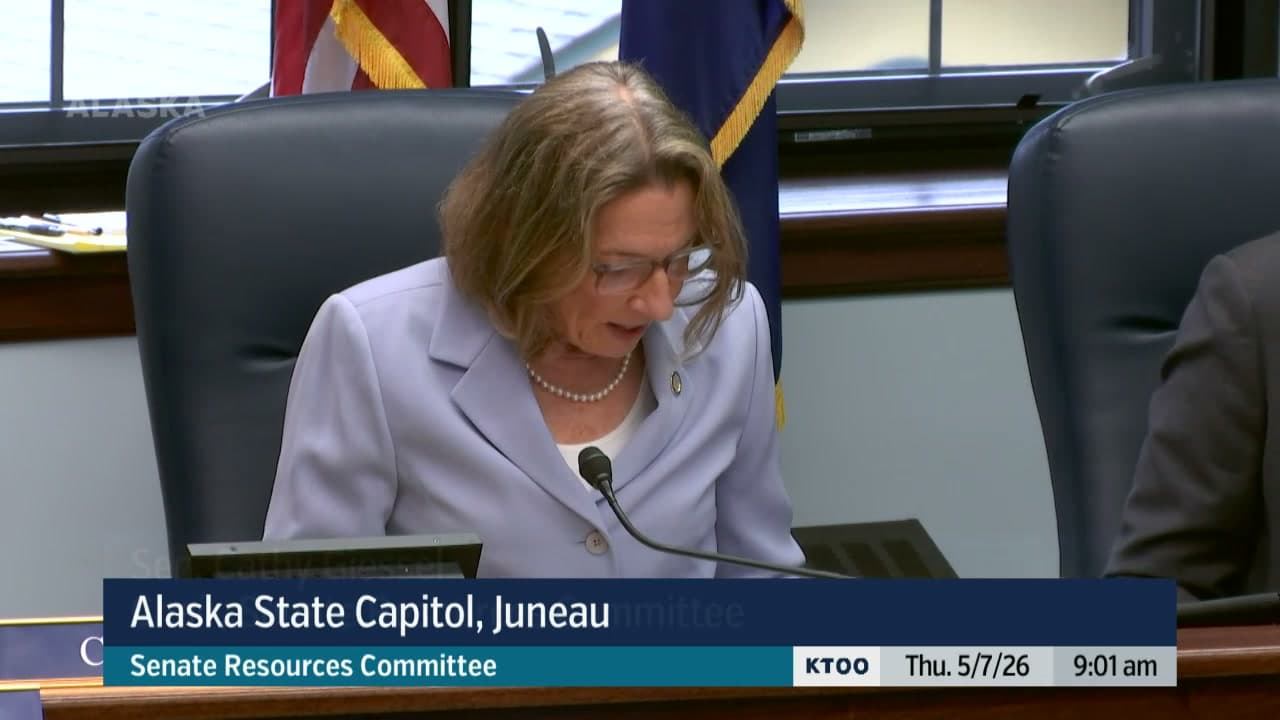
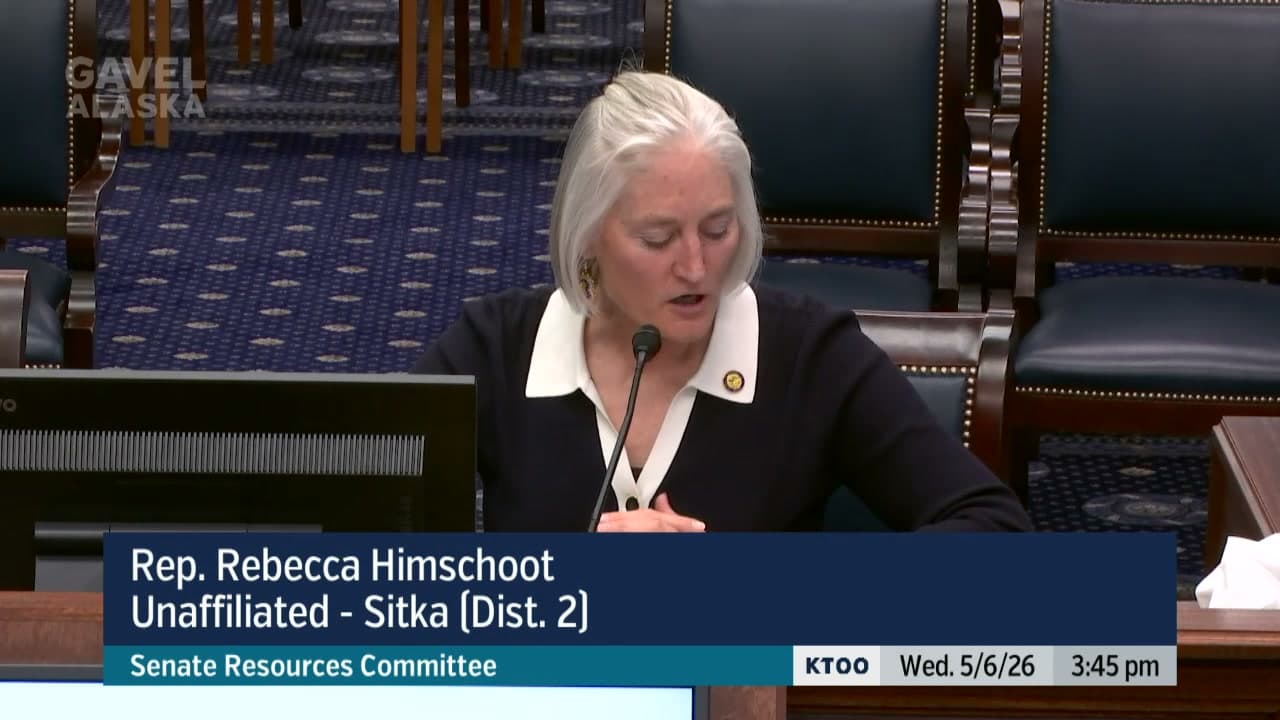
Senate Resources Committee consultant warns legislators lack critical data on Alaska LNG project capital costs and gas pricing needed to fulfill constitutional obligation to maximize resource value, with only 12 days left in session.

The Alaska Senate Resources Committee heard House Bill 93, which would require residents to be physically present in Alaska for at least 180 days annually to qualify for resident hunting and fishing licenses, aligning the standard with Permanent Fund Dividend eligibility.

The Senate Transportation Committee moved forward Thursday with legislation to update Alaska's travel insurance laws, aligning the state with 42 others that have adopted similar reforms.

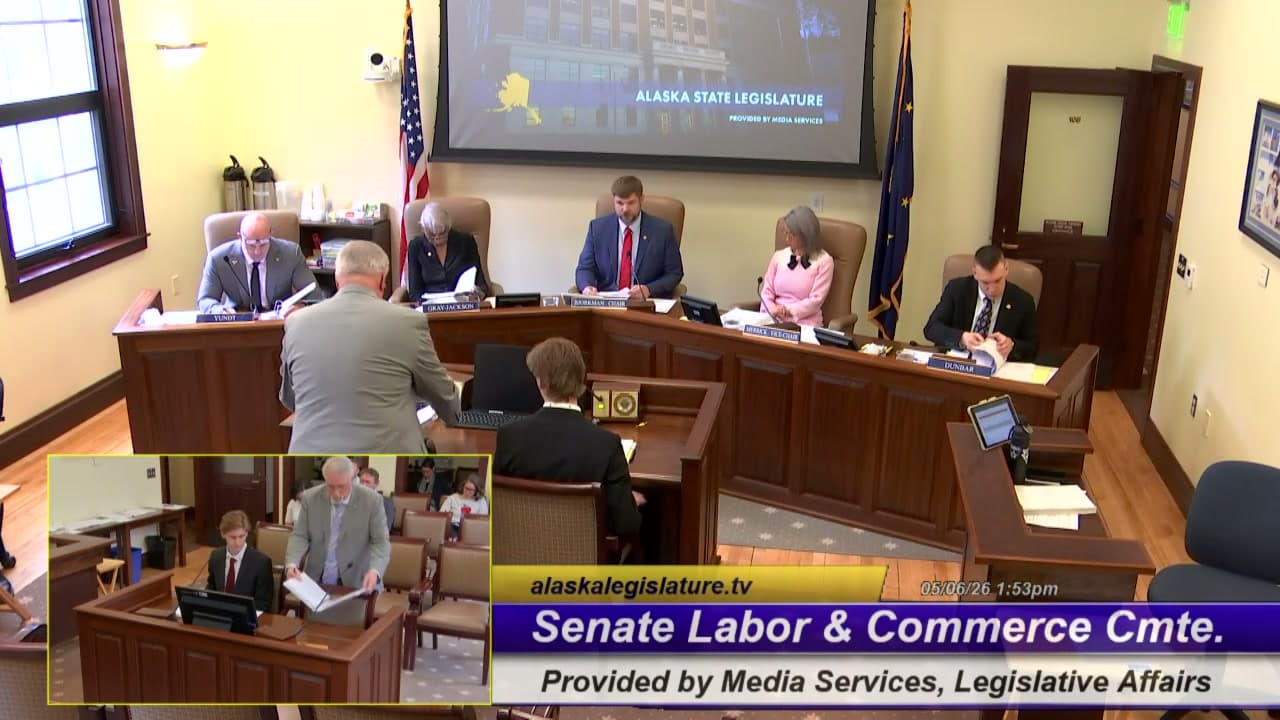
The Alaska Senate Labor and Commerce Committee advanced House Bill 110, which includes five interstate healthcare licensing compacts and scope of practice changes for respiratory therapists, occupational therapists, and physical therapists.

Alaska House Labor and Commerce Committee heard sharply divided testimony on HB 386, which would allow electronic pull-tabs on tablets, with operators warning of reduced charity proceeds and manufacturers citing Minnesota's revenue growth.
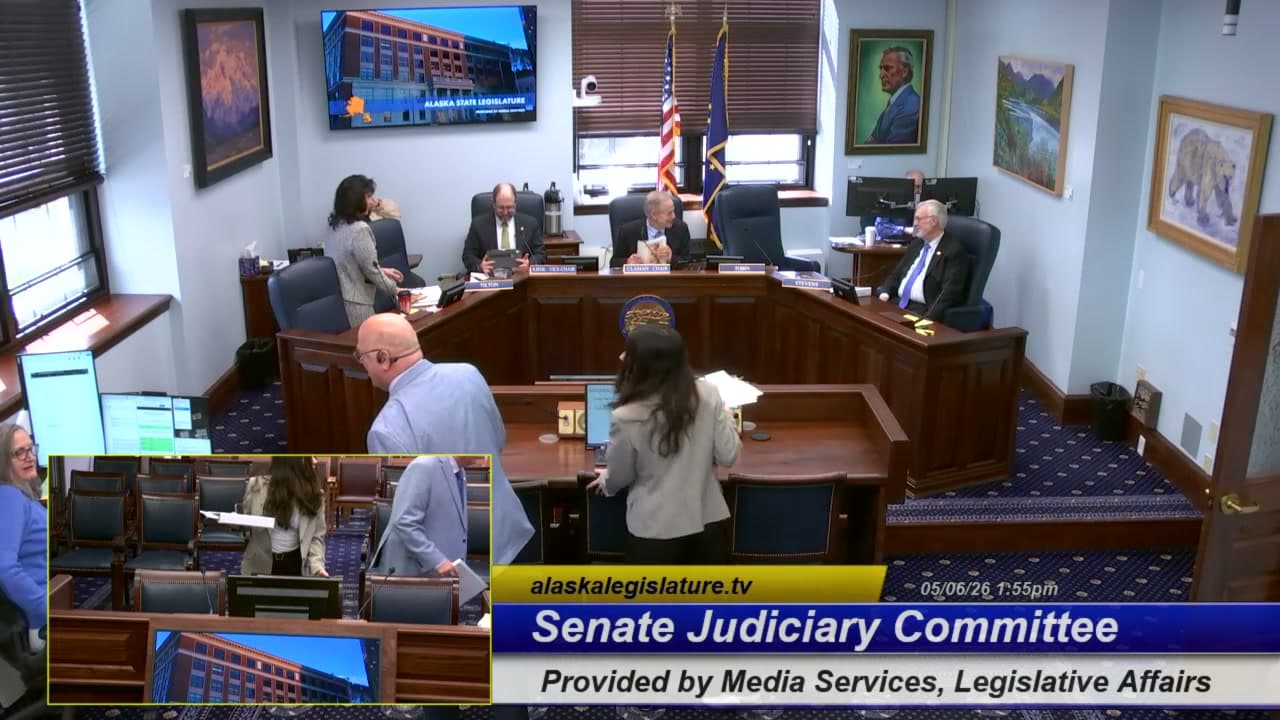
The Senate Judiciary Committee held its first hearing on House Bill 298, which strengthens Alaska's legislative ethics oversight and passed the House 37-3, with discussion focusing on potential amendments to campaign-period complaint procedures.

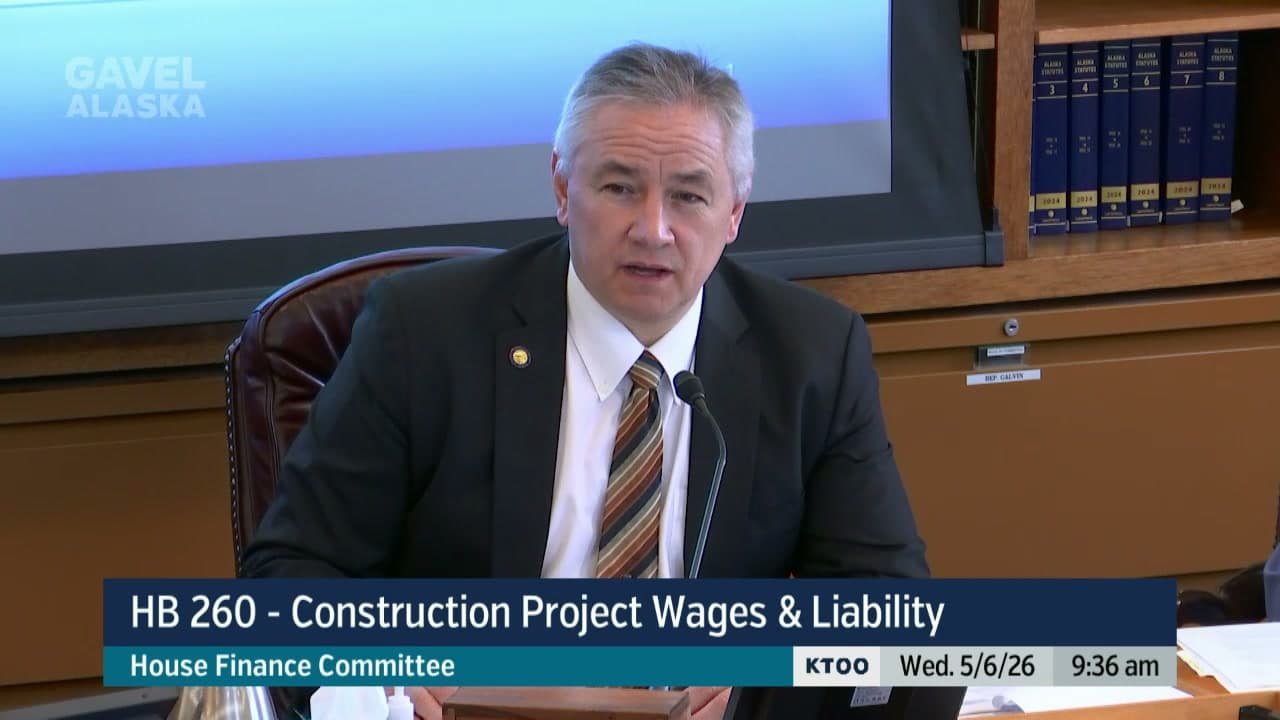
The Alaska House Finance Committee heard testimony on House Bill 260, which would make general contractors jointly liable for unpaid subcontractor wages and shift enforcement from criminal to administrative penalties.

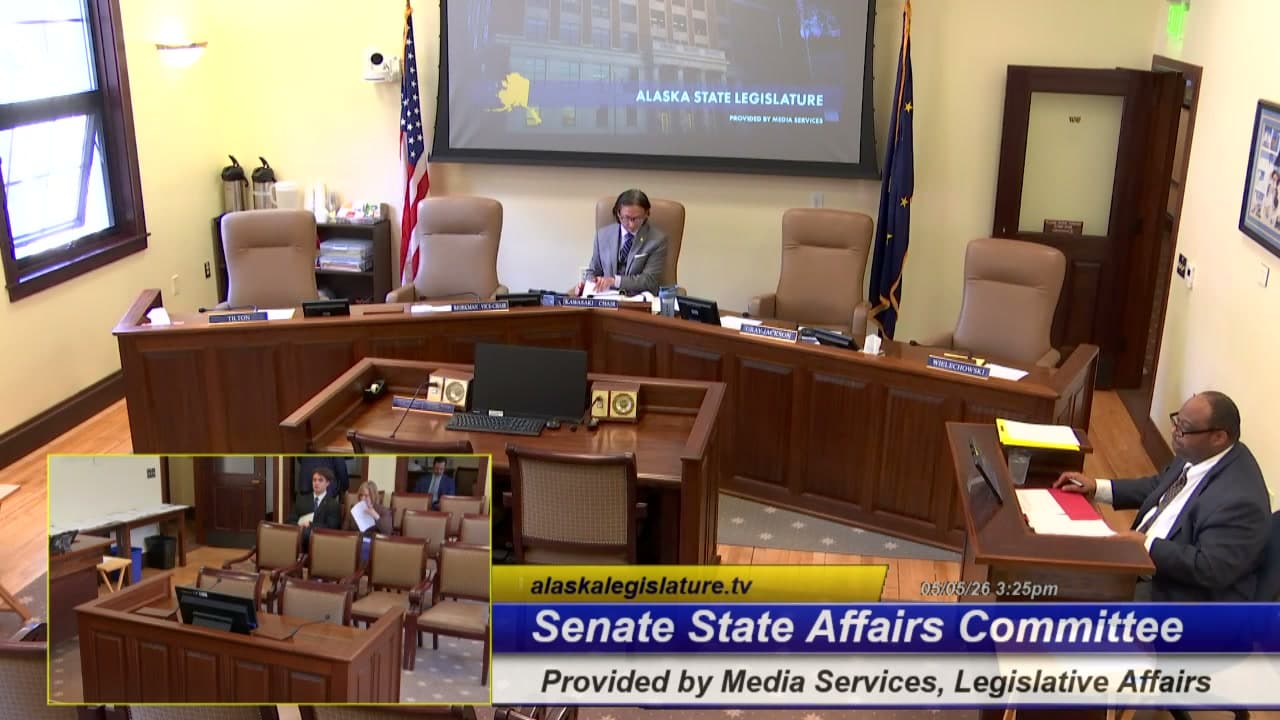
The Senate State Affairs Committee heard testimony on House Bill 25, which would prohibit polystyrene foam food containers statewide, with industry groups citing cost concerns and environmental advocates pointing to pollution and health risks.

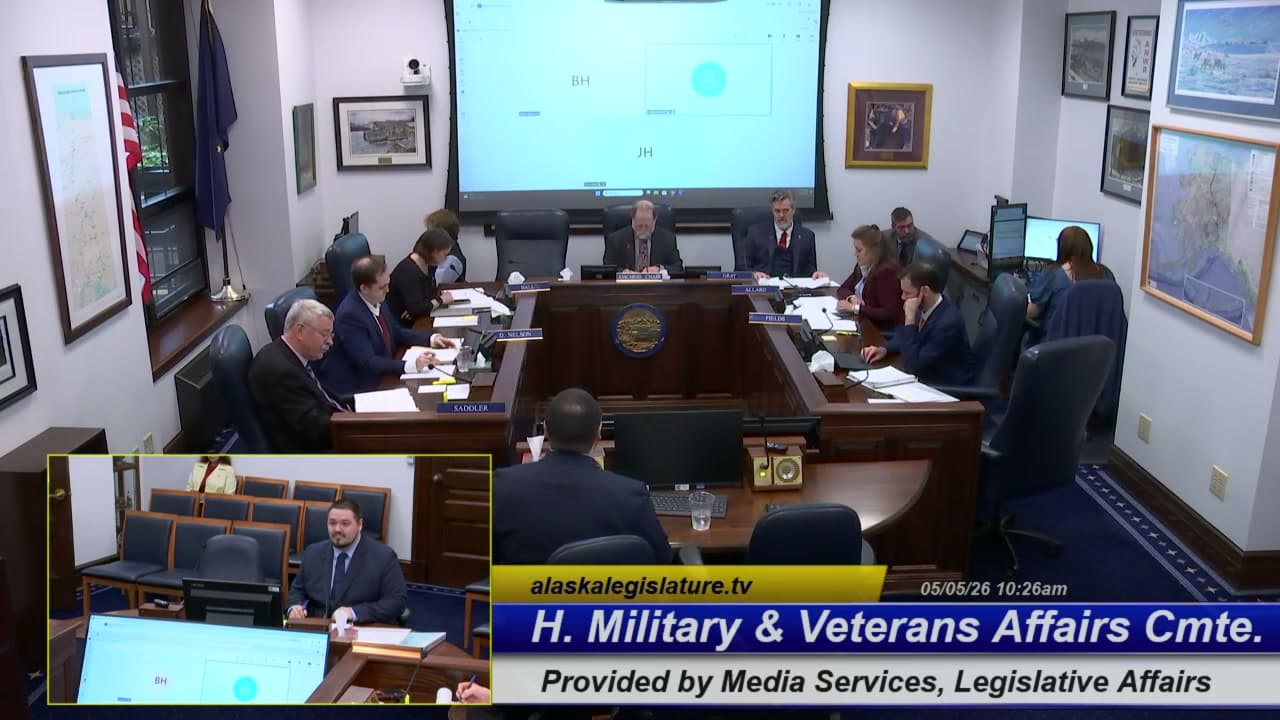
The Alaska House Special Committee on Military and Veterans Affairs advanced a resolution Tuesday supporting military infrastructure development as the state prepares to receive approximately $23 billion in federal funding for defense readiness.

The House State Affairs Committee adopted a modified version of Senate Bill 26 that would split Alaska into two time zones if the state joins Pacific Standard Time, addressing concerns from Western Alaska while attempting to end twice-yearly clock changes.

Heavy crowds of anglers are packing the Kenai River in combat fishing conditions as late-run sockeye and coho salmon runs peak through September.
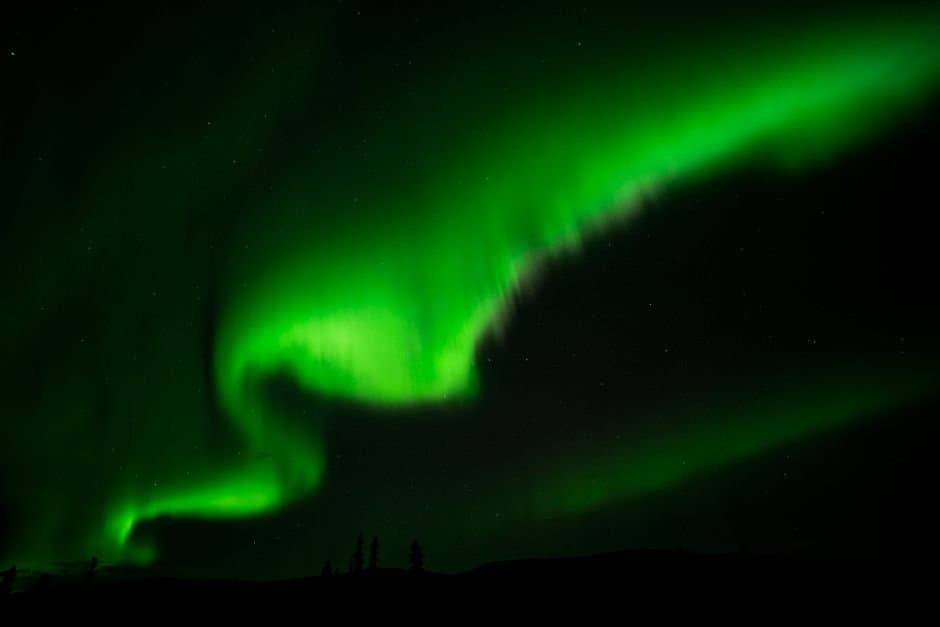
Residents in Kodiak and Interior Alaska reported seeing a vibrant aurora borealis display on the evening of April 18, 2026, sharing photos and videos of the event that occurred during the current solar maximum period.
Fairbanks and North Pole residents witnessed vivid aurora borealis displays on April 19, 2026, featuring intense formations that matched UAF Geophysical Institute forecasts during the ongoing solar maximum period.

New stories usually land 4p to 6p.
1,266
meetings transcribed
5,131
articles published
3,108
hours of audio processed
6
contributors this week
Local news, from the source · Public meetings deserve coverage · Every article names its source