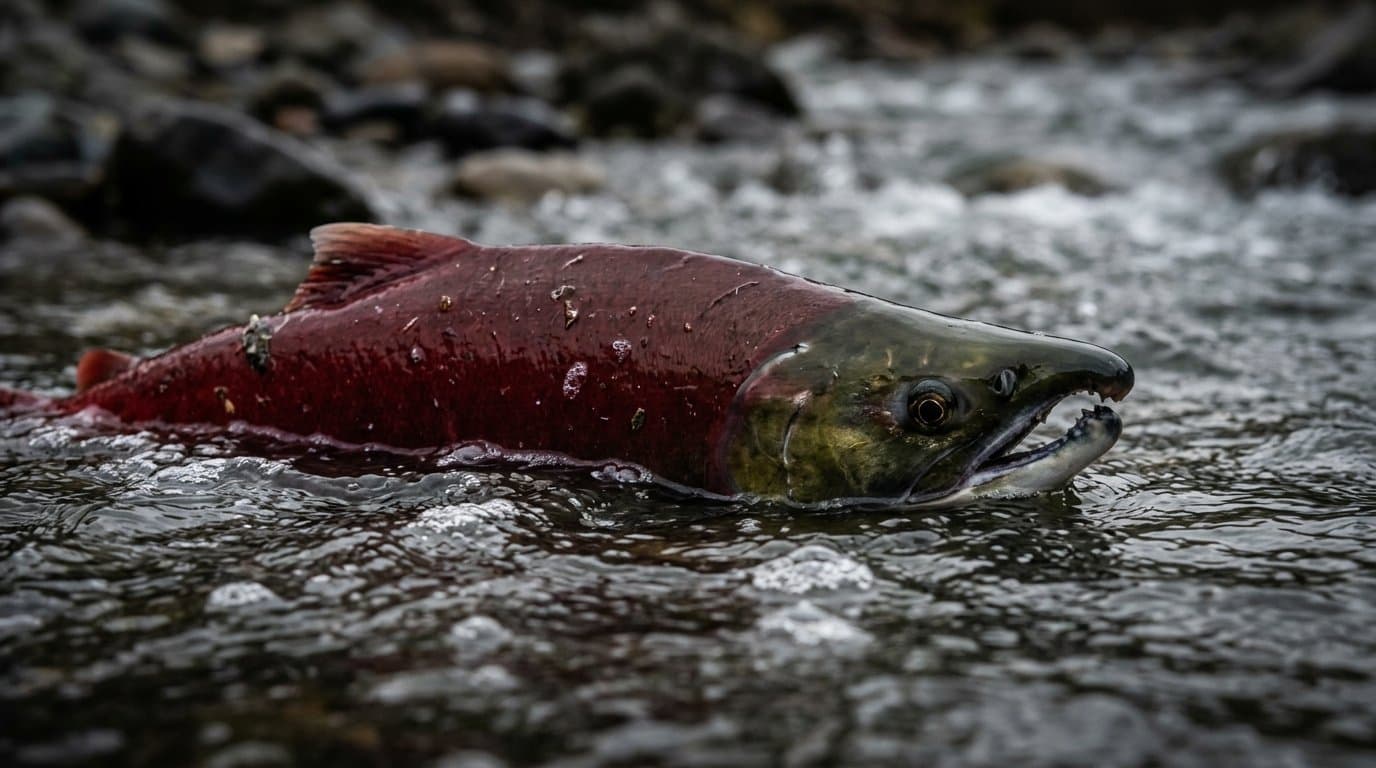
AI image
Upper Cook Inlet sockeye run falls 38% short as commercial catch hits 20-year low
Upper Cook Inlet's sockeye run came back 38% smaller than the state had forecast this summer, and commercial fishermen there caught fewer salmon than in any year since at least 2006, the state reported Tuesday.
Their catch of 1,161,600 salmon was worth $16,288,874 at the dock, less than half of 2025's $36,453,764, according to the Alaska Department of Fish and Game's preliminary 2026 Upper Cook Inlet Commercial Salmon Fishery Season Summary. Sockeye, 94% of that value, brought an estimated $2.83 a pound, up from $1.73.
In February, the department forecast 7.6 million sockeye and called that excellent. The preliminary run, which counts every fish that came back, caught or not, was 4.69 million, in the range the department classes as weak. In 2025, the run of 11.52 million beat its forecast by 66%.
The Kenai River, the inlet's largest run, came back at 2.116 million sockeye against a forecast of 4.445 million. That is 52% short. In the 10 years before, Kenai runs had come in at most 48% below forecast, the department wrote.
The Kasilof River went the other way. Its run of 1,491,000 was 2.1% above its 1,460,000 forecast, and its sonar count of 1,055,564 was more than three times the top of its 140,000 to 320,000 goal.
The summary does not say why the Kenai fell short. On July 27, the department projected that run at 3 million, with its timing four days late. That kept the drift gillnet fleet under rules for runs of 2.3 million to 4.6 million, and the state opened Kenai personal-use dipnetting around the clock for the season's last three days. The run ended below that range. The summary puts the midpoint of sockeye passage past the sonar on July 25, three days earlier than average.
The sonar 19 miles up the Kenai counted 1,111,686 sockeye, just inside the 1.1 million to 1.4 million managers aim to let upriver in a run that size.
The east side setnet fishery, off Kenai Peninsula beaches, never opened. The department closed it Feb. 11 after forecasting 12,718 large late-run Kenai kings, under the 14,250 its plan requires. Setnetters fishing with dip nets instead took 62,444 sockeye on 126 permits, about half the 130,498 taken in 2025 on 37 permits. The commercial king catch, 137 fish, was the second lowest on record.
NOAA Fisheries closed the salmon fishery in federal waters, more than 3 miles offshore, on Aug. 5, when the coho limit was reached. The fleet there caught 38,591 coho against a limit of 16,619, though the agency says overfishing is not occurring. The state wrote that the federal overage was part of why it managed its own coho fisheries conservatively. The Little Susitna River counted 1,768 coho against a minimum goal of 9,200.
NOAA Fisheries' preliminary numbers would cut the ceiling on Kenai sockeye caught in federal waters about 80% for 2027, to 184,408 from 937,993 this year. The North Pacific Fishery Management Council looks at those numbers at its Dec. 4-9 meeting. The Alaska Board of Fisheries takes up Upper Cook Inlet fishing proposals March 4-15 in Anchorage.
What did you make of this story? (no account needed)
Made by our human newsroom with AI. How humans and AI work here · Grow with our newsroom ·
Keep Alaska News free for everyone.
No paywall, ever. Members pay so everyone can read the meetings and records Alaska News covers.
Get Alaska News in your inbox
Create your free account and get the day’s top stories around 6 each morning, in a few minutes’ read.
Top stories, around 6 each morning.
Stories on what you follow, on Sundays.
Source: Alaska Department of Fish and Game, Upper Cook Inlet's 2026 sockeye run came in 38% under forecast, and the Kenai's was about half of what the state predicted.




Comments
Sign in to leave a comment.
No comments yet. Be the first to share your thoughts.