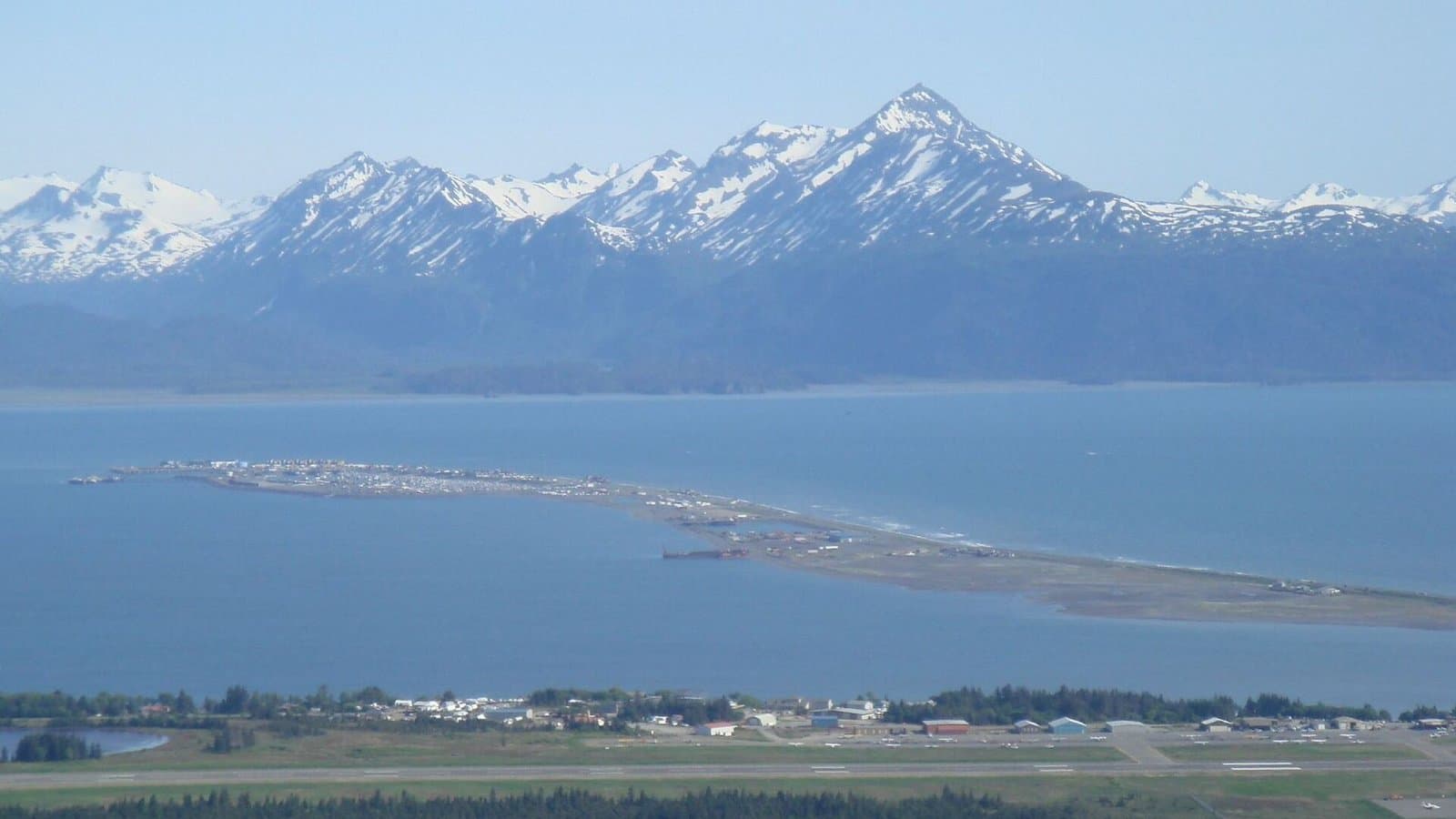
Photo: Chris Lott via Wikimedia Commons · Photo source · CC BY 2.0
Fish board to weigh how Ninilchik River's kings are counted and caught
Six proposals headed to the Alaska Board of Fisheries in December would change how the Ninilchik River's king salmon are counted and fished.
The Alaska Department of Fish and Game closed the lower river to all fishing from June 23 through July 15, 2025, saying the wild run was not projected to reach its goal of 900 to 1,600 fish, which it had missed the three years before. For this year, the department set rules in February that banned bait, limited anglers to one hatchery king a day and opened the lower river on five three-day weekends.
One proposal, from Francis Estalilla, would set a goal that counts only kings 28 inches or longer, instead of every king over 20 inches as the current goal does. He wrote that about 20% of the river's returning kings are now female and that "escaping sufficient numbers of large fecund hens is paramount to meaningful stock rebuilding."
His proposal would also let first-generation hatchery females add to the spawning run, with hatchery fish capped at 43% of it. Department policy doesn't count hatchery kings toward the goal.
The department's April review of escapement goals recommended no change to the current goal "based on information available at the time of review." It said alternatives were discussed, "including a size-based goal and incorporating hatchery-origin fish," and that more evaluation is ongoing.
Other proposals would let anglers keep more of the river's hatchery kings. James Stubbs wrote that 3,263 hatchery kings passed the department's Garrison weir in 2025 and that anglers weren't allowed to keep any of them. His proposals would open more of the river to hatchery king fishing, raise bag limits and bar the department from closing the hatchery fishery to meet the wild-fish goal. Another, from Will Lee, would allow bait when hatchery kings are in the river, as far as broodstock and escapement goals allow.
When it closed the river in 2025, the department said it needed about 150 hatchery females as broodstock for Kachemak Bay's stocking program, and that 40 of the more than 600 hatchery kings counted by mid-June were female.
In a separate proposal, Cook Inlet Recreational Fisherman wants Alaska residents to get priority when king fishing in Lower Cook Inlet salt water is restricted, cutting nonresident limits and barring guides from keeping kings before the resident limit is cut. Nonresidents took more than half the fishery's king harvest in 2024, the group wrote.
Other proposals would let the department restrict guided fishing on Cook Inlet streams when king runs are expected to miss minimum goals, ban helicopters from ferrying anglers to Deep Creek, the Anchor River, Stariski Creek and the Ninilchik, ban freshwater salmon derbies in Cook Inlet and require observers or electronic monitoring on charter boats. "A single helicopter operation can ruin the fishing experience for dozens of anglers," Stubbs wrote in the helicopter proposal.
On the commercial side, proposals would close waters around the Homer Spit to commercial fishing, ban beach seines in Cook Inlet, amend the Tutka Bay Lagoon hatchery plan, repeal the Port Graham hatchery plan, drop the 24-hour closure between Cook Inlet's two Pacific cod seasons and repeal the Cook Inlet sablefish trip limit.
Local fish and game advisory committees are reviewing the 50 proposals before the board meets Dec. 1-4 in Seward. The Kenai/Soldotna committee meets Wednesday, Tyonek's on Nov. 3 and Cooper Landing's on Nov. 9. Written comments are due Nov. 16 through the board's online form.
Source: Cooper Landing Fish and Game Advisory Committee.
Made by our human newsroom with AI. Reviewed by Cale Green. How humans and AI work here · Grow with our newsroom
Stay informed. Support what matters.
Free local news you can verify. Support Maggie AlaskaNews and go ad-free.









Comments
Sign in to leave a comment.
No comments yet. Be the first to share your thoughts.