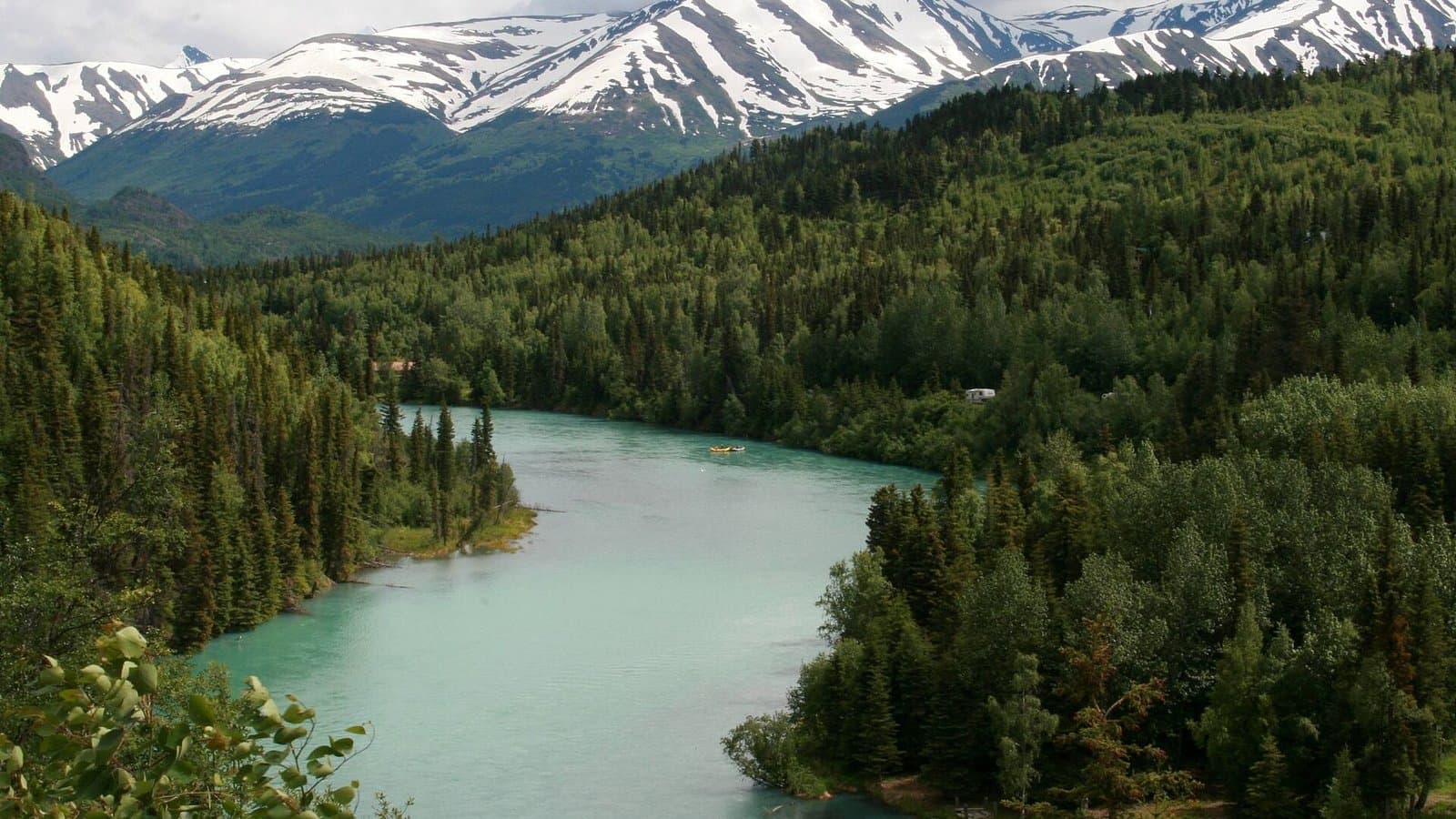
Photo: Frank K. via Wikimedia Commons · Photo source · CC BY 2.0
Federal scientists' early numbers would cut Kenai sockeye ceiling about 80% for 2027
The ceiling on how many Kenai River sockeye drift gillnetters can catch in Cook Inlet's federal waters next year would drop by about 80% under preliminary numbers federal scientists posted Friday.
Their recommended ceiling for Kenai late-run sockeye is 184,408 fish in 2027, down from 937,993 this year, according to the stock assessment from NOAA Fisheries.
Boats fishing federal waters took about 412,000 Kenai sockeye this summer, by the agency's preliminary estimate, more than twice next year's ceiling and about two-thirds of all the sockeye they caught there. The federal-waters fishery was worth an estimated $10.2 million at the dock this year, $9.8 million of it from sockeye.
The North Pacific Fishery Management Council, which recommends the rules for federal fisheries off Alaska, will look at the preliminary numbers at its Dec. 4-9 meeting in Anchorage and recommend final 2027 limits in February. The ceiling isn't the catch limit itself; limits can be set at or below it.
The assessment doesn't say why the Kenai number fell so far, and it doesn't give the predicted 2027 run behind it. The ceiling comes from a federal model that accounts for the expected run, catches in state fisheries and the target for fish reaching the spawning grounds. A cushion for uncertainty is then subtracted.
Kasilof River sockeye would see a smaller cut, about 39%, to 297,017 fish. The fleet caught about 49,000 Kasilof sockeye this year.
For coho, the scientists kept a 60% cushion, leaving a ceiling of 26,805 fish. "This recommendation reflects the highest level of concern for any salmon stock harvested in the CI EEZ," they wrote, using the abbreviation for Cook Inlet's federal waters. Coho harvests across Upper Cook Inlet were at historically low levels from 2024 through 2026, they wrote.
Under federal rules, reaching the limit for any one species shuts down the whole federal fishery, sockeye and all. That happened this year: the fleet caught 38,591 coho, more than twice its limit of 16,619, and NOAA Fisheries closed federal waters Aug. 5. About half of those coho came on a single day, July 30, when 180 boats caught 19,676.
Based on preliminary 2026 data, the assessment finds no overfishing of any Cook Inlet salmon stock in federal waters, and none overfished or approaching that point.
Federal waters are the part of the inlet more than 3 miles offshore. NOAA Fisheries took over managing the drift fishery there in 2024; the state still manages fishing closer to shore. Federal waters produced about 75% of the drift fleet's sockeye catch in Upper Cook Inlet this year, and 347 fishermen held federal permits, the most yet.
The numbers could still change. NOAA Fisheries plans to update its data and model results after the December meeting, and the council's science committee makes its final recommendations in February. Written comments for the December meeting are due Nov. 27.
What did you make of this story? (no account needed)
Made by our human newsroom with AI. Reviewed by Cale Green. How humans and AI work here · Grow with our newsroom ·
Get Alaska News in your inbox
Create your free account and get the day’s top stories around 6 each morning, in a few minutes’ read.
Top stories, around 6 each morning.
Stories on what you follow, on Sundays.
Source: North Pacific Fishery Management Council, Federal scientists' first 2027 numbers would cut Cook Inlet's Kenai sockeye catch limit about 80% and keep the coho cap that closed this year's season.



Comments
Sign in to leave a comment.
No comments yet. Be the first to share your thoughts.