
How It Works
Communities News powers local newsrooms with free reading, verifiable sources, and credits that flow directly to the journalist who wrote the article.
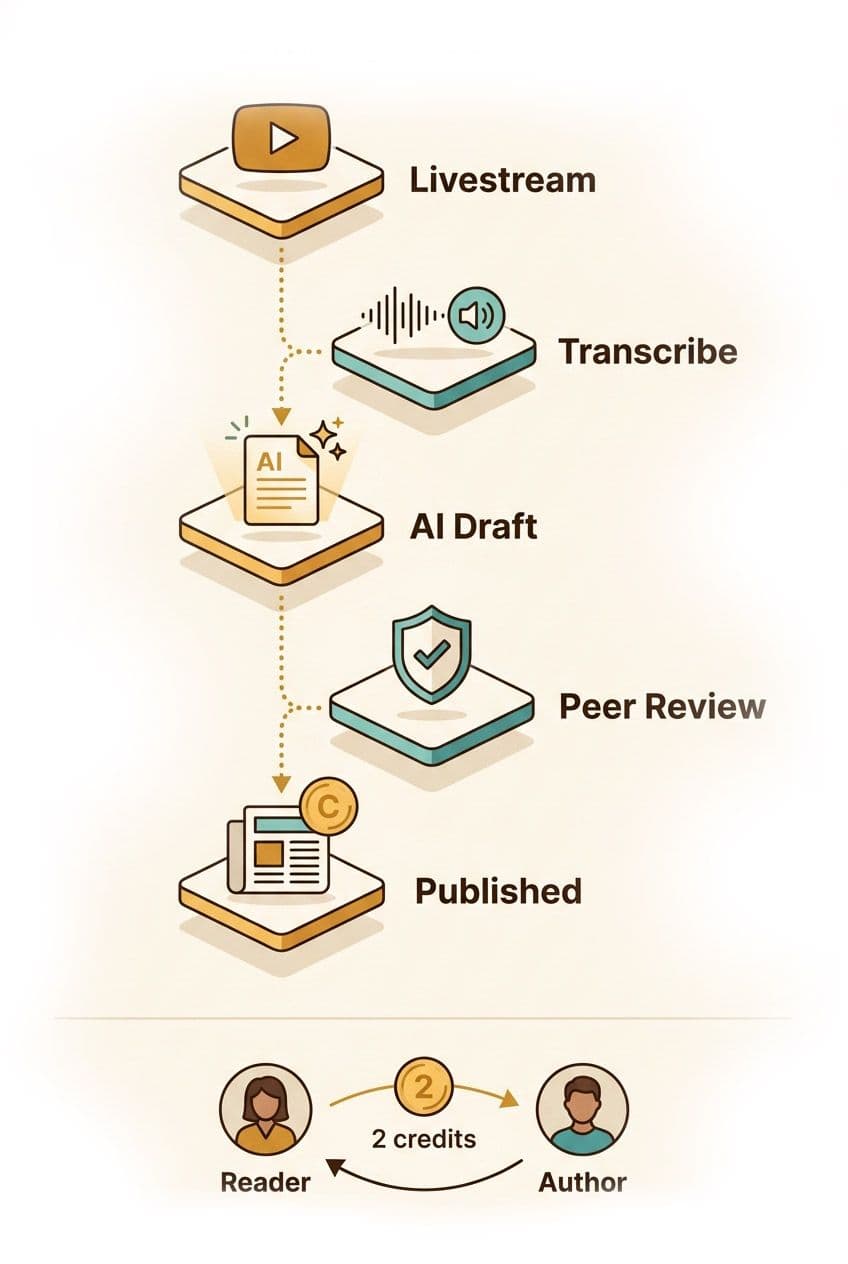
See how it works ↓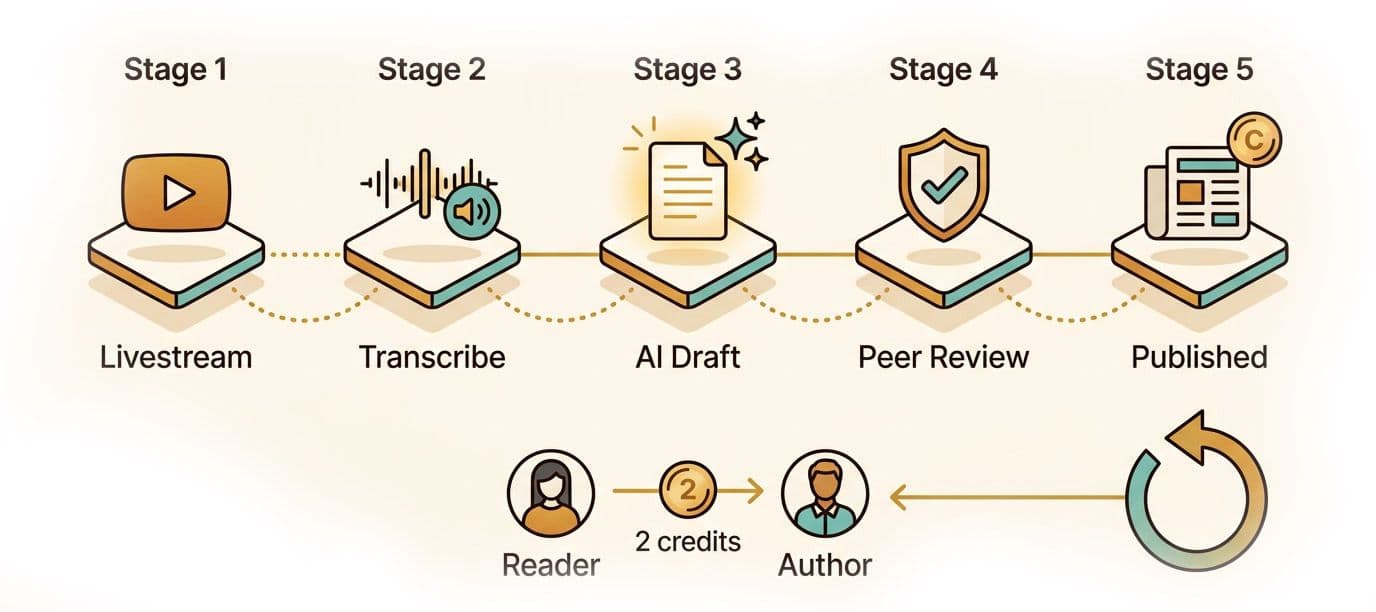
212 Counties Have No Local News. Another 1,525 Have One.
212 US counties have no local news source at all, and another 1,525 rely on a single outlet, usually a weekly paper. Together that is roughly 50 million Americans with limited or no access to local news. Traditional newsrooms cost $300K-$600K per year to operate in a single market. That math doesn't work for small communities.
The paradox: most of these communities already livestream their government meetings. The information is public. Nobody is turning it into journalism.
$300K+
Traditional newsroom
$25K
Community newsroom


Credits Connect Readers and Journalists
When you read an article, credits transfer directly to the author. No middleman. No algorithm. Just people supporting the journalism they value.


2
credits per read
Transferred directly to the author
+100
credits to publish
Write an article, earn credits
+50
credits to review
Peer review builds quality and earns
You Choose How to Participate
Multiple paths to ad-free reading. Nobody loses access.


Journalist
Write articles, peer review, earn credits.
- • AI starts the draft from meeting transcripts; you bring local context + accuracy
- • Earn 100 credits per published article + tips from readers
- • AI drafts get an automated review before they publish, and community editors review and edit articles. How review works
Compute Volunteer
Help transcribe public meetings.
- • Run a desktop app (Windows / macOS / Linux) that processes meeting videos in the background
- • Need: a regular computer, broadband, ~5GB free storage. Your spare cycles do the work
- • Earn credits for each transcription job your computer completes
Subscribe
Monthly plan. Always ad-free.
- • Credits deposited automatically every month
- • Tip your favorite authors directly
- • 50% funds the platform, 50% is yours
Accept Ads
Read everything free.
- • When your credit balance goes negative, you see ads
- • A fair exchange. You never lose access to a single article
- • Full content always available, paywall-free
You can pick either, both, or neither. Some people just read; some write articles, some volunteer compute, some do both. None depend on each other.
What AI Does. What Humans Do.
AI handles the volume work that has been silently skipped for decades. Human journalists do what AI cannot.
AI handles
- • Sitting through six-hour public meetings
- • Recapping assembly, council, and committee decisions
- • Tracking APOC filings and campaign finance reports
- • Monitoring agency rules, court actions, corporate filings
- • Surfacing patterns across hundreds of sources
Humans do
- • Cultivating sources and following leads
- • Investigative work that takes months of judgment
- • The vibe of a campaign event or hearing
- • Asking the hard question in person
- • Deciding which story actually matters
Most people who went to journalism school did not go there to sit through six-hour budget hearings. AI frees them for the work only they can do.
Every Article Names Its Source
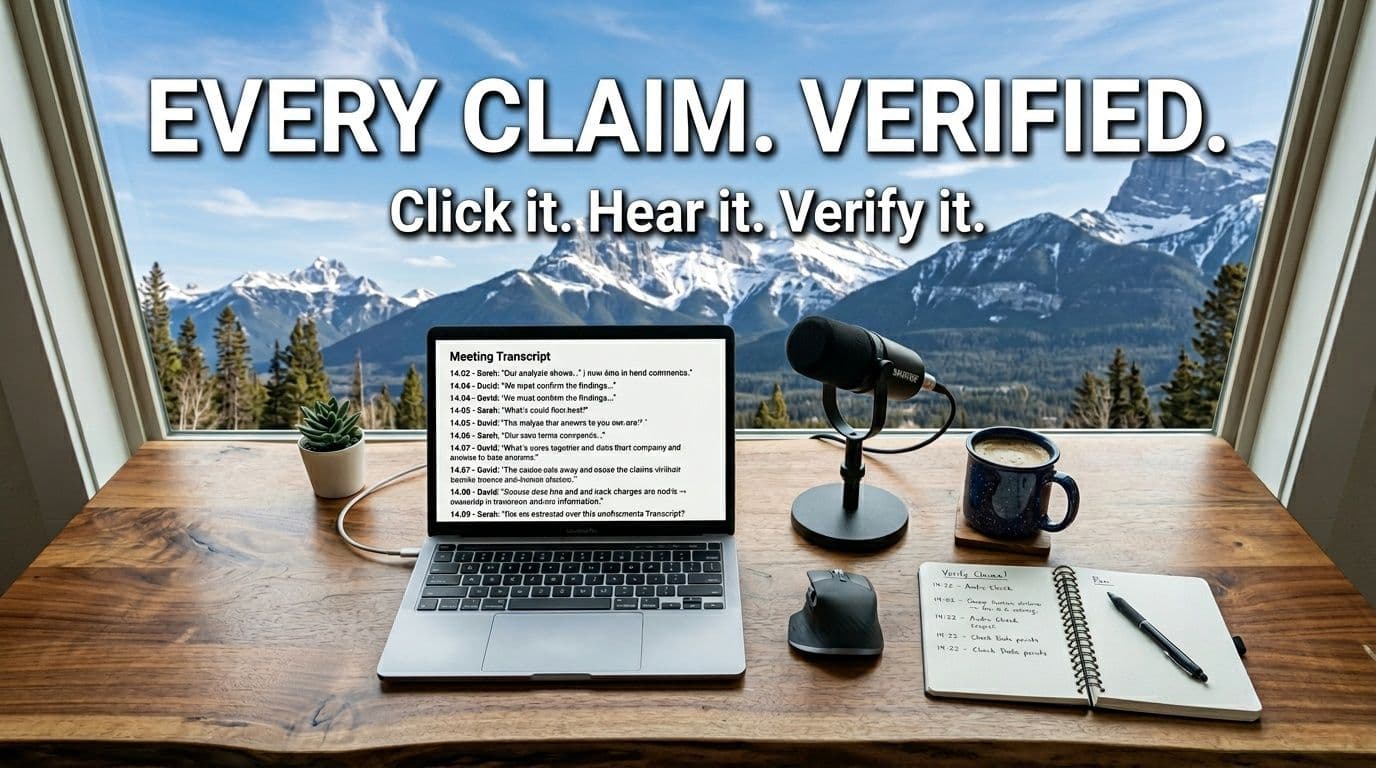
Every article names the meeting, record or announcement it was written from, and links to it where that source is publicly reachable. Where we have the transcript you can search it and read the passage yourself. Do not take our word for it, check for yourself. AI provides baseline coverage. Community members add depth and local knowledge.
“I couldn't remember who said it. I couldn't remember what meeting it happened in. I found it anyway. That's super valuable.”
Decisions, votes, key quotes from each meeting
Recurring themes and shifting coalitions across meetings
How local decisions compare to state and national trends
Transparent Revenue. No Hidden Agenda.
No venture capital. No algorithmic rage bait. Just local journalism that pays the people who do the work.

When You Read
Credits go to the author
Every credit you spend reading goes directly to the person who wrote the article. 100%. No platform cut.
When You Subscribe
50% you, 50% platform
Half of your subscription becomes credits you control. Half funds the servers, AI, and the team.
Built by the Community
Real numbers from a real platform. Updated every 10 minutes.

1,271
meetings transcribed
5,185
articles published
3,114
hours of audio processed
6
contributors this week
Have a Story We Should Cover?
You don't need an account to send a tip. Here's what happens after you submit:
1. A human reads it
Every tip lands in an editor review queue. No auto-publishing, no AI deciding what gets covered. A community editor reads what you sent.
2. Anonymous stays anonymous
If you check “submit anonymously,” your name and email are not shown to editors or stored with the tip. We keep a hashed IP for abuse prevention only. It is not tied to your identity.
3. You can attach evidence
Photos, audio, video, or documents up to 200 MB total. We strip location and identifying metadata from media before anyone sees it.
Tips help us find the stories happening between meetings. A transcript cannot surface those on its own.
Stay Informed. Support What Matters.
Free, permanent access to local news you can trust, so you can go about your daily life from a better informed position.
No paywall, ever. Open source. Meet the team behind it →