AI image
Record cold pushed Anchorage's gas demand to an all-time high, just as the supply is running out
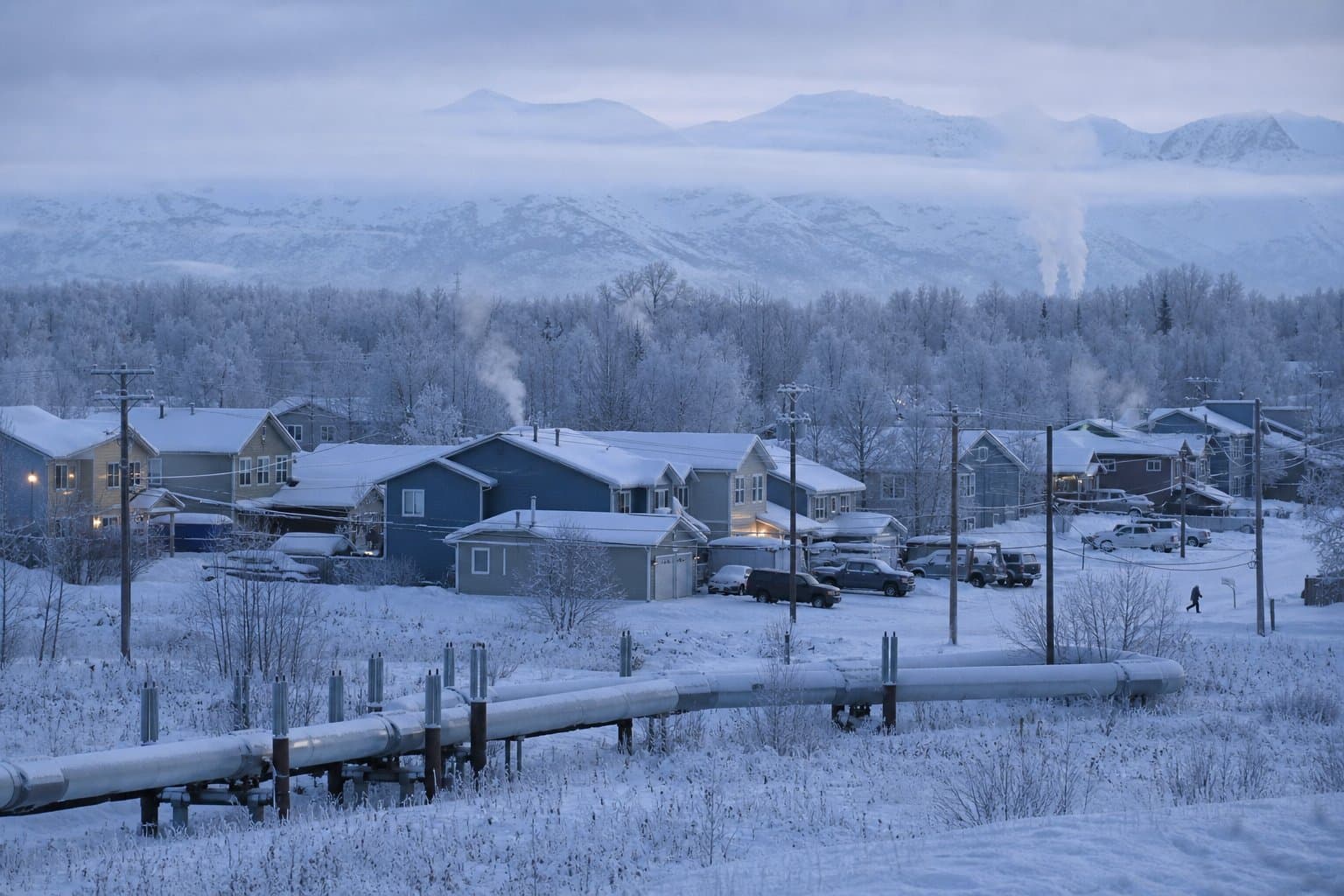
The brutal cold that gripped Southcentral Alaska early this year drove natural gas demand to the highest level ever recorded on the system that heats Anchorage, the Mat-Su and the Kenai Peninsula — and it arrived as the region's gas supply is already dwindling.
On Jan. 3, ENSTAR Natural Gas moved 277.5 million cubic feet of gas in a single day, an all-time peak, with the second-highest day following immediately after. Both fell inside what the utility calls the longest continuous stretch of cold-weather demand in more than 40 years: a 40-day run, with temperatures below normal for 30 straight days and demand far outpacing what the utility had forecast. To cover the gap, ENSTAR drew down its Cook Inlet gas storage — the reserve it leans on when demand outruns supply.
Cook Inlet's daily gas output has fallen from roughly 350 million cubic feet a day in 2010 to about 200 million today, president John Sims told a forum in June. And this coming winter, by the utility's own projections, the math no longer closes: applying a normal year's temperatures to current demand, Sims told a legislative caucus the system will fall about 3 billion cubic feet short — the equivalent of 18 midwinter days when it could not serve any customer at all.
ENSTAR's current gas costs about $10.80 per thousand cubic feet, against an estimated $16 to $22 for imported LNG. Because Southcentral households and small businesses rely almost entirely on this gas for heat, the cost would land on them: one market-analysis firm estimates electricity rates in parts of the region could climb as much as 30 percent.
There is more Cook Inlet gas in the ground. ENSTAR holds firm supply contracts with Hilcorp through 2033, and BlueCrest Energy says its Cosmopolitan field holds a large gas deposit validated by outside engineers. The question the utility keeps pressing is whether enough of it can be brought to the surface, fast enough, to close the gap before imports become the only option.
Stay informed. Support what matters.
Free, permanent access to local news you can verify. Subscribe to support Bill AlaskaNews and go ad-free.
Related Coverage
Enstar faces 2033 supply gap as Hilcorp contract expires, no Cook Inlet producer can match drilling scale
Alaska News · 3mo ago
Southcentral is 3 Bcf short this winter, and producers told lawmakers the gas runs out in 2029
Alaska News · 3w ago
Southcentral utilities warn of steep rate hikes as Cook Inlet gas dwindles
Alaska News · 4mo ago
Cook Inlet gas production falls to 61 Bcf in 2025
Alaska News · 3mo ago
Cook Inlet gas production drops 60% since 2010
Alaska News · 4mo ago
Comments
Sign in to leave a comment.
No comments yet. Be the first to share your thoughts.