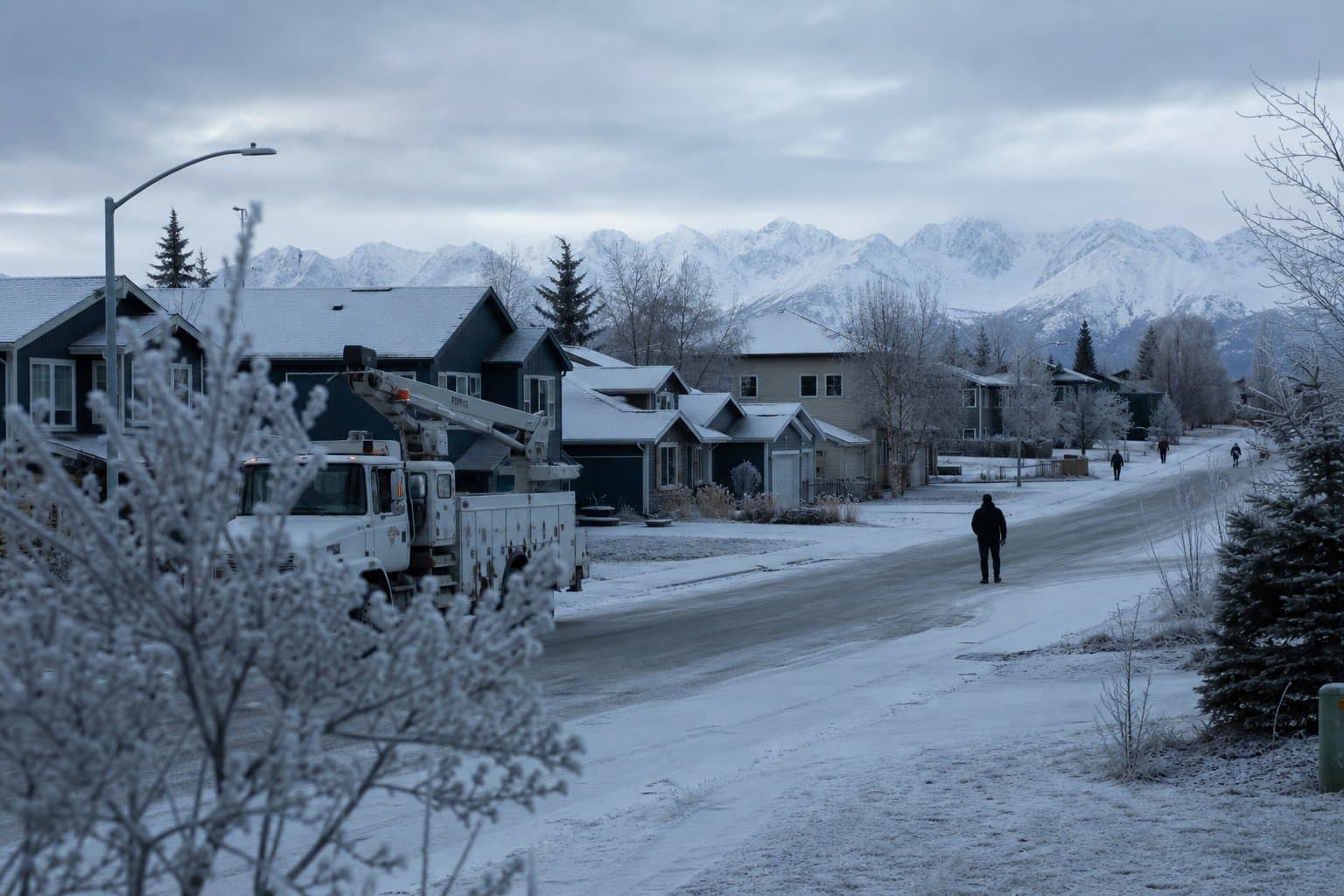
AI image
ENSTAR says Cook Inlet output has fallen to a fifth of its 1990s peak, with its firm contract ending in 2033
Cook Inlet Production Decline and the 2033 Contract Deadline
Cook Inlet now produces 60 to 70 billion cubic feet of natural gas a year, down from more than 300 billion at its early-1990s peak, and the firm contract that carries Southcentral homes and businesses expires in 2033. Hilcorp entered the basin in 2012, drilled 192 wells, spent well over $1.5 billion and kept the system whole. That was the core of what John Sims, president of ENSTAR Natural Gas Company, laid out at a Commonwealth North forum in Anchorage on Friday, June 5.
The scale problem is easiest to see on a cold morning. On a severe peak day, ENSTAR alone needs about 320 million cubic feet, more than the entire basin now produces on an average day. Stored gas, much of it held at the CINGSA facility, bridges that difference. Sims called storage one of the most valuable services Hilcorp provides, and a piece that every replacement option, whether import or pipeline, will have to expand.
Prices have already moved. A cold March left ENSTAR short, and Hilcorp filled the gap at $16 per thousand cubic feet, against a base contract price near $8.36.
A Staggered Countdown to 2033
Hilcorp told Railbelt utilities in 2022 that it would not renew Cook Inlet gas contracts beyond existing terms, and the expirations are staggered: Homer Electric in 2024, Chugach Electric and Matanuska Electric in 2028, ENSTAR in 2033. Matanuska Electric's board has since extended firm supply through March 2029. An earlier Alaska News article on basin production noted output fell to roughly 61 Bcf in 2025, down from 79 Bcf in 2016, while annual demand holds near 65 to 70 Bcf. At a Senate Finance Committee briefing on June 16, the Division of Oil and Gas said the larger Hilcorp firm contract with ENSTAR covers 28 Bcf a year and runs through March 2033.
The 2033 date marks the expiration of ENSTAR's firm Hilcorp contract, which is a separate question from forecasts of when basin supply may fall short of demand. Telling the Alaska State House Finance Committee on June 1 about that agreement, Sims said, "This is the last contract like this you will ever see in the Cook Inlet. We cannot contract for firm supplies of this nature. We've tried for a number of years. No one is willing to provide it."
Not everyone accepts that the basin's limits are settled. In a June 2023 letter to the attorney general and the natural resources commissioner, members of the Alaska State Senate asked the state to investigate whether Hilcorp has met its Cook Inlet lease obligations, noting that state forecasts showed Cook Inlet gas could meet demand into 2027 or 2028, and arguing that an unwillingness to commit to future contracts may reflect noncompliance with lease terms requiring diligent development.
The consequences land on customers. Alaska Energy Transparency's analysis of Railbelt cooperatives notes that "Cook Inlet is currently the only source of natural gas in the Railbelt. Supplies are expected not to be able to meet current levels of demand by 2027," leaving electric cooperative members exposed to higher rates and reliability risk as their utilities weigh imported LNG and other generation options.
What Comes After the Last Contract
ENSTAR's public position is that there is still time to arrange alternatives in an orderly way. The forum's central comparison was among three prices per thousand cubic feet: imported LNG landed at an estimated $9 to $21 in normal times, Phase 1 pipeline gas at a fixed $16, and Phase 2 gas at $5. ENSTAR's own figures for the no-project, imported-LNG alternative are narrower and higher than that import estimate: $16 to $22 per thousand cubic feet, which the company expects to become its customers' baseline cost in 2033.
No producer will sign a firm contract of the kind ENSTAR holds now, according to Sims, while members of the Alaska State Senate contend the basin's decline may reflect lease obligations left unmet. Those are not opposite sides of a supply forecast; they are two different explanations for the same missing signature, and Southcentral ratepayers pay for whichever one turns out to be right.
Source: Energy Forum: This Time, the Gas Line Has a Deadline ().
Drafted with AI. Edited by Cale Green. No full editor review is on record. Who is accountable.
Stay informed. Support what matters.
Free, permanent access to local news you can verify. Subscribe to support Bill AlaskaNews and go ad-free.
Related Coverage
Enstar faces 2033 supply gap as Hilcorp contract expires, no Cook Inlet producer can match drilling scale
Alaska News · 3mo ago
Cook Inlet gas production drops 60% since 2010
Alaska News · 3mo ago
Cook Inlet gas production falls to 61 Bcf in 2025
Alaska News · 3mo ago
Southcentral is 3 Bcf short this winter, and producers told lawmakers the gas runs out in 2029
Alaska News · 1w ago
Record cold pushed Anchorage's gas demand to an all-time high, just as the supply is running out
Alaska News · 8mo ago
Comments
Sign in to leave a comment.
No comments yet. Be the first to share your thoughts.