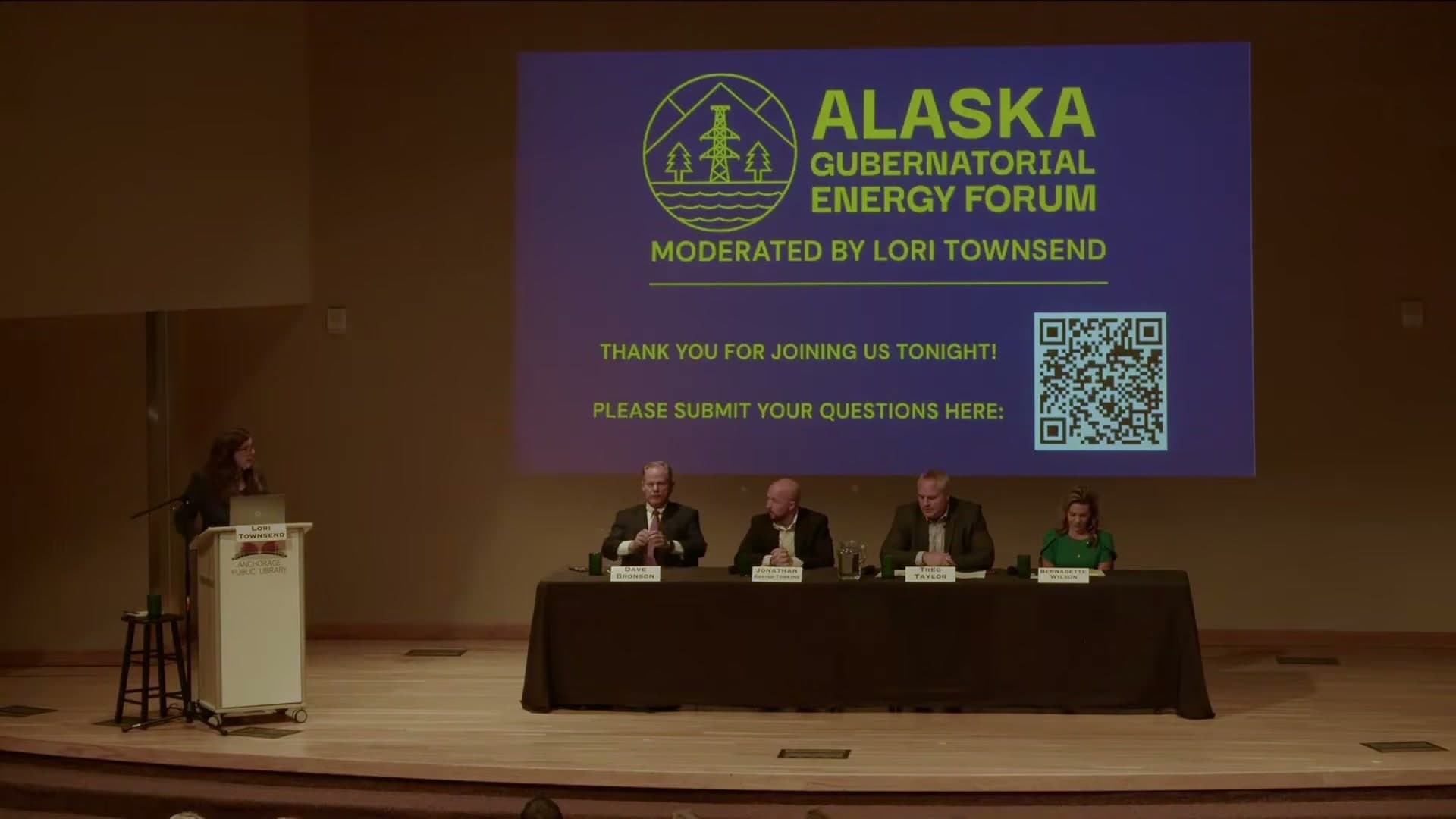
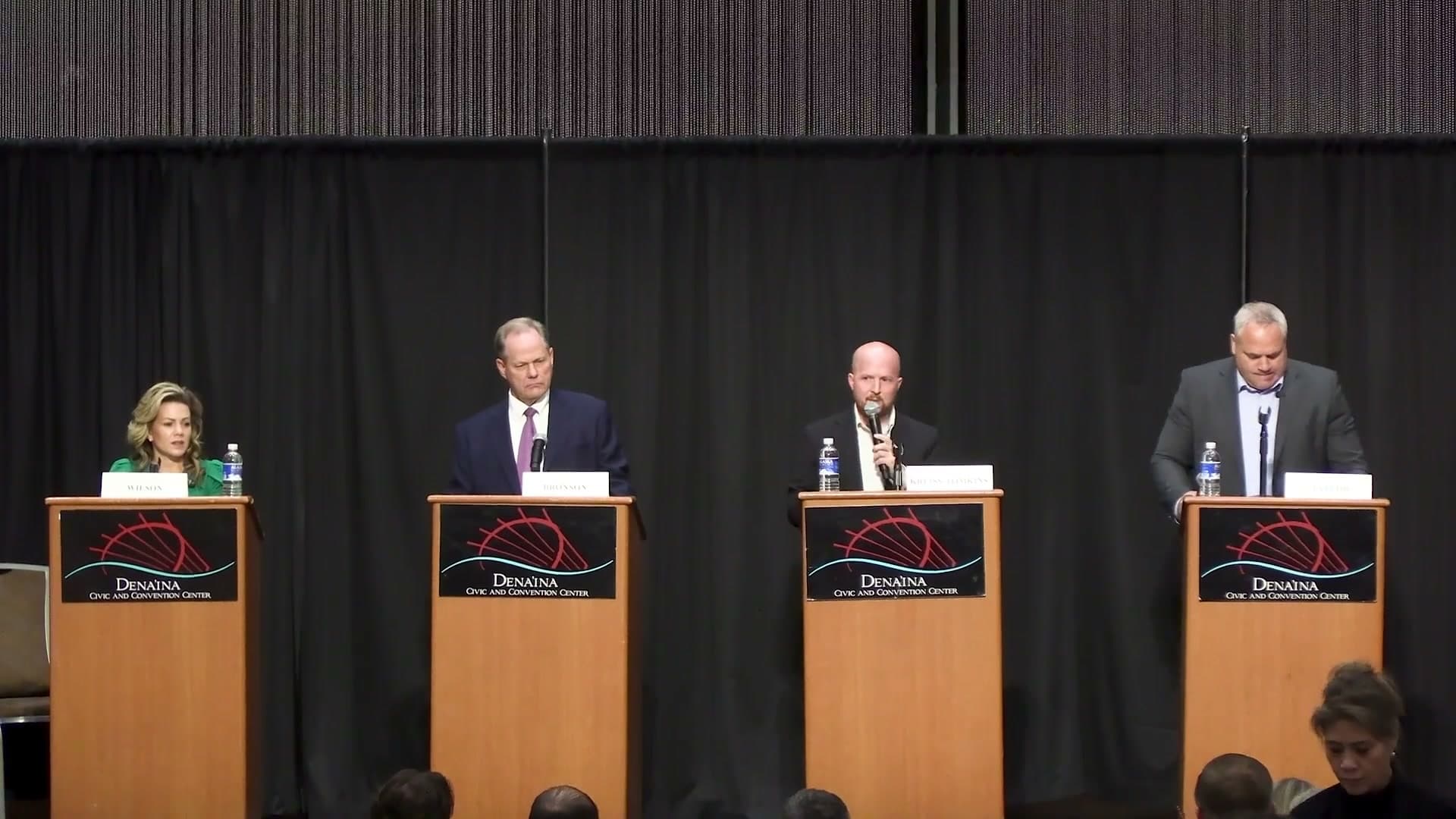
Frame from "REAP: 2026 Alaska Gubernatorial Energy Forum" · Photo source
Governor candidates split over how to close Southcentral gas gap
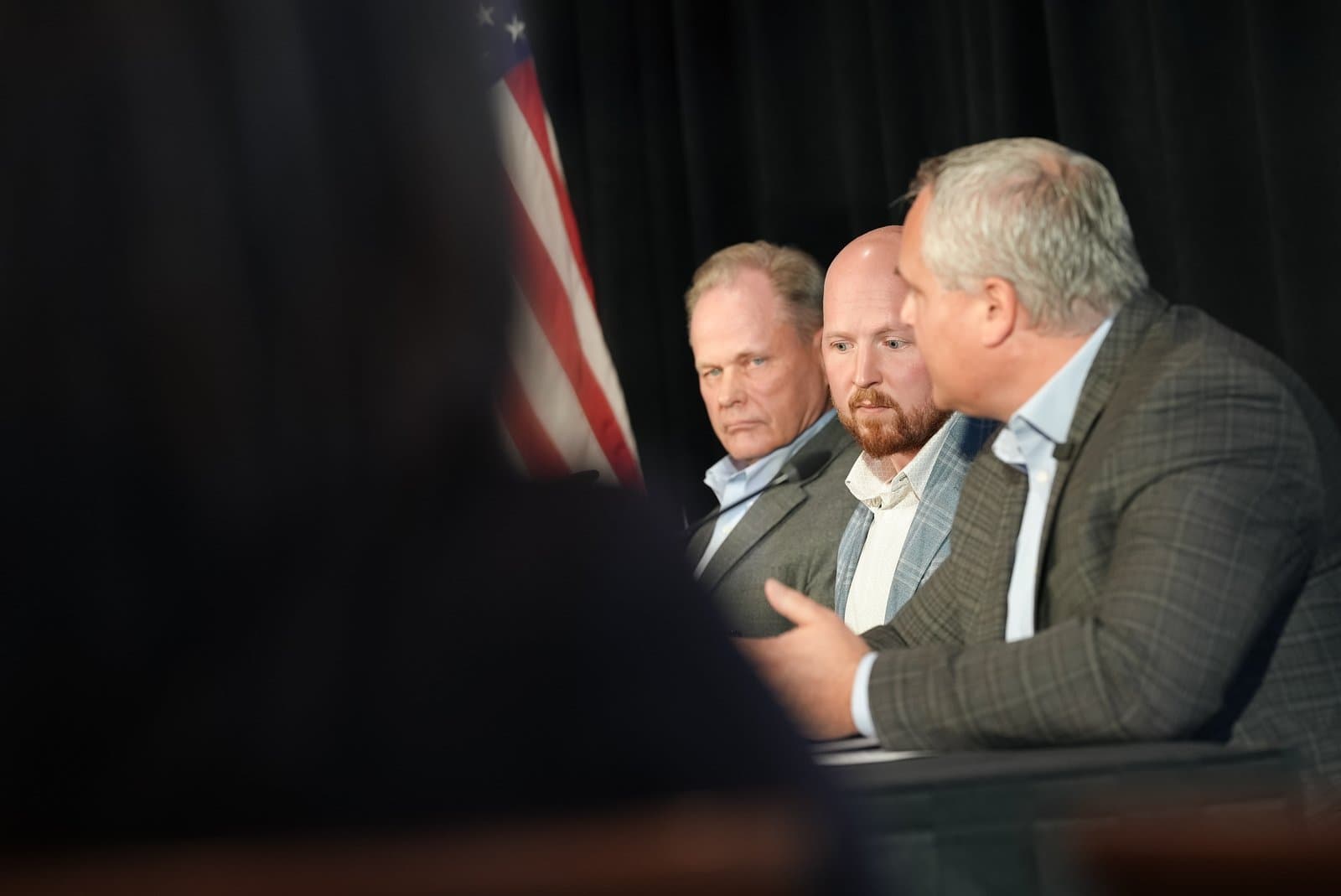
Alaska's four candidates for governor agreed Wednesday that Southcentral needs additional Cook Inlet gas in the near term, but divided over how state government should respond: enforce development commitments, offer new production incentives, provide stable tax and permitting terms or reduce gas-fired electricity demand.
At a Renewable Energy Alaska Project forum in Anchorage, moderator Lori Townsend said ENSTAR had identified an estimated 3 billion-cubic-foot potential gap heading into winter, equal to about 18 days of midwinter demand. The figure describes gas that had not been secured under the arrangements discussed with lawmakers. It is not a forecast that customers will be without heat for 18 days.
Jonathan Kreiss-Tomkins said he understood that arrangements among Hilcorp, Chugach Electric Association and ENSTAR should leave Southcentral with enough gas for the coming winter. He said that did not eliminate the larger supply problem. Producers have told lawmakers that Cook Inlet production will not cover Southcentral demand beyond 2029.
All four candidates called for additional Cook Inlet production. Their differences concerned which tools the state should use and what else it should pursue while a North Slope gas pipeline remains uncertain. Their complete answers are available in the forum transcript.
Kreiss-Tomkins, a former Sitka legislator, said the state should maximize production from Hilcorp, Hex and BlueCrest while using existing regulatory authority to press leaseholders to develop acreage. He credited the Department of Natural Resources with advancing Hex's Kitchen Lights work and called its recent action involving BlueCrest a "kick in the rear end."
In an Aug. 14 notice, DNR Commissioner John Crowther required BlueCrest to resume rig preparations at the Cosmopolitan unit and submit a development plan establishing a drilling date for gas production by March 31, 2027, or relinquish the lease. Kreiss-Tomkins also proposed diversifying Railbelt electricity generation so more Cook Inlet gas could be reserved for heating, where he said Southcentral has fewer substitutes.
Treg Taylor, the former attorney general, called for immediate incentives for Cook Inlet exploration, production and capital projects. He also proposed improving underground gas storage, preparing for imported liquefied natural gas and examining modular North Slope LNG that could be shipped south.
Taylor said imported LNG might not be available until 2027 or 2028 and estimated it could raise electricity costs by about 25% and household gas costs by as much as 80%. Those figures were Taylor's estimates at the forum. Answering the moderator's question about waiting for a North Slope line, Taylor said Alaska should pursue it but "can't just wait" before developing other supplies.
Bernadette Wilson, a business owner, also said the state should incentivize Hilcorp and Hex. She argued that changing tax terms and unreliable permitting had discouraged investment and helped create the shortage. "We've brought it upon ourselves," Wilson said. Her longer-term answer centered on a North Slope gas line and a business climate in which companies could anticipate permitting schedules and tax treatment.
Dave Bronson, the former Anchorage mayor, pointed to Cook Inlet Natural Gas Storage Alaska as an earlier example of the state and Hilcorp responding to a supply problem. His central prescription was to preserve investment by keeping tax rules stable. Bronson said Hilcorp executives told him that an additional $80 million to $100 million in Alaska taxes would be money the company would not invest on the North Slope or in Cook Inlet.
Legislative proposals have sought to apply Alaska income tax to qualifying oil and gas pass-through entities, including S corporations. Such a tax would not convert Hilcorp into a C corporation. Supporters describe the proposal as tax parity because Alaska has no individual income tax to collect tax from owners when income passes through. Opponents, including Bronson and Wilson, argue that the additional cost could reduce investment.
None of the candidates gave a calendar deadline for committing to alternatives while a North Slope pipeline remains under development. Taylor explicitly said not to wait. Kreiss-Tomkins proposed diversification and Cook Inlet development in the meantime. Wilson and Bronson emphasized a gas line, more production and a more stable business climate.
The exchange narrowed the disagreement. The candidates did not divide over whether Alaska should produce more Cook Inlet gas or continue pursuing a North Slope pipeline. They divided over the state's near-term method: regulatory pressure, financial incentives, stable tax and permitting policy, or replacing some gas-fired electricity so the remaining supply can be used for heat.
The four candidates are scheduled to meet again Oct. 8 in a debate hosted by Alaska Public Media and KTUU.
What did you make of this story? (no account needed)
Made by our human newsroom with AI. How humans and AI work here · Grow with our newsroom · Transcript byWalter AlaskaNews
Get Alaska News in your inbox
Create your free account and get the day’s top stories around 6 each morning, in a few minutes’ read.
Top stories, around 6 each morning.
Stories on what you follow, on Sundays.
This article is based on a public meeting of Renewable Energy Alaska Project — REAP: 2026 Alaska Gubernatorial Energy Forum ().
Watch key moments from the source meeting. Click to expand.










Comments
Sign in to leave a comment.
No comments yet. Be the first to share your thoughts.