AI image
Federal proposal would rewrite 1993 rules for midwater trawl nets off Alaska
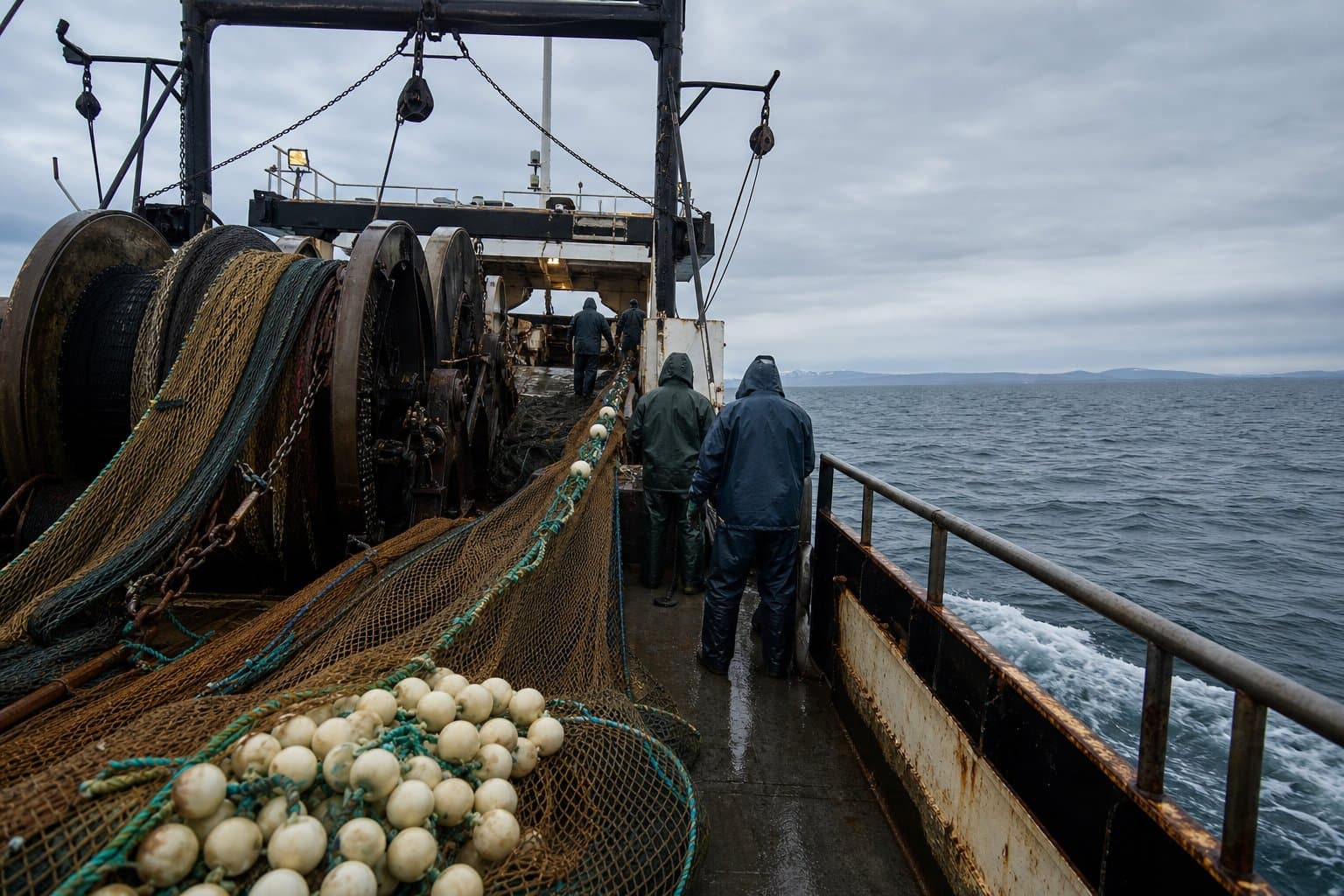
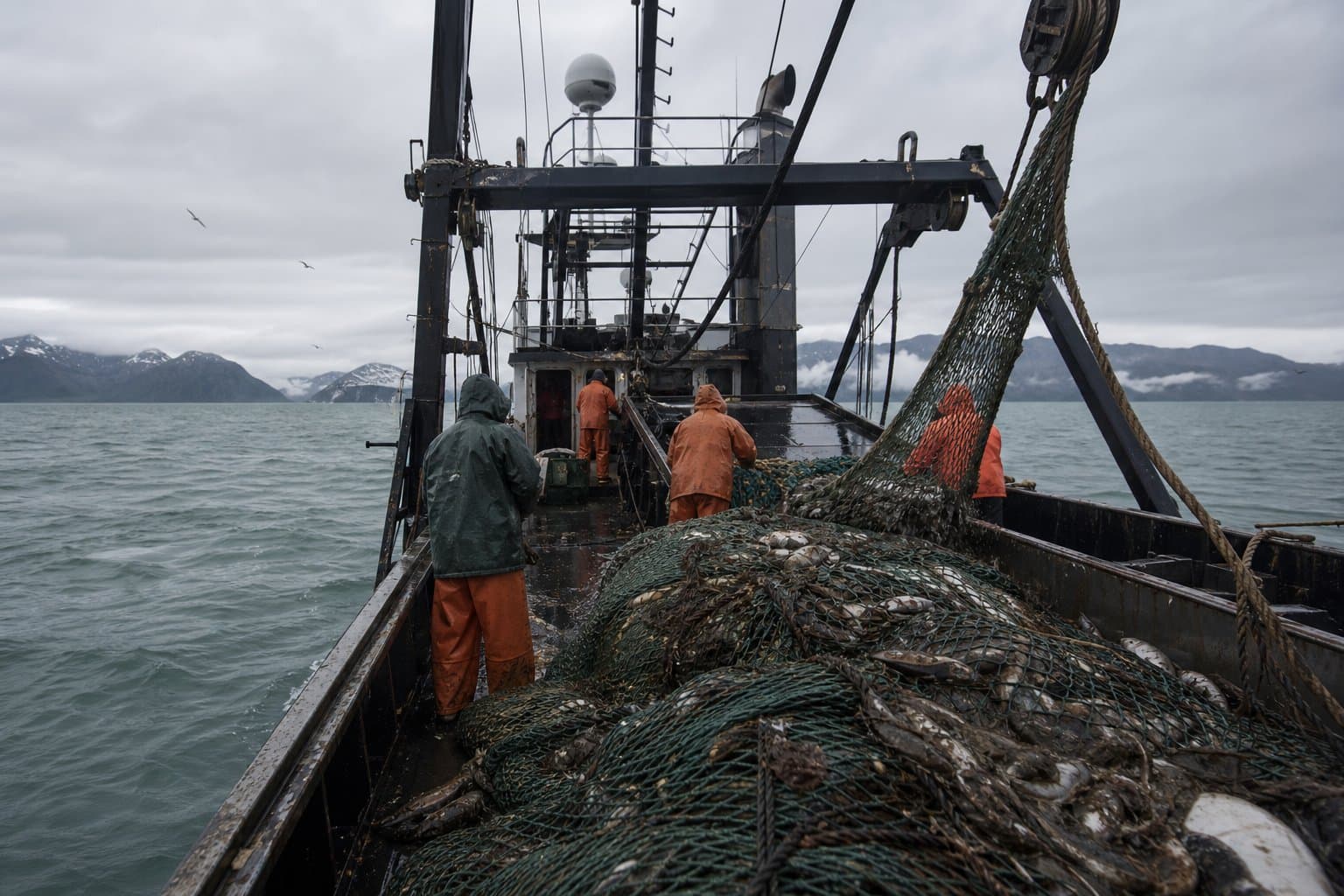
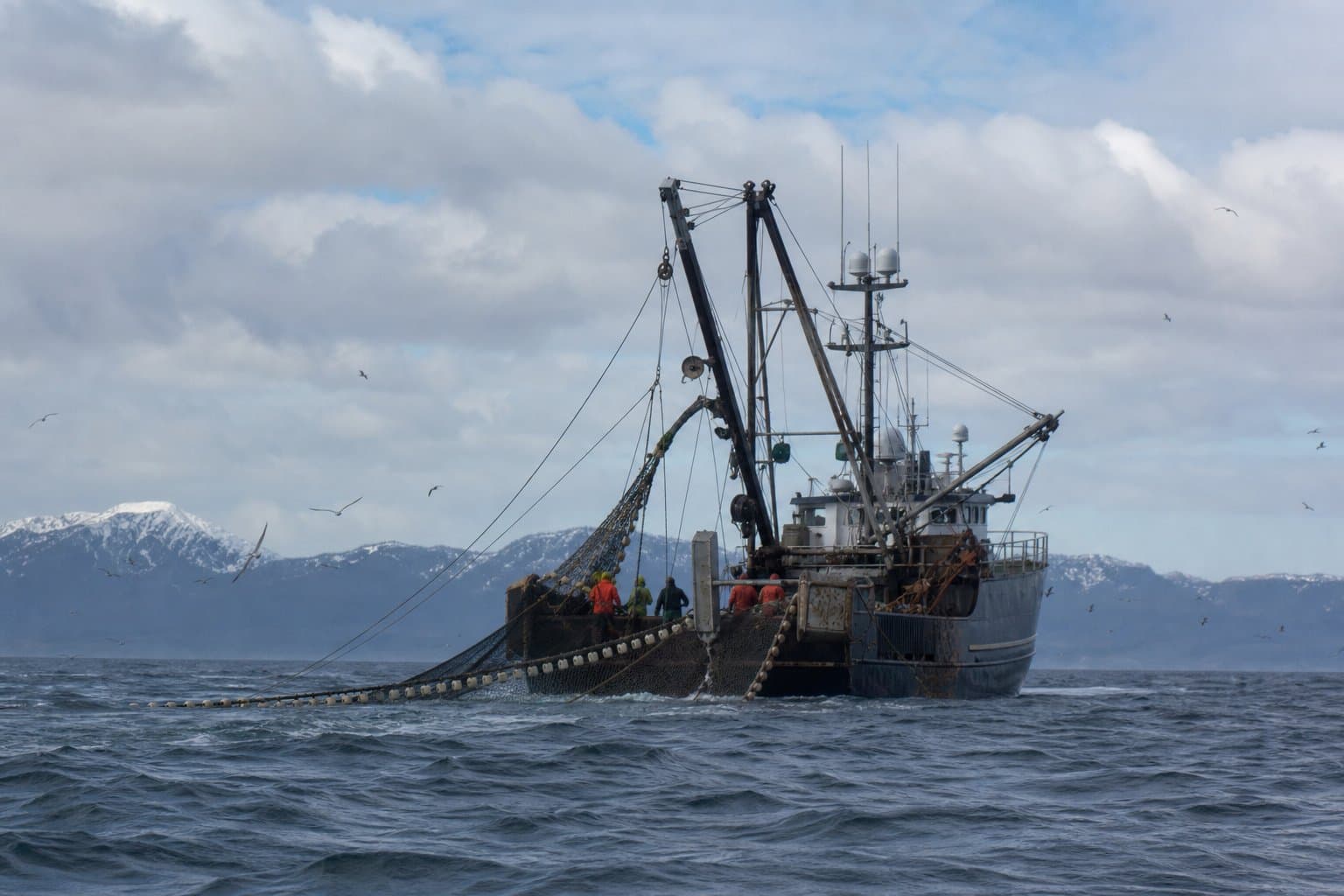
Federal fishery regulators proposed Friday to rewrite the 33-year-old federal rules for what counts as a pelagic, or midwater, trawl net off Alaska, the gear the pollock fleet tows through the Bering Sea and Gulf of Alaska.
The National Marine Fisheries Service proposal would clearly allow equipment that many boats already use but that may not fit the 1993 rules, the agency says: salmon excluders, which let salmon escape the net, along with cameras, sensors, lights and floats. The agency says it would not change how much pollock the fleet can catch, how many salmon it can take as bycatch or where it can fish.
The proposal follows a campaign season in which candidates in both parties criticized the pollock fleet's salmon bycatch. It also comes as federal managers separately study how often these nets touch the seafloor, a question critics say the rewrite leaves untouched.
In 2023, federal enforcement officers inspecting the nets of boats that reported fishing with pelagic trawls found "a large number of potential violations," mainly floats in the codend, the closed end of the net where the catch collects. A 2024 council discussion paper says that operation started the discussion of whether the rules cover the codend.
NOAA's enforcement office and the Coast Guard read the plain text of the rules as covering the codend. The fisheries service's Alaska office concluded it never meant them to, and the North Pacific Fishery Management Council, which recommends federal fishing rules off Alaska, agreed. The council voted for the rewrite in June 2025.
"Pelagic" means the open water. Federal rules define pelagic trawls by how the nets are built: bottom trawls carry discs, bobbins or rollers that protect the net as it's towed along the seafloor, and pelagic trawls can't. Other rules limit how much pelagic nets touch the bottom, but don't ban it.
More than half of the federal waters the council manages off Alaska are closed to bottom trawling, NOAA's enforcement office told the council, and a number of those closures still allow pollock fishing with pelagic trawls. From 2019 to 2024, 147 vessels fished with pelagic trawls off Alaska, mostly for pollock.
The current rules date to 1993, after some fishermen in 1991 and 1992 rigged nets that met the existing definition but fished like bottom trawls, which drove up halibut and crab bycatch, according to the proposed rule. The council paper says a small number weighed down the bellies of their nets with metal to fish more effectively on the bottom. The 1993 rules responded by barring most metal from the body of the net and limiting floats to what a net sounder, a sonar device mounted on the net, needs.
Federal scientists and the industry began testing salmon excluders in 2001, and since 2016, Bering Sea pollock boats in incentive plan agreements have had to use them. Some excluders rely on weighted flapper panels that cover escape holes while the boat tows and drop when the water slows, so salmon can swim out. The metal, floats and lights in that gear are among the parts the 1993 limits can catch, the agency says.
Under the proposal, a pelagic trawl would be any trawl with no discs, bobbins or rollers ahead of the codend and no chafe protection gear on the lines along the bottom of the net's mouth. Existing limits on large forward mesh and on having one footrope and one fishing line would stay. Floats would be allowed anywhere. Most limits on metal would go, except for chain in the middle of the net: no piece could be longer than 10 feet, and the total couldn't exceed 100 feet. The codend would be exempt.
The agency says floats in the codend can help keep a heavy catch from pulling the net to the seafloor. It expects most nets in use to comply as they are. The proposal would keep a standard meant to discourage fishing on the bottom, which bars pollock boats, except catcher vessels using electronic monitoring, from having 20 or more crabs wider than 1.5 inches aboard at a time, and a rule limiting footrope contact with the bottom in parts of the Gulf.
The council's advisory panel voted 17-2 to recommend the rewrite, saying in its June 2025 report that they accurately reflect "the gear currently being used in the fishery" and bring "critical components such as salmon bycatch excluders into compliance."
Some fishing and conservation groups that commented on the rewrite in 2024 asked the council to use it to limit seafloor contact. The Sitka-based Alaska Longline Fishermen's Association wrote that it didn't object to cameras and floats, but said the council "has spent its limited analytical time struggling to redefine pelagic trawl gear without changing how the gear is fished," in a 2024 letter. The Alaska Marine Conservation Council asked that pelagic trawls be classified as bottom-contact gear until a standard barring seafloor contact proves effective and enforceable.
The council's final motion said the rewrite "deals solely with clarifying" the gear's components, and that the council is considering how the gear performs separately. In June, the council asked staff for a paper on enforceable standards for bottom contact in areas closed to bottom trawls, while saying zero contact isn't the goal. At that meeting, industry representatives said some contact is needed to fish pollock efficiently and that limiting it could raise salmon bycatch; tribal representatives, conservation groups, fixed-gear fishermen and crab harvesters called for enforceable standards.
Brad Harris, whose Alaska Pacific University lab runs the federal model that estimates trawling's effects on fish habitat, told state and federal managers in October that the model assumes pollock trawls are on the bottom on every tow. "So we are overestimating effect on purpose," he said. The most recent federal review of fish habitat found no fishing effects severe enough to require action under federal law, according to the council paper.
The council has noted the model doesn't by itself estimate crabs killed by trawl gear without being caught. By June, Harris's team had documented nearly 300 trawls to learn how the nets behave near the bottom, with results due to the council's science committee in February.
The agency itself asked for comment on whether the chain allowance would "armor the belly of the net in a manner that would make the net more suitable to be fished in contact with the seafloor." The council's 2025 analysis said allowing more metal in the middle of the net could mimic bottom trawl gear. In the same analysis, NOAA's enforcement office said the options for allowing metal and instruments, as drafted, would be hard to enforce without clearer definitions.
The rule would not require excluders. Those in use now are designed mainly for Chinook. In February, the council voted 8-3 for chum salmon measures that include an excluder requirement aimed at chum, which the agency is reviewing separately. "The Chinook excluders are already required. Chum are different," Nicole Kimball of the Pacific Seafood Processors Association, who also sits on the council, said at a Resource Development Council forum Sept. 3.
In Congress, Sen. Dan Sullivan's bycatch bill, which cleared the Senate Commerce Committee in September, would set standards his office says are intended to keep midwater trawl nets off the seafloor, and would require salmon excluders; Rep. Nick Begich introduced a House version. Mary Peltola, who challenged Sullivan, made keeping midwater trawlers off the bottom part of her fisheries platform.
Comments on the proposal are due Dec. 16, 30 days after its scheduled Nov. 16 publication in the Federal Register, through the regulations.gov docket.
What did you make of this story? (no account needed)
Made by our human newsroom with AI. Reviewed by Cale Green. How humans and AI work here · Grow with our newsroom ·
Get Alaska News in your inbox
Create your free account and get the day’s top stories around 6 each morning, in a few minutes’ read.
Top stories, around 6 each morning.
Stories on what you follow, on Sundays.
Source: National Marine Fisheries Service, National Marine Fisheries Service: Fisheries of the Exclusive Economic Zone off Alaska: Pelagic Trawl Gear Definition.







Comments
Sign in to leave a comment.
No comments yet. Be the first to share your thoughts.