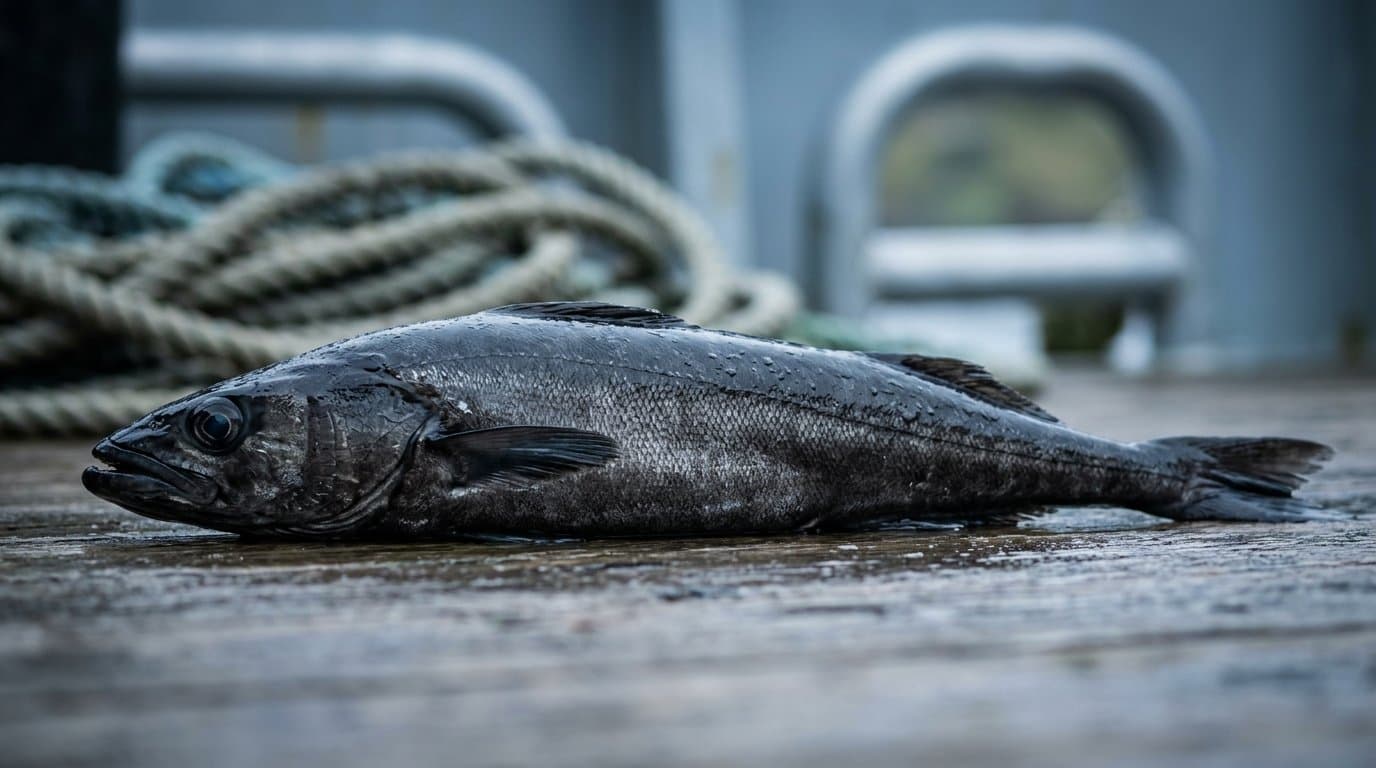
AI image
Feds open comment on letting Alaska sablefish boats release small fish
The National Marine Fisheries Service opened public comment Friday on a change that would let many Alaska sablefish boats throw back small fish that they now have to keep.
Sablefish are also called black cod. The change covers boats fishing with hooks or pots, known as fixed gear, in two programs: individual fishing quota, in which fishermen hold shares of the catch, and the Community Development Quota program, which sets aside a share for Western Alaska community groups. The proposed amendments follow a council recommendation under which catcher vessels in both programs could release sablefish shorter than 22 inches, as long as they do it carefully. They'd still have to keep everything bigger.
The issue has been before the council since 2019, Linda Behnken of the Alaska Longline Fishermen's Association said in June. Sablefish produced record-breaking year classes, or generations of young fish, beginning in 2014, and by 2017 boats were catching what the federal notice calls "an overwhelming number of small fish," which sell for less per pound than big ones.
"It's almost impossible not to have a small sablefish go overboard when you're dealing with 40,000 to 60,000 pounds in 3 to 5 days of fishing," Bob Alverson of the Fishing Vessel Owners Association told the North Pacific Fishery Management Council in June. Under current rules, releasing one can bring a fine. Catcher/processors, which catch and process fish aboard, can already discard sablefish in the individual quota fishery. The change would let them do it in the community quota fishery too.
An earlier version stalled in 2021 because it had no size limit and no way to account for fish that die after being released, according to the 2021 sablefish stock assessment. The council's April 2025 plan addresses both. Each year, a set amount of sablefish would be subtracted from the catch limit before quotas are handed out, to cover released fish expected to die. The council's science committee would recommend what share of released fish to count as dead, and the council asked that discarding stop once the allowance is used up.
The council's Advisory Panel backed the plan 17-3. Opponents said there wasn't enough data collection or monitoring to hold the fleet accountable and enforce it.
"There was a real expectation that would be in place for 2026," Behnken said. In June, the rule wasn't expected until 2028, and the Advisory Panel voted 15-0 to recommend that the council ask federal fisheries headquarters for help meeting the 2027 season.
At the council's Oct. 8 meeting, Jon Kurland, the agency's Alaska regional administrator, said recent direction from NOAA led the agency to speed the rule up by splitting it in two. Release would come first, aimed at 2027, with the discard allowance starting in 2028.
Gretchen Harrington, the agency's assistant regional administrator for sustainable fisheries, said the plan would let release start partway through the year if the rule isn't done before the fishery opens in March 2027. "We can't guarantee anything until our proposed rule is published," she said.
The notice published Friday doesn't say when release would begin, and the agency still plans to publish a separate proposed rule. The Secretary of Commerce will decide whether to approve the amendments. Comments are due Jan. 5, 2027, through the regulations.gov docket.
What did you make of this story? (no account needed)
Made by our human newsroom with AI. Reviewed by Cale Green. How humans and AI work here · Grow with our newsroom ·
Get Alaska News in your inbox
Create your free account and get the day’s top stories around 6 each morning, in a few minutes’ read.
Top stories, around 6 each morning.
Stories on what you follow, on Sundays.
Source: National Marine Fisheries Service, National Marine Fisheries Service: Fisheries of the Exclusive Economic Zone off Alaska: Amendment 128 to the FMP for Groundfish of the Bering Sea and Aleutian Islands Management Area and Amendment 116 to the FMP for the Groundfish….








Comments
Sign in to leave a comment.
No comments yet. Be the first to share your thoughts.