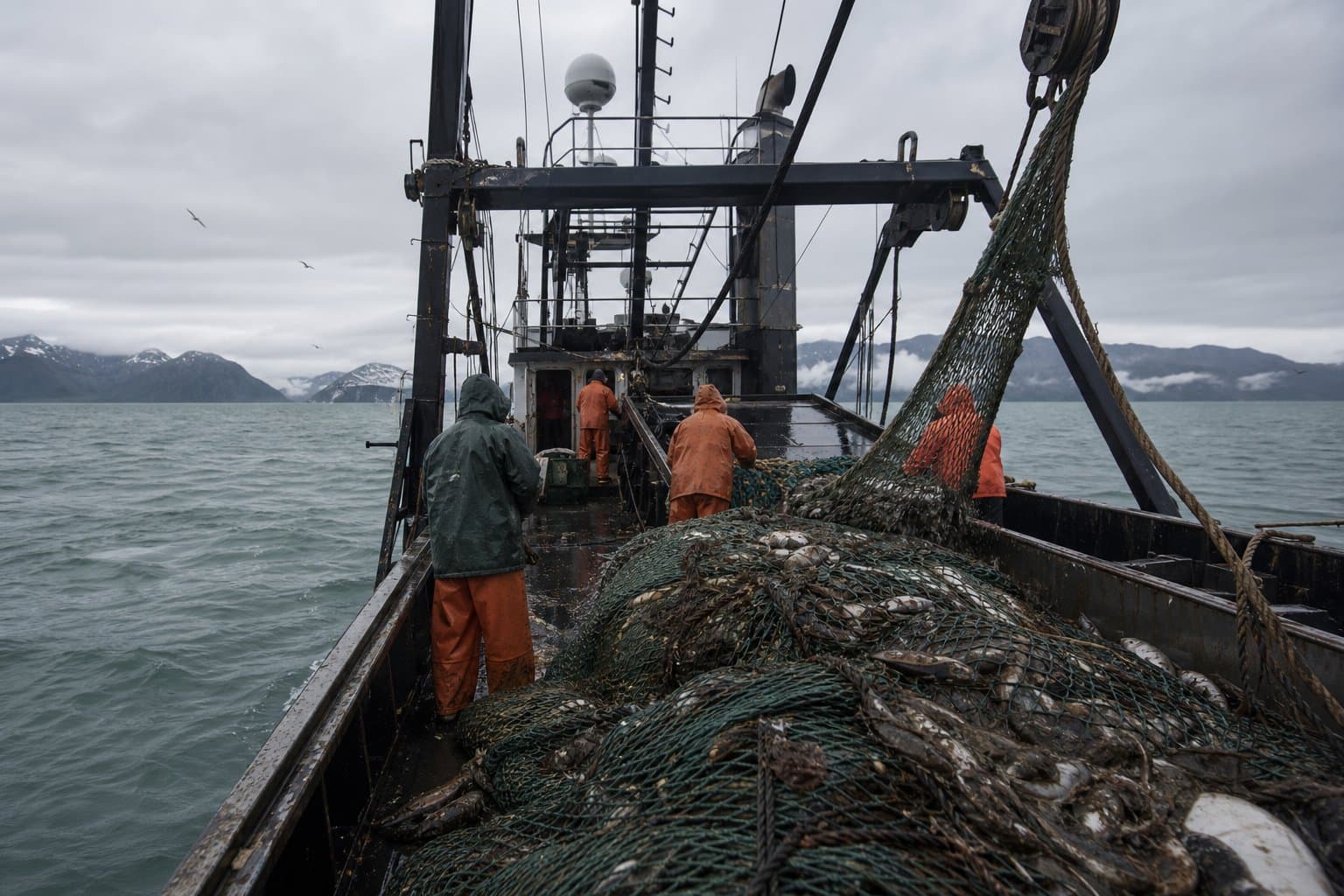
AI image
Sullivan's Bycatch Bill Wades Into Alaska's Hardest Fish Fight
Sen. Dan Sullivan introduced legislation this week that he calls the most comprehensive bycatch bill in American history. It's a sweeping rulebook for the trawl fleets working the Bering Sea, Aleutian Islands, and Gulf of Alaska — and a step onto some of the most charged ground in Alaska fisheries.
S. 4938 would make trawl operators meet new gear-performance standards, install technology that flags when a net is dragging the seafloor, and run salmon excluder devices — gear designed to let salmon slip out of the net while the target fish stay in. It would also stand up a fund to help operators pay for compliance, modernize the electronic monitoring that tracks what boats catch, ban imports of unsustainable foreign seafood that undercuts Alaska's, and pry more transparency into the federal council that writes North Pacific fishing rules.
Underneath all of it is a grievance years in the making.
Salmon caught in pollock nets can't be kept or sold — they're "prohibited species" — but they die just the same. And the numbers are big. Federal scientists estimated more than 546,000 chum and roughly 14,000 to 16,000 Chinook taken as bycatch in 2021 alone.
Those were also the years the Yukon and Kuskokwim ran empty. Runs collapsed. Subsistence families were barred from catching the salmon that anchor their diet and their culture. Offshore, the boats kept hauling.
It's a brutal pairing, and it's worth being careful with. Scientists don't treat the two as simple cause and effect: NOAA points to a tangle of factors behind the collapses, with warming ocean conditions prominent among them, and its genetics show most of that bycatch isn't even Western Alaska fish — in 2021, roughly two-thirds of the chum traced to Asian hatcheries and under 10% to Western Alaska rivers. By the agency's math, Chinook removed by the pollock fleet have averaged less than 2% of Western Alaska's total returns — too small a slice, it concluded, for closing the fishery to refill the rivers. The pollock fishery, the nation's largest by volume, also runs under hard caps that tighten when salmon are scarce, carries near-total observer and camera coverage, and helped invent the excluder gear this bill would now require.
But you can know all of that and still understand the anger. For people watching outside boats scoop up salmon by the hundreds of thousands while their own nets stayed dry, the correlation was injury enough. In late 2021, a coalition including the Association of Village Council Presidents, the Kuskokwim and Yukon River inter-tribal fish commissions, and the Bering Sea Elders Group petitioned to shut the pollock fishery down. The federal government said no — twice.
That's the live wire Sullivan just grabbed.
And the timing isn't only about fish. Sullivan is up for re-election this year against former Rep. Mary Peltola — the first Alaska Native in Congress, who worked Kuskokwim salmon issues before she ever held office and built her whole public identity on fish and subsistence. Dropping his biggest-ever bycatch bill now, on the turf where she's strongest, plants a flag exactly where it'll be seen. For the moment, that's mostly what it is: the bill was read twice and referred to the Commerce Committee, no hearing is set, and "most comprehensive in history" is still just the sponsor's name for a measure that hasn't moved an inch.
Assembled from public records the newsroom collected ().
Drafted with AI. Edited by Cale Green (1 revision). No full editor review is on record. Who is accountable.
Stay informed. Support what matters.
Free, permanent access to local news you can verify. Subscribe to support Walter AlaskaNews and go ad-free.
Related Coverage
Sullivan and Peltola, fighting over the same salmon
Alaska News · 2mo ago
Sullivan's bycatch bill reaches its first Senate committee test
Alaska News · 1w ago
Begich bill would make Alaska trawlers carry salmon excluder gear
Alaska News · 1mo ago
Sullivan's bycatch bill advances from Senate committee
Alaska News · 5d ago
In Kodiak, Sullivan and Peltola agreed on the problems and fought over the fix
Alaska News · 1w ago
Comments
Sign in to leave a comment.
No comments yet. Be the first to share your thoughts.