The North Pacific Fishery Management Council sets fishing regulations for Alaska waters, managing pollock, sablefish, crab and other fisheries through rules.
Video Clips
Browse all clips
Dan Sullivan
“And now we are going after China with regard to the same ban. Why? Because Russian trawlers, Chinese trawlers ravage the ocean. They compete unfairly, and they have been, um, going after our markets.”LIVE: 2026 Alaska Congressional Fisheries Debates · Sep 13, 2026
Mary Peltola
“Dan Sullivan voted He went right along with all these dogecuts, mowing down federal employees that we rely on. These agencies weren't fully staffed to begin with. Alaska has taken more cuts on federal employees percentage-wise than any other state”LIVE: 2026 Alaska Congressional Fisheries Debates · Sep 13, 2026
Mary Peltola
“I am very proud of the, uh, trawling bill, the bycatch bill that I introduced when I was in the Congress, the 2 years that I served in Congress in the minority.”LIVE: 2026 Alaska Congressional Fisheries Debates · Sep 13, 2026
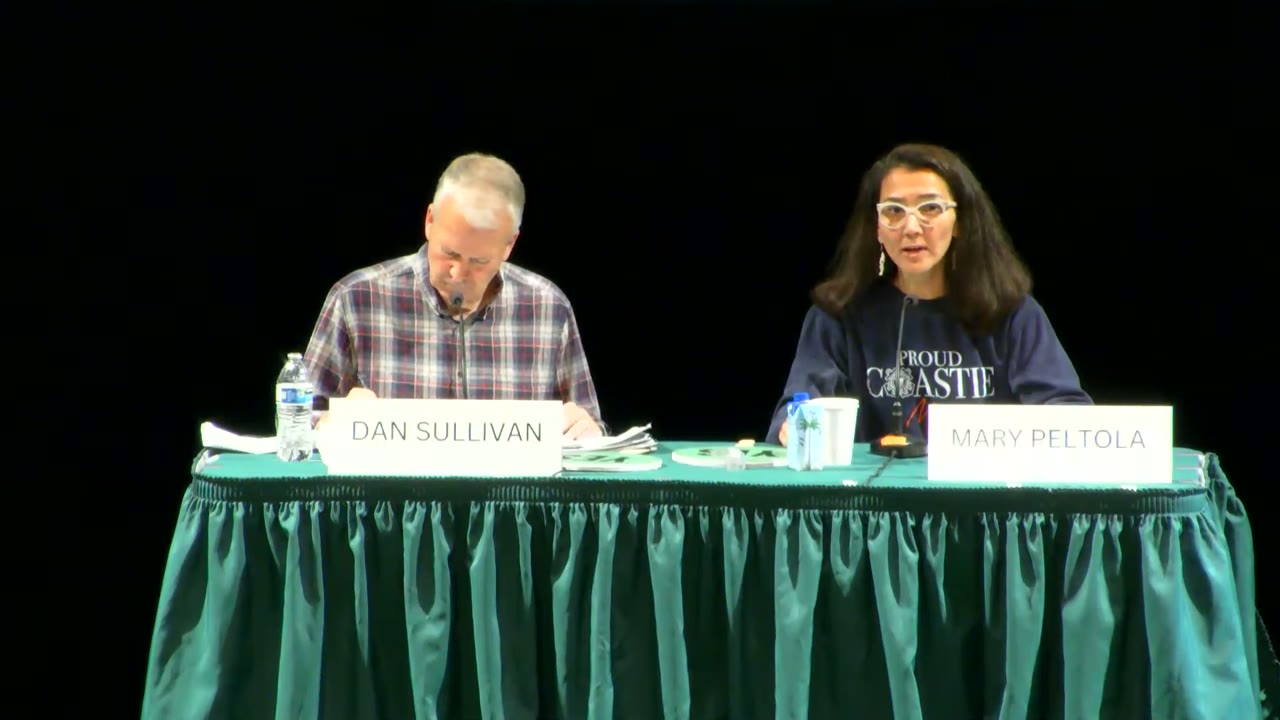
Mary Peltola
“This war in Iran is driving up our gas and diesel prices. Dan Sullivan has voted for the war in Iran over 10 times.”LIVE: 2026 Alaska Congressional Fisheries Debates · Sep 13, 2026
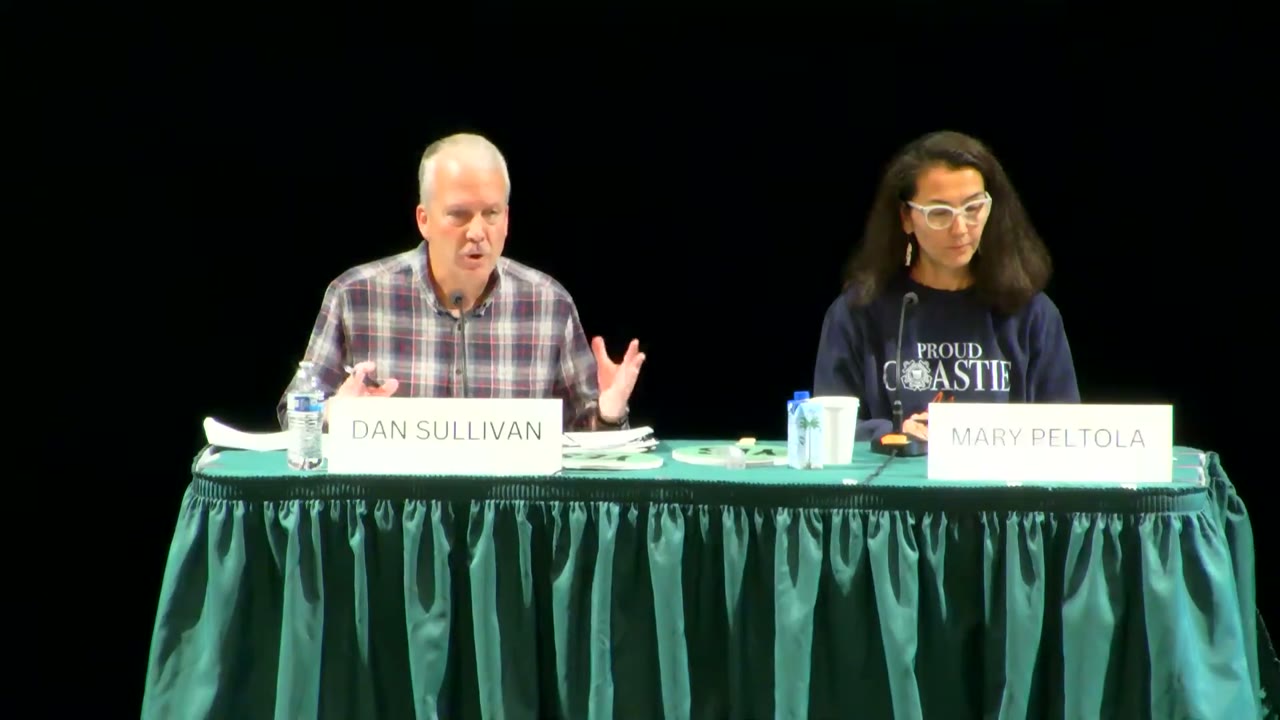
Dan Sullivan
“I relentlessly worked on getting a ban on all Russian seafood into the United States of America. This took relentless work.”LIVE: 2026 Alaska Congressional Fisheries Debates · Sep 13, 2026
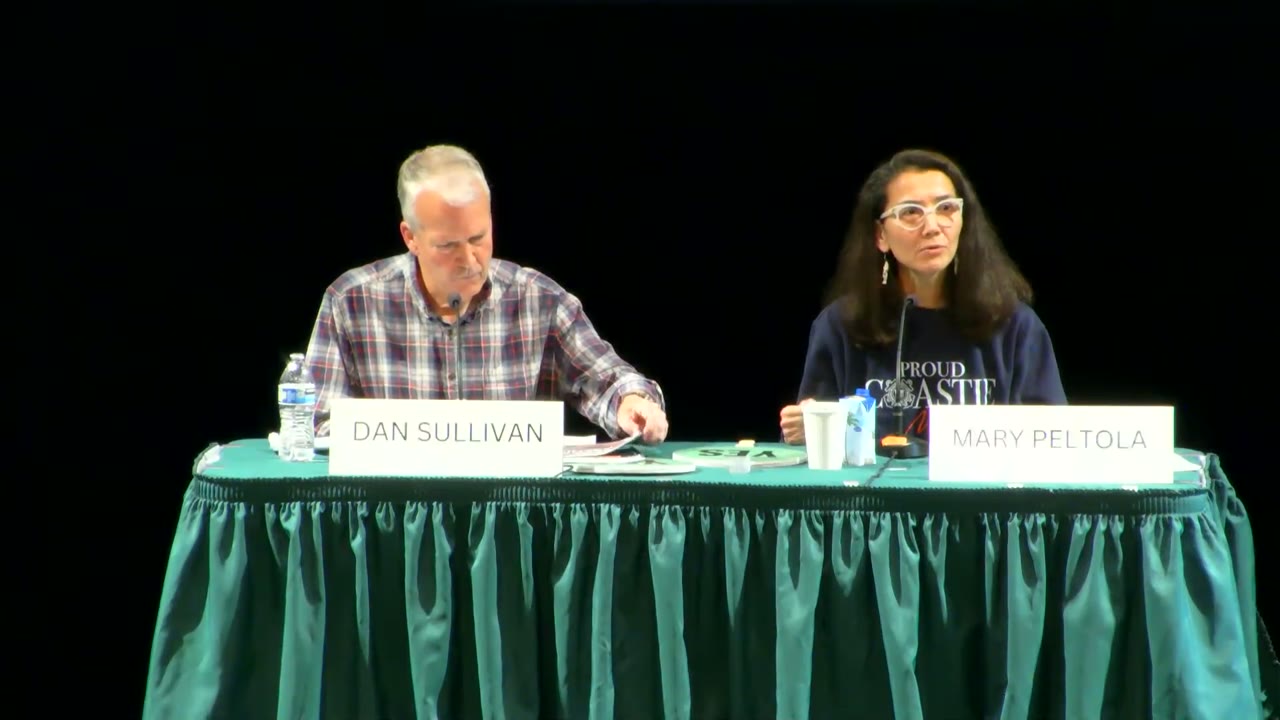
Mary Peltola
“10 times the current senator has voted for this war in Iran.”LIVE: 2026 Alaska Congressional Fisheries Debates · Sep 13, 2026
Federal managers weigh permit letting a Bering Sea trawler donate halibut it now must discard
NMFS exempted fishing permit would let a Bering Sea trawl catcher/processor donate halibut bycatch through SeaShare's donation program; comments due Oct. 16.
 by Bill AlaskaNews2d ago2 min read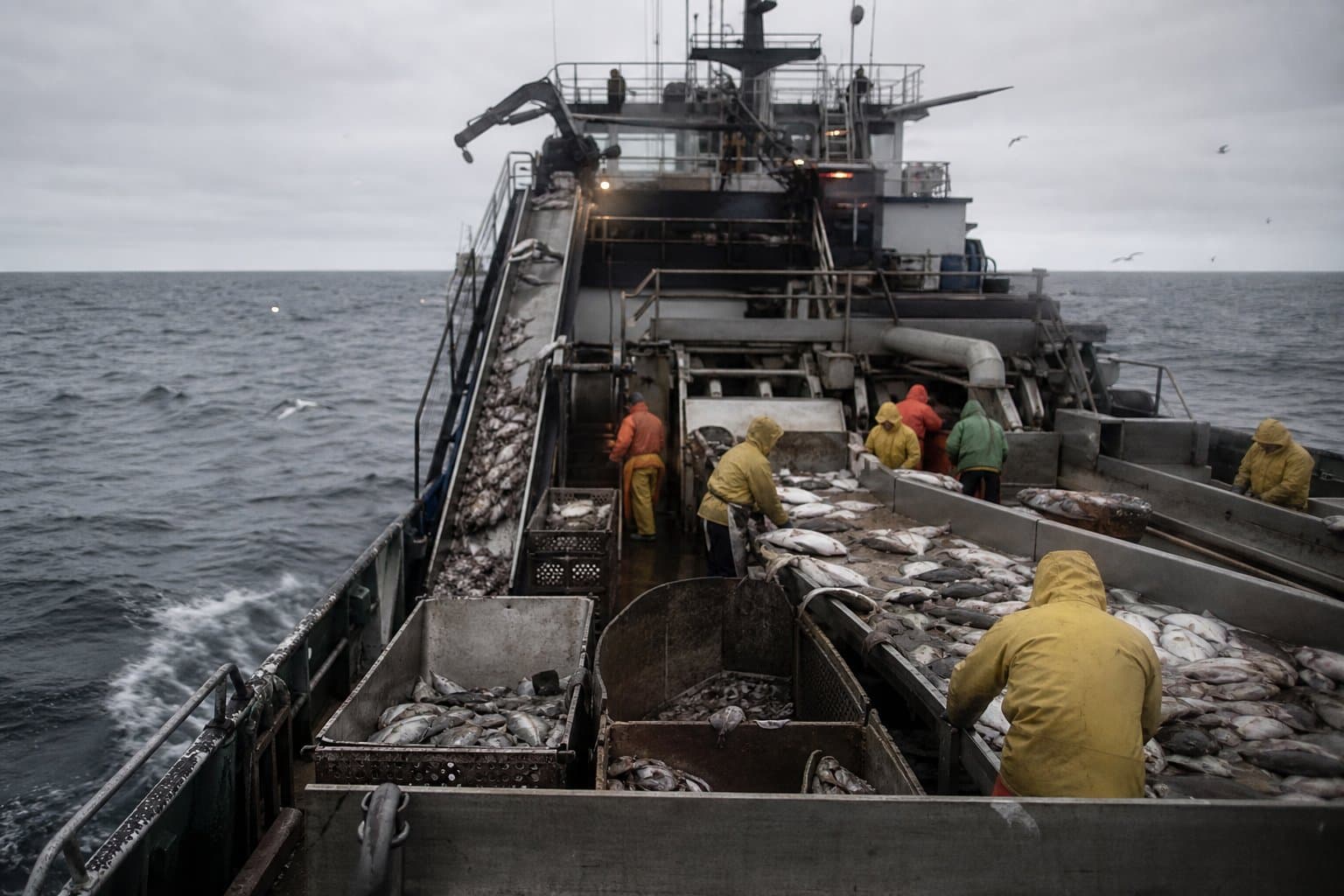
Trawl meeting in Anchorage Oct. 16 will take no remote testimony
Alaska Board of Fisheries and North Pacific Fishery Management Council joint committee meets Oct. 16 on trawl bottom contact; written comments due Oct. 9.
 by Walter AlaskaNews5d ago2 min read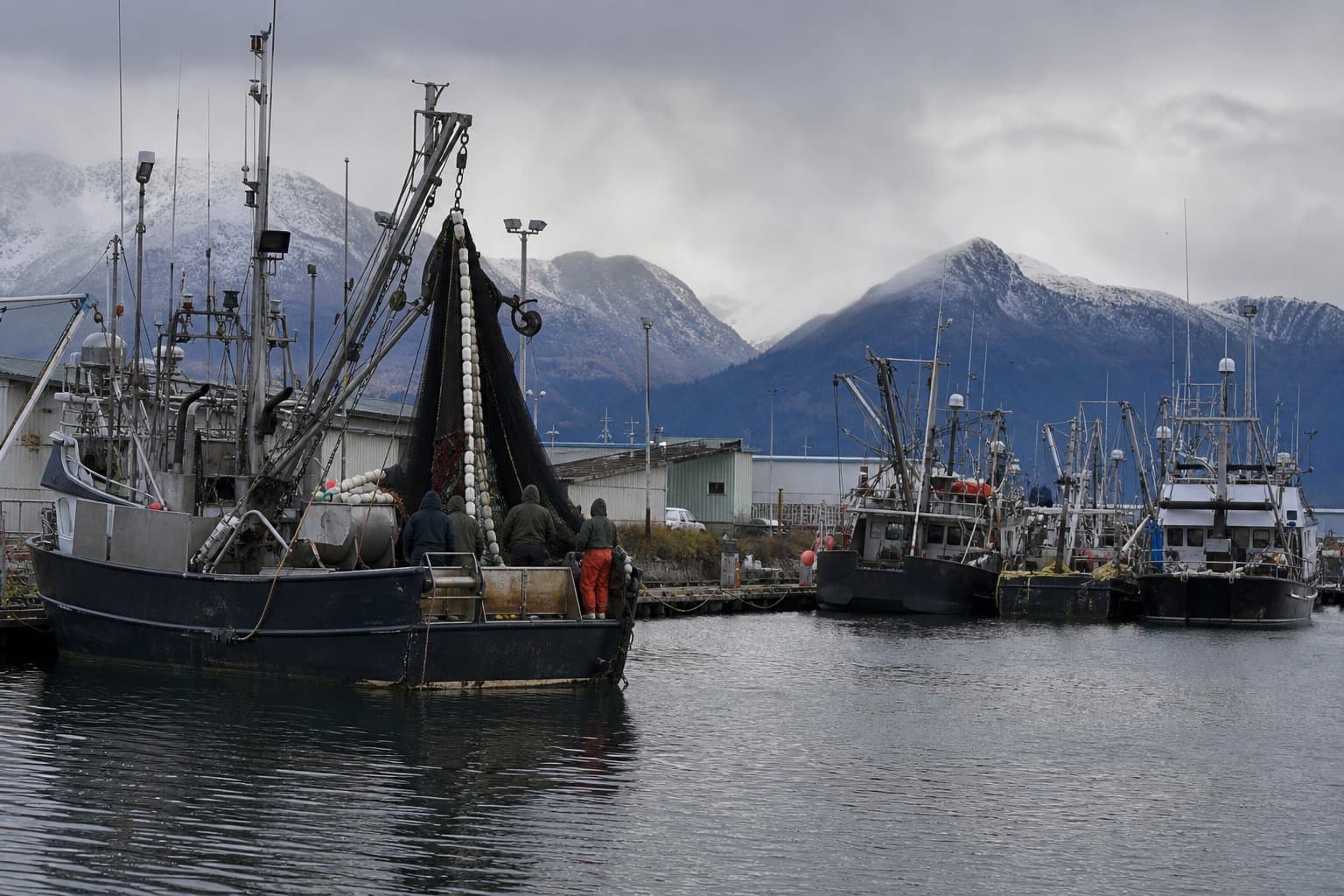
Aleutian groundfish boats barred from selling 'other rockfish' for the rest of 2026
NMFS closes Aleutian Islands "other rockfish" retention Sept. 21 through Dec. 31 after the 415-metric-ton 2026 limit is reached; what trawl and hook boats must do.
by Walter AlaskaNewsadded 6d ago2 min read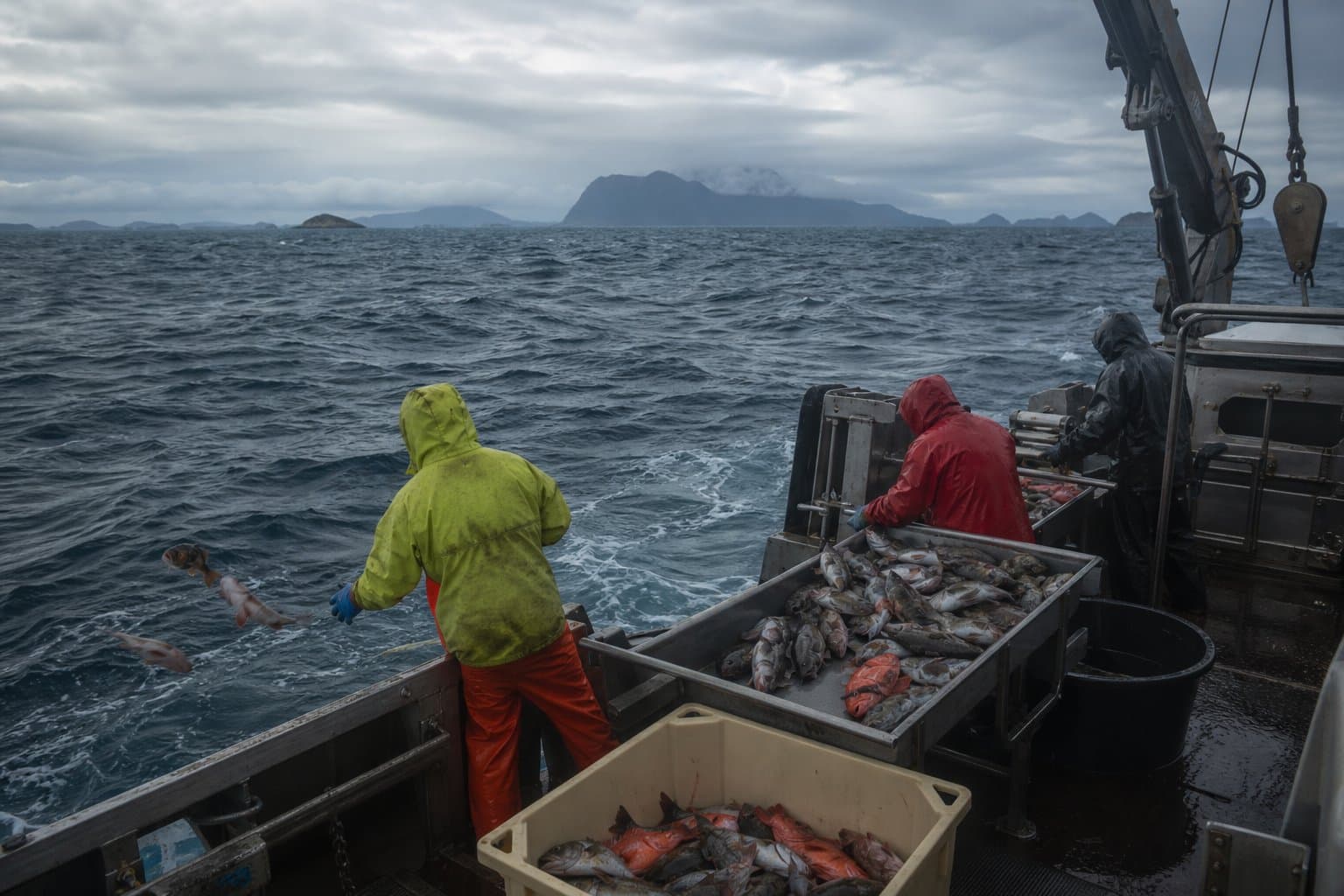
Fishery managers will meet on trawl seafloor contact, with no power to recommend
Public comment on trawl bottom contact closes Oct. 9 before an Oct. 16 Board of Fisheries and NPFMC joint committee meeting that allows only in-person testimony.
by Walter AlaskaNews1w ago3 min read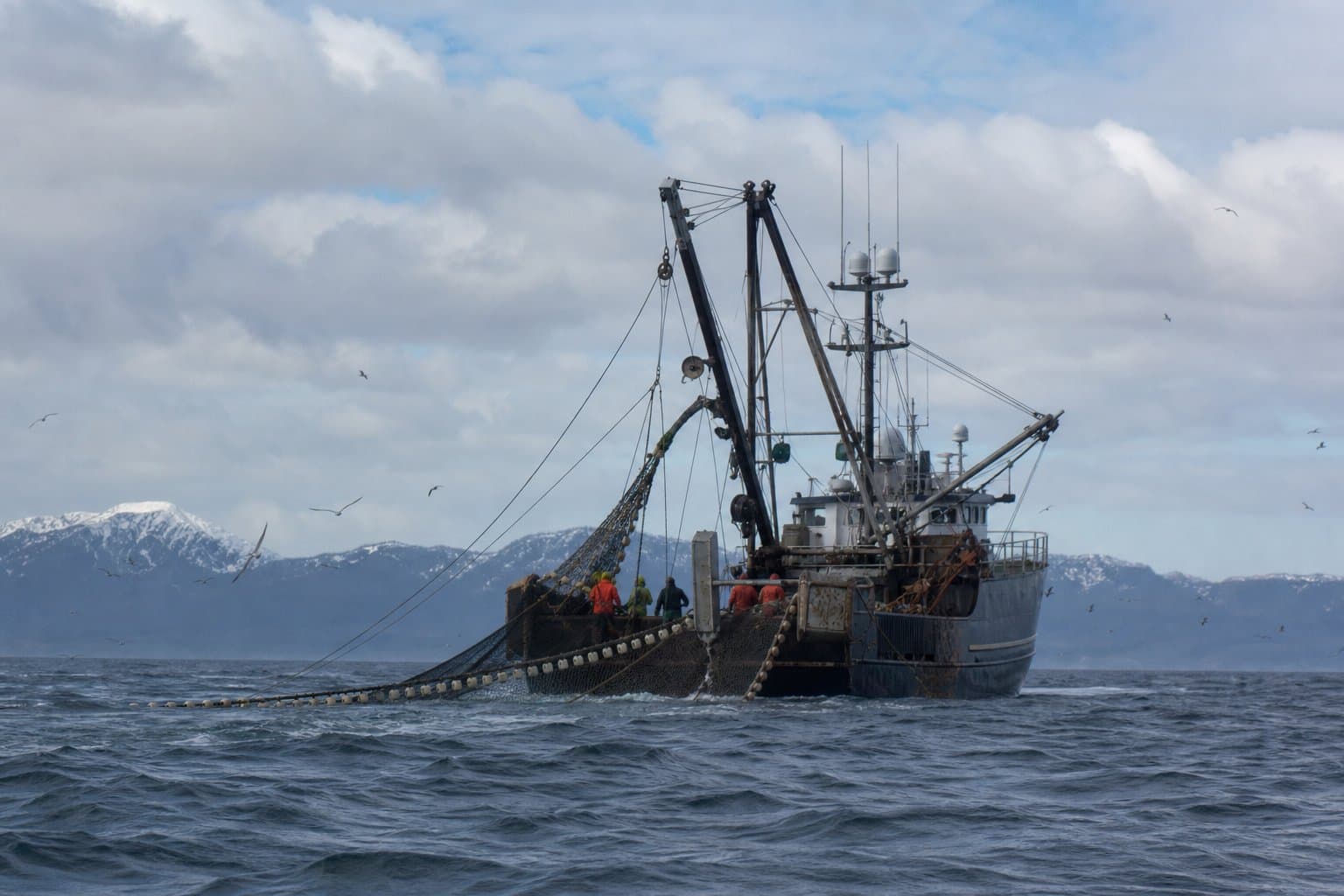
Trump fishing order targets Gulf, Atlantic data disputes and could reach Alaska
Trump's saltwater-angling order changes no Alaska limit now. Its national standards review could later affect data, permits and allocation decisions.
by Walter AlaskaNews2w ago2 min read
State says genetics funding enabled first Western Alaska chum bycatch cap
ADF&G says state-funded genetic testing enabled a 45,000-fish Western Alaska chum bycatch cap. NOAA must still implement the federal rule.
by Bill AlaskaNews2w ago2 min read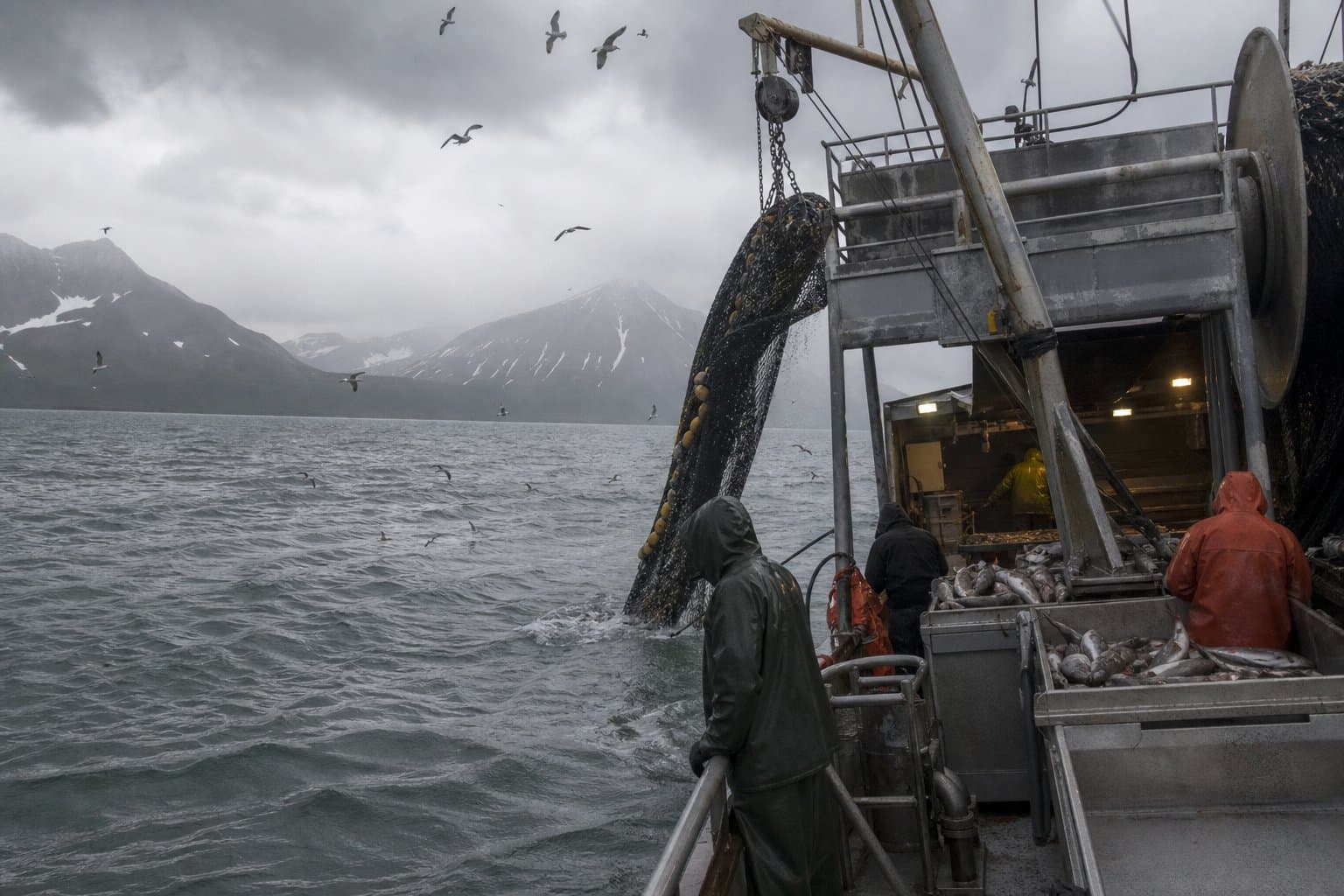
The snow crab limit is going up. There aren't more crab.
A proposed 13% increase in the Bering Sea snow crab catch limit comes entirely from shrinking the scientific uncertainty buffer, not from any improvement in the stock.
by Walter AlaskaNews2w ago3 min read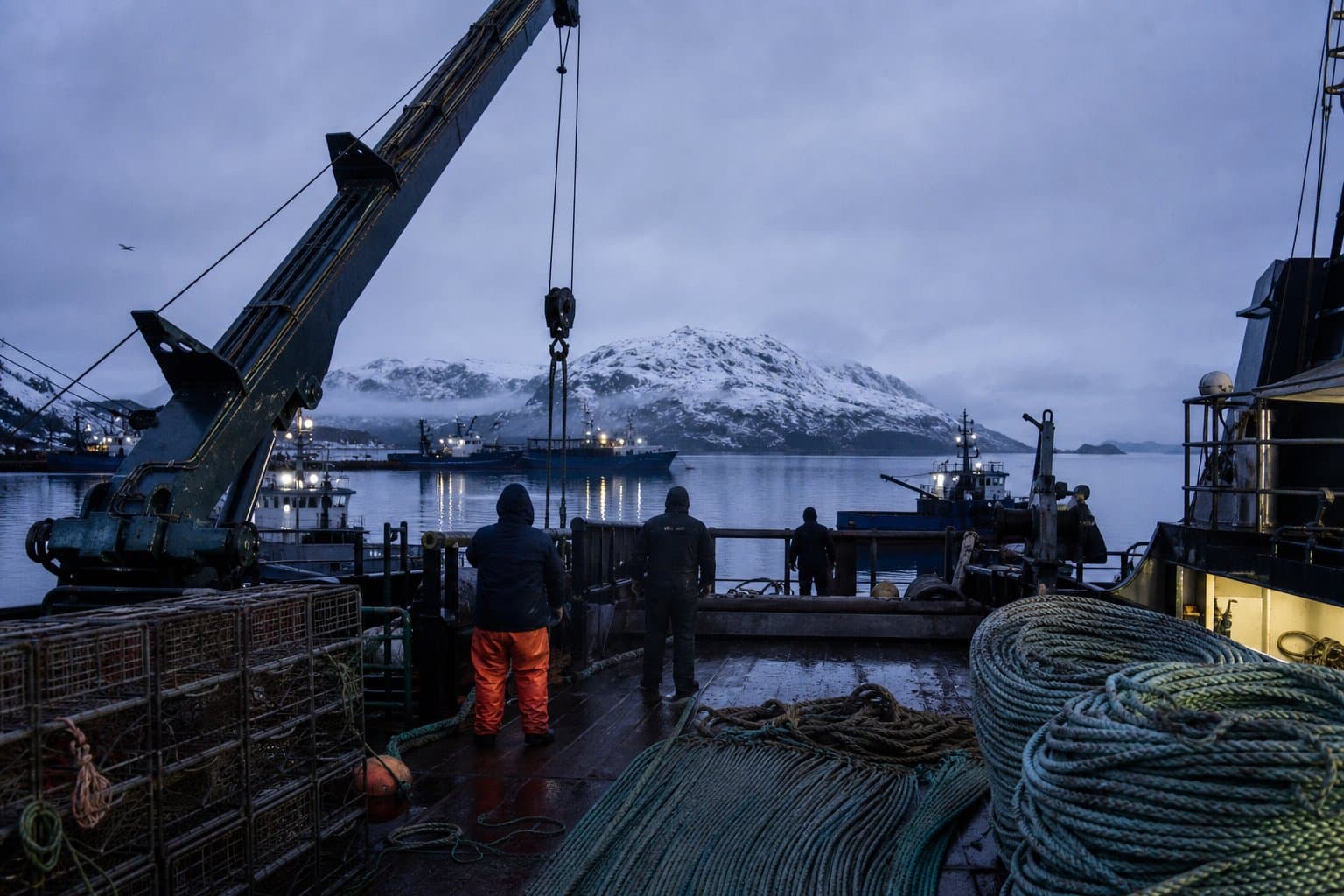
Managers want to double a halibut cap. Their own analysis warns against it.
The National Marine Fisheries Service proposed nearly doubling a halibut vessel cap in the Bering Sea, a change its own analysis says favors larger boats.
by Walter AlaskaNews2w ago3 min read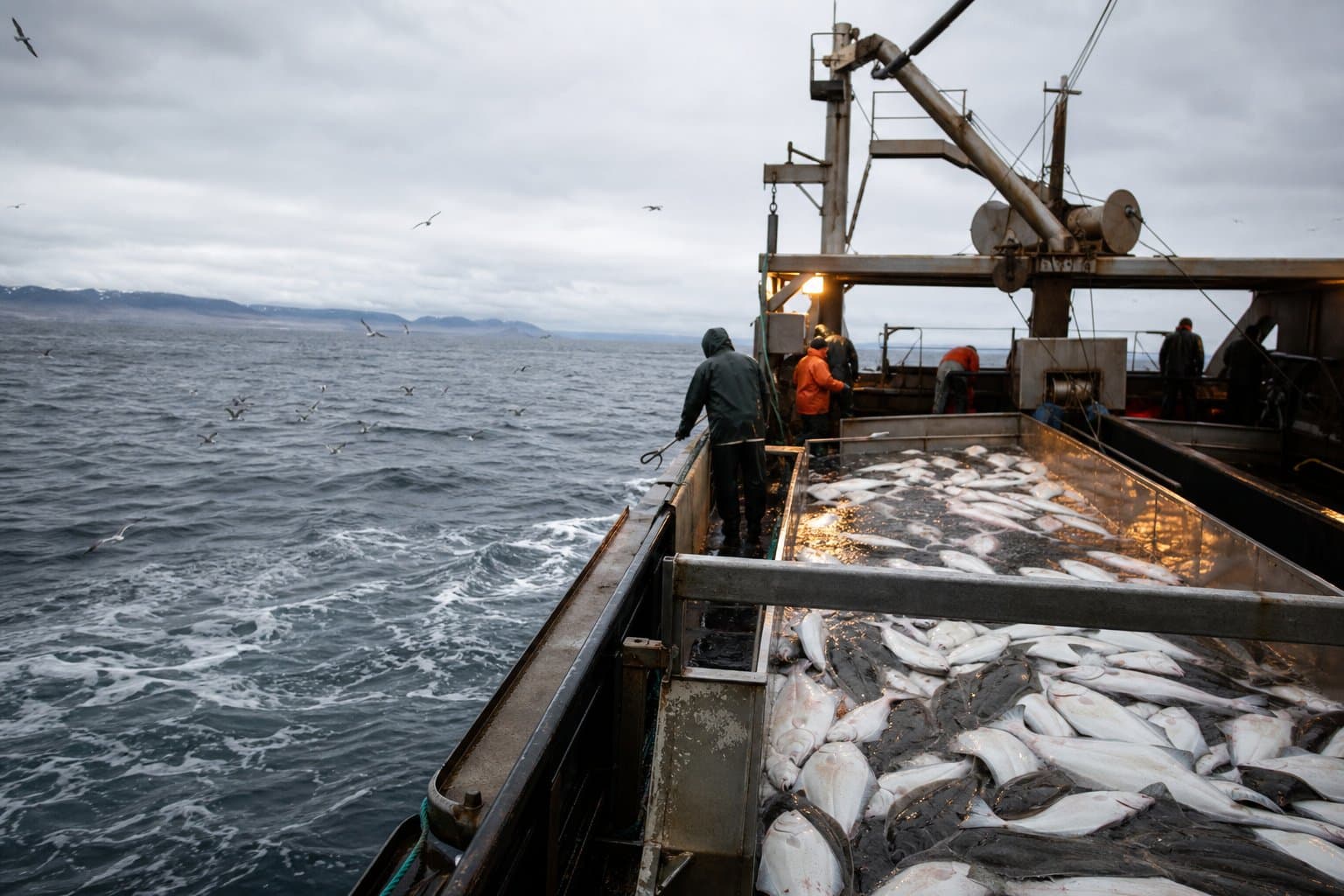
In Kodiak, Sullivan and Peltola agreed on the problems and fought over the fix
Sen. Dan Sullivan and Mary Peltola agreed on climate, subsistence and funding at Kodiak's fisheries debate, then split over what counts as delivering.
 by Alaska News2w ago3 min read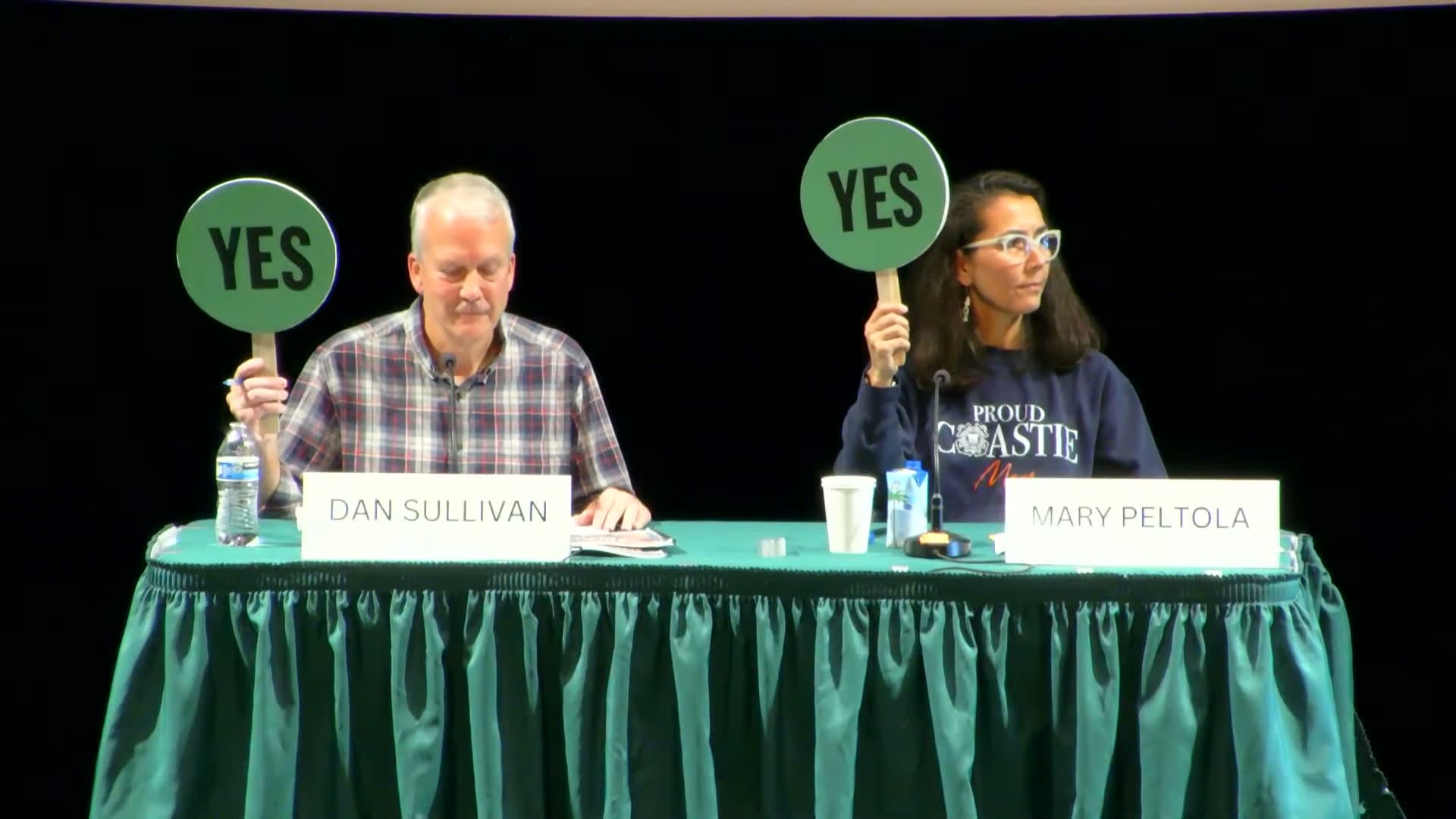
Bronson calls for bottom trawling ban in state waters at Kodiak fisheries debate
At the Kodiak Chamber of Commerce fisheries debate Wednesday, Dave Bronson called for banning bottom trawling inside Alaska's three-mile state waters, a step his three rivals for governor stopped short of, while all four pledged to restore a fisheries advisor in the governor's office.
by Walter AlaskaNews3w ago2 min read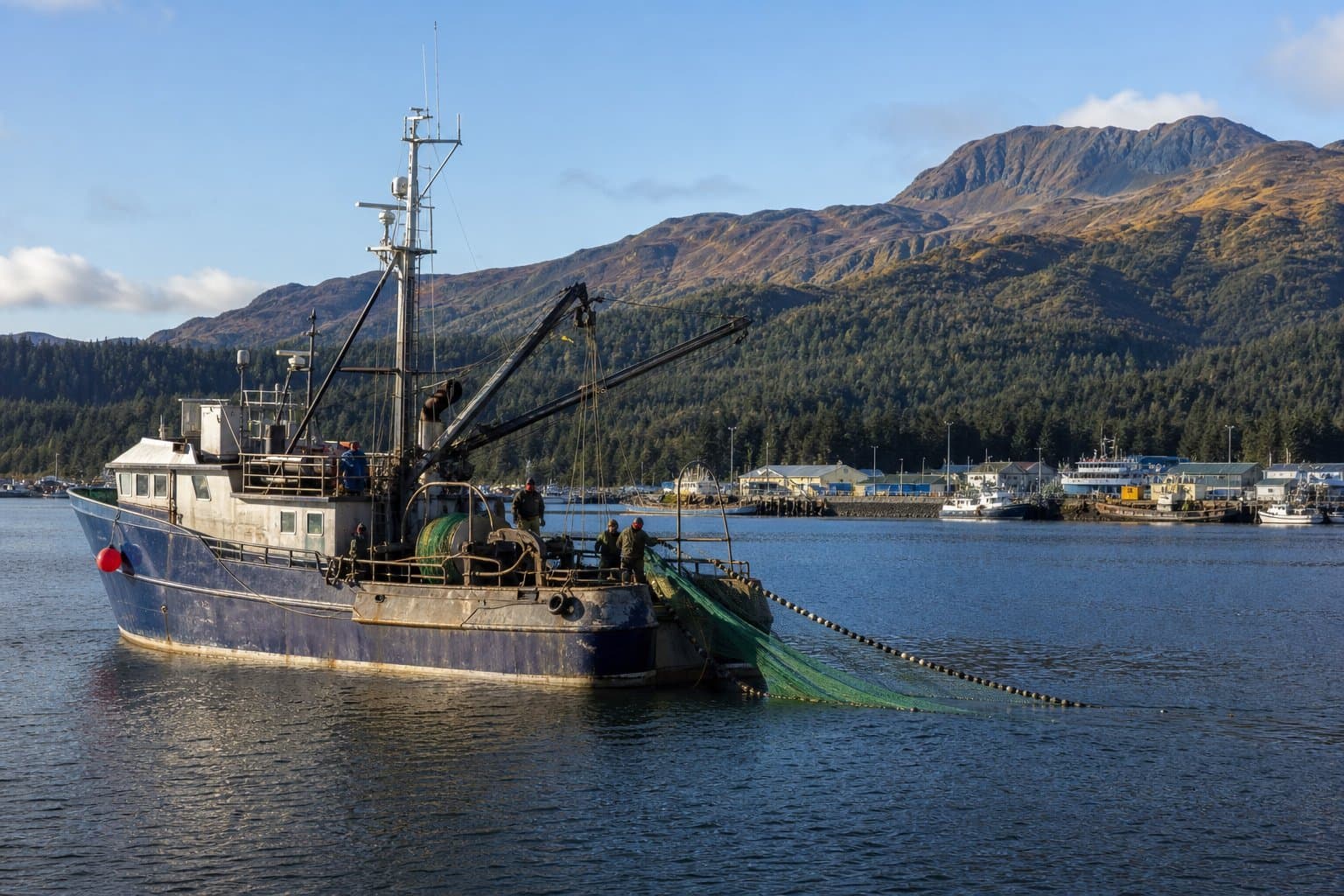
Bering Sea halibut boats would get a catch cap double the rest of Alaska
A proposed federal rule would set a permanent halibut vessel cap in the Bering Sea and Aleutians at 132,900 pounds, nearly double the Alaska coastwide limit.
by Walter AlaskaNews3w ago2 min read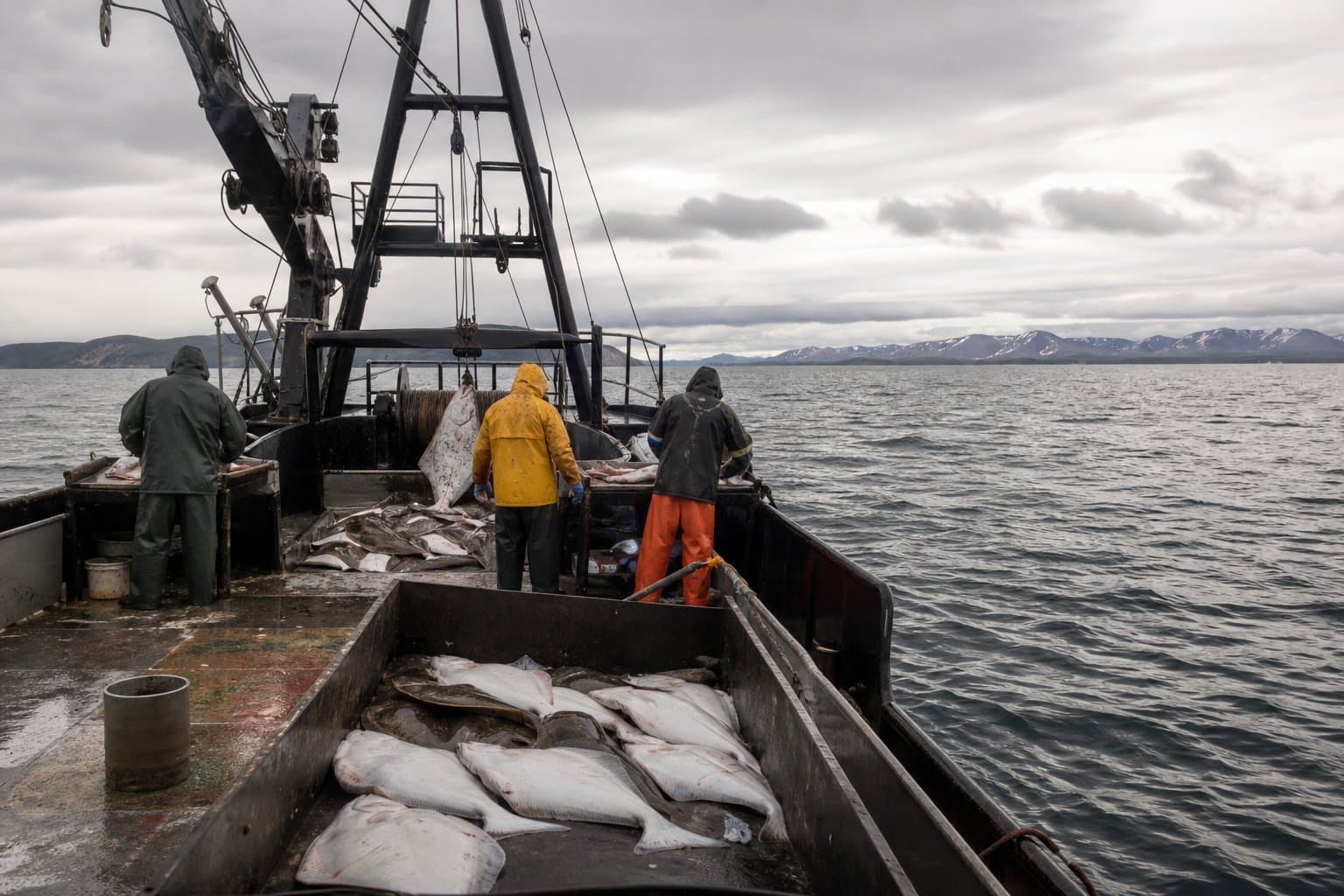
NOAA will stop briefing Alaska tribes before every council meeting
NOAA Fisheries Alaska Region says staff capacity dropped substantially in 2025 and it can no longer host a virtual tribal engagement session before every North Pacific Fishery Management Council meeting. The Oct. 8-13 Anchorage meeting sets groundfish and crab limits.
 by Maggie AlaskaNews4w ago1 min read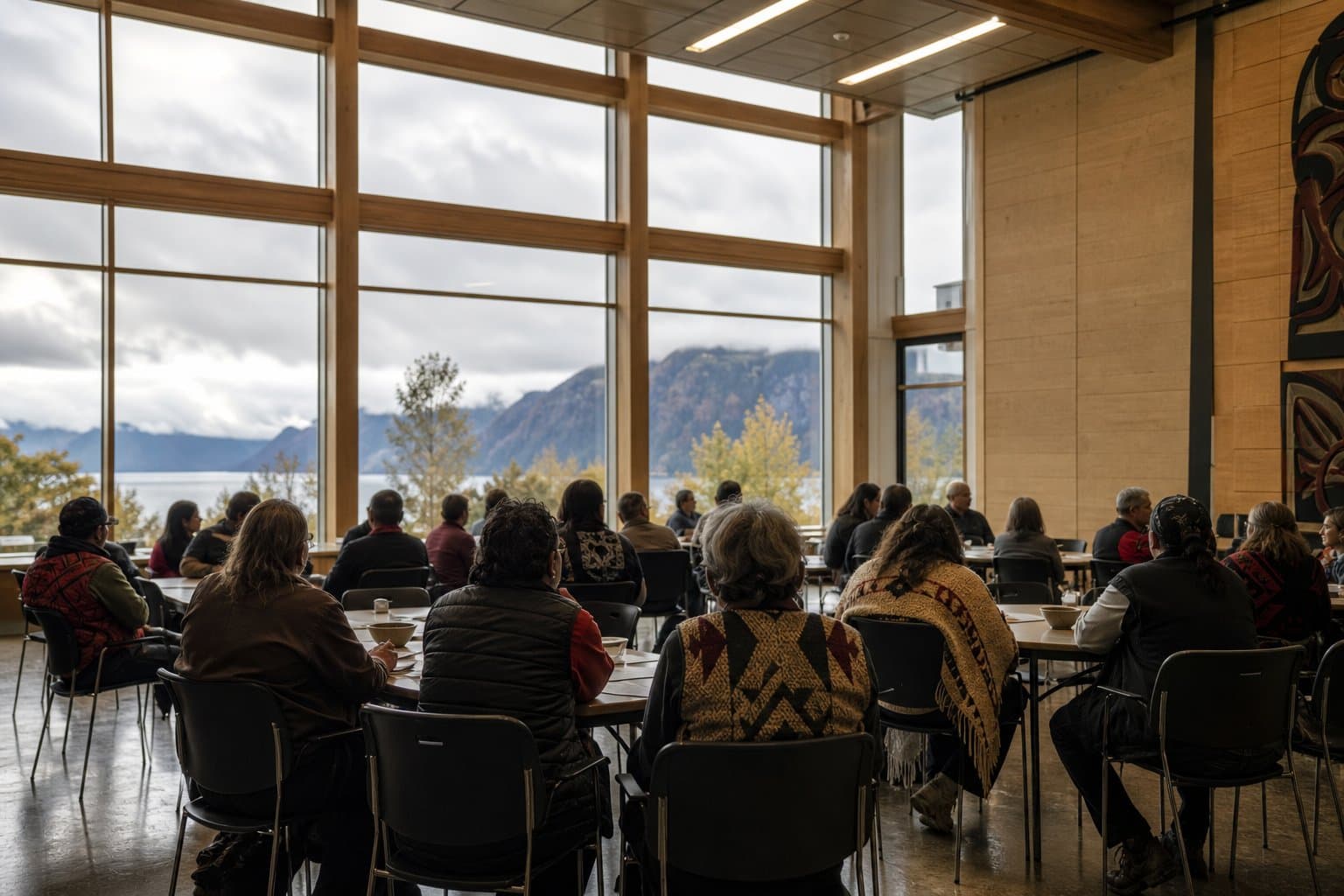
NOAA would let one boat take far more western halibut to get anyone fishing it
NOAA Fisheries proposed capping a single vessel at 5 percent of the Area 4 halibut catch limit, replacing a coastwide cap suspended out west since 2020.
by Bill AlaskaNews4w ago2 min read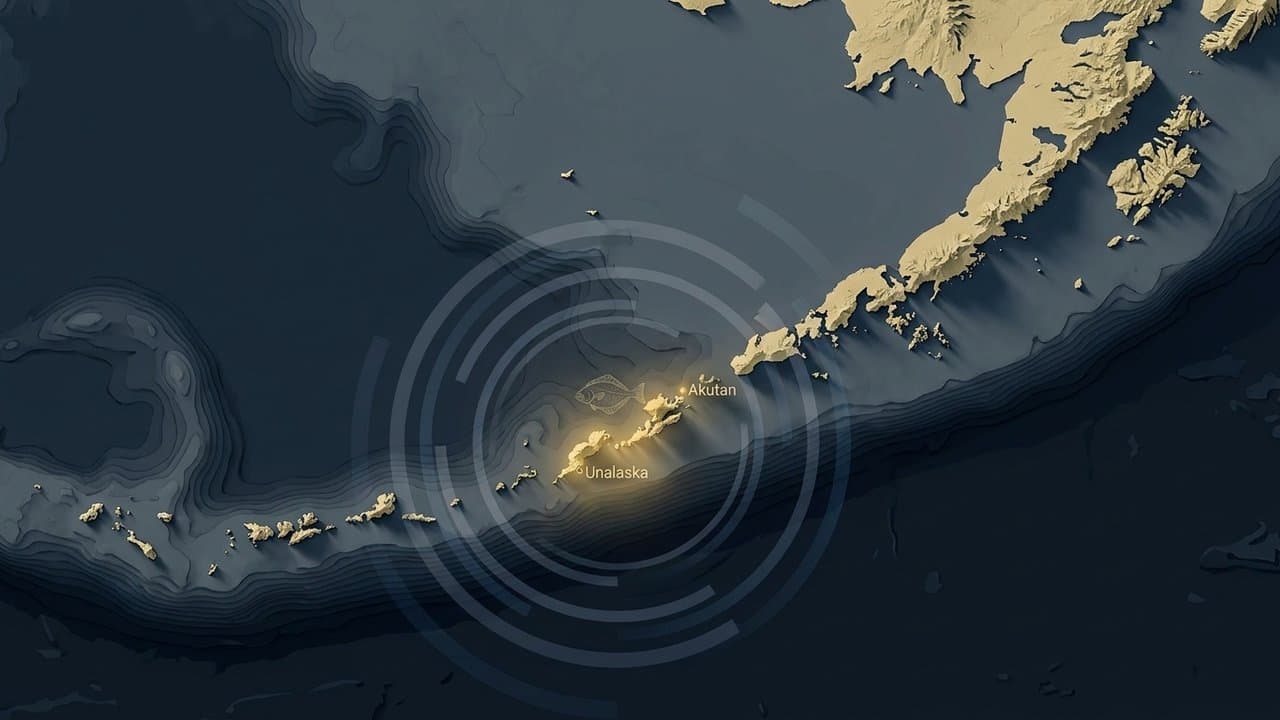
Charter halibut committee meets online Sept. 30; comment accepted beforehand
The North Pacific Fishery Management Council's Charter Halibut Management Committee meets by web conference Wednesday, Sept. 30, to review a Charter Halibut Permit discussion paper and make recommendations to the Council. The committee advises; it does not set rules.
by Bill AlaskaNews1mo ago1 min read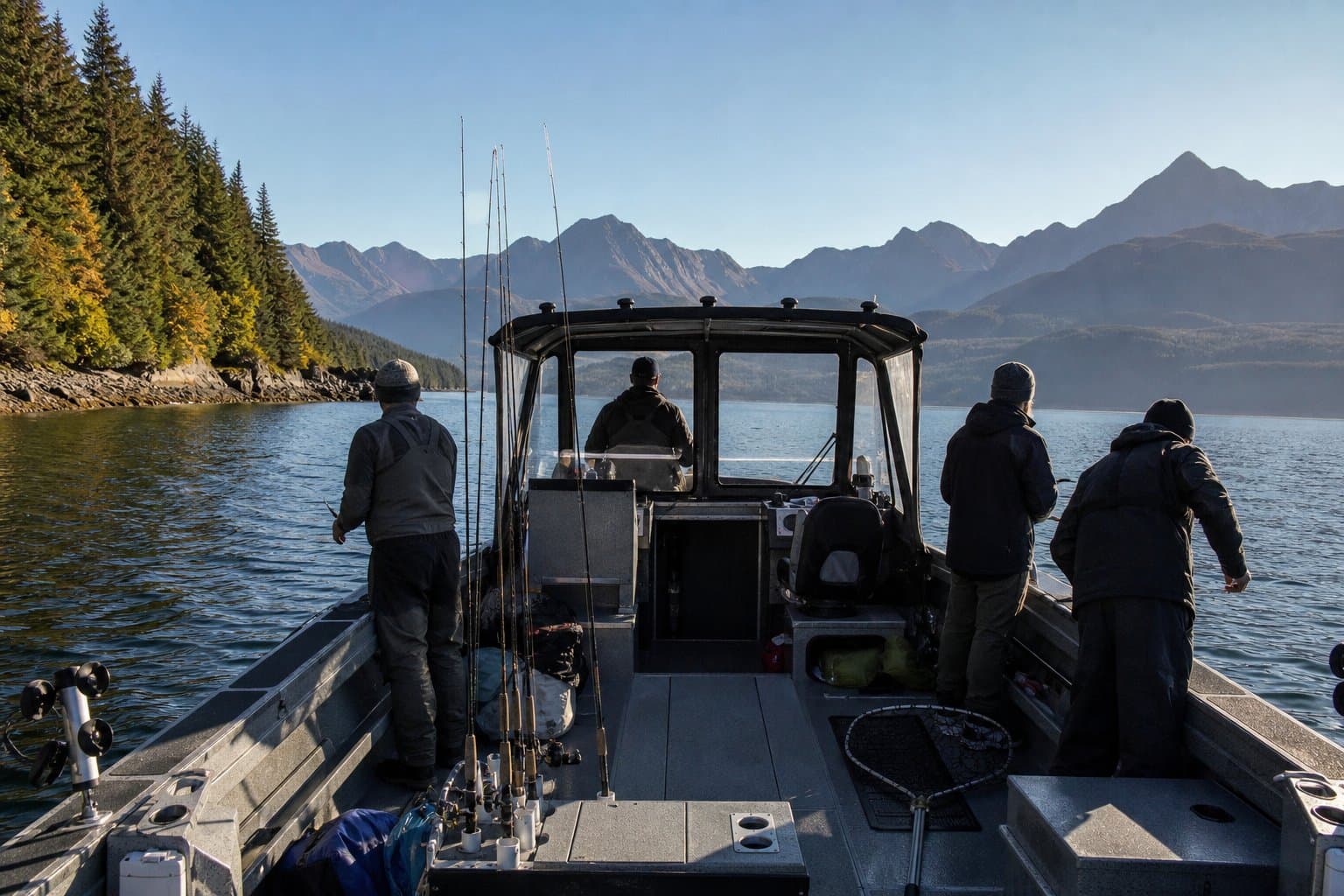
Rules on remote Alaska communities' fishing quota return to council
Rules that let small Alaska coastal communities hold halibut and sablefish quota are up for an expanded discussion paper at the North Pacific Fishery Management Council's Oct. 8-13 meeting in Anchorage. Written comment closes Oct. 2 at noon AKT.
by Maggie AlaskaNews1mo ago1 min read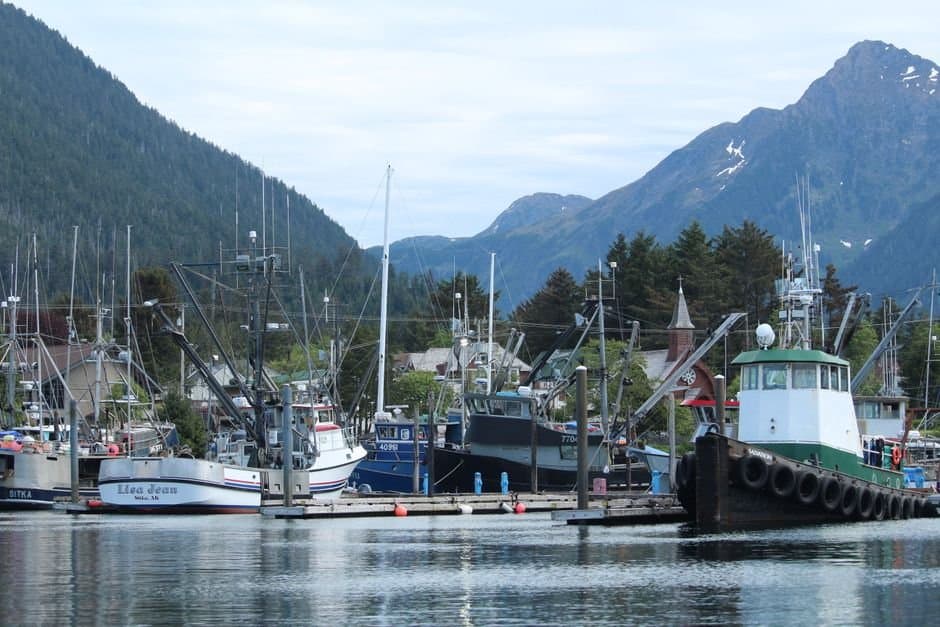
Yakutat scallop fishery closes as harvest reaches 145,000-pound cap
ADF&G is closing the Area D (Yakutat) commercial weathervane scallop fishery at 12:00 noon Wednesday, Aug. 26, under emergency order EO 1M2626, after the fleet takes the season's guideline harvest level of 145,000 pounds of shucked meat.
by Walter AlaskaNews1mo ago1 min read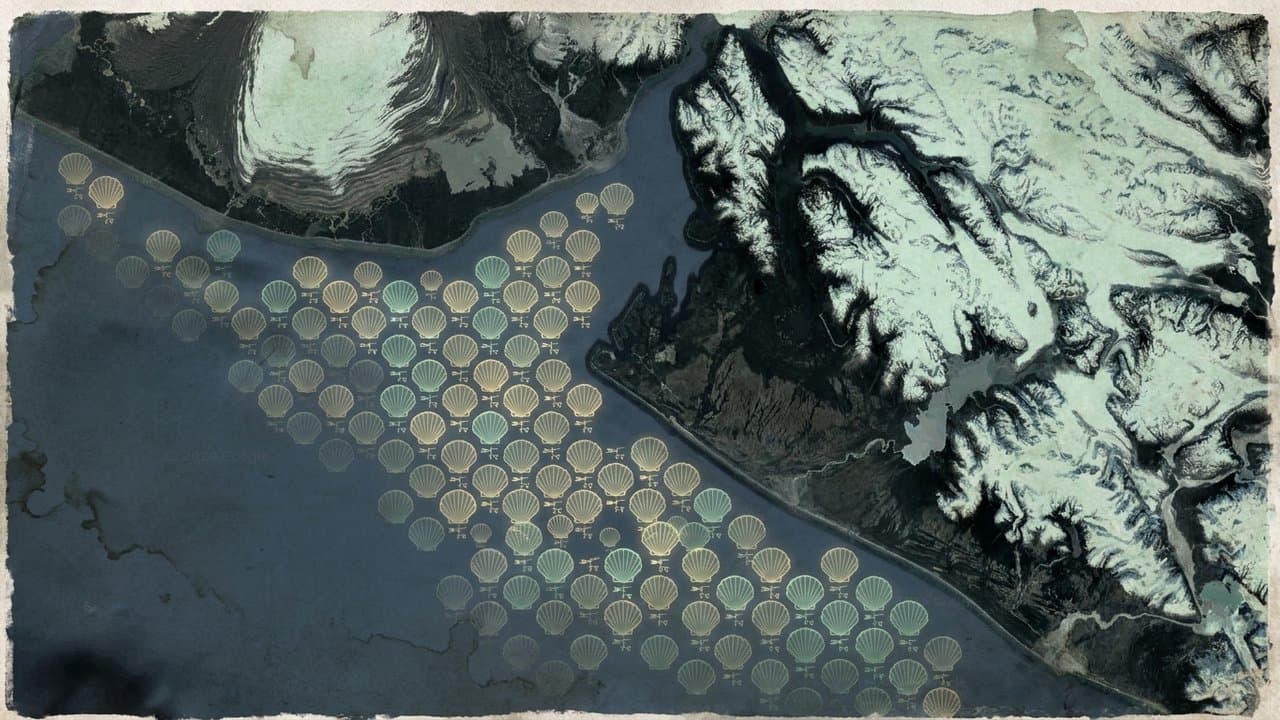
The panels that shape Alaska's pollock and cod catch limits meet next month
The North Pacific Fishery Management Council has scheduled its Groundfish Plan Teams for a hybrid public meeting Sept. 8-11, 2026. The agenda centers on scientific and management reviews rather than a council vote, with online access through the NPFMC meetings portal.
by Bill AlaskaNews1mo ago1 min read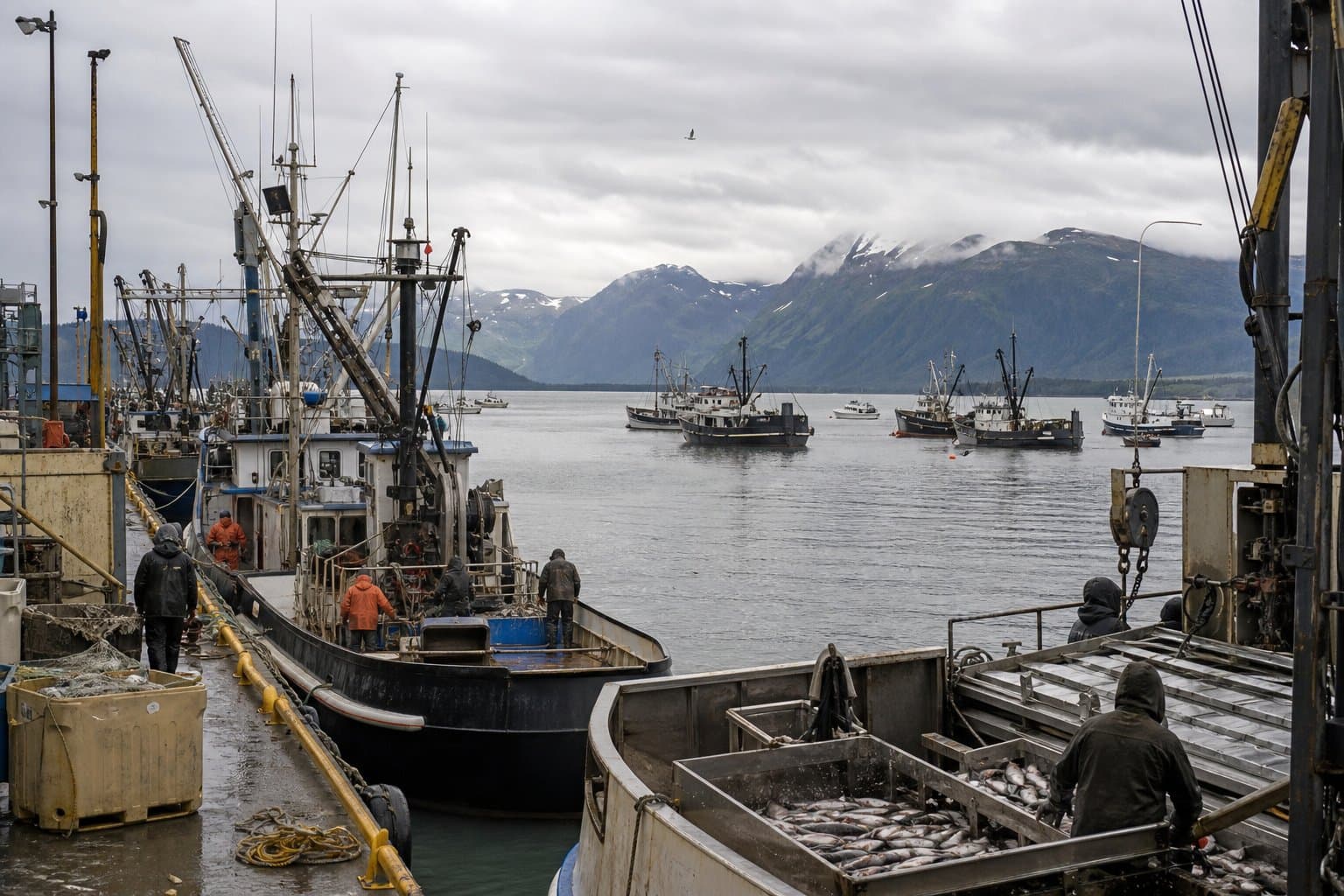
Regulators shift unused halibut allowance to Bering Sea trawlers
NMFS reapportioned 100 metric tons of unused halibut bycatch allowance from the Pacific cod Trawl Cooperative Program to the trawl limited access catcher vessel C season, raising that sector's cap from 15 to 115 metric tons through Nov. 1, with no public comment.
by Bill AlaskaNewsadded 1mo ago2 min read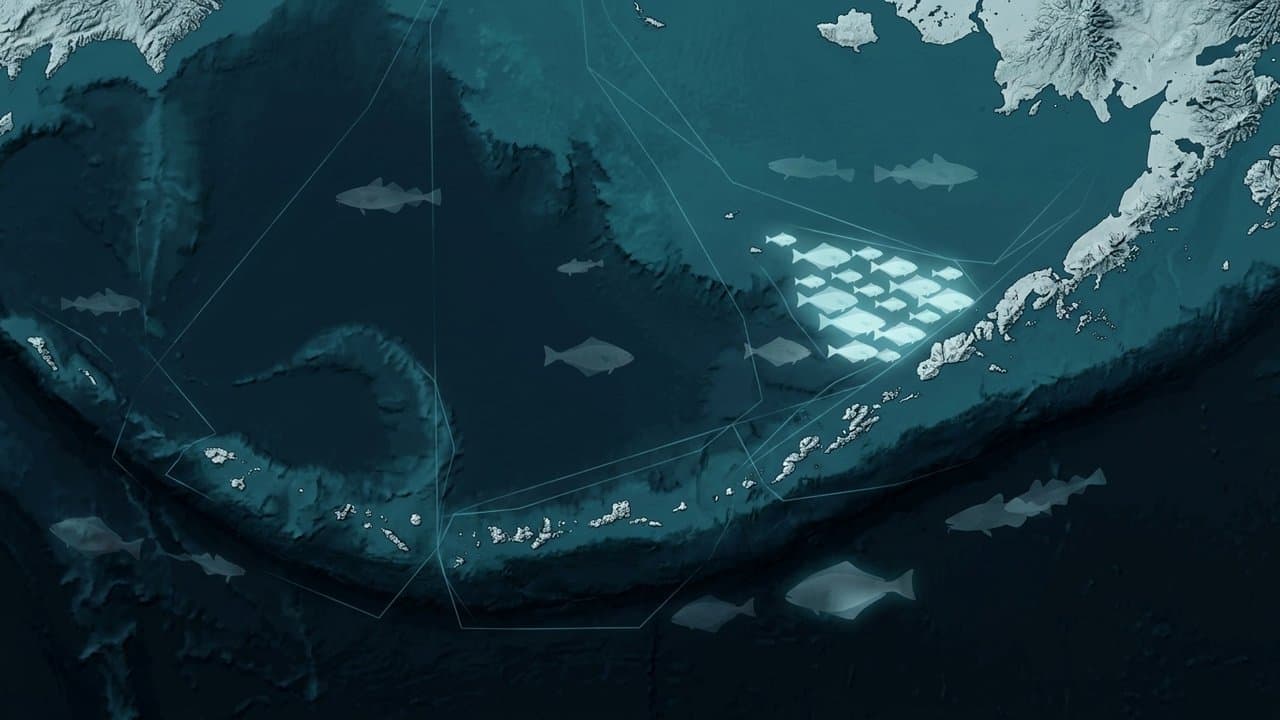
Bering Sea cod trawl fee drops to 2.09% after fishery value jumps
NMFS set the 2026 Pacific Cod Trawl Cooperative Program cost recovery fee at 2.09 percent, down from the 3 percent statutory maximum charged in 2025. Cooperatives that miss the Aug. 31 payment deadline lose quota transfer approval and next year's CQ permits.
by Maggie AlaskaNews1mo ago1 min read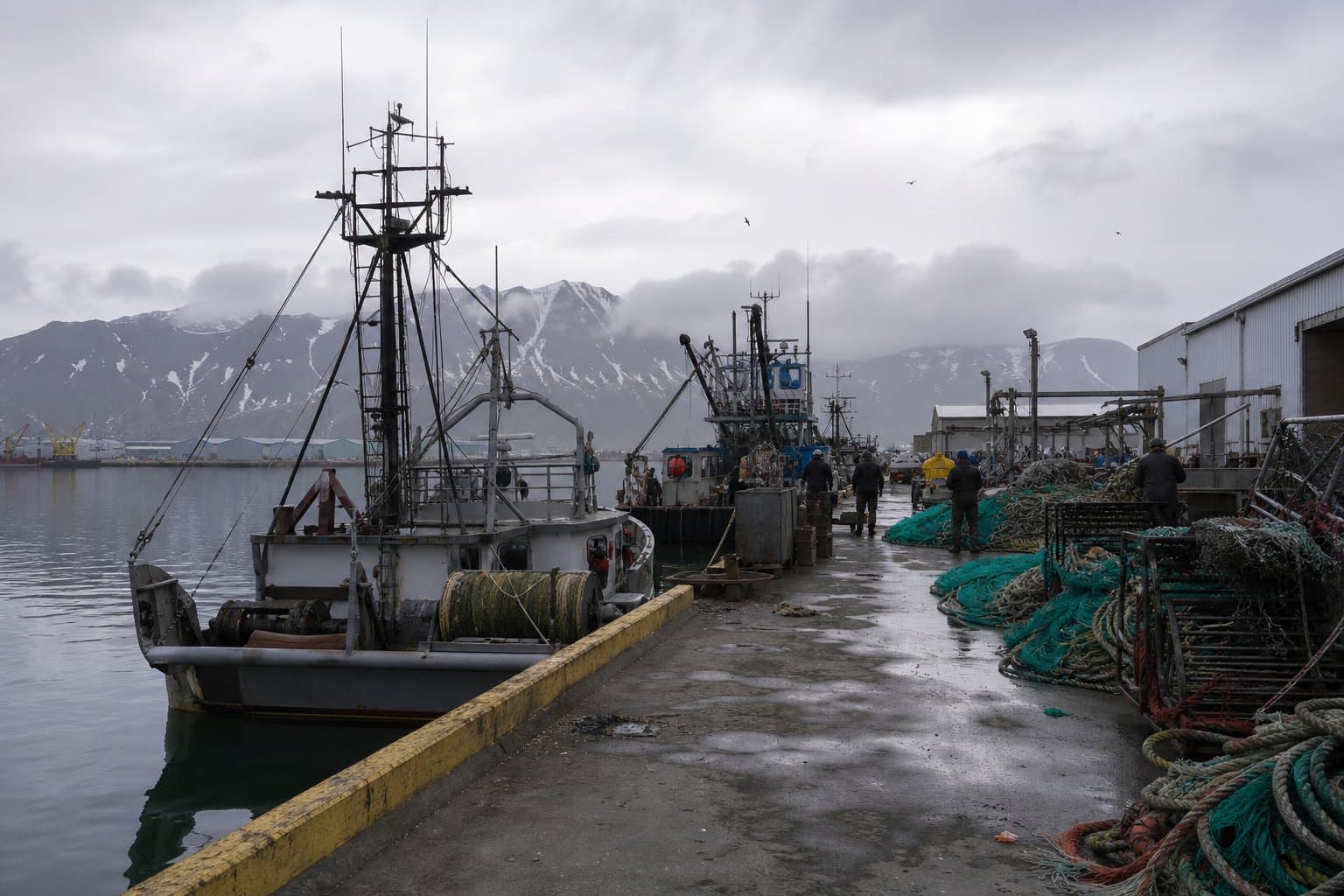
A halibut-bycatch report is dropped for the Bering Sea's biggest bycatch fleet
A federal notice folds away a separate halibut-bycatch report on the Amendment 80 trawl fleet, which accounts for most Bering Sea halibut bycatch, amid a long accountability fight.
by Bill AlaskaNews2mo ago2 min read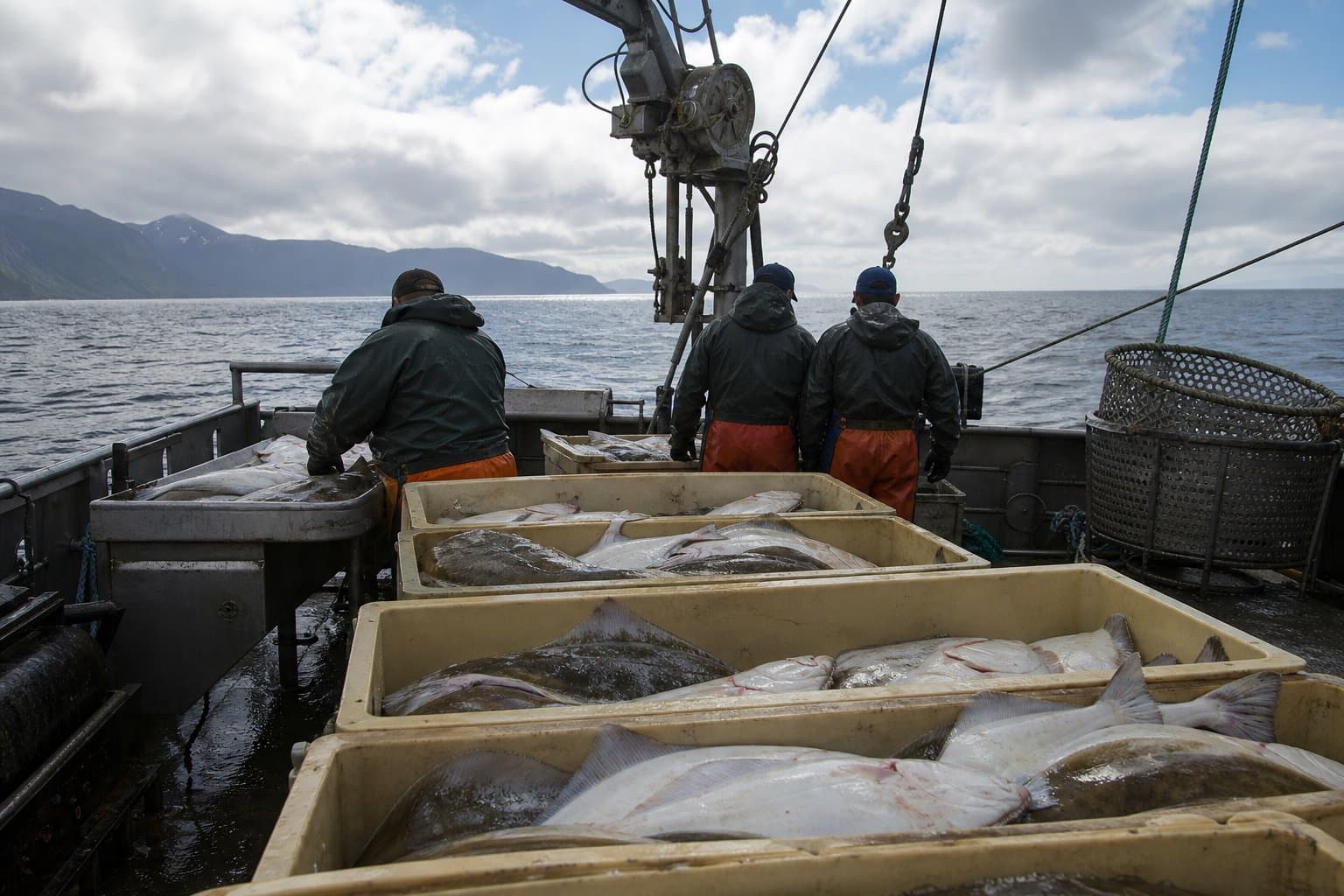
NOAA scouts new fish-farm zones as Gulf of Alaska planning proceeds
NOAA opened public comment through Sept. 13 on where to site the next Aquaculture Opportunity Areas. The Gulf of Alaska is already in a separate NOAA planning process.
by Alaska News2mo ago1 min read
Bering Sea crab fee drops by half, but the itemization fight remains
The federal cost-recovery fee on Bering Sea crab fell to 0.67% as fishery value rose, but harvesters still can't get an itemized accounting of the enforcement costs they pay.
by Bill AlaskaNews2mo ago1 min read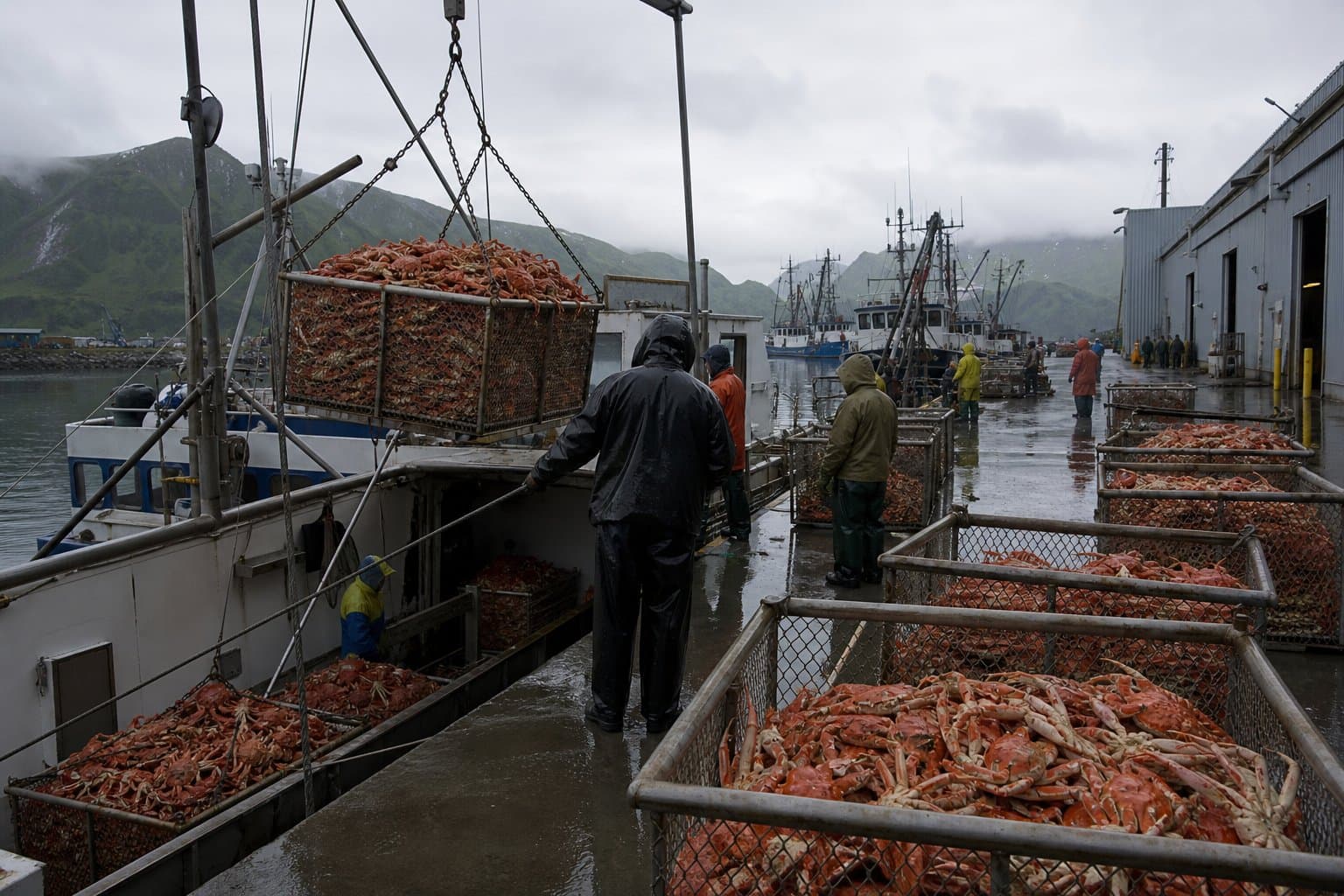
The council that runs Alaska's fisheries has no tribal vote
The North Pacific Fishery Management Council has no designated tribal seat, and Alaska Native tribes are pressing for voting power over decisions affecting subsistence salmon.
by Maggie AlaskaNews2mo ago1 min read
The state ordered Cook Inlet setnetters onto gear their permits don't allow
Alaska's Board of Fisheries ordered Cook Inlet setnetters onto beach seines their permits don't authorize, deepening a years-long wind-down as drift rules stay unchanged.
by Walter AlaskaNews2mo ago2 min read
NMFS proposes removing economic data reporting requirements for BSAI trawl and crab programs
NOAA Fisheries has published a notice of availability for proposed amendments that would eliminate Economic Data Reports for Alaska's Amendment 80 trawl catcher/processor fleet and Bering Sea crab harvesters, citing high costs and limited management use. A separate proposed rule would follow, and public comments must be received by September 15, 2026.
by Bill AlaskaNews2mo ago2 min read
North Pacific council demands OLE justify enforcement fees billed to Alaska catch-share programs
The North Pacific Fishery Management Council passed motions Friday requiring NOAA's Office of Law Enforcement to document each investigation billed to Alaska's catch-share programs by regulation, hours, and apportionment formula, responding to years of industry complaints that OLE charges exceed the legal incremental-cost standard under the Magnuson-Stevens Act.
by Bill AlaskaNews2mo ago2 min read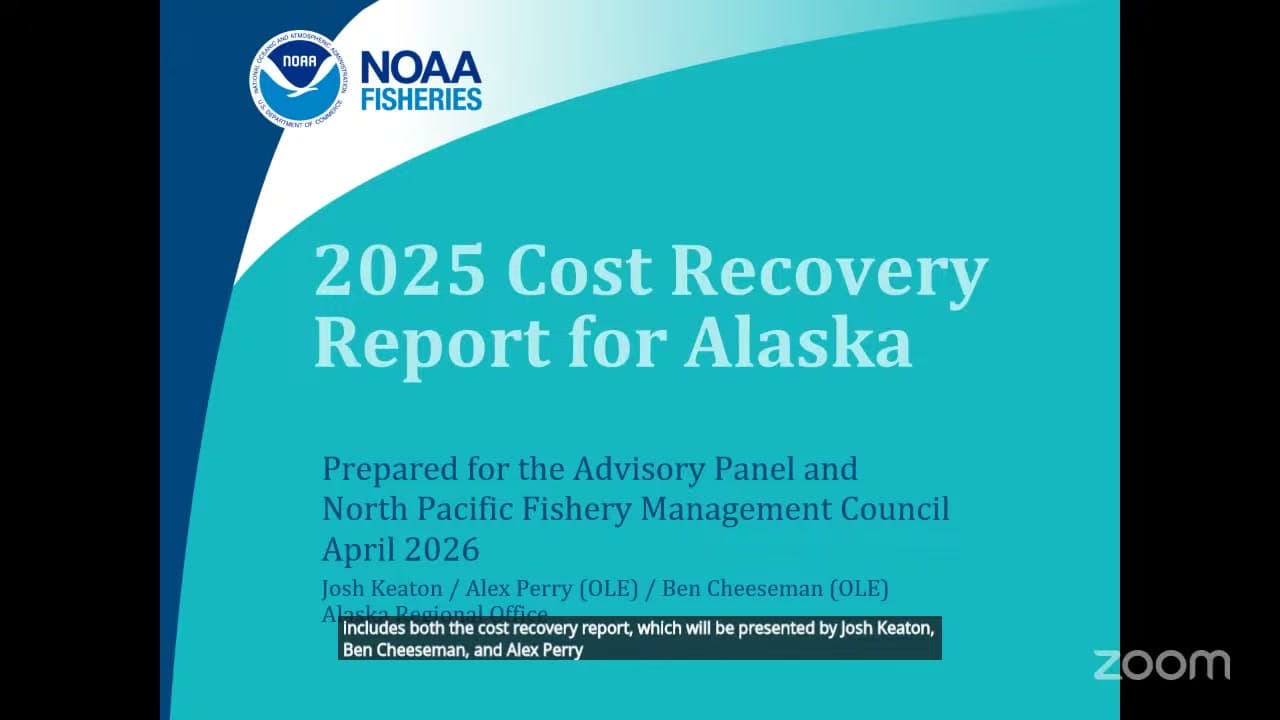
Pollock fleet's groundfish bycatch fell below 1% in 2025, but salmon bycatch rose as warm water pushed fish onto the shelf
The Bering Sea pollock fleet posted a groundfish bycatch ratio below 1 percent in 2025, well under the 1.7 percent long-term average, but Chinook and chum salmon bycatch both rose compared to 2024 as record-low sea ice pushed salmon distributions onto the shelf and into direct overlap with the fishery, Austin Esterbrooks told the North Pacific Fishery Management Council on Friday.
by Bill AlaskaNewsadded 3mo ago1 min read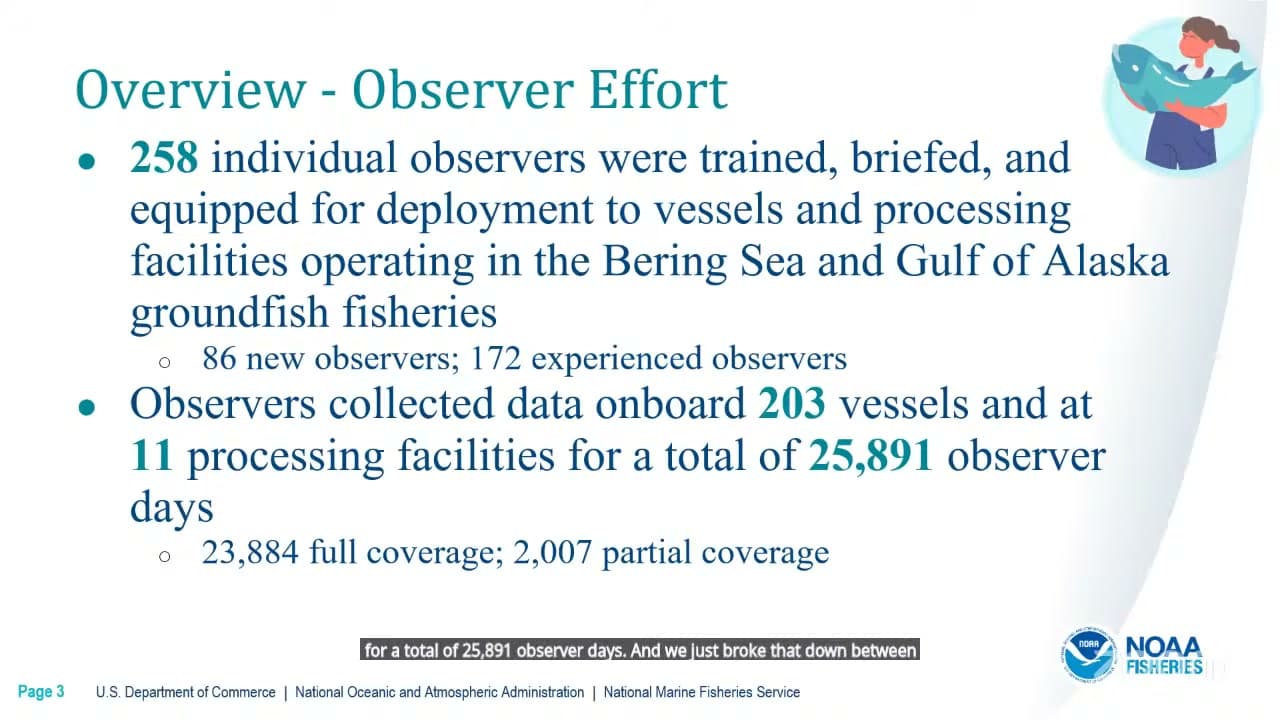
NPFMC directs NOAA to update pollock roe rules after seizure highlighted regulatory gap
The North Pacific Fishery Management Council passed two motions directing NOAA Fisheries to update product recovery rate regulations that no longer match how AFA catcher-processors and motherships measure catch, and to clarify rules governing prohibited species catch disposition, including whether bycatch can be converted to fishmeal.
by Bill AlaskaNewsadded 3mo ago2 min read
Sablefish fleet faces compliance gap as approved release rule sits in federal limbo until 2028
The North Pacific Fishery Management Council approved a small sablefish release rule in April 2025, but NMFS implementation is not expected until 2028, leaving vessels subject to fines if they release small sablefish under current rules. Industry asked the council to seek NMFS assistance to advance implementation to the 2027 season.
by Bill AlaskaNewsadded 3mo ago2 min read
Council sends Kodiak Tanner crab closure to second initial review with preliminary preferred alternative
The North Pacific Fishery Management Council voted without objection Sunday to send Gulf of Alaska Tanner crab protection measures to a second initial review, selecting a preliminary preferred alternative of non-pelagic trawl closure in the east-side custom box while retaining a narrowed version of Alternative 3 covering existing closure areas.
by Bill AlaskaNewsadded 3mo ago4 min read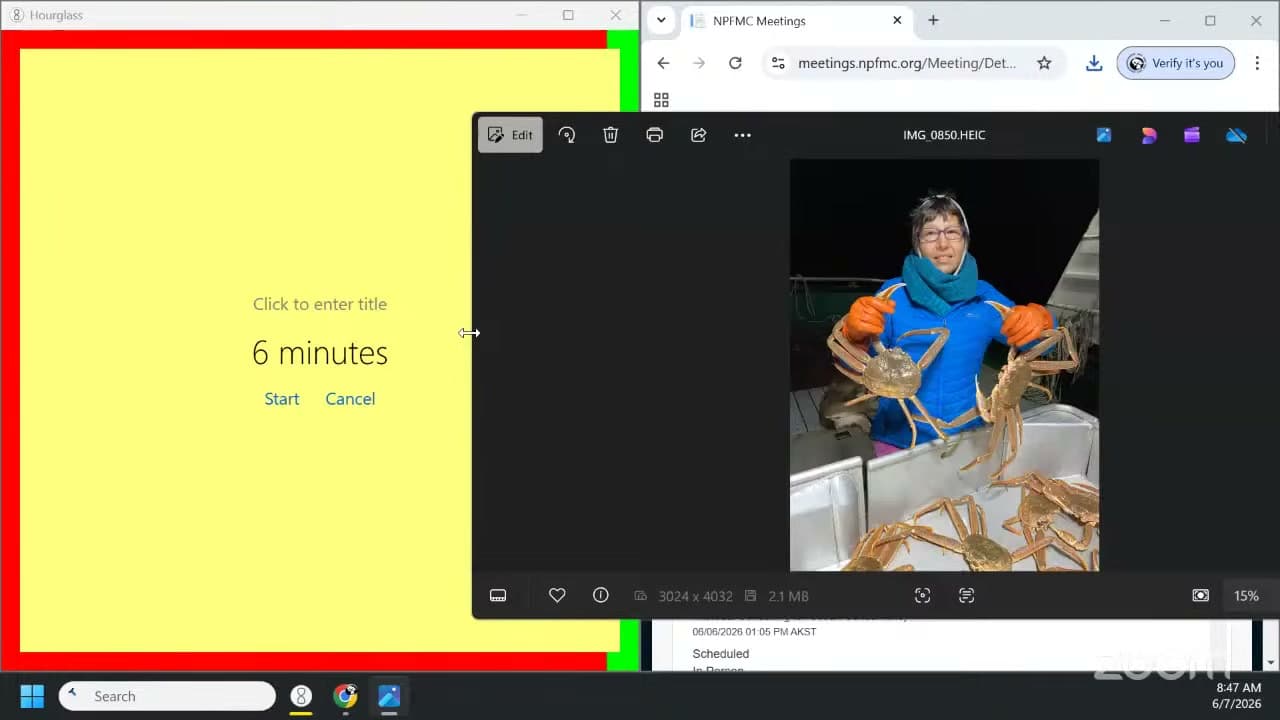
Pollock fleet builds empirical database of trawl seafloor contact as Congress weighs gear restrictions
Alaska Pacific University's Gear Innovation Initiative has documented nearly 300 trawls, building an evidence base for how pelagic trawl gear behaves near the seafloor. Updated gear parameters are scheduled for Scientific and Statistical Committee review in February 2027, alongside a Trident Seafoods modified foot-rope design tested under an exempted fishing permit.
by Bill AlaskaNewsadded 3mo ago2 min read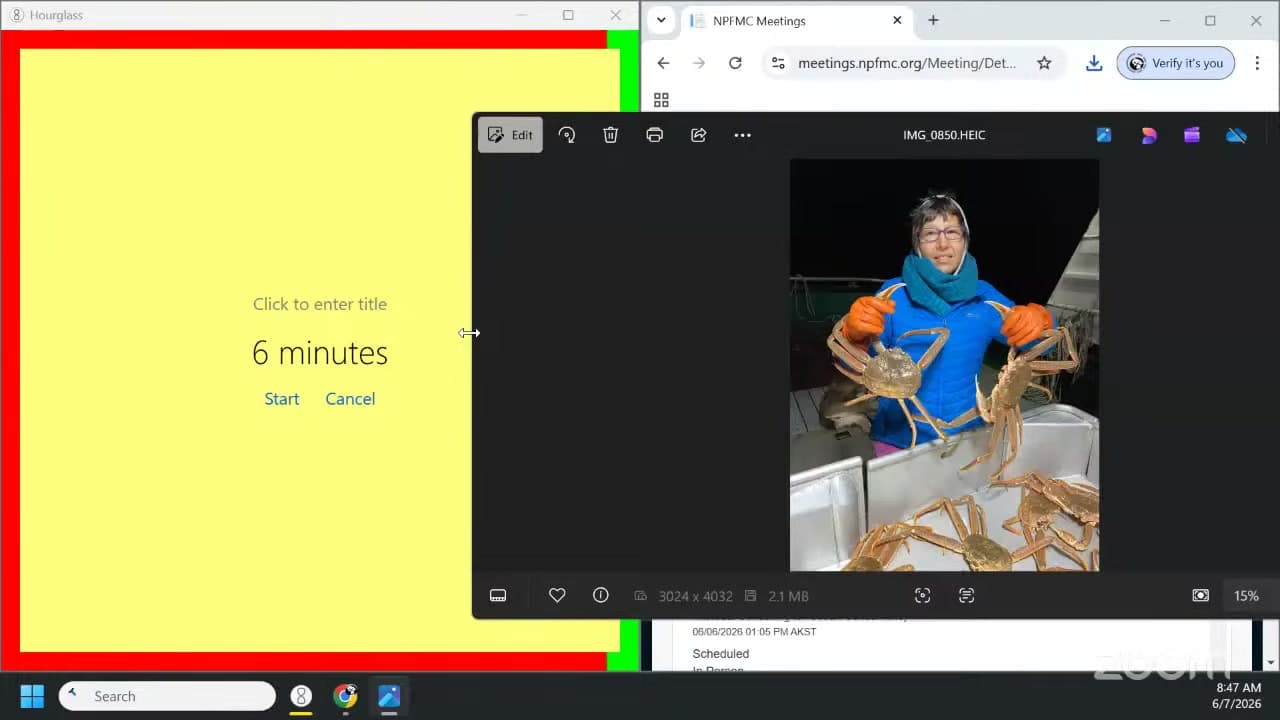
North Pacific council moves toward enforceable pelagic trawl gear standards
The North Pacific Fishery Management Council voted without objection to request a discussion paper on enforceable performance standards for pelagic trawl gear bottom contact. The council also separately requested the pollock industry continue voluntary dynamic spatial crab-avoidance measures in the 2027 A season.
by Bill AlaskaNewsadded 3mo ago3 min read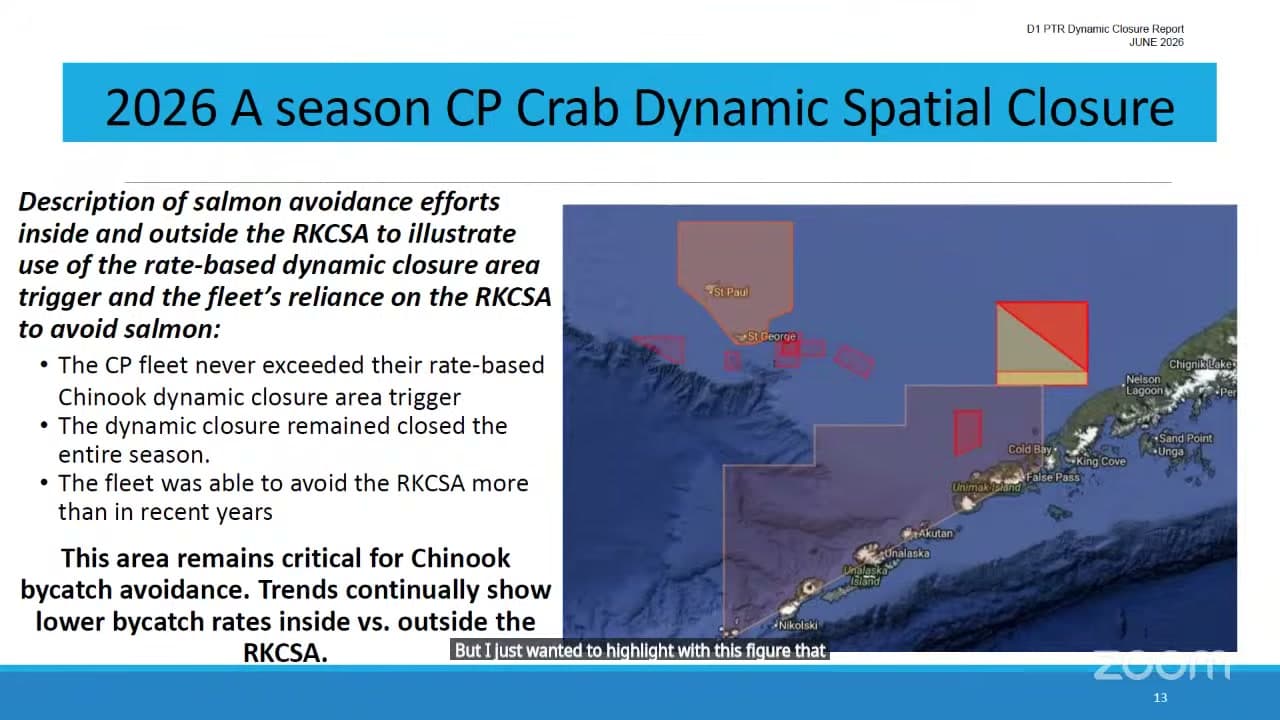
Pollock fleet asked to repeat voluntary crab closures in 2027 after proof-of-concept season
The North Pacific Fishery Management Council passed a motion without objection on June 8 requesting the pollock industry continue dynamic spatial closures in the Red King Crab Savings Area during the 2027 A season, with salmon bycatch avoidance remaining the highest priority. Industry representatives reported the 2026 proof-of-concept produced zero crab bycatch in the catcher-processor and mothership fleets, and 25 animals in the inshore sector, though extensive sea ice significantly altered fishing dynamics.
by Bill AlaskaNewsadded 3mo ago2 min read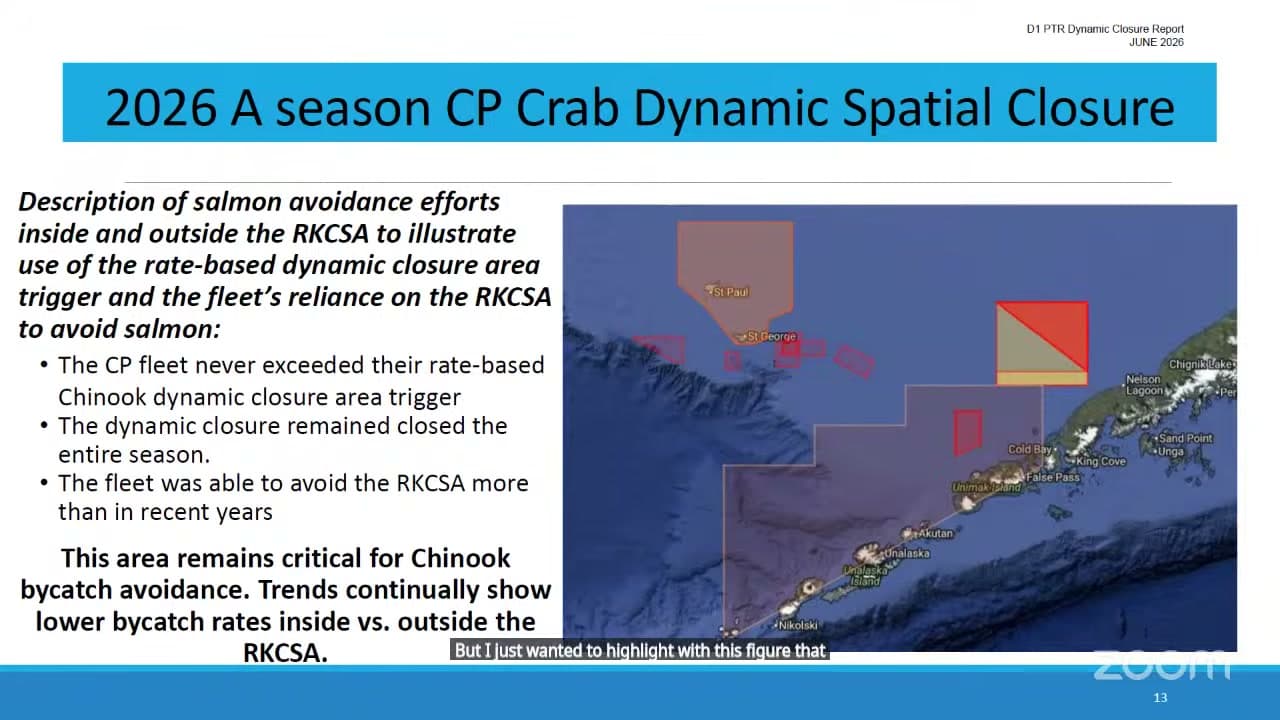
Council votes 8-3 to study halibut bycatch rules for Golden Fleece replacement vessel
The North Pacific Fishery Management Council voted 8-3 on Tuesday to initiate a regulatory analysis that could require an Amendment 80 replacement vessel in the Gulf of Alaska to follow the same halibut bycatch limits and monitoring standards as other non-pelagic trawl catcher processors, prompted by news that the Golden Fleece's unique 2007 exemptions could transfer to a different vessel at a time of historically low halibut abundance.
by Alaska Newsadded 3mo ago2 min read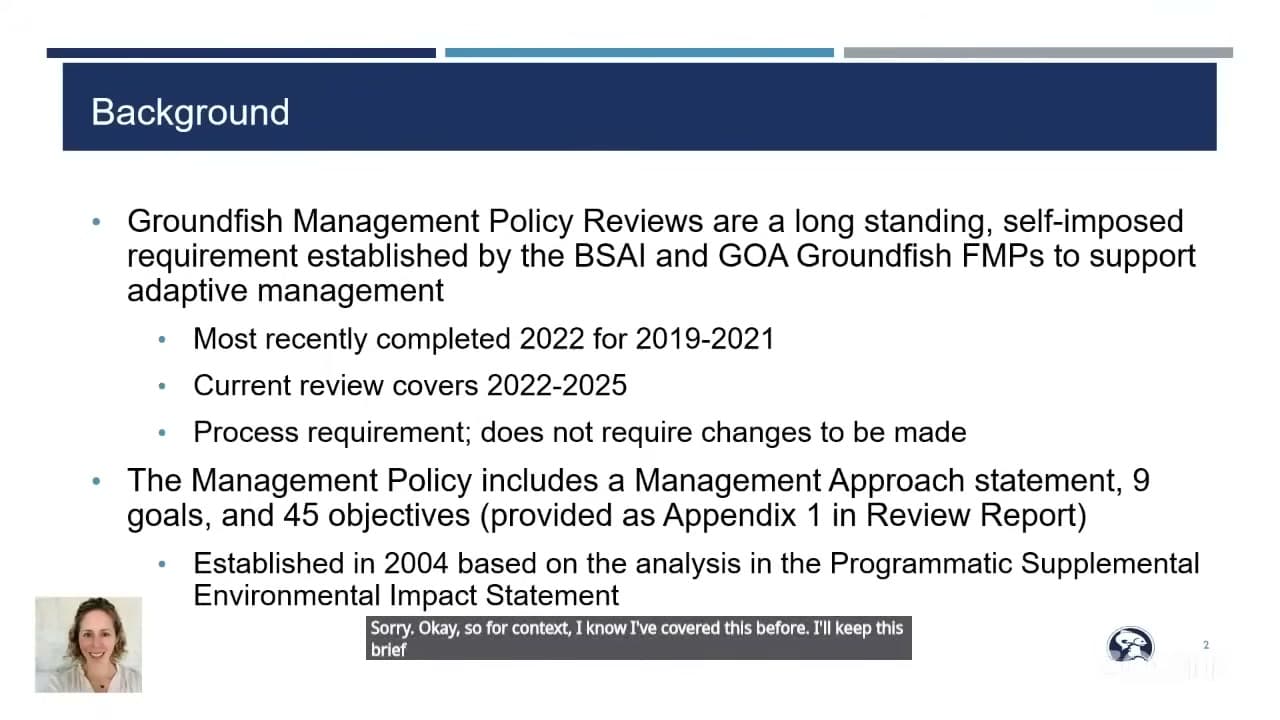
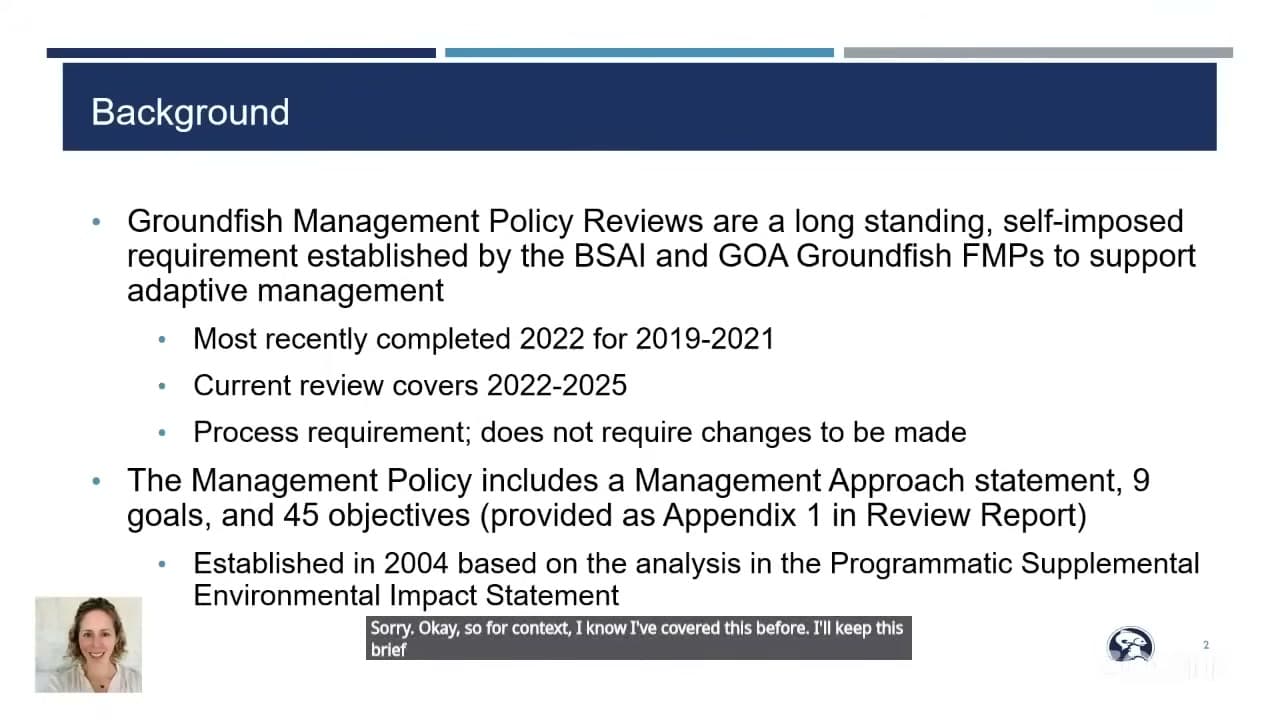
North Pacific council directs Ecosystem Committee to revise 2004 groundfish policy goals
The North Pacific Fishery Management Council voted unanimously Tuesday to declare its triennial groundfish policy review complete and directed the Ecosystem Committee to develop specific language changes before any formal FMP amendment begins, focusing on two goals written in 2004 that no longer reflect current council practice.
by Alaska Newsadded 3mo ago3 min read