Senate passes gas-line bill; Dunleavy immediately calls lawmakers back to rewrite it
The Alaska State Senate passed the Alaska LNG enabling bill, HB 381, on June 19 by a vote of 12 to 8 — and within hours Gov. Mike Dunleavy called a second special session, opening the next day, to rewrite it. It sets up a direct standoff: the governor and the House say the version the Senate passed would sink the gas project, while a majority of the Senate just deliberately chose that version.
The House had earlier passed what Dunleavy calls a "clean" bill on a wide bipartisan margin. The Senate amended it and passed the changed version over its Republican minority, which voted no as a bloc. Three provisions sit at the center of the fight: new tax language affecting S corporations, tax relief tied to strict construction timelines, and labor terms written into statute rather than left to a negotiated agreement between developer Glenfarne and the unions.
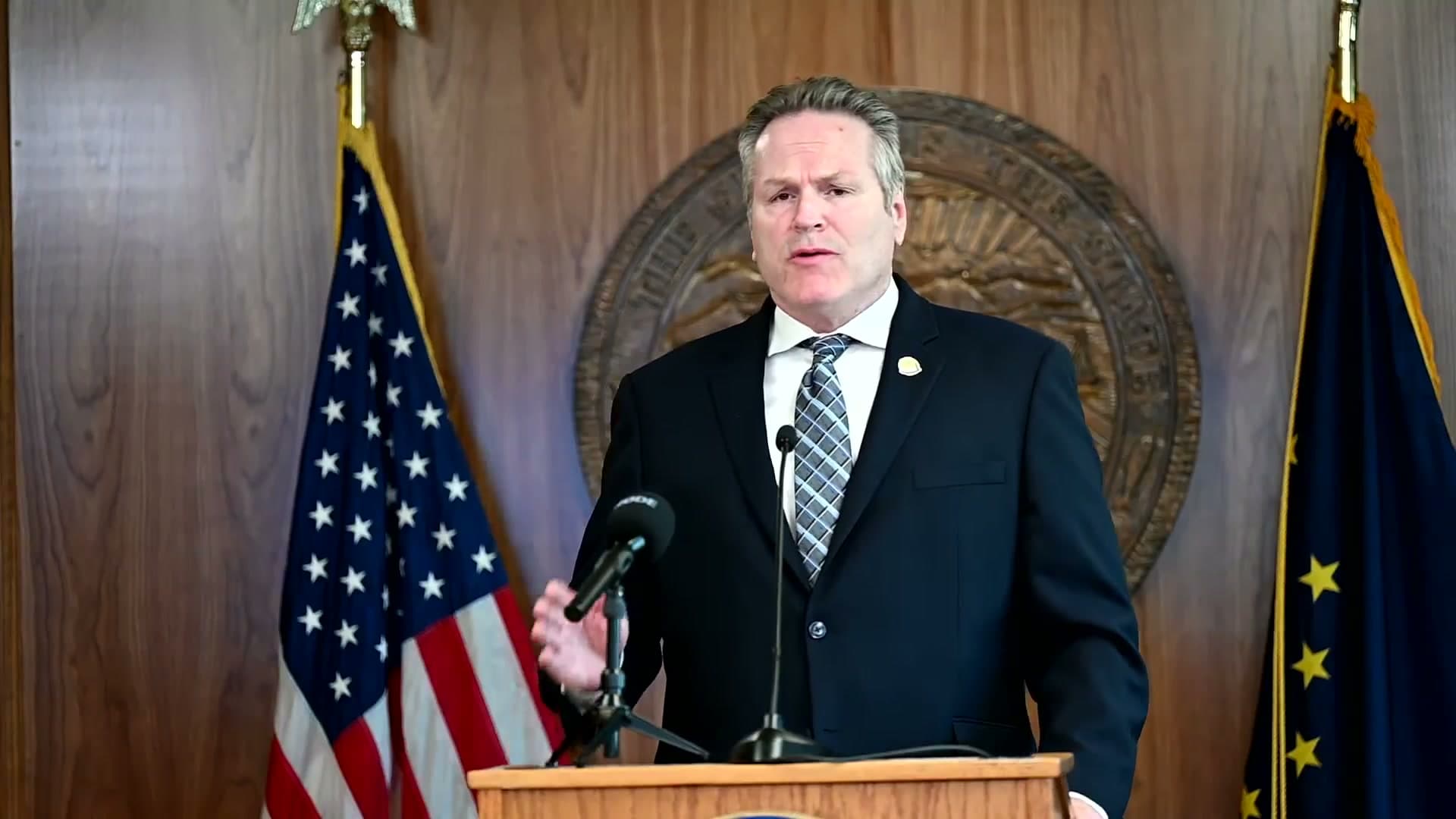
Dunleavy, House Republicans and the Senate's Republican caucus all argue those provisions make the project unfinanceable. Rep. Chuck Kopp, at a Capitol press conference, called it self-defeating: "The greatest mistake we can make is allowing the pursuit of maximum government revenue extraction become the reason we receive no revenue at all." Dunleavy cast the alternative as absurd for a state holding an estimated 200 trillion cubic feet of North Slope gas — importing it instead. "Plan B is imports," he said, calling that outcome "crazy."
But the amendments were no accident, and the fiscal picture they respond to is genuinely unsettled. The Department of Revenue told the Senate Finance Committee that the bill's fiscal note is indeterminate — the state cannot say whether the project pencils out with or without the tax breaks — and that the changes would cut some municipal property-tax revenue even as related development might add other income. Members and watchdog groups warned in those hearings against rushing a fiscally risky bill through special sessions under investor pressure, the more cautious, revenue-protective instinct the Senate's provisions reflect. The majority that passed the bill did not lay out its case at the governor's podium. They've been doing it over weeks in the Senate Finance Committee, as has been covered by Alaska News.
Both sides agree on the underlying problem. Cook Inlet gas, which heats and powers the Railbelt from Fairbanks through Anchorage, is declining, and the North Slope project is pitched as the long-term fix — and as up to 10,000 construction jobs and about 1,000 permanent ones. Alaska has chased a North Slope gas line for decades, under Govs. Palin, Parnell and Walker, without ever breaking ground.
When the second special session opened Saturday, the House had not decided whether to accept the Senate's version, send it to a conference committee, or start over. Every path still runs back through the Senate — the same majority that just wrote the amendments. Dunleavy says a deal is close. Whether the chamber that passed the bill agrees is the open question.
This article is based on a public meeting of Facebook — 1Bf2Rw648G.
Made by our human newsroom with AI. How humans and AI work here · Grow with our newsroom Transcript byLucas Brown
Watch key moments from the source meeting. Click to expand.
Stay informed. Support what matters.
Free, permanent access to local news you can verify. Subscribe to support Cale Green and go ad-free.
Related Coverage
Dunleavy called a second special session over the unresolved LNG tax bill
Alaska News · 3mo ago
Alaska Senate passes LNG bill as Republicans warn it kills financing
Alaska News · 2mo ago
Alaska House ties 19-19 on gas line bill, killing it for now
Alaska News · 2mo ago
Alaska Senate passes HB 381 oil and gas tax bill 11-8, with dissenters signaling more work ahead
Alaska News · 2mo ago
What the Senate Changed in the Gas-Line Deal
Alaska News · 3mo ago
Comments
Sign in to leave a comment.
No comments yet. Be the first to share your thoughts.