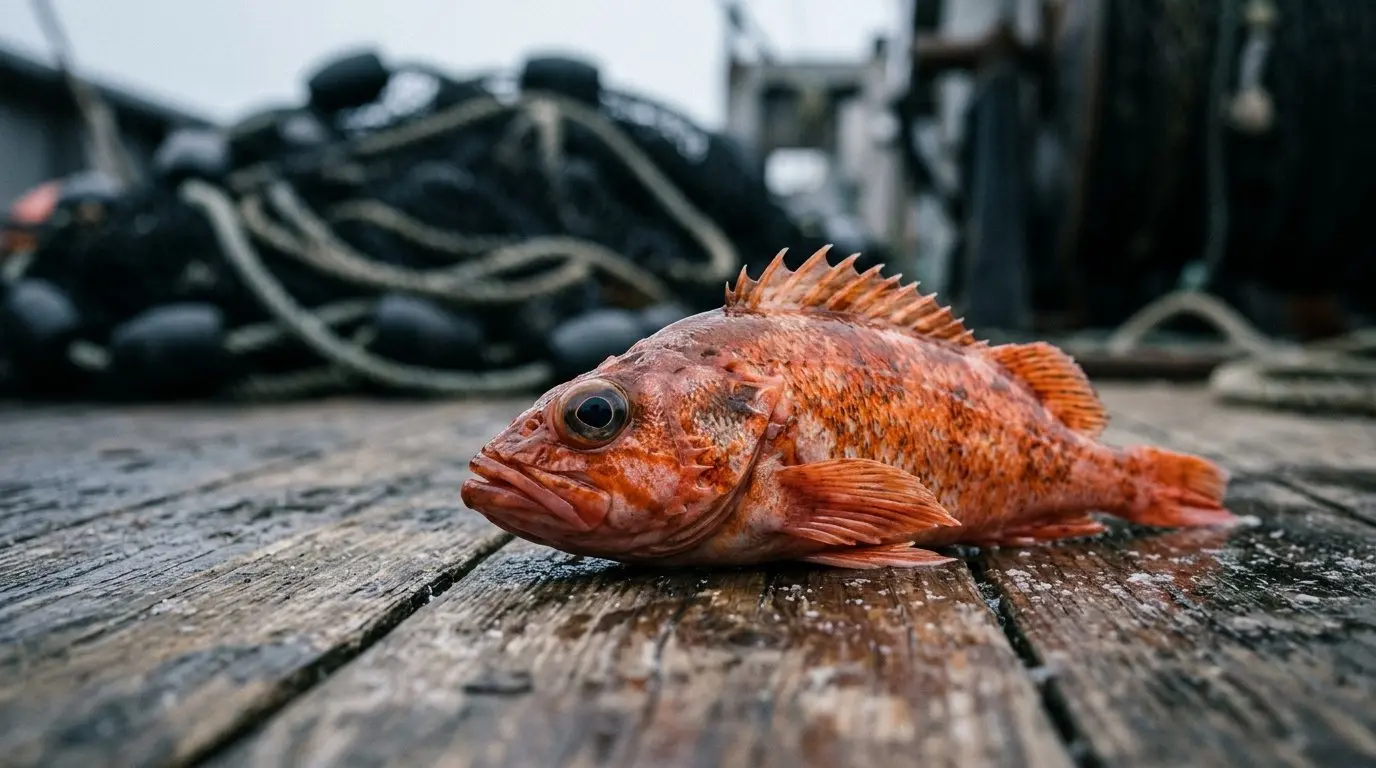
AI image
Federal scientists recommend 8% lower 2027 catch limit for Bering Sea, Aleutian perch
Federal scientists recommend cutting next year's acceptable biological catch for Bering Sea and Aleutian Islands Pacific ocean perch by 8%, to 33,640 metric tons, after the Aleutian survey estimate fell for a second straight time. The North Pacific Fishery Management Council's Plan Team is scheduled to review the draft assessment Tuesday afternoon.
The acceptable biological catch is a ceiling: the total allowable catch, the amount boats may actually take, cannot exceed it. Under the 2026 federal harvest rule, this year's acceptable biological catch is 36,578 tons and the total allowable catch is 33,490 tons, so the recommended 2027 ceiling sits slightly above this year's catch limit.
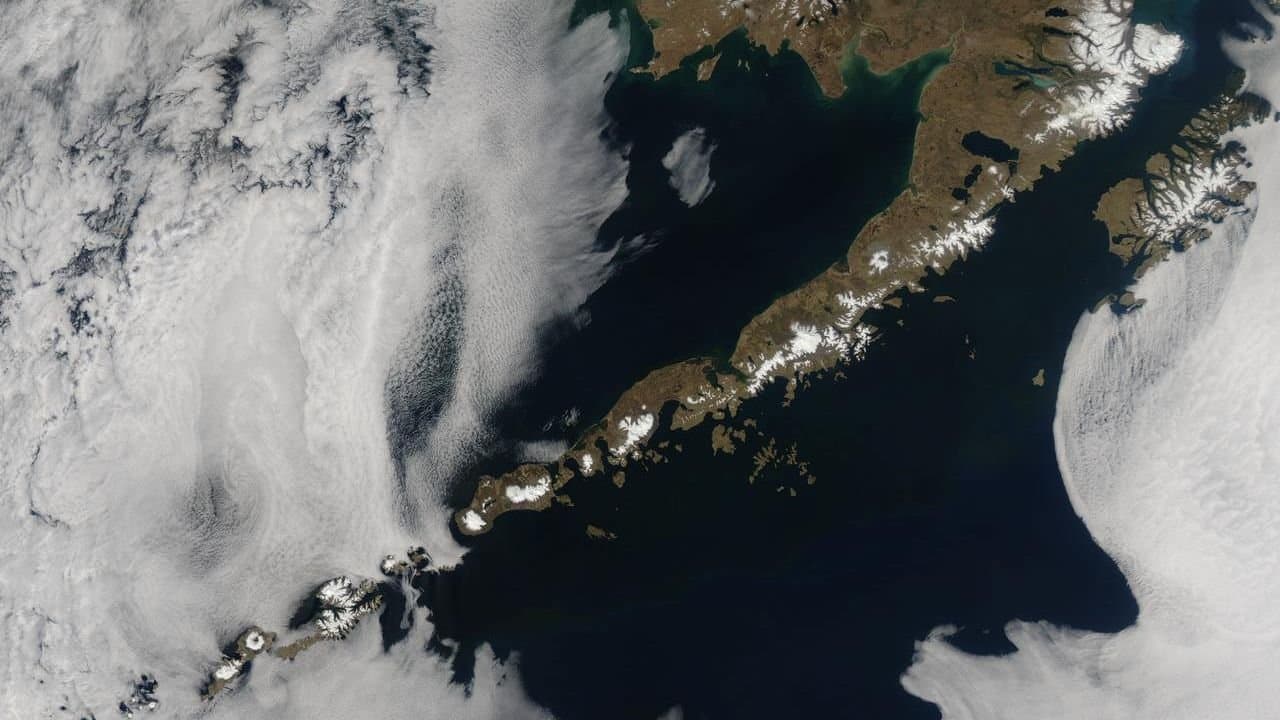
Paul D. Spencer and James N. Ianelli of the Alaska Fisheries Science Center wrote the draft 2026 BSAI Pacific ocean perch assessment. The Aleutian Islands trawl survey estimated a record 1,069,000 tons of perch in 2022, 984,000 tons in 2024 and 785,000 tons this year, a drop the authors put at 20%. Their last full assessment, in 2024, set this year's figures; no projection was produced in 2025 because of the government shutdown.
The draft says the stock is not overfished, not approaching an overfished condition and not subject to overfishing. The authors project 2027 female spawning biomass at 329,342 tons, above the draft's reference level of 269,022 tons. Last year's catch totaled 32,368 tons, against an overfishing limit of 44,594 tons. The authors would lower that limit from 43,084 tons this year to 39,897 tons in 2027.
The authors rate assessment concerns at "increased concern," citing a relatively strong retrospective pattern, with a Mohn's rho of -0.18 (a statistic showing how much past stock estimates have shifted as new data arrived), and poor fits to age and length data. They rated the stock's other three risk categories as normal and still recommend the maximum allowable catch. "The AI trawl survey indicates that BSAI POP remain at high abundances," Spencer and Ianelli wrote.
The draft also replaces the old subarea limits with new "Biologically-informed Recommended Distributions." The western Aleutian figure would fall from 15,088 tons to 12,682 tons, a drop of about a sixth. The eastern Aleutian figure would rise from 6,144 tons to 6,997 tons. The draft does not say whether the lower western figure would reduce that area's catch limit, set this year at 12,000 tons. Through Oct. 10, boats had caught 11,869 tons of it.
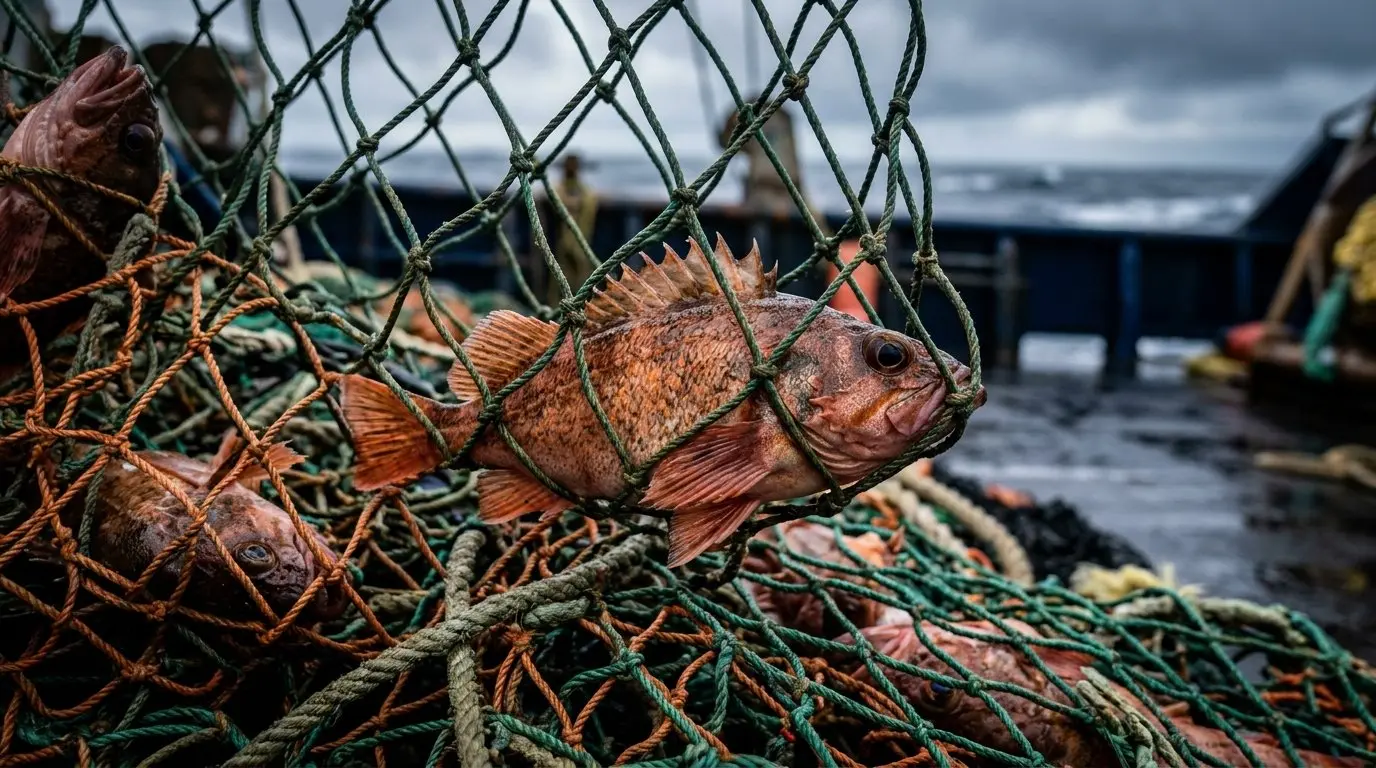
Trawlers catch perch mainly on trips targeting rockfish, Atka mackerel and pollock. The draft says current catches are the largest since the mid-1970s.
The Scientific and Statistical Committee meets Nov. 30 to Dec. 3 at the Egan Center in Anchorage to recommend catch limits, and the North Pacific Fishery Management Council meets Dec. 4 to 9 to adopt them. Written comment closes at noon Alaska time Friday, Nov. 27.
What did you make of this story? (no account needed)
Made by our human newsroom with AI. How humans and AI work here · Grow with our newsroom ·
Get Alaska News in your inbox
Create your free account and get the day’s top stories around 6 each morning, in a few minutes’ read.
Top stories, around 6 each morning.
Stories on what you follow, on Sundays.
Source: North Pacific Fishery Management Council, Scientists recommend an 8 percent lower 2027 catch limit for Bering Sea and Aleutian Pacific ocean perch as the Aleutian survey declines.





Comments
Sign in to leave a comment.
No comments yet. Be the first to share your thoughts.