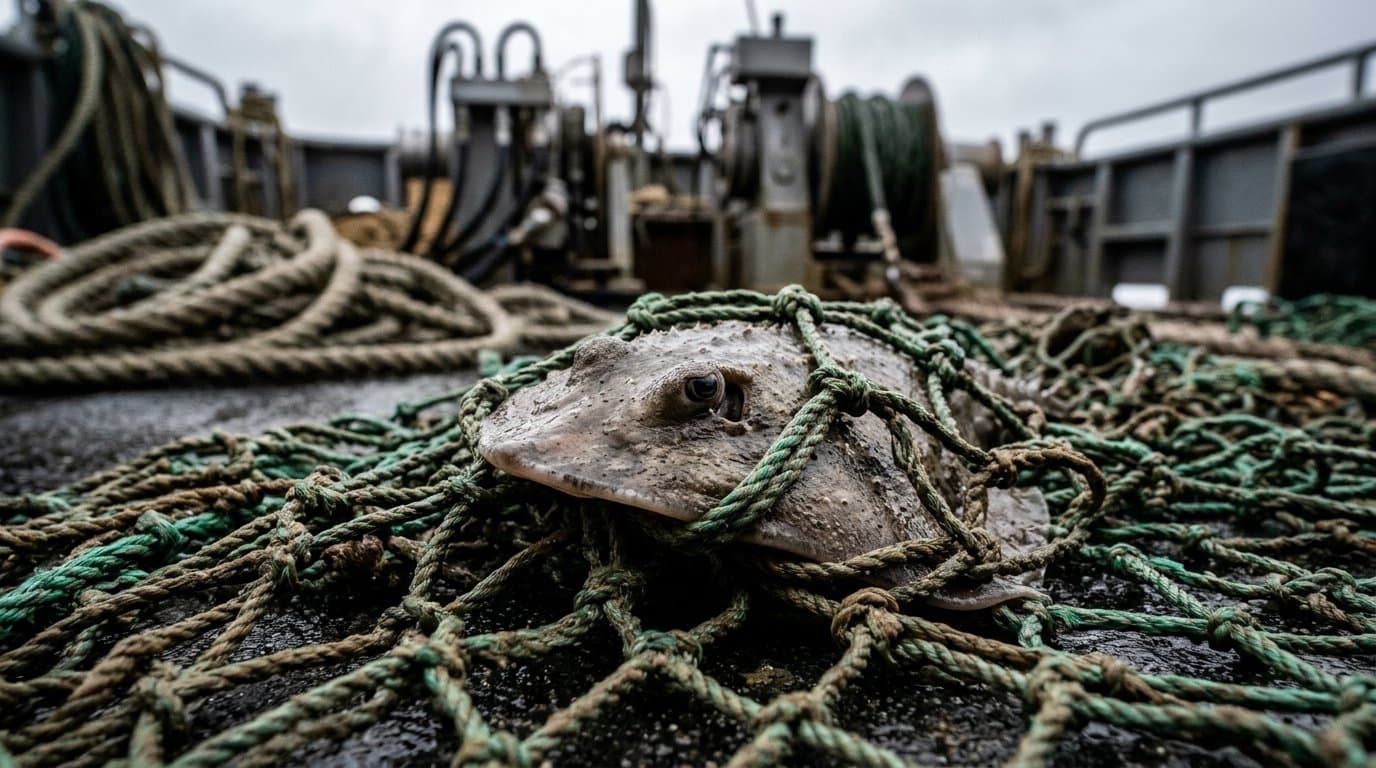
AI image
Scientists recommend lower skate catch limit as Aleutian leopard skate declines
Federal and university scientists are recommending a lower 2027 catch ceiling for skates in the Bering Sea and Aleutian Islands, and warning that one species found only in the Aleutians has declined steeply.
Skates are flat, diamond-shaped fish related to sharks and rays. No fishery targets them, but boats fishing for other species catch them. Most are caught by longliners fishing for Pacific cod.
The draft assessment recommends that the "acceptable biological catch," the scientific ceiling for how much can be caught, fall to 33,163 metric tons next year, from 35,833 this year. That's still far above the estimated 2026 catch of 17,205 tons.
The leopard skate
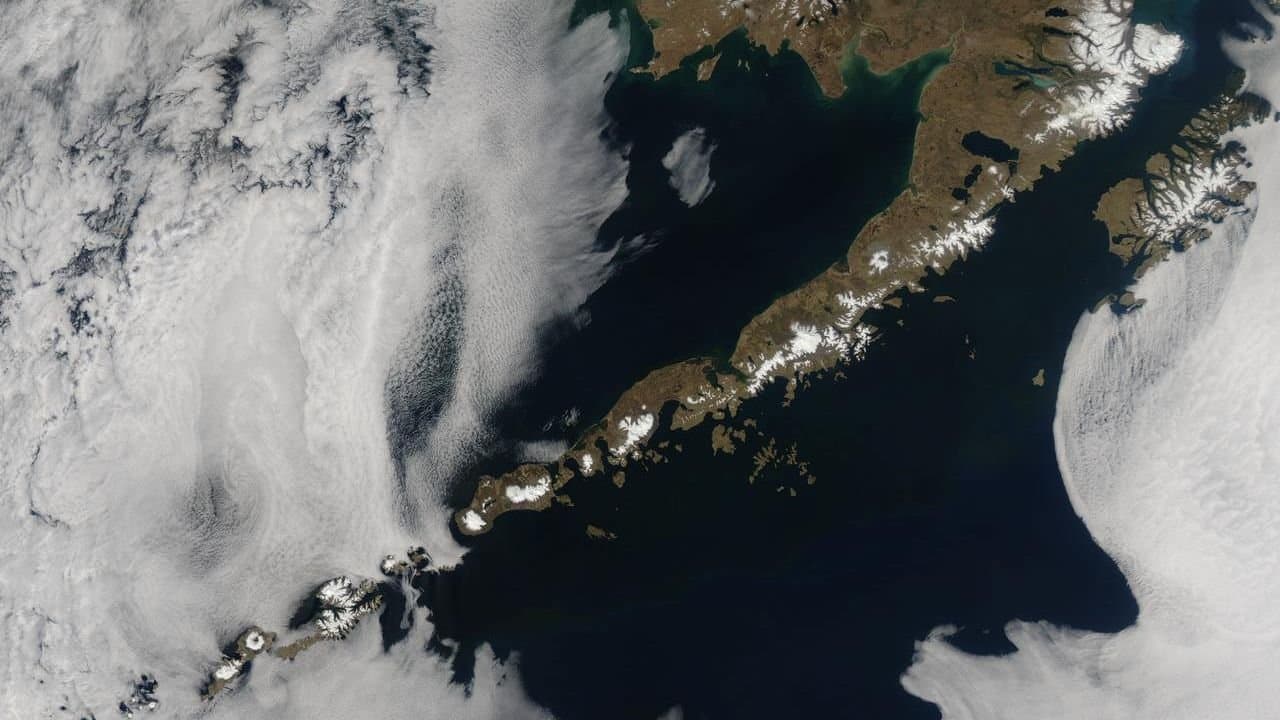
The leopard skate lives only in the Aleutian Islands. Its biomass in federal surveys has dropped 89% since 2010, when surveyors began reliably identifying it, and is now 74% below its long-term average, according to a companion evaluation.
Leopard skate catch isn't tracked. Observers don't identify them to species, so they're recorded as Alaska skates or unidentified skates. The authors write that managing all 16 skate species as one group "may mask localized depletions," and they call for more research, including whether leopard skate could get its own stock assessment.
The Alaska skate, the most common species, is also below average in surveys: 24% below its long-term average in the eastern Bering Sea and 63% below in the Aleutians.
Still, the authors don't recommend setting the catch ceiling any lower than the maximum their model allows. They write that Alaska skate in the eastern Bering Sea is well above target levels, with a strong group of young fish coming up. And because the skates share a single limit, Alaska skate dominates the catch and no one targets skates, they concluded that a cut aimed at the other species wouldn't help them.
How the numbers were set
The authors, Cindy A. Tribuzio, Mary Elizabeth Matta and Steve Barbeaux of the Alaska Fisheries Science Center and Matt Cheng of the University of Alaska Fairbanks, recommend a new computer model for Alaska skate. The one used since 2014 had settings hitting their limits and failed stability tests the new one passes. They project that Alaska skate is not overfished.
The model relies on age data no newer than 2015. More than 500 skate vertebrae, which can be used to tell a fish's age, have been collected from fisheries, but the center's aging program has a severe staffing shortage and only one person with experience aging skates, the authors write.
The assessment also recommends lowering the overfishing limit, a higher line above which catch would count as overfishing, to 40,137 tons from 43,285. Both documents are drafts for scientific review, not agency decisions.
The council's groundfish plan team is scheduled to review the assessment Nov. 18, and written comments close Nov. 13. The North Pacific Fishery Management Council is scheduled to set 2027 limits at its Dec. 4-9 meeting in Anchorage.
What did you make of this story? (no account needed)
Made by our human newsroom with AI. Reviewed by Cale Green. How humans and AI work here · Grow with our newsroom ·
Get Alaska News in your inbox
Create your free account and get the day’s top stories around 6 each morning, in a few minutes’ read.
Top stories, around 6 each morning.
Stories on what you follow, on Sundays.
Source: North Pacific Fishery Management Council.











Comments
Sign in to leave a comment.
No comments yet. Be the first to share your thoughts.