AI image
Federal scientists recommend a rebuilt model for 2027 Bering Sea skate catch limits
Federal scientists are recommending that fishery managers adopt a rebuilt population model for Alaska skate in the Bering Sea and Aleutian Islands. It would replace a model that did not converge: several of its estimates kept running into the limits the model allowed. The new model would shape recommended 2027 skate catch limits, but the North Pacific Fishery Management Council adopts the final overfishing limit, acceptable biological catch (ABC) and total allowable catch.
The draft assessment, by Cindy Tribuzio, Mary Elizabeth Matta and Steve Barbeaux of the Alaska Fisheries Science Center and Matt Cheng of the University of Alaska Fairbanks, recommends lower 2027 skate limits than the old model produces. A separate stock structure review found leopard skate biomass in the Aleutian Islands has fallen 89% since 2010.
The council's Groundfish Plan Team reviews both Wednesday, Nov. 18, in Seattle. The council sets Bering Sea and Aleutian Islands groundfish catch limits at its Nov. 30-Dec. 9 meeting in Anchorage.
In their September 2025 model review, Tribuzio, Matta, Barbeaux and Pete Hulson reported problems with the old model and preferred Model 25_2, which set survey catchability at 0.836, based on research showing many skates escape the survey trawl net. That scaled biomass estimates up compared with an otherwise identical model keeping catchability at 1.
The November draft's recommended Model 25.3 keeps the new fixes to growth and to which skate sizes the nets catch, but leaves catchability at 1, as past models did. The authors wrote that their analysis points to a value below 1 and that they plan to study it further.
The model has had no new skate age data since 2015, so growth is now estimated outside it, and the model relies heavily on length data.
The draft recommends a 2027 ABC of 33,163 metric tons and an overfishing limit of 40,137 tons for the whole skate complex, which includes 16 species and is managed with one set of limits. Alaska skate accounts for 23,366 tons of that ABC. Model 25.3 gives lower 2027 limits than the old model but a more optimistic 2028 projection. Alaska skate is not overfished.
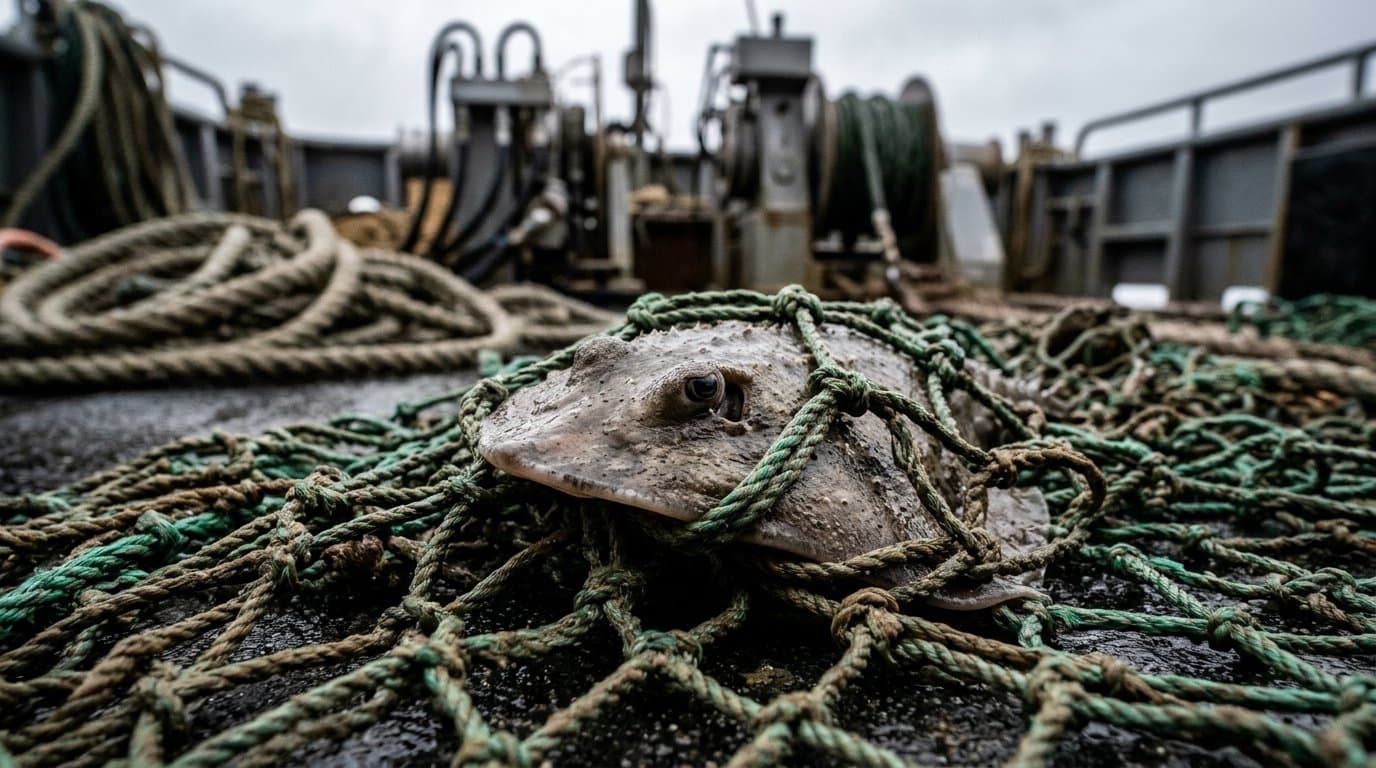
Skates have no directed fishery, but about 80% of eastern Bering Sea skate catch comes in fisheries targeting Pacific cod, according to the draft. The Alaska skate population has decreased since 2015, and the stock structure review put 2026 eastern Bering Sea biomass 24% below the long-term mean.
Written comments for the council meeting are open until noon Alaska time Nov. 27.
What did you make of this story? (no account needed)
Made by our human newsroom with AI. How humans and AI work here · Grow with our newsroom ·
Get Alaska News in your inbox
Create your free account and get the day’s top stories around 6 each morning, in a few minutes’ read.
Top stories, around 6 each morning.
Stories on what you follow, on Sundays.
Source: NPFMC.






Comments
Sign in to leave a comment.
No comments yet. Be the first to share your thoughts.