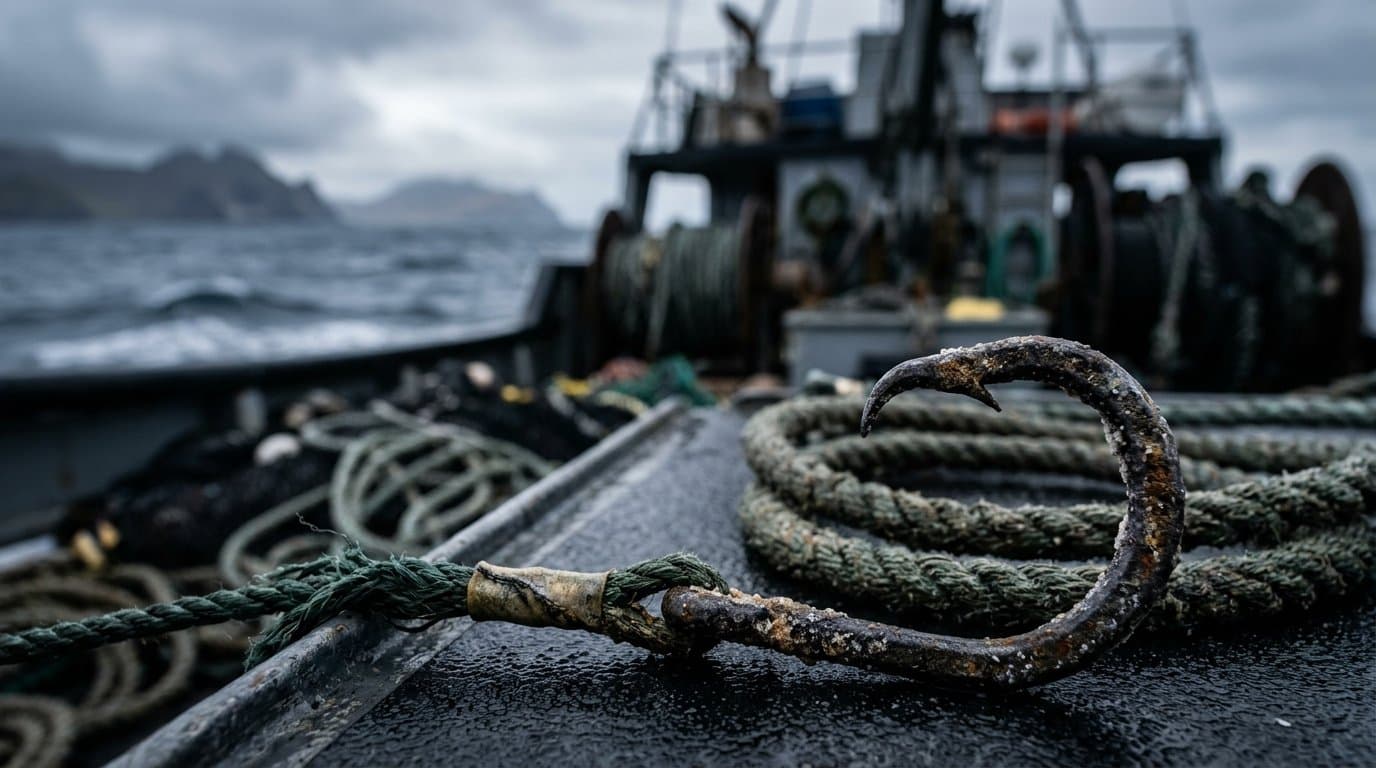
AI image
Report estimates western Aleutian fishing boats caught twice the usual number of seabirds
Commercial fishing boats in the far western Aleutian Islands caught an estimated 741 seabirds last year, more than twice the usual number, according to a draft federal report.
All 741 were shearwaters, according to the report. Shearwaters are seabirds that scavenge bait and fish scraps behind fishing boats.
The estimate, for federally managed groundfish and halibut fisheries, is 128% above the average from 2016 to 2024, according to the Aleutian Islands Ecosystem Status Report, prepared for the North Pacific Fishery Management Council.
It isn't a record. The same report puts the western Aleutians at 1,664 seabirds in 2019. And across the whole Aleutian chain, the report says, seabird bycatch fell in 2025 compared with the recent average. No seabirds listed under the Endangered Species Act were caught in 2024 or 2025.
Bycatch is anything fishermen catch that they weren't trying to catch. Seabirds get hooked going after baited longlines or caught up in trawl gear.
Most of the shearwaters caught in the Aleutians are short-tailed shearwaters. They can switch from their natural prey to bait and fish waste behind boats when natural prey is scarce, the report says.
The authors point to a pattern. Past high shearwater bycatch has lined up with odd-numbered years, when pink salmon are abundant, and 2025 fits that pattern. But the authors say more work is needed on the fishing and ecological factors behind it.
The numbers are estimates, not counts. Federal observers aboard some commercial vessels record what they see, and NOAA scientists extrapolate from those records to the whole fleet. In one example, the report estimates 66 storm petrels were caught in the central Aleutians in 2025, based on a single Leach's storm petrel found in a trawl sample. The authors call it an example of how hard it is to extrapolate rare bycatch events.
Elsewhere in the chain, the eastern Aleutians' estimate fell 63%, to 59 birds, which the report attributes largely to fewer shearwaters and northern fulmars being caught. The central Aleutians' total was 71 birds.
Longline boats over 26 feet have had to use streamer lines, which flap above the baited hooks to scare birds away, since 2004. The council says rules adopted that year cut seabird bycatch by 73% from late-1990s levels.
The council uses this report and similar ones for the Bering Sea and Gulf of Alaska when it sets catch limits for Alaska's federal groundfish fisheries in December.
What did you make of this story? (no account needed)
Made by our human newsroom with AI. Reviewed by Cale Green. How humans and AI work here · Grow with our newsroom ·
Get Alaska News in your inbox
Create your free account and get the day’s top stories around 6 each morning, in a few minutes’ read.
Top stories, around 6 each morning.
Stories on what you follow, on Sundays.
Assembled from public records the newsroom collected.









Comments
Sign in to leave a comment.
No comments yet. Be the first to share your thoughts.