Senate unveils gas pipeline bill with $600M property tax, consumer protections
The Alaska Senate Resources Committee introduced a major rewrite of the governor's natural gas pipeline bill Tuesday, raising the proposed property tax nearly eightfold and adding consumer protections against cost overruns.
The committee substitute sets property tax at $600 million at full production, compared to the governor's proposal of $74 million. The bill also prohibits shifting project cost overruns to consumers and caps gas prices at $12 per thousand cubic feet before export begins and $5 after export. Those are figures the governor has cited in press conferences.
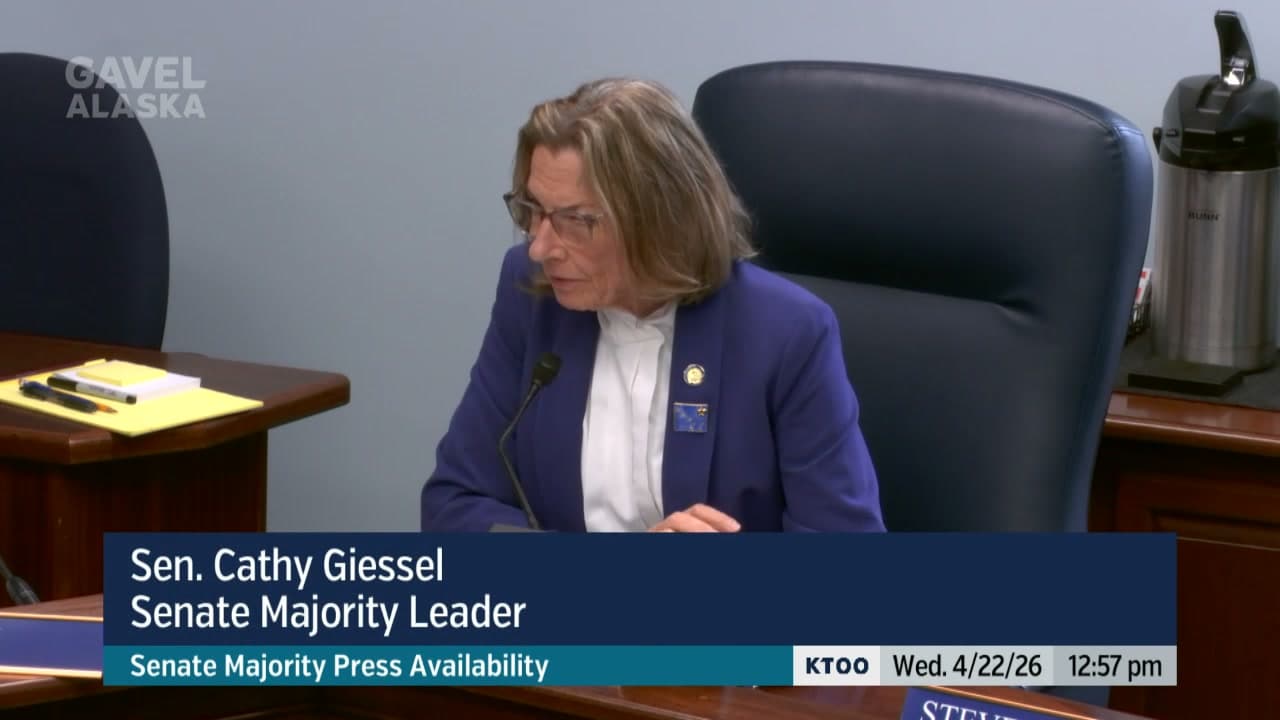
"The Senate Resources Committee has three goals that we're working on here," Senate Resources Committee Chair Cathy Giessel said. "First of all, to get North Slope gas to Alaska consumers at the lowest possible cost. To protect Alaska consumers from project cost overruns and tax giveaways. And to protect communities from the damaging impacts during construction."
The $600 million property tax figure comes from the most recent producer-led pipeline proposal, Giessel said. The committee adopted the governor's volumetric tax structure but adjusted the rate to match what producers had previously proposed paying.
"The governor proposed at full production property tax of about $74 million," Giessel said. "The Senate Resources went back and looked at what the most recent project has been. Remember, we've had multiple projects proposed, but the most recent one, producer-led, was around $600 million in property tax at full production."
The bill includes $1 million per pipeline mile in impact payments to local communities during construction. Those payments would go into a fund that communities could apply to for covering construction impacts.
"We put in place impact payments for local communities during construction," Giessel said. "That's $1 million per pipeline mile installed. So that would be a trench dug, pieces of pipe put into it and welded together. Each mile would have an impact payment requirement of $1 million."
The consumer protection provisions go beyond the governor's proposal. The bill prohibits any cost overruns from being shifted onto gas prices for consumers.
"We disallow any cost overruns for the project to be shifted onto the cost of gas for consumers," Giessel said. "We limit the price of gas to the price that the governor is announcing, using in his press conferences. The governor says the cost of gas will be $12 an MCF before export begins and $5 an MCF after export."
Other provisions include a corporate income tax. That matters because Glenfarn and several oil companies involved are S corporations or limited liability companies that would otherwise avoid state corporate taxes. The bill adjusts property tax annually by the Anchorage Consumer Price Index rather than the governor's proposed 1 percent per year.
The bill requires pursuit of a spur line to Fairbanks and mandates that taxes be shared with local governments statewide after full construction. It also extends the legislative review period from six months to 12 months before the state would commit to major investments in the project.
The bill also requires the pension fund remain at least 90 percent funded. If funding falls below that threshold, the bill requires contribution adjustments for all three parties in the defined benefit pension: employers, employees, and retirees. The pension fund begins 100 percent funded under the bill's terms, Giessel said.
Giessel cited two constitutional obligations driving the committee's approach: Article 8, which requires maximum benefit from Alaska's gas for Alaska's people, and Article 9, which prohibits surrendering the power of taxation.
The committee is working with consultants Gaffney Klein and Pegasus to model the bill's provisions. The Resources Committee has been meeting daily on the pipeline legislation and will continue those meetings for at least another week.
The governor's office reached out to schedule a meeting with Giessel on the bill but rescheduled twice and the meeting has not occurred, she said.
The bill repeals all law changes if the project does not come to fruition.
This article is based on a public meeting — Alaska Legislature: Senate Majority Presser, 4/22/26, 12:50pm ().
AI-assisted. How we use AI Transcript byLucas Brown
Stay informed. Support what matters.
Free, permanent access to local news you can verify. Subscribe to support Alaska News and go ad-free.
Related Coverage
Senate panel advances gas pipeline bill with reduced community payments
Alaska News · 4mo ago
Senate panel advances gas pipeline tax overhaul with $610M revenue target
Alaska News · 5mo ago
Senate panel proposes doubling Dalton Highway surcharge in gas line bill
Alaska News · 4mo ago
Alaska House Rewrites LNG Tax Bill, Raising Rate While Empowering Boroughs
Alaska News · 4mo ago
Senate panel doubles oil surcharge for Dalton Highway maintenance in gas pipeline bill
Alaska News · 4mo ago
Comments
Sign in to leave a comment.
No comments yet. Be the first to share your thoughts.