Senate panel advances gas pipeline tax overhaul with $610M revenue target
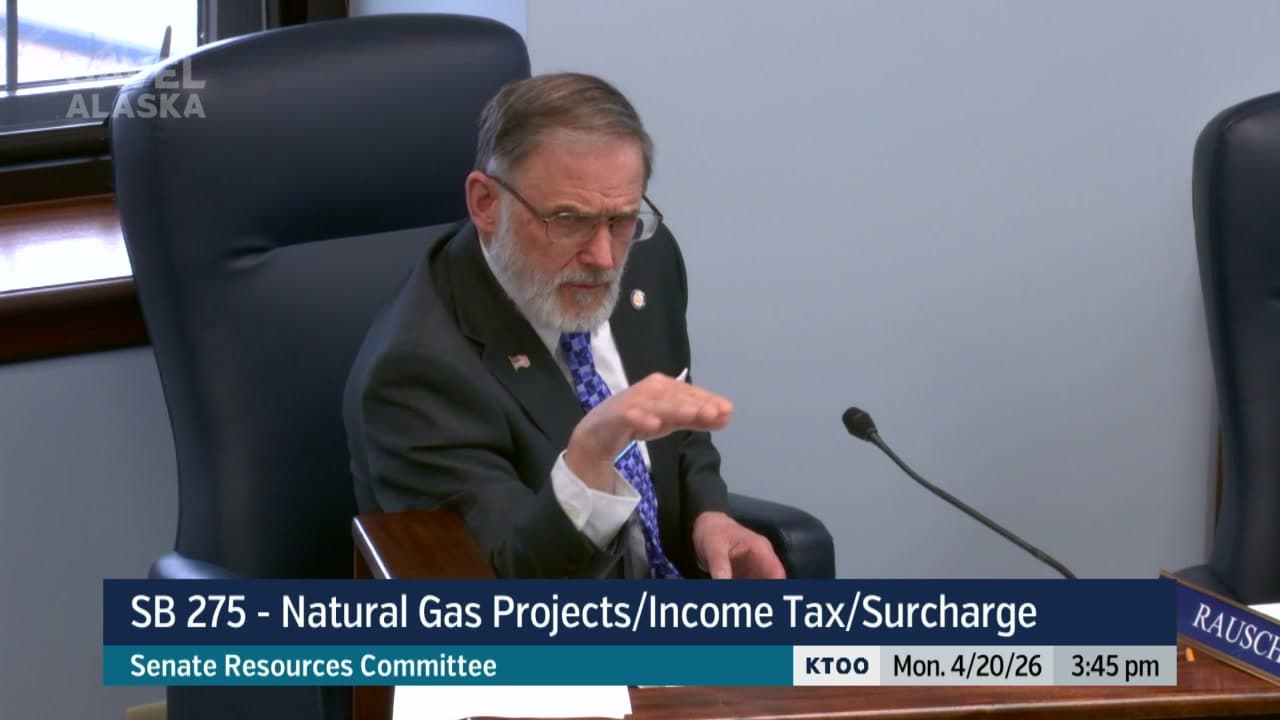
The Alaska Senate Resources Committee voted 5-2 Monday to advance a sweeping overhaul of how the state taxes natural gas pipelines, combining strict legislative oversight with a new tax structure that could generate $610 million annually once the Alaska LNG project reaches full capacity.
The committee substitute merges two separate bills into a single measure that fundamentally changes how Alaska captures revenue from its natural gas resources. The bill replaces the traditional 20-mill property tax with a volumetric tax ranging from 15 to 25 cents per thousand cubic feet depending on which facility processes the gas. That is a significant departure from Governor Mike Dunleavy's original proposal in March that called for a 6-cent rate.
Senate Majority Legal Counsel told the committee the alternative volumetric tax structure would charge 15 cents per thousand cubic feet for gas moving through the pipeline itself and the gas treatment plant on the North Slope. Gas processed through the liquefied natural gas export facility near Kenai would face a 25-cent rate. Gas moving through all three facilities would accumulate the full 55-cent charge.
"At that maximum amount, we were expecting, we are expecting $610 million under this alternative volumetric tax," Senator Forrest Dunbar said. The projection is based on capacity of 3.3 billion cubic feet per day with 2.7 billion cubic feet destined for export markets.
The bill also creates a 9.4 percent income tax on pass-through entities involved in gas projects. That includes limited liability companies and S corporations. The tax closes what the committee described as a loophole created when Alaska repealed its personal income tax in 1980 while maintaining corporate income taxes. The tax would apply to entities earning more than $5 million in taxable income from gas production or pipeline transportation. Current partners like Glenfarn, which holds a 75 percent stake in the Alaska Gasline Development Corporation's pipeline subsidiary, would be covered. So would Great Bear, an LLC that has discussed supplying gas from the Pantheon lease.
The committee substitute requires legislative approval before AGDC can divest its remaining 25 percent stake in the pipeline subsidiary or enter into business relationships with foreign entities. The bill also mandates that AGDC ensure a spur line to serve Fairbanks and caps the price AGDC can charge Alaska utilities at $12 per thousand cubic feet before the export terminal opens and $5 afterward.
Dunbar questioned why the bill used past tense when describing a 15-cent surcharge on gas processed through the LNG facility for foreign markets. A committee member explained the committee substitute eliminates that surcharge, which would have generated an estimated $389 million annually, in favor of the higher volumetric rate on the export facility itself.
Senator George Rauscher raised concerns about how the bill would affect Fairbanks consumers. He noted the spur line would face both the 30-cent volumetric tax for gas moving through the pipeline and treatment plant plus standard property taxes on the spur line itself. The committee is still investigating the spur line's tax treatment. If the Fairbanks North Star Borough owned the line outright, it would be exempt from taxation under the state constitution.
The bill includes sunset provisions that would restore traditional property tax treatment if construction does not begin by January 1, 2028, or if commercial operations do not commence by January 1, 2032. It also creates an impact payment fund requiring developers to pay $1 million per mile of pipeline constructed each year, with funds available for legislative appropriation to communities affected by construction.
Revenue distribution under the alternative volumetric tax would split proceeds 50-50 between the state and affected municipalities. For the pipeline itself, half would go to municipalities along the corridor based on the proportion of pipeline within their boundaries. The state would retain the share from unorganized boroughs. The North Slope Borough would receive half the revenue from the gas treatment plant. The Kenai Peninsula Borough would receive half the revenue from the LNG export facility.
Dunbar noted the Kenai Peninsula Borough could receive between $100 million and $130 million annually under the structure. That raises potential equity concerns under state education funding formulas. Legislative Legal Services confirmed the office had flagged the equity issue when reviewing the original version and said additional analysis would be provided.
The bill also requires AGDC to maximize use of Alaska contractors and suppliers during development and construction. State utilities would receive priority over export sales if pipeline capacity is reduced. AGDC must publicly disclose owners, investors and gas purchasers in an online database.
The transparency provisions clarify that legislators can attend executive sessions with developers without signing nondisclosure agreements if the developer consents. Information about project economics can no longer be kept confidential but must be summarized or provided in ranges.
The committee will take up the bill again Tuesday morning with a detailed sectional analysis. The measure still requires passage by the full Senate and House before reaching the governor. AGDC, Glenfarn, Great Bear, and affected municipalities including the Kenai Peninsula Borough and Fairbanks North Star Borough have not publicly responded to the committee substitute.
This article is based on a public meeting — Alaska Legislature: Senate Resources, 4/20/26, 3:30pm ().
AI-assisted. How we use AI Transcript byLucas Brown
Stay informed. Support what matters.
Free, permanent access to local news you can verify. Subscribe to support Alaska News and go ad-free.
Related Coverage
Senate unveils gas pipeline bill with $600M property tax, consumer protections
Alaska News · 5mo ago
Alaska House Rewrites LNG Tax Bill, Raising Rate While Empowering Boroughs
Alaska News · 4mo ago
Senate panel debates gas pipeline tax structure in 26th hearing
Alaska News · 4mo ago
Senate panel advances gas pipeline bill with oil tax floor increase
Alaska News · 4mo ago
Senate panel advances gas pipeline bill with reduced community payments
Alaska News · 4mo ago
Comments
Sign in to leave a comment.
No comments yet. Be the first to share your thoughts.