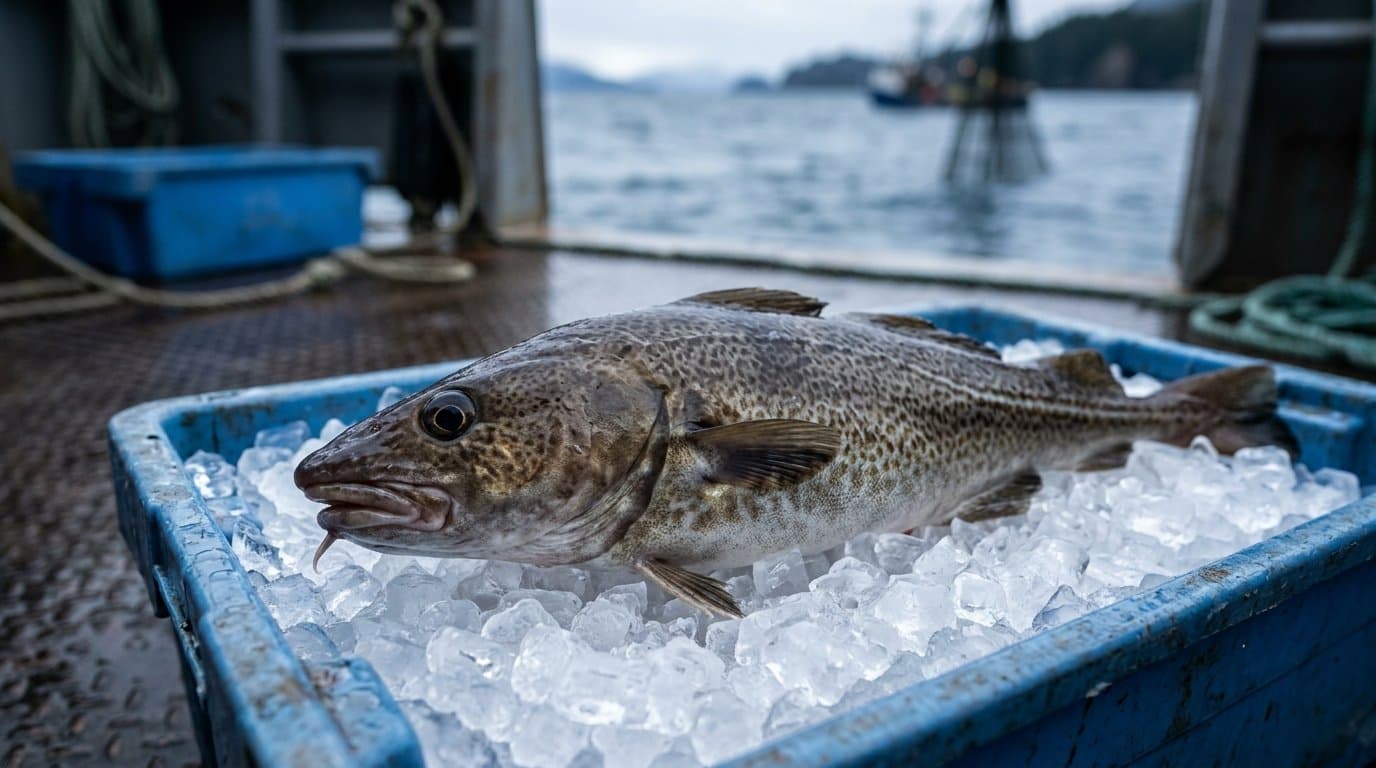
AI image
Scientists recommend keeping the Gulf of Alaska cod limit near this year's level in 2027
Fishermen in the Gulf of Alaska should be allowed to catch about as much Pacific cod next year as this year, federal scientists say.
That's more than the rules now on the books allow. The 2027 limit already written into federal regulations was based on last year's projections, and the new recommendation is 30% higher, because of "updated data and an increase in the estimated stock status," the scientists write.
The recommended ceiling is 41,937 metric tons, or about 92 million pounds, 1% above this year's 41,520 tons, according to the stock assessment.
That figure is the most scientists advise taking from the Gulf in a year, by pot, trawl, longline and jig boats in both state and federal waters. Federal managers then set their own limit lower, to leave room for state-waters fisheries. This year's federal limit is 30,053 tons.
The Gulf's cod limit fell from 88,342 tons in 2017 to 18,000 in 2018, after the marine heatwave of 2014 to 2016, and the federal directed fishery closed in 2020. Now "the stock appears to be recovering from low levels," write the assessment's authors, led by federal scientist Peter-John F. Hulson.
The 2025 federal trawl survey found 39.2% more cod by weight than in 2023, though it sampled the fewest stations since 1990. And this year's beach seine survey found near-record numbers of cod in their first year of life.
The stock is still below where managers aim to keep it. The authors project the spawning stock, the weight of mature female cod, at 32% of its estimated unfished level in 2027. That's below the 40% mark where the harvest rule starts lowering the allowed fishing rate.
The stock isn't overfished, and it isn't being overfished, but it "remains in an undesirable stock status," they write.
They also flag two cautions. A forecast El Niño could bring warm water in 2027 that "may impact population productivity." And the number of young fish entering the stock has been below average since 2014, so the forecast for spawning fish is "likely" overly optimistic, though they say that matters little for the next two years' limits.
For 2028, they recommend a lower limit of 35,866 tons, as the spawning stock is projected to shrink from 51,423 tons to 46,230, assuming fleets catch the full 2027 limit.
The recommendations for Alaska's other cod stocks went in opposite directions. In the eastern Bering Sea, scientists are calling for a lower limit after this summer's survey found the fewest cod since 1989. In the Aleutian Islands, they recommend a limit two-thirds higher.
This year, the Gulf's fleets came close to their limits. By Oct. 26, federal fisheries had caught 88% of theirs and state-waters fisheries 98%, according to the assessment. In the Western Gulf, federal managers closed the pot boats' cod fishery Oct. 23, two days after giving them more fish.
More boats are chasing Central Gulf cod, too. There, 152 catcher vessels targeted cod this year, nearly twice the 79 in 2022, according to the National Marine Fisheries Service's year-end report.
By area, the recommendation would give the Central Gulf 29,020 tons, the Western Gulf 10,401 and the Eastern Gulf 2,516.
A panel of scientists, the Gulf of Alaska Groundfish Plan Team, adopted the recommendation unchanged. The North Pacific Fishery Management Council takes up next year's limits Dec. 7 and 8 in Anchorage, and a final rule due early next year will replace the 2027 numbers now in regulation.
What did you make of this story? (no account needed)
Made by our human newsroom with AI. Reviewed by Cale Green. How humans and AI work here · Grow with our newsroom ·
Keep Alaska News free for everyone.
No paywall, ever. Members pay so everyone can read the meetings and records Alaska News covers.
Get Alaska News in your inbox
Create your free account and get the day’s top stories around 6 each morning, in a few minutes’ read.
Top stories, around 6 each morning.
Stories on what you follow, on Sundays.
Source: North Pacific Fishery Management Council, Final Gulf cod assessment recommends a 2027 limit of 41,937 tons, 30% above the number now on the books, with a cut to follow in 2028.







Comments
Sign in to leave a comment.
No comments yet. Be the first to share your thoughts.