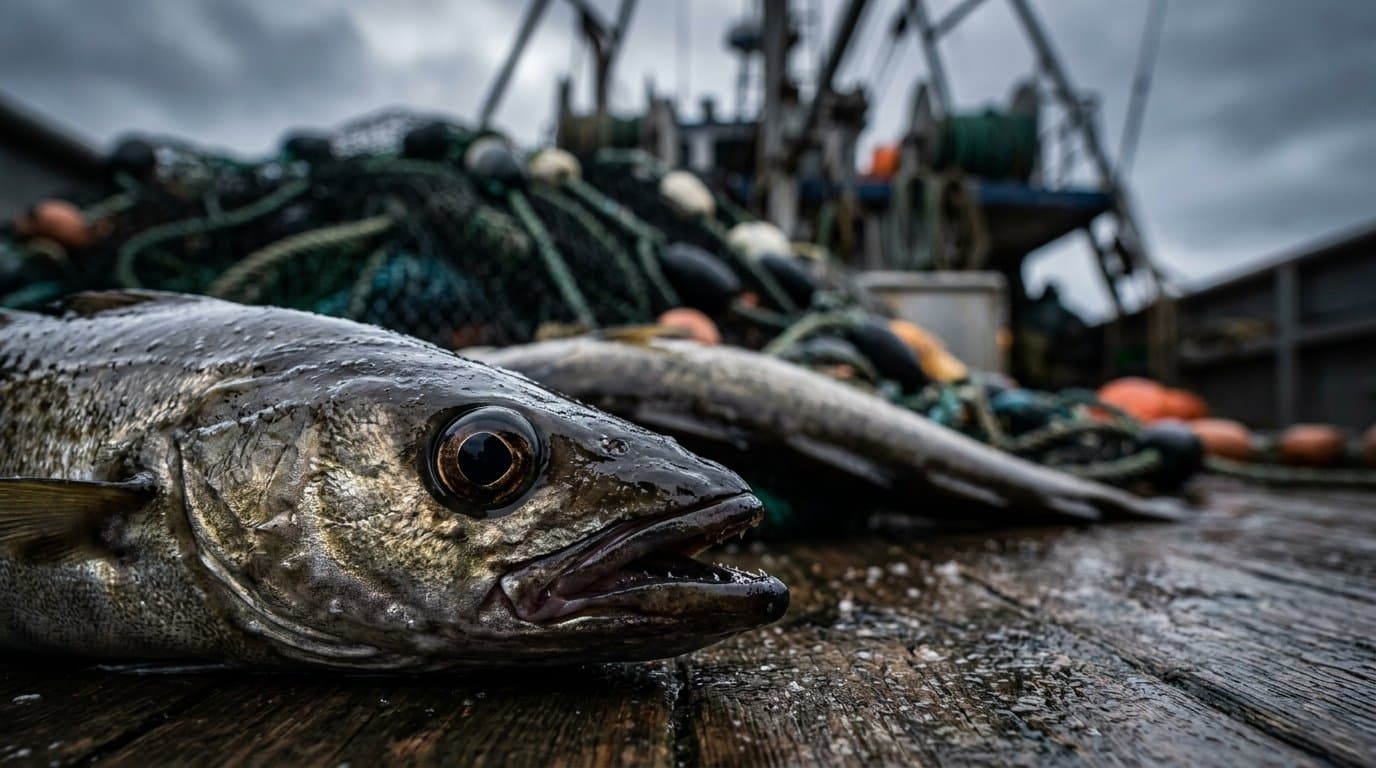
AI image
Scientists recommend a lower Bering Sea pollock ceiling though surveys found more fish
Federal scientists recommended Sunday that next year's ceiling on the eastern Bering Sea pollock catch drop 7%, even though surveys this year found more of the fish.
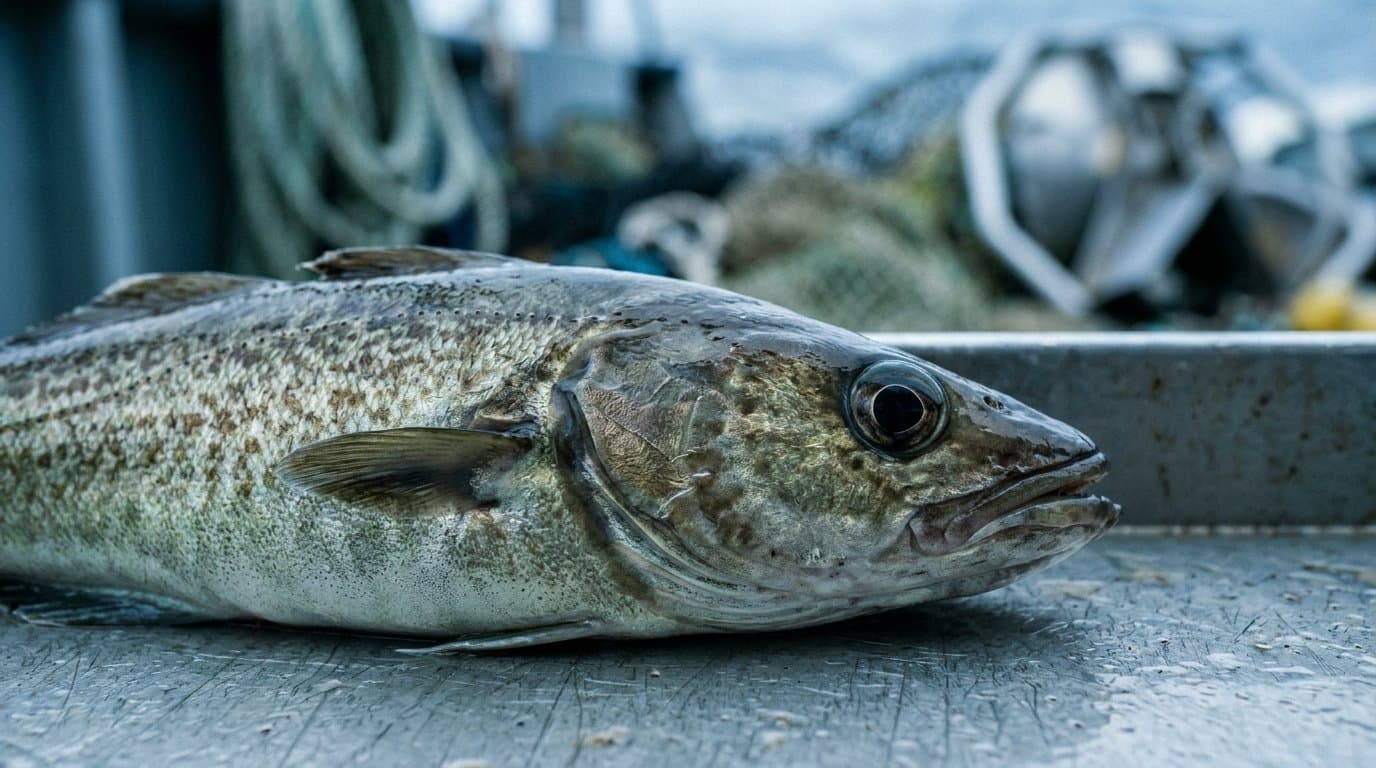
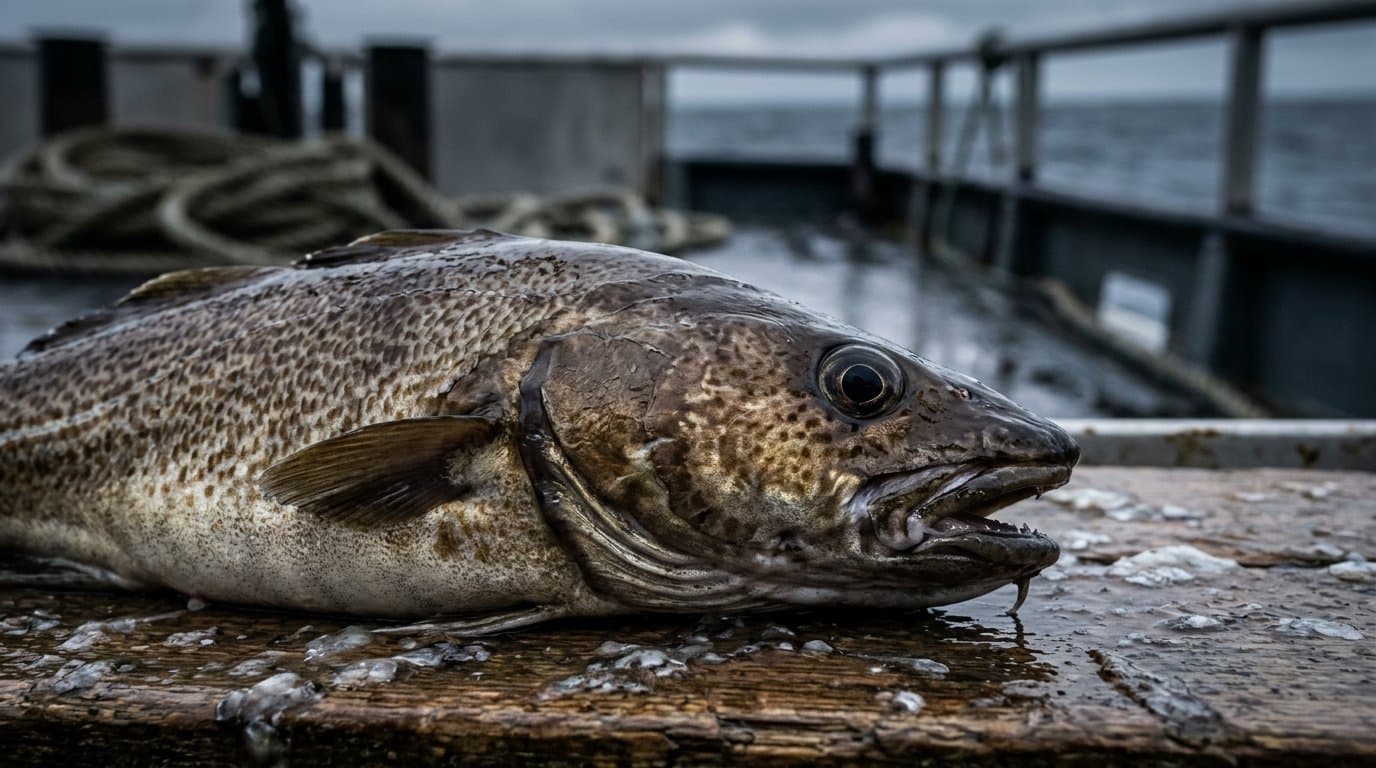
Pollock is a mild white fish that shows up in fish sticks, fast-food fish sandwiches and imitation crab. It's caught by trawlers, boats that pull large nets through the water, and it's big money: pollock products from the Bering Sea and Aleutian Islands were worth about $1.47 billion when processors first sold them in 2024, according to the scientists' assessment.
A tenth of the Bering Sea pollock quota is set aside for Western Alaska's community development quota groups, which use the earnings to support coastal villages in the region.
The scientists put the 2027 ceiling at about 1.9 million metric tons, down from about 2 million this year. This year's ceiling was itself down from 2.4 million in 2025.
The drop comes even as the fish appear more plentiful. A survey that counts pollock with sound found 28% more than in 2024. Another, which drags nets along the seafloor, found about 56% more than last year.
The assessment's summary doesn't tie the lower ceiling to any one cause. The clearest change is in the scientists' math: this year's assessment, the first full one since 2024, runs on a new model with a lower cap on how hard the stock can be fished.
The scientists rated the stock as not overfished, with spawning fish well above the level the assessment uses as a benchmark, and they recommended the highest ceiling the rules allow.
The ceiling isn't what the boats actually catch. The North Pacific Fishery Management Council, which manages federal fisheries off Alaska, sets the real limit, called the quota, and it can't go above the ceiling. In every year since 2018 except 2022, the council set it lower.
That's partly because of a bigger limit: federal rules cap the combined catch of all groundfish, including pollock, cod and flatfish, in the Bering Sea and Aleutian Islands at 2 million metric tons, so pollock has to share. This year's pollock quota was about 1.39 million tons, and the fleet caught an estimated 1.31 million. Even after the proposed cut, the ceiling would sit about 520,000 tons above this year's starting quota.
The fleet had a mixed year. Fishing appeared good in the winter-spring season, the scientists wrote, when boats target pollock carrying roe. "Later in the B-season, fishing occurred farther north than normal, and pollock of desirable sizes were limited," they wrote of the summer and fall.
The council's science advisers review the recommendation Nov. 30 to Dec. 3, and the full council meets Dec. 4 to 9 in Anchorage to set 2027 catch limits.
What did you make of this story? (no account needed)
Made by our human newsroom with AI. Reviewed by Cale Green. How humans and AI work here · Grow with our newsroom ·
Keep Alaska News free for everyone.
No paywall, ever. Members pay so everyone can read the meetings and records Alaska News covers.
Get Alaska News in your inbox
Create your free account and get the day’s top stories around 6 each morning, in a few minutes’ read.
Top stories, around 6 each morning.
Stories on what you follow, on Sundays.
Source: North Pacific Fishery Management Council meetings and documents, Final assessment recommends a 7% lower 2027 Bering Sea pollock ceiling, 1.896 million tons, even as surveys find more pollock.





Comments
Sign in to leave a comment.
No comments yet. Be the first to share your thoughts.