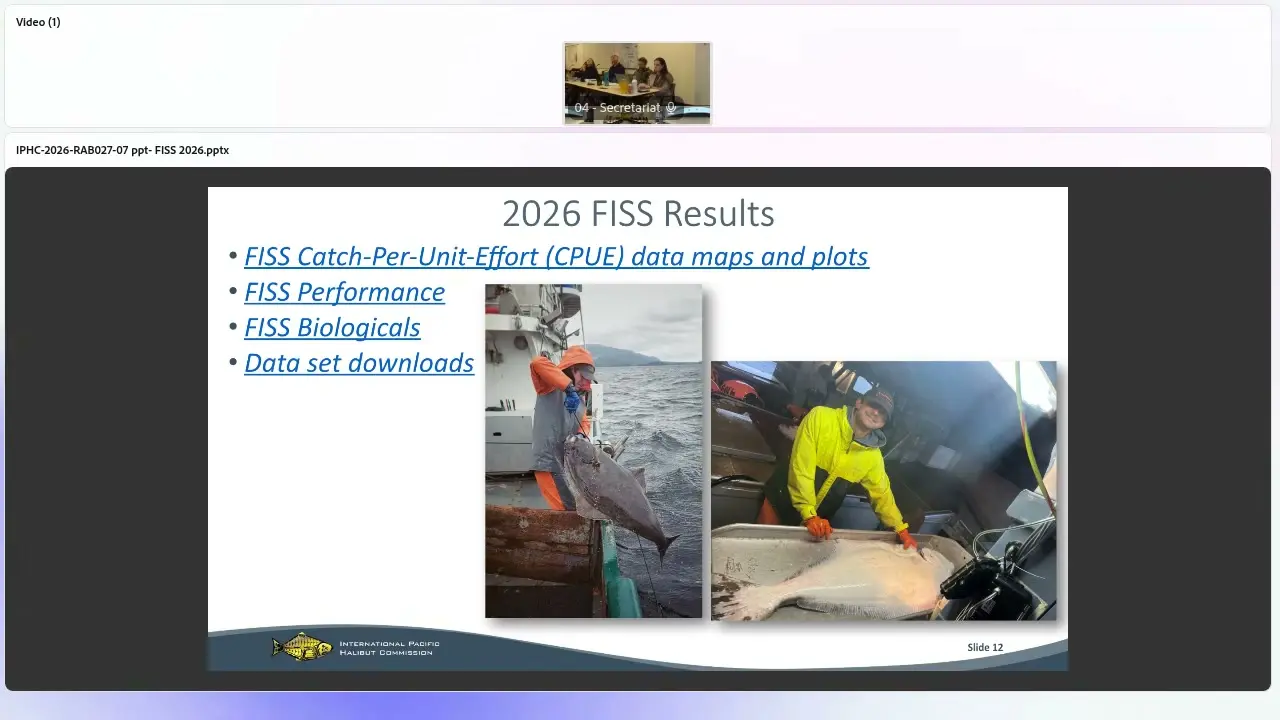
Frame from "27th Session of the IPHC Research Advisory Board Day 1, part 2" · Photo source
A shuttle built to beat killer whales held halibut in trials, but no more are planned
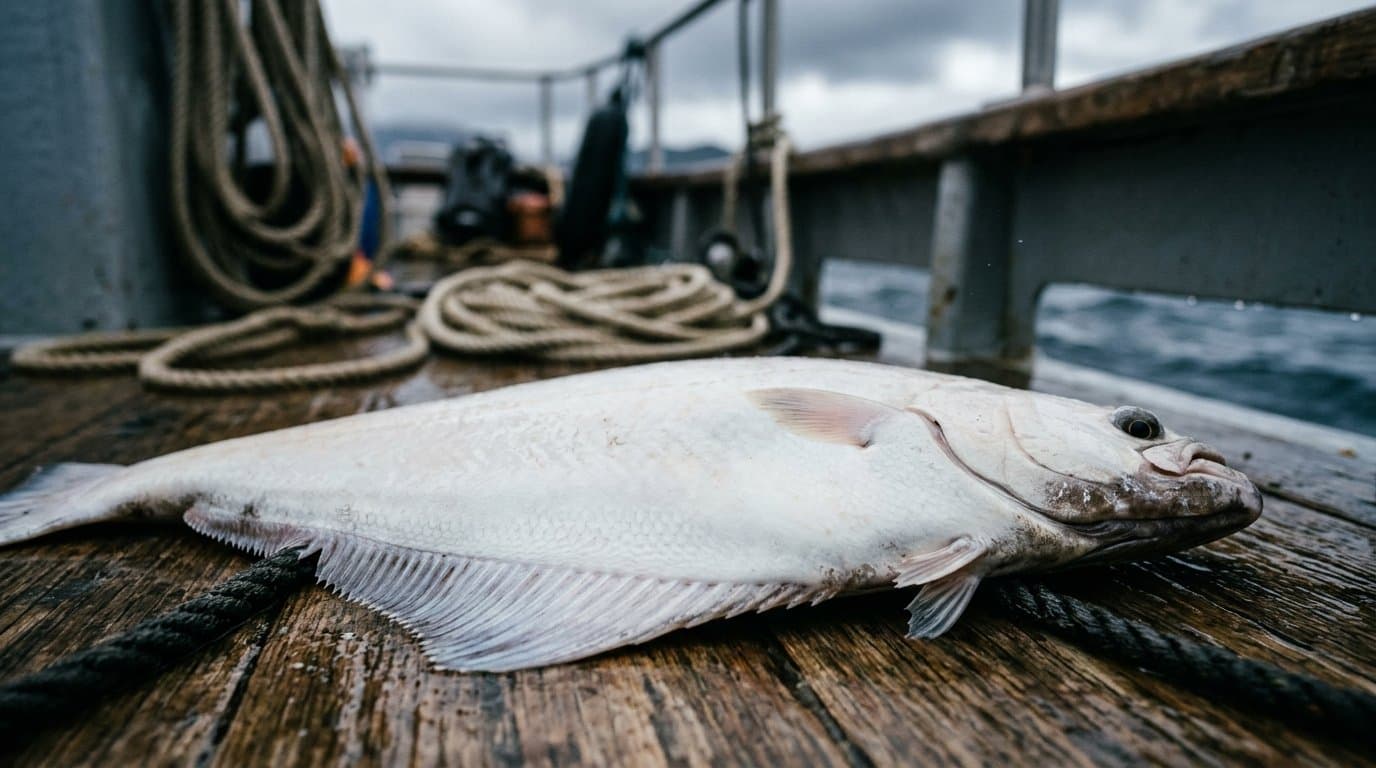
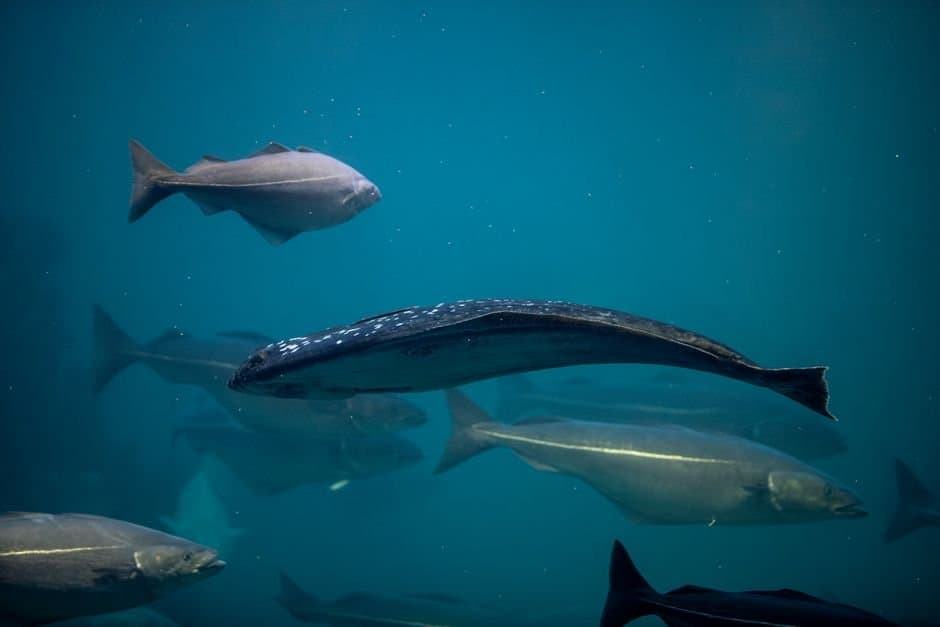
A metal shuttle built to carry hooked fish up to a fishing boat out of reach of killer whales held on to 93% of the halibut that went into it in trials out of Dutch Harbor, according to early results presented Tuesday to the International Pacific Halibut Commission's Research Advisory Board.
The commission has no more trials planned. Staff will finish reviewing the video and look for support for next steps, researcher Claude Dykstra said, "but outside of that, right now we don't have further work currently planned."
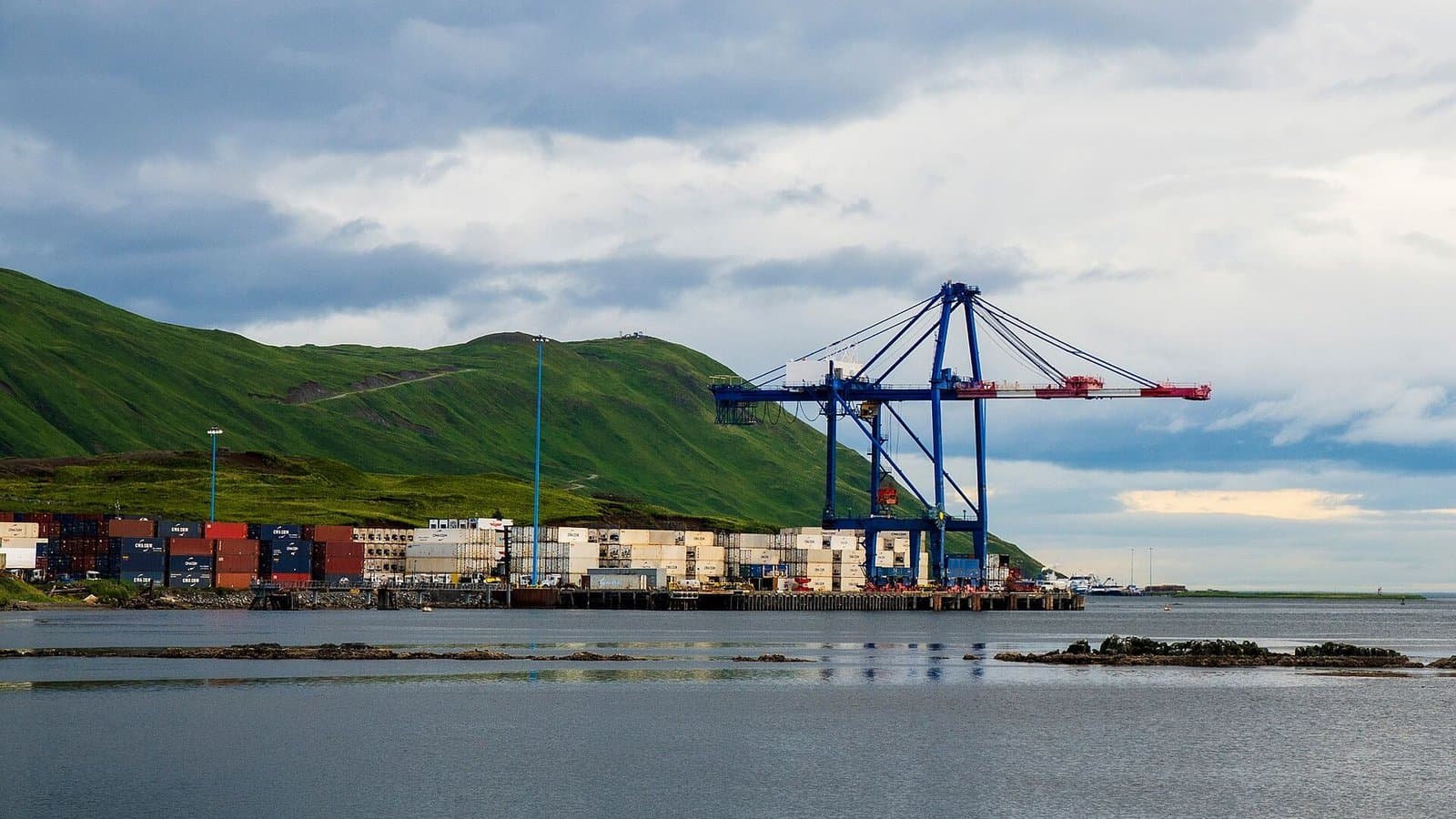
Killer whales working longline grounds out of Dutch Harbor and near the Pribilof Islands strip halibut off the hooks as the gear comes up, sometimes leaving those grounds effectively unfishable, commission staff said in September. Often all that comes back is lips. "You just get a bunch of lips back and you never see one whale," a board member said Tuesday.
When whales were around, halibut catch rates fell 15% to 57%, depending on the region, according to a 2014 study cited in the commission's report to the board. Nobody has been able to measure how many halibut whales take. The stock is near a 40-year low.
Longliners fish with a groundline, a main line laid along the seafloor with baited hooks hanging off it. As the crew hauls, it threads the shuttle, a stainless steel and aluminum cylinder made by the Norwegian company Sago Solutions, onto the groundline. The shuttle slides down and along the line over the hooks. Hooked fish end up inside, off the hook, and the line runs out the back.
At a stopper fixed to the line, the entrance is plugged and the whole device "rides up through the water column, kind of like an elevator with fish inside of it," Dykstra said. The whales can't get in. On deck, the crew opens a door and spills the fish out.
The trials ran in May 2025 aboard the F/V Oracle, with funding from NOAA's Bycatch Reduction Engineering Program. Killer whales were taking fish around six of the 15 sets researchers compared. "The whales were quite aggressive," Dykstra said. "They'd even come charging towards the boat when you got on site."
In the 11 sets reviewed so far, the shuttle kept 112 halibut, the report says. Some small halibut slipped through still on the hook, and one was knocked away before it got in.
It kept 84% of the Pacific cod that went in but only about half the sablefish. Dykstra blamed gaps along the shuttle's sides, which let smaller, rounder fish slip through, and a stopper that didn't fit snugly, which let fish drift out on the way up. He called both easily fixable.
Sand fleas, small scavengers on the seafloor, got to some of the rockfish first. A badly eaten rockfish "would hit the tines on the outside and just explode into a cloud of debris and sand fleas," Dykstra said.
Whether the shuttle puts more fish on deck is less clear. Catch rates compared with regular gear were "all over the place," he said. Some sets had fish in the shuttle and none on regular gear; others were the reverse. He said the small number of sets and how well the device was working on a given set probably played a part.
The shuttles tested weigh about 220 pounds empty, and the report says they brought up as much as 1,800 pounds of fish. Fleets fishing Patagonian toothfish, sold as Chilean sea bass, use them quite a bit, Dykstra said; some own about 20 and set one every 300 to 400 hooks.
The shuttle frees fish by "just yanking the hook out," he said, while commission rules require fishermen to release undersized halibut with minimal damage. Options he listed include weaker gangions, the short lines that tie each hook to the groundline, softer or modified hooks and a rule change letting fishermen who use the shuttle keep undersized halibut.
The commission has two shuttles sitting unused. Next steps, such as hooks that do less damage, would need more studies and funding, Dykstra said.
What did you make of this story? (no account needed)
Made by our human newsroom with AI. Reviewed by Cale Green. How humans and AI work here · Grow with our newsroom · Transcript byLucas Brown
Get Alaska News in your inbox
Create your free account and get the day’s top stories around 6 each morning, in a few minutes’ read.
Top stories, around 6 each morning.
Stories on what you follow, on Sundays.
This article is based on a public meeting of International Pacific Halibut Commission — 27th Session of the IPHC Research Advisory Board Day 1, part 2 ().
Watch key moments from the source meeting. Click to expand.








Comments
Sign in to leave a comment.
No comments yet. Be the first to share your thoughts.