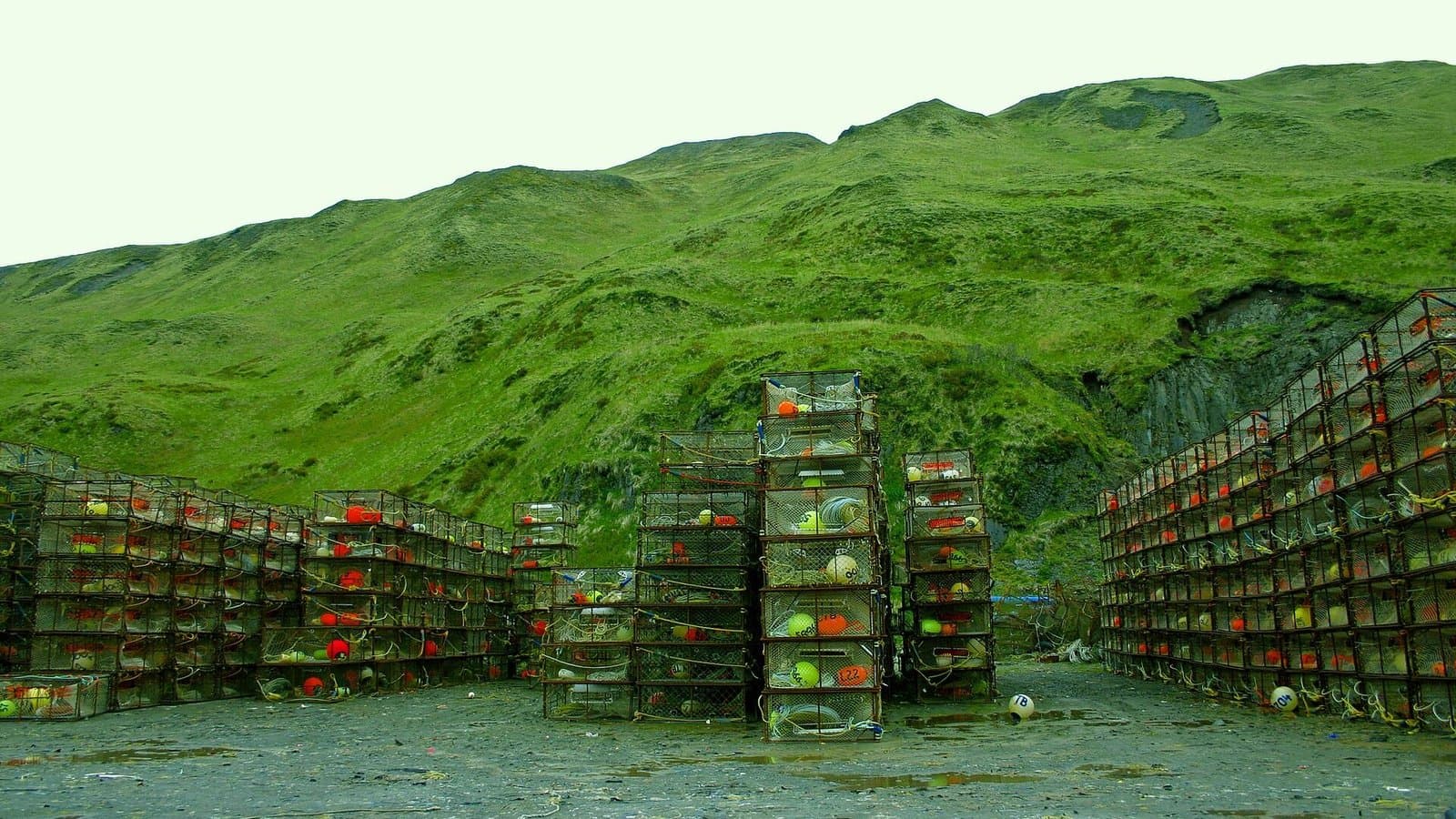
Photo: David Csepp via Wikimedia Commons · Photo source · Public domain
Science panel to weigh cutting Norton Sound red king crab limits by about a quarter
Science panel to weigh cutting Norton Sound red king crab limits by about a quarter
The North Pacific Fishery Management Council's Scientific and Statistical Committee will weigh cutting next year's Norton Sound red king crab limits by about a quarter when it meets in Anchorage Nov. 30 through Dec. 3.
The council's Crab and Scallop Plan Team recommends a 2027 overfishing limit of 143 metric tons, about 315,000 pounds, and an acceptable biological catch of 100 metric tons, about 221,000 pounds, according to the plan team's introduction to the assessment. The council adopted 193 and 135 metric tons for 2026. State biologists who wrote the stock assessment recommended the 26% cut in October, and the plan team backed it at a Nov. 5 meeting.
The committee will review the final assessment and recommend limits. The full council is set to specify them at its Dec. 4-9 meeting at the Egan Center. Written comments are due by noon Nov. 27.
The limits cover three fisheries: a summer commercial opener, a winter commercial fishery through the ice and a year-round subsistence fishery. The acceptable biological catch sits below the overfishing limit, with a buffer for uncertainty in the assessment. The Alaska Department of Fish and Game then sets its commercial catch target, called the guideline harvest level, under both. "The GHL can't be over the ABC or the OFL, so we're always constrained by that legally," Marit Carlson-Van Dort said at a March 14, 2025, Board of Fisheries meeting.
Total fishing mortality in 2026 reached 338,628 pounds, over the 298,000-pound acceptable biological catch but under the 426,000-pound overfishing limit, according to the stock assessment. The 268,000-pound guideline harvest level was exceeded by 16.8%. The assessment ties part of the overage to an increase in catch between the June 23 closure announcement and the noon closure two days later. Crab in the summer fishery averaged 3.7 pounds, the highest on record, and the summer harvest was worth $3.5 million, according to the department's season summary.
The plan team said the overage needed no action from the team and, because it was not tied to scientific uncertainty, no change to the catch buffer, according to its November report. Under the crab plan, the state has discretion to account for the overage when it sets next season's harvest level.
The team said the lower 2027 limit reflects a change in scale from a new model-based index. It kept a 30% buffer, citing uncertainties in biology and environmental processes. No federal or state trawl survey was conducted in 2026. The stock is not overfished, standing at 61% of its biomass target.
What did you make of this story? (no account needed)
Made by our human newsroom with AI. How humans and AI work here · Grow with our newsroom ·
Keep Alaska News free for everyone.
No paywall, ever. Members pay so everyone can read the meetings and records Alaska News covers.
Get Alaska News in your inbox
Create your free account and get the day’s top stories around 6 each morning, in a few minutes’ read.
Top stories, around 6 each morning.
Stories on what you follow, on Sundays.
Source: North Pacific Fishery Management Council.




Comments
Sign in to leave a comment.
No comments yet. Be the first to share your thoughts.