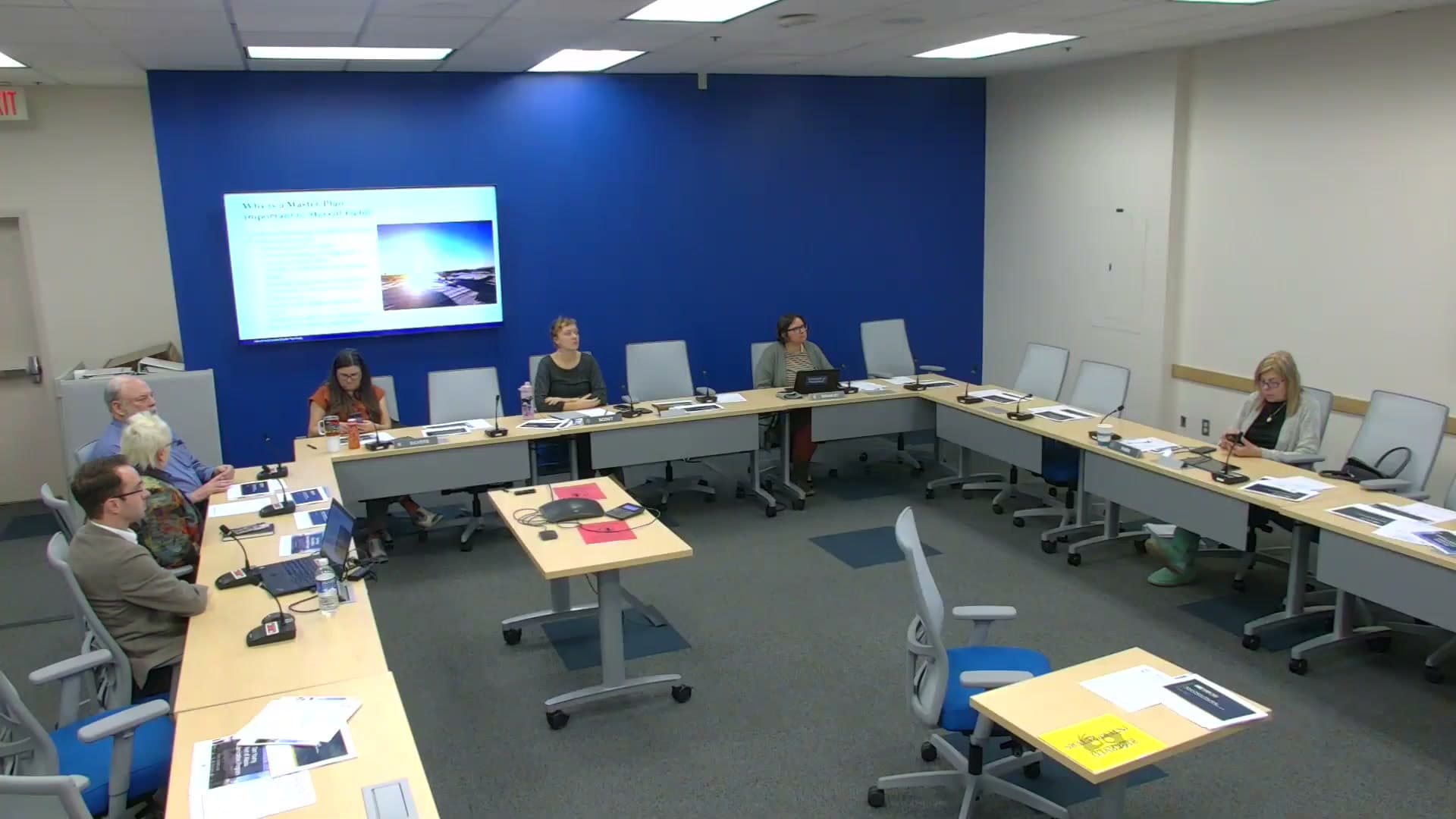
Frame from "Anchorage Assembly: Energy, Enterprise, & Utilities Oversight Committee-of-the-Whole Committee" · Photo source
Port of Alaska asks federal regulators to shrink Terminal 1 beluga shutdown zone
The Port of Alaska has asked the National Marine Fisheries Service to shrink the beluga whale shutdown zone for vibratory pile driving at Terminal 1 from 9,000 meters to 1,300 meters, Eric Adams, the project's Jacobs program manager, told an Anchorage Assembly committee Thursday.
Under the federal marine mammal authorization, pile driving must stop when a beluga swims into the shutdown zone, which at Terminal 1 reaches about 5.6 miles from the site. Adams said the port pays the contractor to stand by until the whale leaves, and the shutdowns have slowed pile driving. The zone at the nearby petroleum and cement terminal, built earlier, was 6,000 meters. The environmental assessment behind the authorization lists Cook Inlet belugas as endangered, estimated at 331 whales in 2021 and 2022 surveys.
Pile driving began in June, about two months later than planned. Adams said belugas came into Knik Arm this year in greater numbers than in past years, with counts from June through September at times more than 300% above what the permits anticipated.
He said this season's data shows belugas swim toward the vibratory hammer, with no clear avoidance response in any of the project's 85 takes this year. The port also ran hydroacoustic studies this summer and plans a broader request near the end of November to recalibrate every shutdown and harassment zone on the project. Adams said that request will likely need two public comment periods, with a decision expected in spring 2027.
A contract milestone requires 748 feet of dock, which needs 136 pilings, by Aug. 15 so cranes can be delivered. The contractor plans to install 30 of those pilings this year, working within a six-month in-water season. Adams said the contractor is "a little bit behind on the pile driving progress," but he still expects contractual obligations to be met. Changing the template that holds piles in place cut the number of temporary piles needed in half and has improved installation efficiency, he said.
Barges and cranes are set to leave by the end of this month, and Adams said work will go quiet once the ground freezes, likely mid-November. The contractor plans to return in mid-March to drive piles before belugas arrive and is still working toward completion in August 2028.
This article is based on a public meeting of Municipality of Anchorage — Anchorage Assembly: Energy, Enterprise, & Utilities Oversight Committee-of-the-Whole Committee ().
Made by our human newsroom with AI. How humans and AI work here · Grow with our newsroom Transcript byLucas Brown
Watch key moments from the source meeting. Click to expand.
Stay informed. Support what matters.
Free, permanent access to local news you can verify. Subscribe to support Walter AlaskaNews and go ad-free.
Related Coverage
NOAA proposes letting Seward cruise dock pile driving run into 2027
Alaska News · 1mo ago
The Port of Alaska's terminal design contract is up 50 percent and rising again
Alaska News · 1mo ago
Federal regulators weigh a noise permit for a Douglas Island cruise terminal, with sea otters in the balance
Alaska News · 2mo ago
Federal agency proposes marine mammal permit for Juneau's Seawalk extension
Alaska News · 5d ago
Sitka Coast Guard dock switches from steel to plastic fender piles
Alaska News · 2mo ago
Comments
Sign in to leave a comment.
No comments yet. Be the first to share your thoughts.