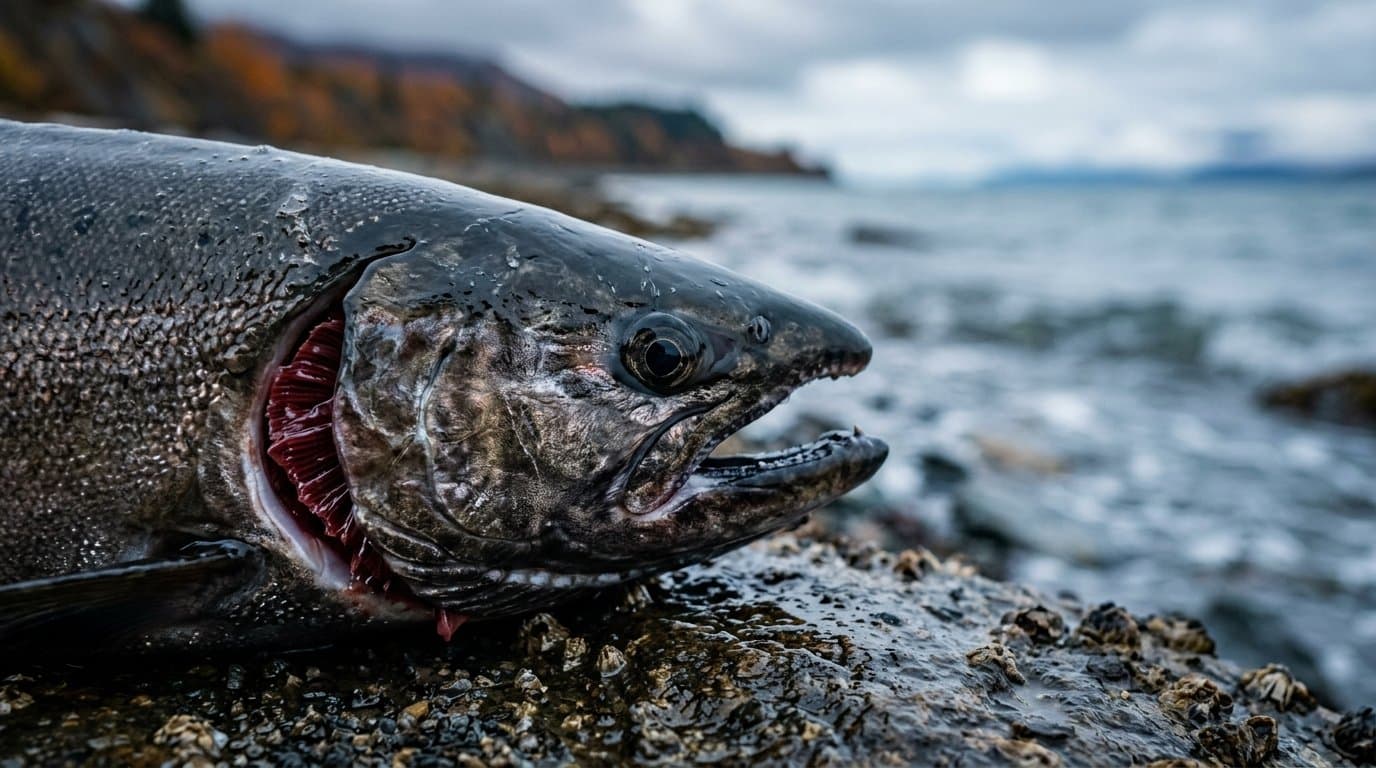
AI image
Board of Fisheries will weigh Homer Spit net closures and a Kodiak trawl ban
Draft editor's note: This story was updated Oct. 17 to describe the major proposals the board will consider.
The Alaska Board of Fisheries issued notice Friday that it will take up changes to Cook Inlet and Kodiak finfish rules this winter. The first 75 proposals, posted for Lower Cook Inlet and Kodiak, would close waters off the Homer Spit to commercial fishing, ban trawling in Kodiak's state waters and put Alaska residents first in line for Lower Cook Inlet king salmon when the catch is restricted.
The board "is not limited by the specific language or confines of the actual proposals" submitted by the public or the Alaska Department of Fish and Game, the notice says, and final rules may differ from what was proposed.
Lower Cook Inlet
The board meets on Lower Cook Inlet Dec. 1-4 in Seward. Its proposal book has 50 proposals.
Three deal with commercial nets near the Homer Spit. Two, reported by Alaska News Oct. 11, would close waters within a half-mile or a mile of the Spit, citing nets that their authors say get in the way of boats entering and leaving the Homer Small Boat Harbor. A third would redraw commercial fishing subdistricts to create a 1-mile corridor off the Spit, which its author says would keep the purse seine fleet off wild salmon headed for Upper Cook Inlet.
Under Proposal 1, from Cook Inlet Recreational Fisherman, when the department has to restrict the saltwater king fishery it would cut nonresident limits first, then bar guides and crew from keeping kings, then set a 28-inch minimum size, and cut Alaska residents' limit to one king last. The group says Kodiak's and Southeast Alaska's king salmon management plans already give residents priority.
Another proposal would ban helicopters from carrying anglers or their catch on Deep Creek, the Anchor River, Stariski Creek and the Ninilchik River. Its author says helicopter-guided trips are reaching stretches that walk-in steelhead anglers hike for hours to fish. One would set a maximum size for king salmon and halibut in Lower Cook Inlet's subsistence, sport, personal use and commercial fisheries.
Kodiak
The board meets on Kodiak Jan. 5-8 in Kodiak, with 25 proposals in the Kodiak book.
Proposal 75 would close all Kodiak Area state waters to commercial trawling. Nonpelagic trawl gear, which fishes on the bottom, is already barred there. The proposal's author argues that pelagic trawls can't tell whether they are on the bottom, so the expectation of no bottom contact inside three miles can't be enforced. In March, the board voted 7-0 to take no action on proposals to restrict trawling in state waters farther west, choosing to coordinate with federal managers instead.
Proposal 71 would cap subsistence Pacific cod longlines at 100 hooks per person and 200 per vessel, cap pots at 10 per person and 20 per vessel, and require a subsistence permit to keep cod. Its author says Kodiak residents now face no limit on how much gear they can use for subsistence cod.
The Kenai River Sportfishing Association wants recovery targets and management measures written into regulation for Karluk and Ayakulik king salmon, stocks of concern since 2010 and 2019. The group says both have declined to critically low levels.
Upper Cook Inlet and comments
The board takes up Upper Cook Inlet March 4-15 in Anchorage. Those proposals are not yet posted.
The notice also lists subsistence actions the board may take, including changing the amounts considered reasonably necessary for subsistence and creating tier II fisheries. None of the posted proposals asks for them.
The notice calls the schedule tentative. Written comments are due Nov. 23 for Lower Cook Inlet, Dec. 21 for Kodiak and Feb. 17 for Upper Cook Inlet. Comments filed after deliberations begin "are likely to receive less consideration," the notice says. Under the board's Traditional Knowledge policy, a knowledge holder nominated by a community, tribe or qualifying organization gets 10 minutes before the board.
Based on a press release from Alaska Department of Fish and Game.
Made by our human newsroom with AI. Reviewed by Cale Green. How humans and AI work here · Grow with our newsroom
Stay informed. Support what matters.
Free, permanent access to local news you can verify. Subscribe to support Bill AlaskaNews and go ad-free.
Related Coverage
Board of Fisheries to weigh closing Homer Spit waters to commercial fishing
Alaska News · 6d ago
Trawl meeting in Anchorage Oct. 16 will take no remote testimony
Alaska News · 2w ago
Board of Fisheries takes written comments through Oct. 13 for its October work session
Alaska News · 2w ago
Board of Fisheries committee weighs how to let the public weigh in on last-minute rewrites
Alaska News · 3w ago
Board considers trawl gear restrictions in Aleutian Islands state waters
Alaska News · 7mo ago
Comments
Sign in to leave a comment.
No comments yet. Be the first to share your thoughts.