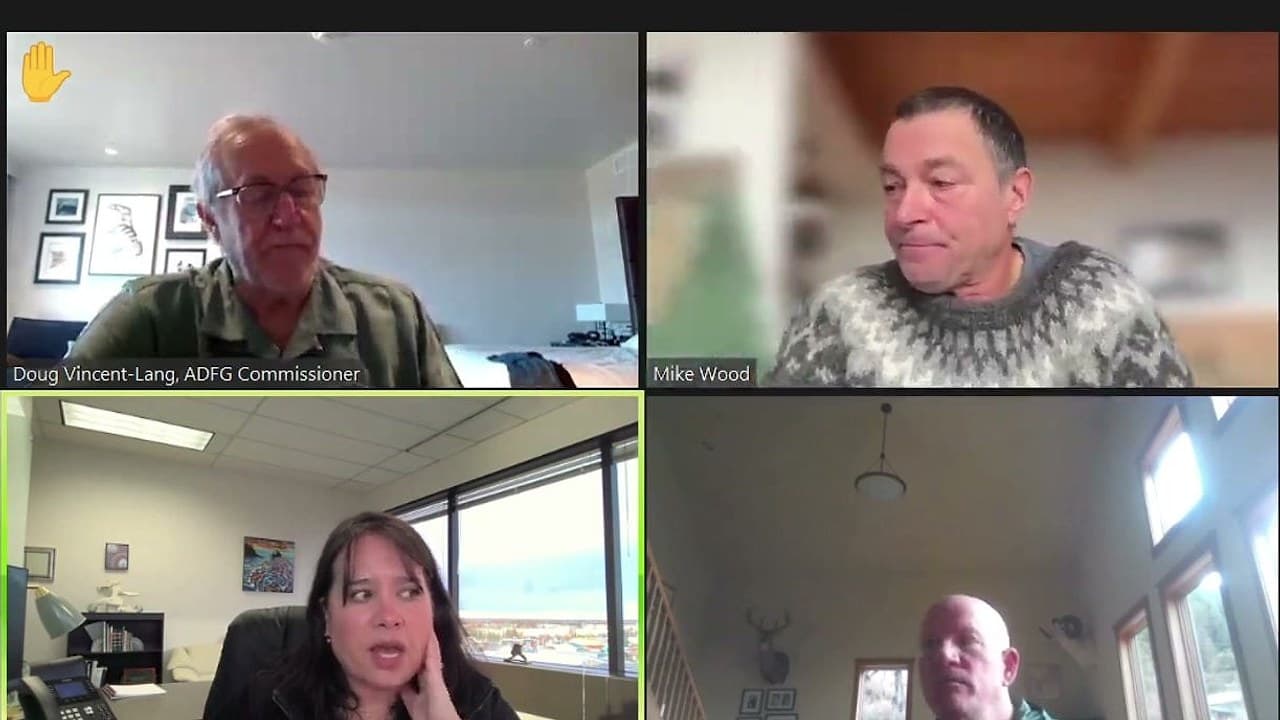
Frame from "Alaska Board of Fisheries" · Photo source
Alaska Board of Fisheries urged to add a second vote on the final text of fishing rules
A Department of Law attorney on Wednesday urged the Alaska Board of Fisheries to add a final vote on the actual text of its regulations, after giving the public 30 days to comment on it.
Under the current process, Edward Lee told the board's process committee, a proposal the board approves is not converted into regulatory text during the meeting, and neither the board nor the public sees that final language before it becomes law. His recommendation would add an end-of-session adoption meeting where the board would vote on that final text. "This is kind of a historic change to how the board does business," Lee said.
Lee said the current process complies with the Administrative Procedure Act, the state law on adopting regulations, but leaves openings for legal challenges. The added step would "add a legal safeguard," he said. Fish and Game Commissioner Doug Vincent-Lang pointed to a lawsuit over Mulchatna caribou, filed after the Board of Game amended a proposal at the table, that argued the public had no chance to review the regulatory language before it took effect.
The board's process has been under scrutiny. In July, Alaska lawmakers voted unanimously to audit the Board of Fisheries' process after the attorney general invalidated five Area M regulations over ethics violations. The audit, requested by Rep. Louise Stutes, includes concerns about substitute language that altered proposals without public comment. The process committee first weighed how the public could comment on last-minute rewrites on Sept. 25.
The change would start with this winter's meetings on Lower Cook Inlet, Kodiak and Upper Cook Inlet finfish, Lee said, with the adoption meeting after the Upper Cook Inlet meeting in March.
Board members and the commissioner said the final meeting should not become a second round of debate. Chair Marit Carlson-Van Dort said it should check that the text accurately reflects what the board voted on, and that she did not want it to become "a tactic" for a member who opposed a proposal to "kick the can indefinitely down the road." Lee said small errors could be fixed at the meeting, but significant changes might require another 30-day notice.
Vincent-Lang said that if board members expect new information on every proposal, the process could "considerably slow down" and add significant cost and staff time for the department.
Timing is the biggest practical problem. Carlson-Van Dort said the board wants new rules in effect by June 1, and the new process adds at least 30 days, probably 45, between the last regional meeting and when rules take effect. Lee noted that most salmon fisheries open in June and the Copper River fishery can open as early as May 22. He said the 2027-28 meeting cycle, which ends with a meeting in late March, would make a June 1 deadline "problematic," and that some meetings may need to move.
The committee took no action. Lee said more details will come before the full board at its work session next week.
This article is based on a public meeting of Alaska Board of Fisheries — Alaska Board of Fisheries: Committee on Board Process, Management, and Research Needs Meeting (10/21/2026) ().
Made by our human newsroom with AI. Reviewed by Cale Green. How humans and AI work here · Grow with our newsroom Transcript byLucas Brown
Watch key moments from the source meeting. Click to expand.
Stay informed. Support what matters.
Free, permanent access to local news you can verify. Subscribe to support Bill AlaskaNews and go ad-free.
Related Coverage
Board of Fisheries committee weighs how to let the public weigh in on last-minute rewrites
Alaska News · 3w ago
Board of Fisheries committee to take up remote testimony and process changes Oct. 21
Alaska News · 2w ago
Alaska lawmakers order audit of Board of Fisheries process
Alaska News · 3mo ago
Fish board committee to review Traditional Knowledge report process Sept. 25
Alaska News · 1mo ago
Board of Fish Nominees Face Questions on Public Process Erosion
Alaska News · 5mo ago
Comments
Sign in to leave a comment.
No comments yet. Be the first to share your thoughts.