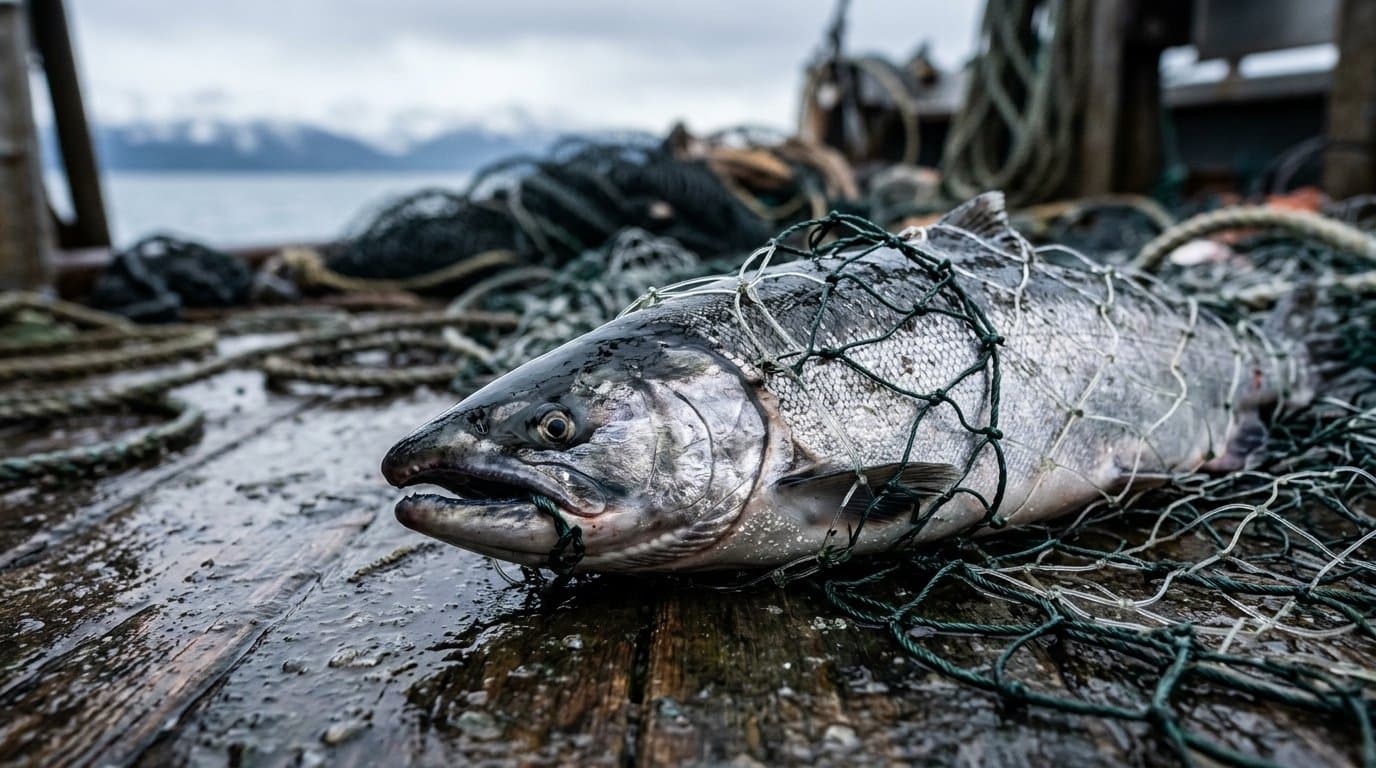
AI image
Federal council adds a December look at proposed 2027 Cook Inlet salmon limits
The North Pacific Fishery Management Council, which recommends the rules for federal fisheries off Alaska, will look at proposed 2027 salmon catch limits for Cook Inlet's federal waters at its Dec. 4-9 meeting in Anchorage, according to a meeting notice filed Monday.
Those limits, called harvest specifications, set how many of each kind of salmon drift gillnet boats can catch in the inlet's federal waters, more than 3 miles offshore. Drift gillnetters set out a long net that hangs in the water and drifts with the tide, catching salmon on their way to the rivers.
The boats go after sockeye, the red salmon that make up most of the catch, but they catch coho, or silver salmon, along the way. Under federal rules, reaching the limit for any one species shuts down the whole federal fishery, sockeye and all.
By NOAA Fisheries' preliminary count, the fleet caught 38,591 coho this year, 232% of its limit of 16,619, and NOAA Fisheries closed the federal fishery Aug. 5. About half of those coho came in a single day: on July 30, 180 boats caught 19,676. The agency said in its October report to the council that it couldn't close the fishery quickly enough to stop a scheduled Aug. 3 opening. The catch went past the higher level its scientists had judged safe, but not the overfishing limit of 67,013 coho, the point at which a catch counts as overfishing.
Managers had set the coho limit about 10,000 fish below what scientists said could be safely caught, citing thin data on Cook Inlet coho and the risk that they couldn't publish a closure fast enough once the catch got close. Fishermen warned in June that the low cap could end the season while sockeye were still running.
Gretchen Harrington, who oversees sustainable fisheries for NOAA Fisheries in Alaska, told the council Oct. 8 that the fishery opens two days a week, drops to one day a week to let coho and other salmon move through the inlet, then goes back to two. One of the days brought an unexpectedly large catch, she said. "I think we are going to look at how we could better predict if that's coming and maybe preemptively close that day," Harrington said.
Federal waters were a bigger part of the fishery this year. They produced about 75% of the drift fleet's sockeye catch in Upper Cook Inlet this year, up from about 11% in 2025, and NOAA Fisheries issued 347 federal salmon permits, up from 248, according to its report. The fleet caught 608,508 sockeye in federal waters, 41% of its sockeye limit.
The December review is new. The council recommended Cook Inlet limits in February in 2025 and 2026, and it still plans to make its recommendation in February. Staff told the council in October that the December item was added "because of some specifics about the requirements for issuing proposed specifications," according to the meeting record. Only the council will take it up in December. Its science committee will review the final numbers in February.
The federal government took over managing the drift fishery in federal waters with the 2024 season. The state still manages salmon fishing closer to shore.
What did you make of this story? (no account needed)
Made by our human newsroom with AI. Reviewed by Cale Green. How humans and AI work here · Grow with our newsroom ·
Get Alaska News in your inbox
Create your free account and get the day’s top stories around 6 each morning, in a few minutes’ read.
Top stories, around 6 each morning.
Stories on what you follow, on Sundays.
Source: North Pacific Fishery Management Council, North Pacific Fishery Management Council: Hearings, Meetings, Proceedings, etc.: North Pacific Fishery Management Council.





Comments
Sign in to leave a comment.
No comments yet. Be the first to share your thoughts.