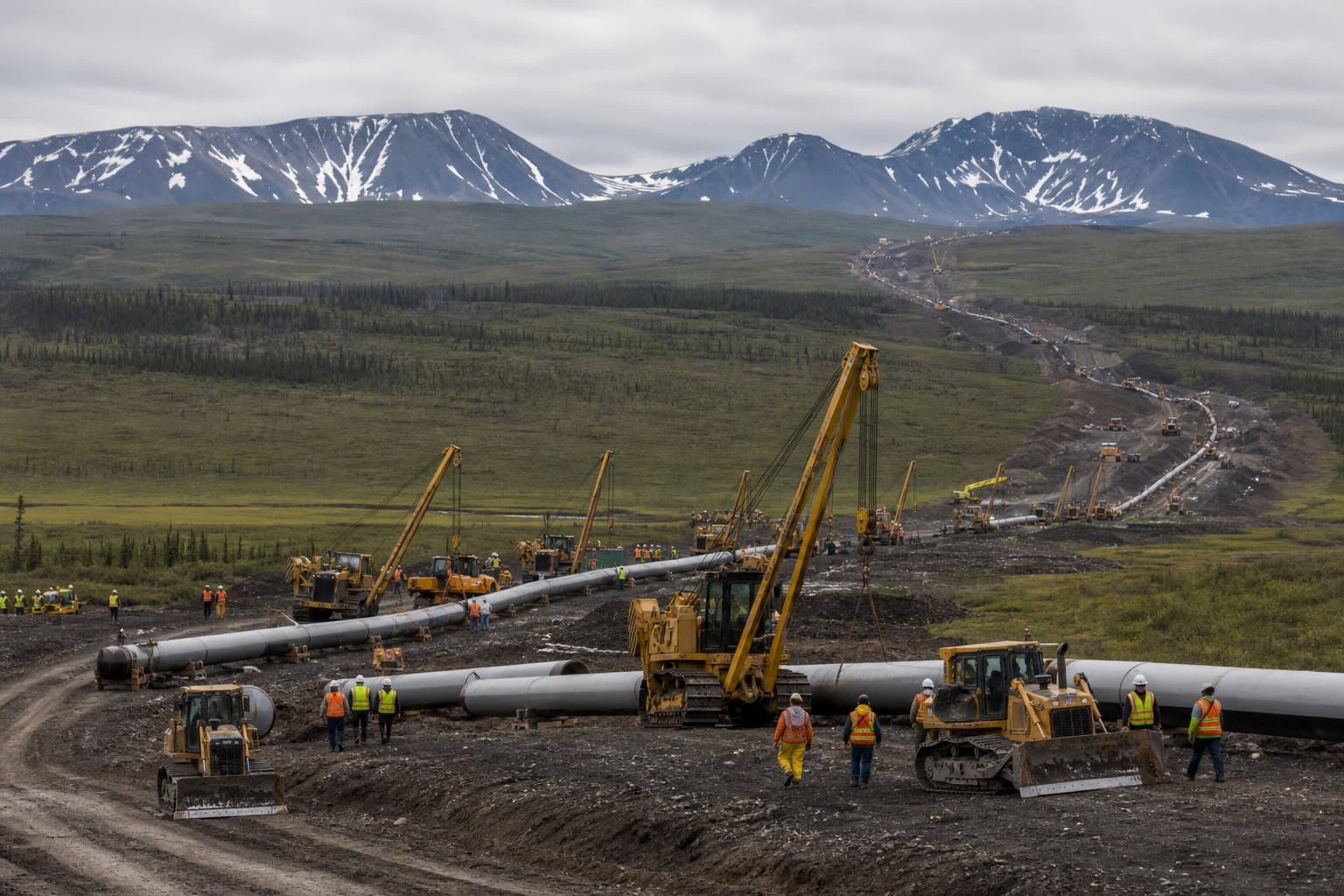
AI image
Dunleavy's LNG bill would swap a graduated S corp tax topping 9.4% for a flat 2%
Governor Mike Dunleavy lowered the disputed tax on oil and gas S corporations to a flat 2% in a compromise Alaska LNG bill he transmitted to the Alaska State Legislature on Wednesday, according to his office. The governor's office said the revised tax and oversight framework could clear the way for the project to begin securing financing, the stated purpose behind the changes.
The version he is amending taxed those companies on a sliding scale that topped out at 9.4% on income over $5 million. Dunleavy's flat 2% replaces the whole schedule.
He is rewriting a bill the House already rejected. On July 16, the conference committee report on House Bill 381 failed in the House on a 19-19 tie, with two members excused. A tie is a defeat, and the measure has sat since.
The new bill is identical to that conference version except for three changes: it sets the S corporation tax at the lower flat rate; it delays the tax's effective date by a year, to Jan. 1, 2030, or to first commercial gas through the pipeline; and it removes a provision that could have reduced state education aid for boroughs receiving gas line tax revenue.
"I have never been in favor of new taxes on Alaska's producers, and I still am not," Dunleavy said in the release. "This bill is a compromise that removes a significant barrier to moving the gas line forward. Given the robust discussion and work that has already gone into this bill, I am hopeful the legislature can swiftly pass a bill that will help the AK LNG project get the financing it needs to start construction as soon as possible."
Dunleavy said the compromise contains no new concepts, and that the legislature has debated and voted on earlier versions containing each provision. Lawmakers reconvene in Juneau on Aug. 20.
At the heart of HB 381 is a shift in how the project is taxed. Rather than paying standard state and municipal property taxes on what the infrastructure is worth, the project would pay a volumetric tax on the gas moving through the line. The Department of Revenue has estimated that change would cut the project's annual tax burden from nearly $750 million to roughly $200 million by 2033 — a reduction of about $550 million a year, though the figure moves with the project's cost.
That revenue would be split among the boroughs and communities along the route, with the Kenai Peninsula Borough getting the largest share. Five borough mayors testified against the tax structure in a related measure, citing revenue losses and inadequate compensation for the local impacts of construction.
The governor's release contains no response from legislators, borough governments, or the developer, and none had commented on the new bill by publication. The tax provisions also take effect only on conditions carried over from the conference bill: $80 million in total payments to the state, project labor agreements, and a spur line to serve the Fairbanks area. Whether the legislature accepts Dunleavy's three changes is the open question when it returns next week.
Based on a press release from Alaska Governor.
Drafted with AI. Edited by Cale Green (1 revision). No full editor review is on record. Who is accountable.
Stay informed. Support what matters.
Free, permanent access to local news you can verify. Subscribe to support Walter AlaskaNews and go ad-free.
Related Coverage
Conference draft keeps oil-and-gas pass-through tax, delays it to 2029
Alaska News · 2mo ago
Alaska's gas-pipeline bill now carries a tax on Hilcorp and others
Alaska News · 3mo ago
Alaska Senate passes S-corp LNG tax with 2028 effective date
Alaska News · 3mo ago
Alaska Senate passes HB 381 oil and gas tax bill 11-8, with dissenters signaling more work ahead
Alaska News · 2mo ago
Alaska House Rewrites LNG Tax Bill, Raising Rate While Empowering Boroughs
Alaska News · 4mo ago
Comments
Sign in to leave a comment.
No comments yet. Be the first to share your thoughts.