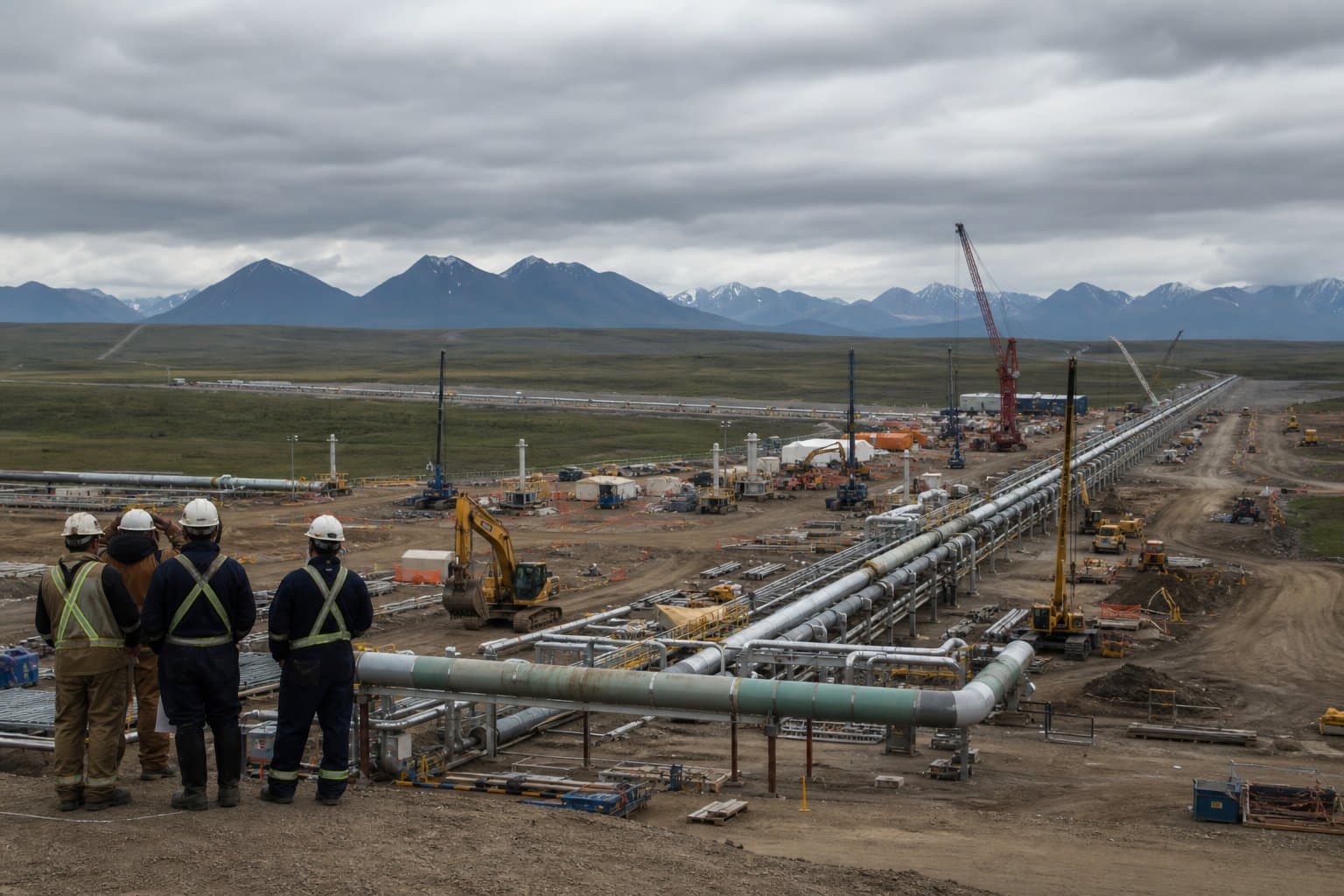
AI image
Conference draft keeps oil-and-gas pass-through tax, delays it to 2029
A House-Senate conference committee draft of HB 381 keeps a proposed income tax on certain oil-and-gas pass-through entities but delays collections until 2029.
The pass-through tax provision is a major point of debate in the latest version of the gas-line tax bill. Supporters argue it would generate significant new revenue from oil-and-gas companies that currently pay no corporate income tax to the state. Opponents contend it creates uncertainty that could undermine investment in the Alaska LNG project and harm its economics.
The six-member committee moved the draft out on a 4-2 vote. Sen. Mike Cronk, R-Tok, and Rep. Justin Ruffridge, R-Soldotna, voted no. Sen. Bert Stedman, R-Sitka, Sen. Lyman Hoffman, D-Bethel, Rep. Bryce Edgmon, I-Dillingham, and Rep. Calvin Schrage, I-Anchorage, voted yes.
Ruffridge said he could not support advancing the bill without more answers from the Department of Revenue. “There’s a lot of issues within this conference committee document that make it to where I don’t believe I can support it coming out of the committee today,” he said.
Cronk also objected to moving the bill so quickly after members received the final draft. “I’m going to vote no, obviously, but I want to explain why I’m going to vote no,” Cronk said. “Because, again, I just saw this.”
Edgmon supported moving the bill forward, while acknowledging the process and bill were not ideal. “The bill before us, I think, achieves the central goal of providing property tax relief on a liquefied natural gas project,” he said. “Imperfect bill, imperfect process, imperfect everything else. But I think it’s important to get this thing forward.”
Stedman also supported advancing the draft but cautioned that the bill is only one step. “This does not get us a project,” he said. “It helps in that direction is all it does.”
The committee packet posted Thursday says the draft would calculate taxable income for a qualified entity as if the entity were a C corporation, while allowing credits or deductions against tax liability on the same basis. The summary says the language exempts income from an Alaska liquefied natural gas project and entities exempt from federal income taxes.
The tax would apply to tax years beginning on or after Jan. 1, 2029. An earlier version had set the date at Jan. 1, 2028.
Before collections begin, the draft would require a one-time informational tax return for the most recent completed tax year before Jan. 1, 2028. No tax would be due under that informational return, the summary says, but the same penalties for a late return or failure to file would apply.
HB 381 is the Legislature's major tax and oversight bill tied to the Alaska LNG project. The bill also changes how project property would be taxed, creates an alternative volumetric tax on gas throughput, adds reporting requirements for the Alaska Gasline Development Corporation and sets conditions before the tax changes take effect.
The conference committee packet says the project developer would have to pay $50 million to the state within 60 days after a final investment decision on phase one, up from $40 million in the prior version. It also adds legislative intent that $10 million of that amount be appropriated for Alaska LNG workforce training projects, including the Alaska Teamster Training Center, the Fairbanks Pipeline Training Center, the instructional service center in Kenai and AVTEC.
The draft also clarifies project labor agreement language. The summary says the project developer has committed to require contractors to enter project labor agreements for phase one, for work performed in Alaska, and to negotiate project labor agreements for phase two.
Other changes affect transparency and risk. The draft would allow AGDC to use redactions, estimated ranges, summaries or status indicators for some commercially sensitive information in project dashboards and biannual reports. It would also change the cost-overrun definition used in gas-supply contract review to the construction budget agreed to at the initial closing of construction funding, rather than an estimate at final investment decision.
The draft is not law yet. A conference committee substitute must still go back to the House and Senate for votes before it can be sent to Gov. Mike Dunleavy. The Legislature's floor calendar says the House adjourned to 10:30 a.m. Thursday and the Senate adjourned to 11 a.m. Thursday, with both sessions delayed to the call of the chair.
If both chambers adopt the conference committee report, the governor can sign the bill, veto it or allow it to become law without his signature. Until then, the packet posted Thursday is the committee's proposal, not an enacted tax change.
Source: Conference draft keeps oil-and-gas pass-through tax, delays it to 2029.
Made by our human newsroom with AI. How humans and AI work here · Grow with our newsroom
Stay informed. Support what matters.
Free, permanent access to local news you can verify. Subscribe to support Walter AlaskaNews and go ad-free.
Related Coverage
Where Alaska's gas-line tax deal stands, and what's still stuck
Alaska News · 3mo ago
Alaska LNG tax bill advances to floor on split conference committee votes
Alaska News · 3mo ago
Alaska Senate passes HB 381 oil and gas tax bill 11-8, with dissenters signaling more work ahead
Alaska News · 3mo ago
Alaska Senate passes S-corp LNG tax with 2028 effective date
Alaska News · 3mo ago
Alaska LNG tax bill advances as working draft, disputes unresolved
Alaska News · 3mo ago
Comments
Sign in to leave a comment.
No comments yet. Be the first to share your thoughts.