Alaska Senate passes S-corp LNG tax with 2028 effective date
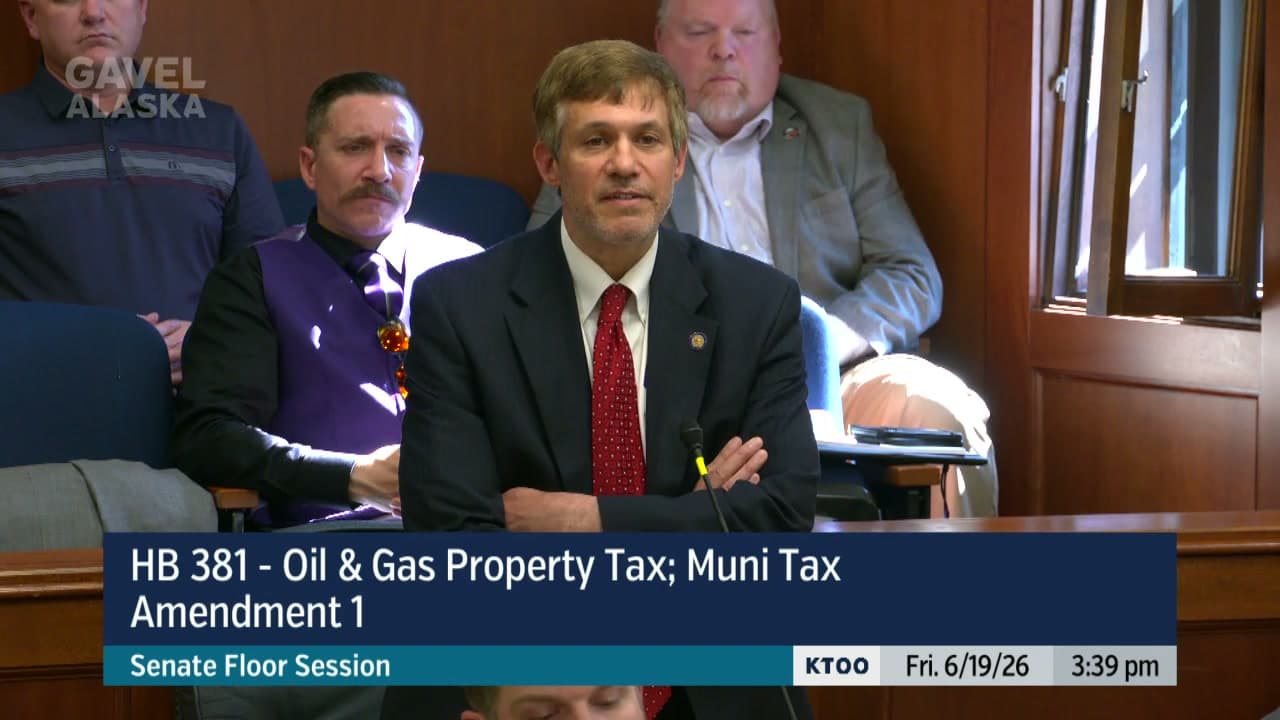
Alaska senators on Friday adopted a pass-through entity tax on oil and gas income as part of the Alaska LNG tax bill. The Senate first rejected an immediate-effective-date version 9-11, then incorporated a 2028 effective date before passing the underlying bill 12-8. The votes resolved, at least in the Senate, a structural gap in Alaska's tax code that supporters said costs the state more than $400 million a year.
The gap is this: Alaska taxes only C-corporations on business income. Because the state repealed its personal income tax in 1980, pass-through entities such as S-corporations and limited liability companies in the oil and gas sector pay no state income tax on their profits. Glenfarn, the LNG project developer, is organized as a limited liability corporation. The Senate passed similar language in 2024 on an 11-8 vote, but the provision has never been enacted into law.
Senator Forrest Dunbar warned that the stakes extend beyond future LNG revenue. "In the construction phase, when you're not getting gas taxes, you are going to be losing oil revenue," he said. "So this bill, as it's currently written, unamended, it won't just raise very little in gas taxes in the long term, it'll also actually substantially harm Alaska's existing oil tax revenue in the short term and during the construction phase. That means less money for schools, less money for the PFD, less money for road maintenance."
Senator Bill Wielechowski framed the vote in broader terms. "The fundamental question that we are being asked right now is how many billions in tax breaks shall we give to Glenfarn or whoever ends up producing this project so that they can make, according to the Department of Revenue's projections, $5 billion a year in profits?" he said. He put the cost of inaction at $462 million per year in foregone tax once the project reaches full production. Senator Cathy Giessel reinforced that figure. "One of the things that is said about this bill is it has not been modeled," she said. "Mr. President, then how the heck do you think we know that they will be making about $5 billion, Glenfarm, when this is at full production and we will be losing out on more than $400 million? Because it has been modeled by our own Department of Revenue, Mr. President."
Opponents led by Senator Mike Cronk argued the language was not ready. "The language is incomplete, untested, and poorly drafted," he said. "This proposal is incomplete and leaves major questions unanswered regarding entry-level treatment, apportionment, deductions, depreciation, loss carryforward, or as an investor taxation. Tax professionals from impacted parties agree the language is unworkable and would have chilling effects on the project's economics and the ability to attract investors." Senator Robert Myers warned the combined state and federal rate would exceed what Canada charges on a comparable project. "What we're doing with this amendment is we're taking one of the few places that we're actually a little more competitive than Canada and we're getting rid of it," he said.
The first version, with an immediate effective date of January 1, 2026, failed 9-11. Senator Lyman Hoffman then introduced a second version setting the effective date at January 1, 2028. An amendment to push the date further to 2029 failed 7-13. The 2028 version passed 11-9. The Senate passed HB 381 12-8 later Friday, sending to the Alaska State House a bill that explicitly included language establishing an income tax on certain entities producing or transporting oil or gas in the state.
This article is based on a public meeting — Alaska Legislature: Senate Floor Session - June 19, 2026 2:15pm ().
Drafted with AI. Edited by Cale Green (1 revision). No full editor review is on record. Who is accountable. Transcript byLucas Brown
Watch key moments from the source meeting. Click to expand.
Stay informed. Support what matters.
Free, permanent access to local news you can verify. Subscribe to support Walter AlaskaNews and go ad-free.
Related Coverage
Alaska Senate passes HB 381 oil and gas tax bill 11-8, with dissenters signaling more work ahead
Alaska News · 2mo ago
Alaska's gas-pipeline bill now carries a tax on Hilcorp and others
Alaska News · 2mo ago
Conference draft keeps oil-and-gas pass-through tax, delays it to 2029
Alaska News · 2mo ago
Senate panel advances gas pipeline tax overhaul with $610M revenue target
Alaska News · 4mo ago
Alaska House passes new tax structure for Alaska LNG pipeline aimed at attracting investors
Alaska News · 3mo ago
Comments
Sign in to leave a comment.
No comments yet. Be the first to share your thoughts.