Alaska's gas-pipeline bill now carries a tax on Hilcorp and others
Buried in the bill meant to advance Alaska's long-sought gas pipeline is something with nothing to do with the pipeline: a permanent change to state tax law that would, for the first time, make a whole class of oil and gas companies pay corporate income tax — whether or not a single mile of pipe ever gets built.
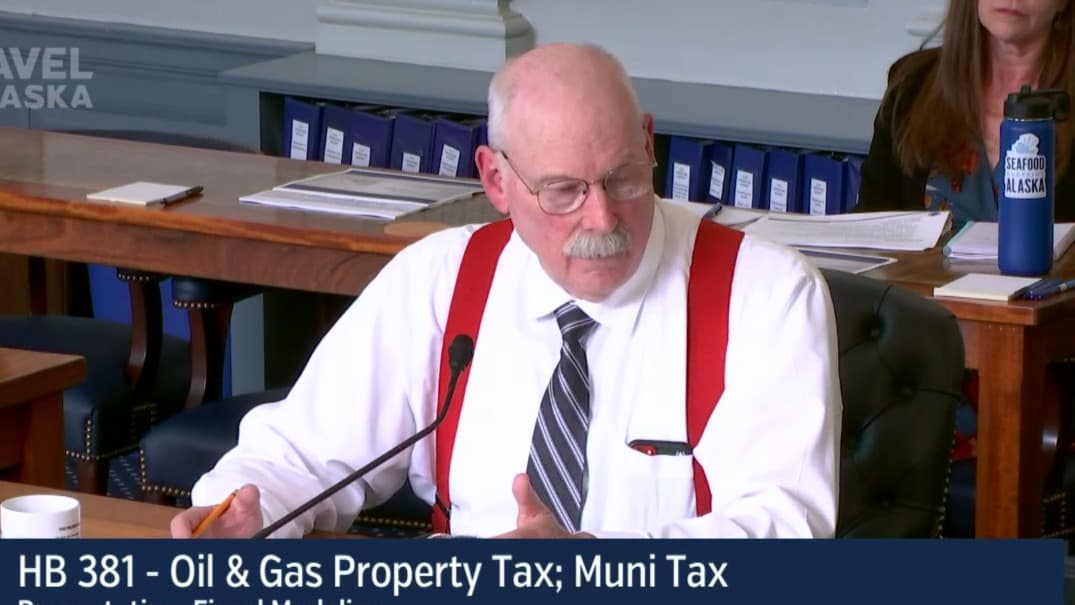
The Alaska Senate attached the measure to HB 381, the bill tied to the AK LNG project, and on Friday the state's chief economist told the conference committee reconciling the bill that it is the single biggest difference between the Senate's two versions. The tax "would apply to all... pass-through entity companies doing business in the state regardless of whether the AK LNG project moves forward or not," Dan Stickel of the Department of Revenue testified, with "material state revenue impacts" either way.
Here is what that means. Since Alaska repealed its personal income tax in the 1980s, only C corporations — the publicly traded giants like ConocoPhillips and ExxonMobil — have paid the state's corporate income tax. Companies built as "pass-throughs," where profits flow to private owners, pay nothing. The largest in Alaska is Hilcorp, the privately held firm owned by Texas billionaire Jeff Hildebrand that bought BP's North Slope assets in 2020, took over Prudhoe Bay, and became the dominant gas producer in Cook Inlet. BP paid the corporate income tax. Hilcorp, as an S corporation, does not.
Closing that gap — supporters call it a loophole; the industry calls it lawful tax structure the state itself wrote — has been one of the Legislature's longest-running fights. Lawmakers have tried for years to bolt the tax onto one bill after another, and the House rejected a version just this spring. The pipeline bill is now the latest, and highest-profile, vehicle.
The amendment sets a bracketed rate — nothing on income up to $1 million, rising to 9.4 percent above $5 million — and would take effect in 2028, applying going forward rather than retroactively, as an earlier proposal had. Revenue officials estimate it would raise somewhere between zero and $100 million a year from companies already producing. The pipeline operator itself, by contrast, would owe nothing for roughly two decades, as construction costs and depreciation erase taxable income; only over the project's full life would it shift an estimated $6 billion to the state.
"There's gonna be no net income, taxable net income for 2 decades. Literally, 2 decades," Sen. Bert Stedman said. "You don't pay taxes unless you have a net income." In other words, the near-term money comes almost entirely from existing producers — chiefly Hilcorp — not from the pipeline the bill is meant to enable.
Supporters cast it as basic fairness: every other major producer pays the tax, and sparing one of the largest amounts to a standing subsidy. Opponents, including industry groups and Hilcorp, warn it injects investment uncertainty at a fragile moment — especially for Cook Inlet, where Hilcorp supplies most of Southcentral Alaska's natural gas and a shortage already looms. Stickel kept returning to one phrase: the change, he said, is "a significant policy decision for the committee to consider."
The conference committee adjourned Friday and was due back Saturday morning, the tax still in the bill.
This article is based on a public meeting — Alaska Legislature: MSC2-20260626-1410 ().
Drafted with AI. Edited by Cale Green (1 revision). No full editor review is on record. Who is accountable. Transcript byLucas Brown
Watch key moments from the source meeting. Click to expand.
Stay informed. Support what matters.
Free, permanent access to local news you can verify. Subscribe to support Walter AlaskaNews and go ad-free.
Related Coverage
The $100 million question inside Alaska's gas-line bill
Alaska News · 2mo ago
Alaska Senate passes S-corp LNG tax with 2028 effective date
Alaska News · 3mo ago
A pass-through tax, not the pipeline, is the real fight in Juneau
Alaska News · 3mo ago
Alaska Senate passes HB 381 oil and gas tax bill 11-8, with dissenters signaling more work ahead
Alaska News · 2mo ago
Conference draft keeps oil-and-gas pass-through tax, delays it to 2029
Alaska News · 2mo ago
Comments
Sign in to leave a comment.
No comments yet. Be the first to share your thoughts.