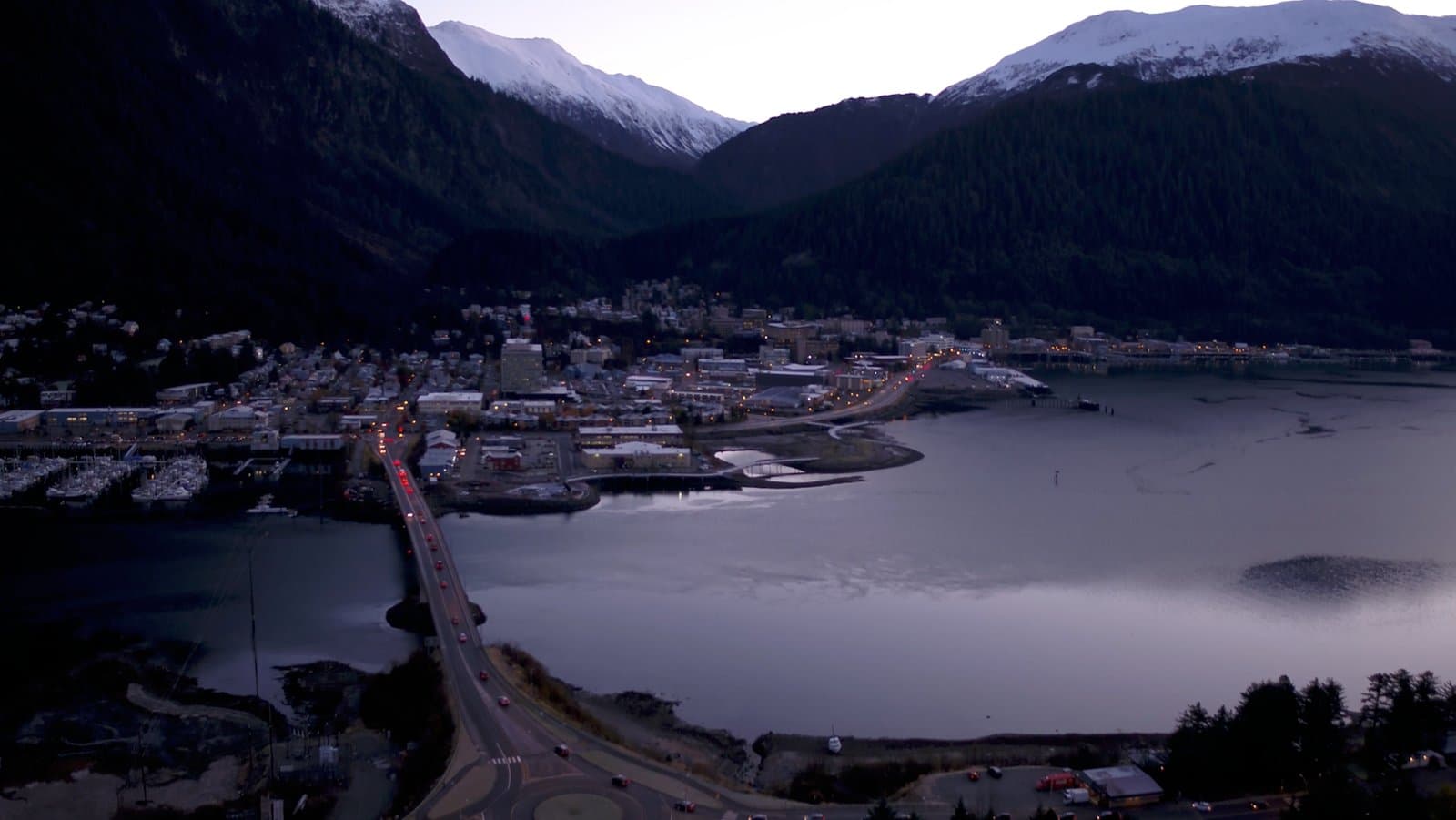
Photo by Cale Green
A pass-through tax, not the pipeline, is the real fight in Juneau
For two days this week, a conference committee in Juneau worked to reconcile the House and Senate versions of Alaska's natural gas pipeline tax bill — and the sharpest fight had nothing to do with the pipeline. It was over a tax the Senate bolted on: one that would, for the first time, make oil and gas companies organized as partnerships and S-corporations pay state income tax starting in 2028, whether or not the $44 billion line ever gets built.
The principle is barely contested. Big producers like ConocoPhillips already pay Alaska's corporate income tax; pass-through companies — Hilcorp the largest — pay none, a gap dating to the state's 1980 repeal of its personal income tax. About a third of in-state oil and gas production comes from outside the corporate structure the tax reaches. Closing that gap is basic fairness, supporters say, and the Department of Revenue estimates it could pull as much as $100 million a year. The fight isn't the goal. It's the machinery.
And the loudest objection comes from a revealing place. F. Steven Mahoney, who filed the most detailed attack this week, is a tax attorney for Glenfarne — the company building the pipeline, and one of the parties the tax would hit. His analysis, "Rushed, Targeted & Volatile," calls the 9.4 percent top rate the highest mandatory pass-through tax in the country — only four states impose one at all — and the drafting structurally broken: bolted onto a statute written for corporations, whose math starts from a federal income figure that pass-throughs don't have.
His interest is obvious. But the Department of Revenue, which has none, told the committee much the same thing: the idea is "relatively novel," hard and costly to administer, and ripe for "unintended consequences." The industry's Alaska Support Industry Alliance rejected the oil and gas tax hikes in the bill outright, and Gov. Mike Dunleavy counts the tax among the parts of the bill bad for the developer. Even Mahoney concedes the goal is fair. So the question isn't whether to tax these companies, but whether this draft can.
The pass-through tax is where the committee brawled. The larger, quieter money is in the tax it rewrote next. On Saturday members turned to the alternative volumetric tax — the per-unit levy on the gas itself — and the changes there decide how the real dollars split between the state and its host communities. Chief economist Dan Stickel walked the committee through the Senate's version: it strips out the House formula, which recalculated rates and municipal shares from each project's capital spending, and locks flat rates into statute instead — 6.2 cents per thousand cubic feet during pipeline operations, 10.6 cents once LNG exports begin — along with fixed community shares. Fixing the percentages, Stickel said, adds certainty and "removes one item of potential contention going forward."
The Senate also added two rate doublings, and their design is deliberately communities-first. The first, a decade into exports, sends its entire increase to community assistance — actually cutting the state's own share from 9 percent to 5. The second, in 2060, flips the arrangement: the full increment runs to the state general fund, lifting the state's share to 52 percent while communities keep their fixed base. Sen. Bert Stedman pressed Stickel to confirm that after 2060 the new money goes to the state, not community assistance; Stickel said it does. Across the modeled period, the department puts the cumulative benefit to the state at $32.2 billion through 2062. Rep. Mike Cronk put the stakes plainly: do nothing, he said, and the numbers vanish — zero revenue to the state, zero to many communities.
The rest of the bill is its own bargain. Before the developer collects its tax breaks, it would have to put up to $80 million into a fund for the six towns construction would tear up, sign a labor agreement, and run a spur line of gas to Fairbanks. The bill also caps what utilities can be charged, and blocks contracts that would stick customers with cost overruns or let rates climb if less gas flows than promised.
No vote is scheduled. The committee holds the objections, the warnings, and a special-session clock, all at once.
Source: Legislative Finance Division ().
Drafted with AI. Edited by Cale Green (1 revision). No full editor review is on record. Who is accountable.
Stay informed. Support what matters.
Free, permanent access to local news you can verify. Subscribe to support Walter AlaskaNews and go ad-free.
Related Coverage
Alaska's gas-pipeline bill now carries a tax on Hilcorp and others
Alaska News · 3mo ago
The $100 million question inside Alaska's gas-line bill
Alaska News · 2mo ago
Where Alaska's gas-line tax deal stands, and what's still stuck
Alaska News · 2mo ago
Conference draft keeps oil-and-gas pass-through tax, delays it to 2029
Alaska News · 2mo ago
Senate panel advances gas pipeline tax overhaul with $610M revenue target
Alaska News · 5mo ago
Comments
Sign in to leave a comment.
No comments yet. Be the first to share your thoughts.