AI image
The Air Force needs its Cold War-era Arctic radar towers inspected — the ones still watching Alaska's skies
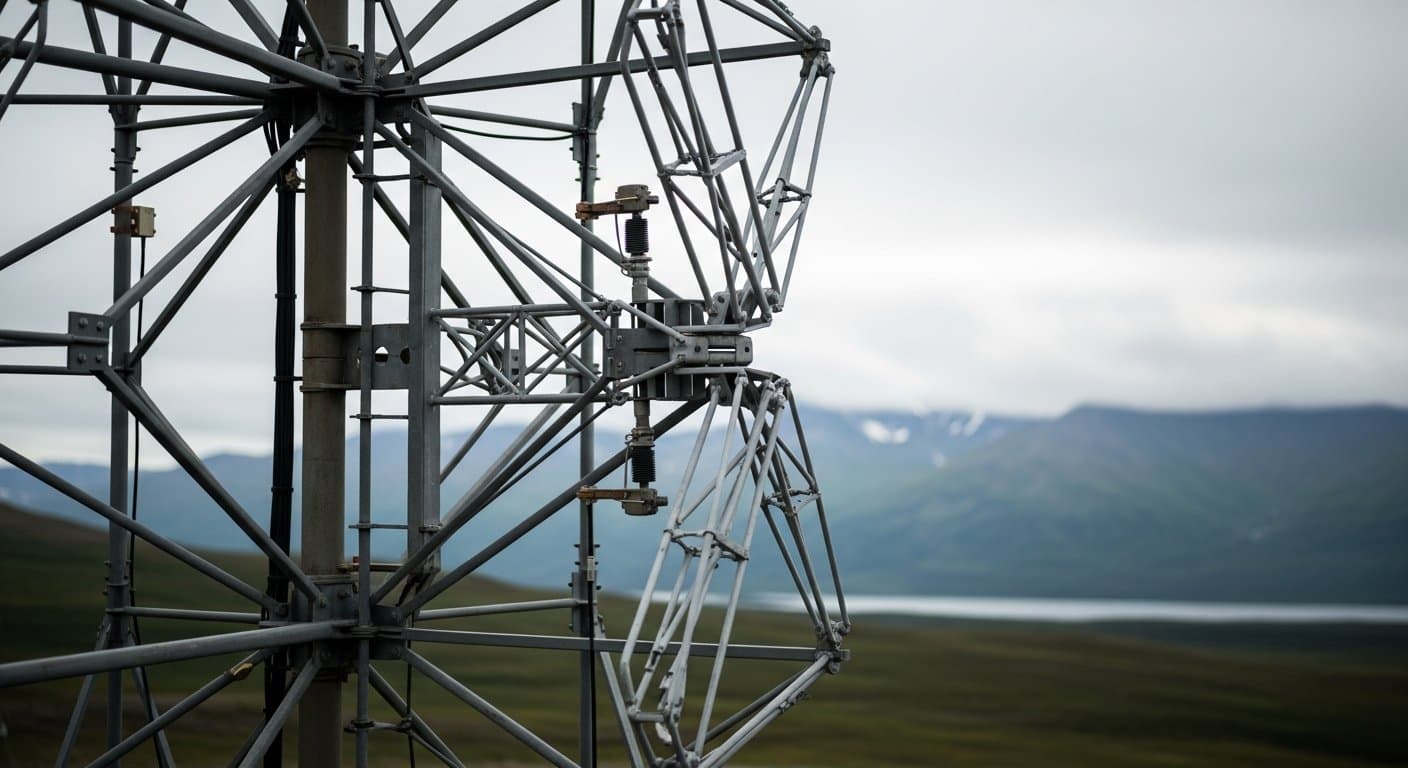
The Air Force is looking for someone to inspect four remote radar towers scattered across the Alaska wilderness — aging installations, built to watch for Soviet bombers in the 1950s, that still stand watch over the Arctic approaches today.
The towers sit at Fort Yukon, Indian Mountain, Tatalina and Sparrevohn, four of the long-range radar sites that make up the Alaska NORAD Region's early-warning network. Each was built in the Cold War as a continental-defense station, meant to give the United States warning of an air attack over the pole. Most were downgraded to minimally attended sites in the 1980s, when they received the AN/FPS-117 radar they still use — equipment designed to beam aircraft-tracking data by satellite to the regional air-defense center at what is now Joint Base Elmendorf-Richardson. Decades on, they remain active, part of the early-warning coverage the military maintains as Russian and Chinese aircraft draw renewed attention to Alaska's skies.
The state's long-range radar sites are maintained and operated by ARCTEC, a subsidiary of Arctic Slope Regional Corporation, the Alaska Native corporation for the North Slope. The physical upkeep of the state's air-defense infrastructure runs through the Native-owned firm.
The contract covers a non-destructive inspection of the towers themselves — checking the structures without damaging them. The Air Force posted the solicitation Aug. 14 through its Life Cycle Management Center in Utah, with offers due Aug. 21, noon in Alaska. It has restricted bidding entirely to small businesses, capping a bidder's average annual revenue at $25.5 million, and has not published what it expects the contract to be worth. Inspection costs would be fixed, while travel to the remote sites — no small expense in roadless Alaska — would be reimbursed at actual cost with no profit added.
The paperwork carries one discrepancy: the solicitation names four towers, but its requirements page refers at one point to "five original" towers, and never reconciles the two.
Source: Department of the Air Force, Department of the Air Force: SOLICITATION/CONTRACT/ORDER FOR COMMERCIAL PRODUCTS AND COMMERCIAL SERVICES.
AI-assisted. How we use AI
Stay informed. Support what matters.
Free, permanent access to local news you can verify. Subscribe to support Melinda Communities.News and go ad-free.
Related Coverage
Air Force seeks contractor to install communications gear at remote Shemya outpost
Alaska News · 2mo ago
Air Force seeks contractor for Red Flag-Alaska exercise at JPARC
Alaska News · 3mo ago
Three Alaska National Guard wetland surveys go out to bid, with proposals due Sept. 21
Alaska News · 2w ago
Air Force parts shop at JBER seeks quotes for a 3D printer before funding is in hand
Alaska News · 6d ago
The Air Force wants to put AI data centers on Alaska military land — and the three sites tell three very different stories
Alaska News · 3mo ago
Comments
Sign in to leave a comment.
No comments yet. Be the first to share your thoughts.