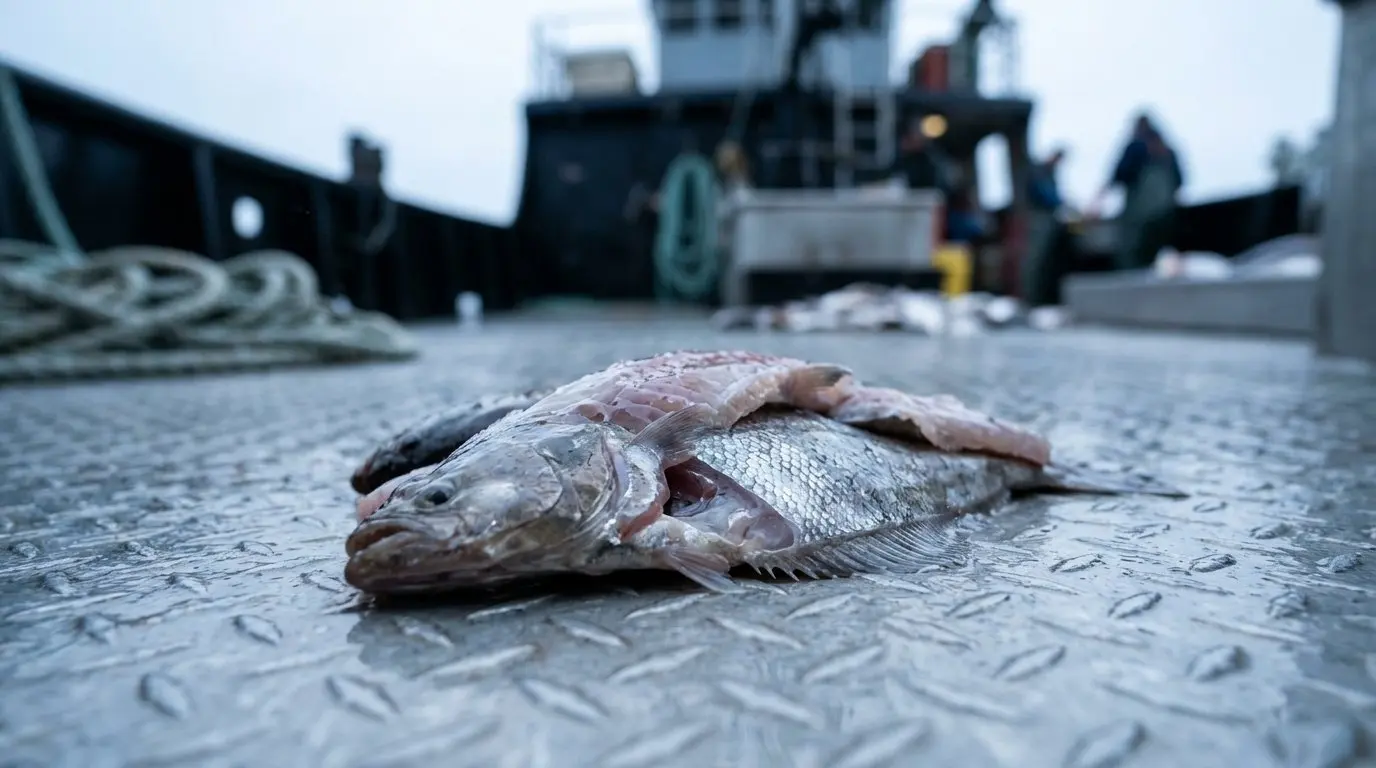
AI image
Federal paper lays out options to let Alaska processors turn bycatch into fish meal
A federal discussion paper posted Friday asks the North Pacific Fishery Management Council how broadly to let Alaska processors turn undonated bycatch into fish meal rather than send it back to sea. The council takes up the question at its Dec. 4-9 meeting in Anchorage. Any regulatory change would come later.
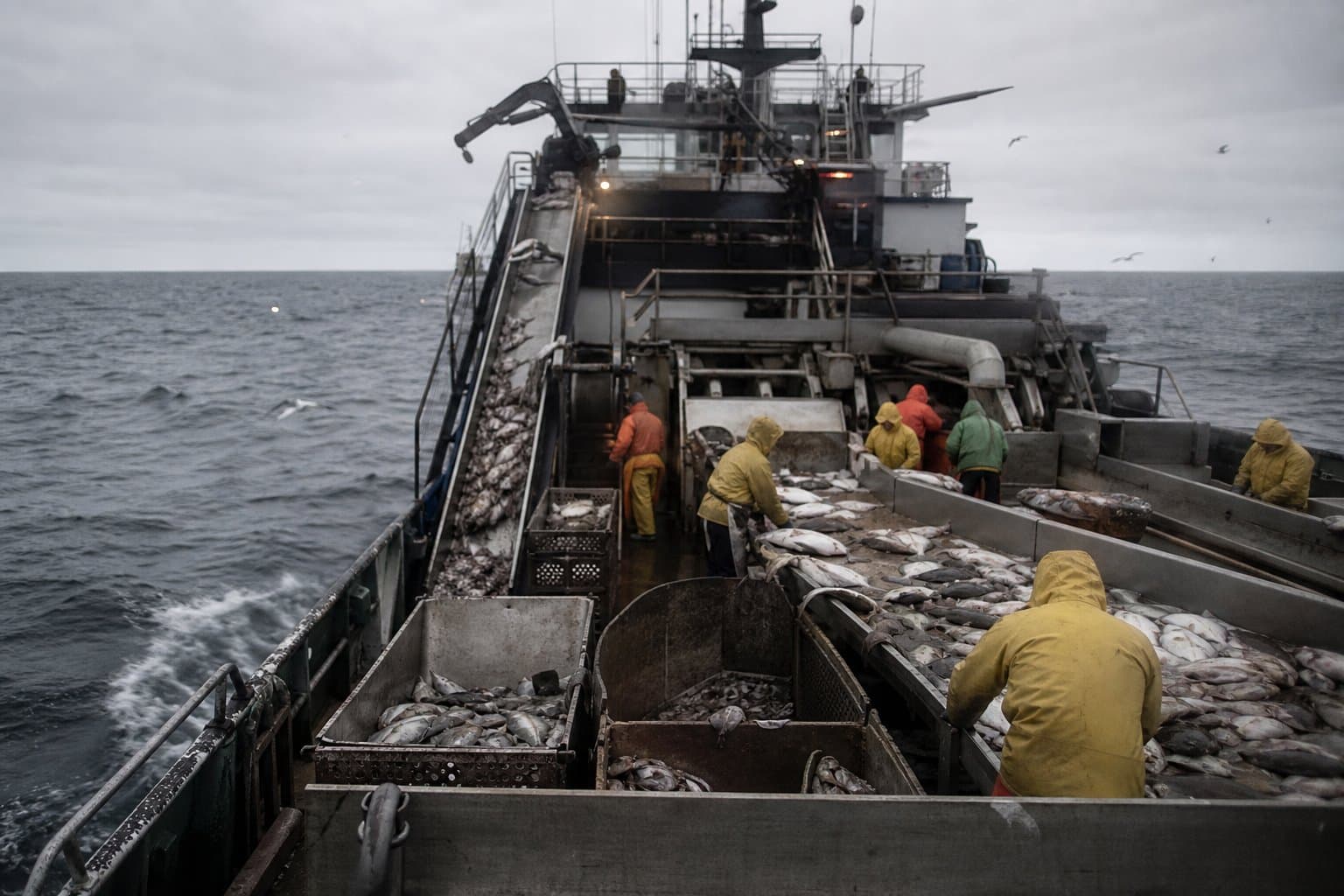
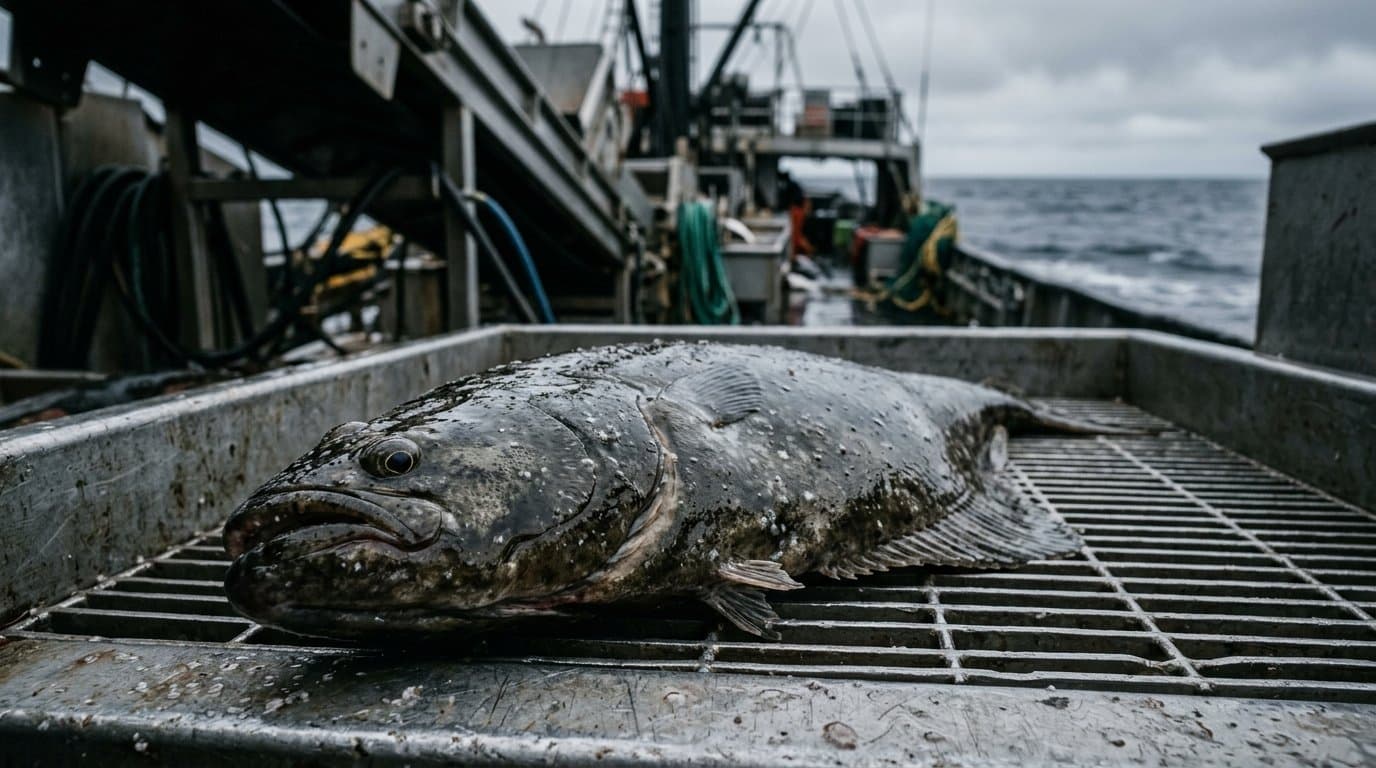
The bycatch in question is prohibited species catch, known as PSC: halibut, salmon, crab, herring and steelhead, plus groundfish that federal managers have closed to retention. More programs now require boats to bring it to the dock for counting and sampling, including trawlers that use electronic monitoring, with cameras in place of an onboard observer. Under current rules, the paper says, a processor that does not donate PSC must load it back onto a boat to be dumped at sea, which costs money to store, transport and discard.
The paper, by NMFS and council staff, answers a June 5 council motion saying the rules should make clear that processors may turn undonated PSC into fish meal, oil or bone meal and sell those products. In a March 13 letter, NMFS Alaska Regional Administrator Jonathan Kurland told the council that current regulations do not prohibit Gulf of Alaska processors from doing so.
The snag is a 2024 rule barring processors from letting PSC from camera-monitored trawlers be "sold, purchased, bartered, or traded," with no exception for meal. NMFS prefers to allow meal from those boats, the paper says, but the regulations do not yet say so.
Kodiak processors cannot grind and discharge fish waste into the ocean because of environmental concerns, so they send it, PSC included, to the shared Kodiak Fishmeal Company. The paper calls that a longstanding practice that "is not consistent with current regulations as described in this paper." It says most processors are not comfortable sending PSC to meal until NMFS clarifies the rules.
Option 1 would exempt only camera-monitored trawlers' PSC made into fish meal, fish oil or bone meal from the sale ban. Option 2 would let processors do so with all PSC from all fisheries after sampling and donation decisions. Boats in fisheries that do not require them to keep PSC would still discard it at sea. PSC limits, the vessel ban on selling PSC and the duty to avoid it stay in place under both.
The money is small. The paper puts gross meal revenue at no more than about $97,000 across all plants analyzed, before costs and leaving out herring. In 2025, PSC delivered to processors made up about 0.32% of groundfish landings, which the paper says leaves likely no financial incentive to catch PSC for meal.
At the council's June meeting, a public testifier argued that no handling of these species should bring in revenue while subsistence and small-boat fisheries that depend on them are closed or restricted.
The paper also lays out options for the donation program SeaShare has run alone since it began. They include five-year permits instead of three, school districts and shelters as recipients, and adding herring, steelhead and crab as eligible species, which would require amending the fishery management plans.
Written comments are due at noon Nov. 27.
What did you make of this story? (no account needed)
Made by our human newsroom with AI. How humans and AI work here · Grow with our newsroom ·
Get Alaska News in your inbox
Create your free account and get the day’s top stories around 6 each morning, in a few minutes’ read.
Top stories, around 6 each morning.
Stories on what you follow, on Sundays.
Source: North Pacific Fishery Management Council, Federal paper lays out options to let Alaska processors turn undonated bycatch into fish meal and to widen the bycatch donation program.









Comments
Sign in to leave a comment.
No comments yet. Be the first to share your thoughts.