AI image
Storm to raise water up to 5 feet above the tide line, Golovin to Wainwright
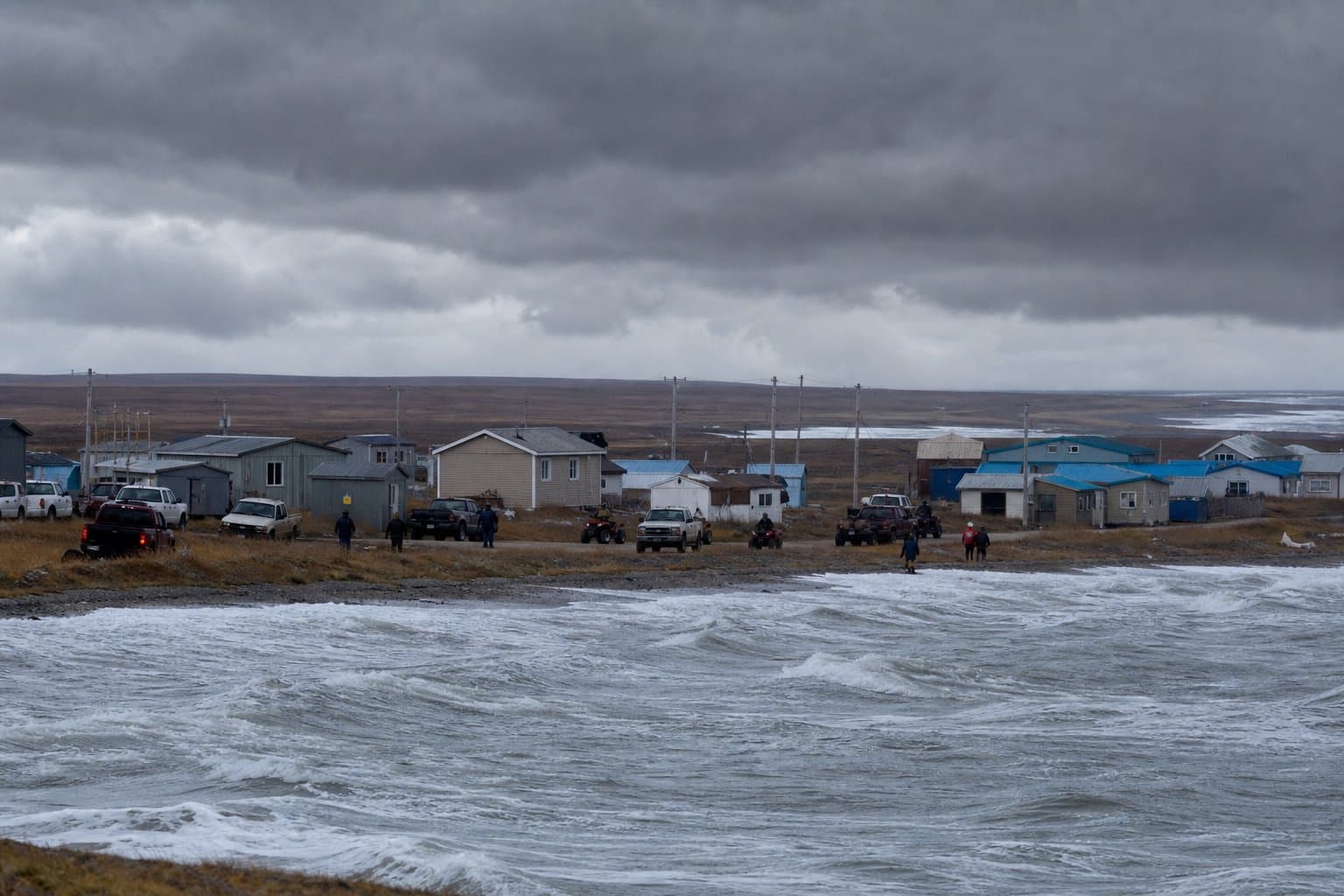
Water along much of Alaska's western and northern coast could rise 2 to 5 feet above the normal high tide line this week — and forecasters say it's likely to stay elevated across several tide cycles, not just one.
A developing storm off Siberia is expected to push gale-force southwest winds across Norton Sound and Kotzebue Sound starting midweek, driving water onto the coast. The National Weather Service warns of flooding from Golovin to Wainwright through Friday, with the highest rises — 3 to 5 feet — expected along the Western and Northwest Arctic coasts and eastern Norton Sound. Most other areas, including Shishmaref, Kivalina and the Seward Peninsula, are in the 2-to-4-foot range; the Yukon Delta coast, 1 to 2 feet. Wind gusts could reach 50 to 60 mph in the north.
"With the strong southwesterly winds continuing for roughly 48 hours, there will be multiple high tide cycles that will be elevated," forecasters wrote.
The flooding is expected to move south to north. Water should begin rising Wednesday along Norton Sound and the Yukon-Kuskokwim Delta, peak Thursday night, and stay high into Friday. Farther north, on Kotzebue Sound and the northwest Arctic coast, it should start Thursday, peak Friday morning, and continue into Saturday. Forecasters warn of localized beach erosion, and high-wind watches for the Bering Strait and Western Arctic coasts flag possible property damage and power outages.
Western Alaska knows what a bad storm can do. The remnants of Typhoon Merbok battered roughly 1,300 miles of coastline in September 2022, damaging 40 communities and drawing a federal disaster declaration — including for the Bering Strait and Lower Yukon regions, which cover much of the coast now under warning. This week's system is far smaller, but forecasters are watching it closely and say they'll update the warnings as the storm approaches.
Source: National Weather Service, A Siberian low will push water up to five feet above the high tide line from Golovin to Wainwright this week, for 48 hours and across successive high tides, on the most erosion-exposed coast in Alaska.
Made by our human newsroom with AI. How humans and AI work here · Grow with our newsroom
Stay informed. Support what matters.
Free, permanent access to local news you can verify. Subscribe to support Walter AlaskaNews and go ad-free.
Related Coverage
NWS forecasts water 5 feet above high tide at Golovin through Friday
Alaska News · 1mo ago
A storm could raise water 4 to 6 feet at low-lying Norton Sound villages
Alaska News · 2mo ago
Choi-Wan remnants could push water 4 to 6 feet above high tide on Bering Strait coast
Alaska News · 2w ago
Water forecast 2 to 4 feet above normal high tide in Eastern Norton Sound
Alaska News · 1mo ago
Flood watch warns Hooper Bay water could rise 4 to 8 feet above high tide
Alaska News · 2d ago
Comments
Sign in to leave a comment.
No comments yet. Be the first to share your thoughts.