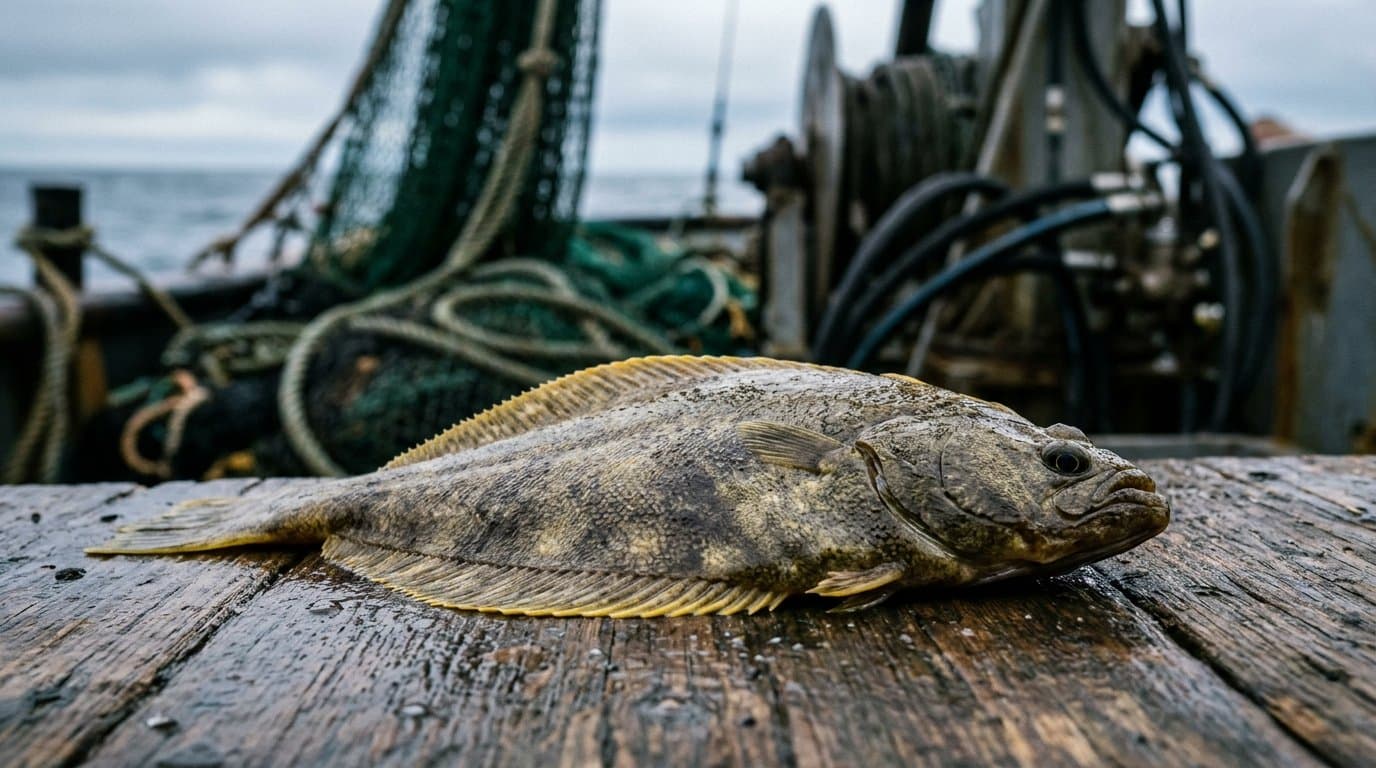
AI image
Scientists back a one-third lower yellowfin sole ceiling after a formula change
Federal scientists recommend lowering next year's catch ceiling for Bering Sea yellowfin sole by about a third, according to an assessment dated Friday. They attribute the drop to a change in how the ceiling is calculated, not to a new finding of fewer fish.
The ceiling, called the acceptable biological catch, marks the most scientists advise taking in a year. It would fall from 267,639 metric tons this year to 175,231 tons in 2027, the assessment says. The North Pacific Fishery Management Council is scheduled to set the 2027 limits at its Dec. 4 to 9 meeting in Anchorage.
The federal rule now in force sets the actual 2027 catch limit lower, at 145,000 tons, under a 2-million-ton cap on combined limits for all Bering Sea and Aleutian Islands groundfish.
A lower ceiling would shrink the gap between the two limits. The rule now in force holds that gap in reserve for six western Alaska Community Development Quota groups and the Amendment 80 trawl catcher-processors that take most yellowfin sole. Operational, environmental and economic factors can keep them from catching their full allocations, the rule says.
For 2027 the gap is 122,639 tons. At the new ceiling and the same catch limit, the gap would be about 30,231 tons. In September, Norton Sound Economic Development Corporation, one of the six groups, traded 900 tons of unused yellowfin and flathead sole for 900 tons of rock sole from the quota groups' reserve.
The authors, led by Ingrid Spies of NOAA's Alaska Fisheries Science Center, dropped a formula tied to a curve of spawning fish and their young after independent reviewers and the council's Plan Team found a poor fit. They now use a standard fishing rate the assessment calls a conservative stand-in for the rate that yields the largest sustainable catch.
The stock is not overfished, the assessment says. This summer's survey estimate rose for a second straight year. Over decades, though, the number of fish has fallen to about half its late-1980s peak.
Written comments close at noon Friday, Nov. 27. The council's decision will go into a later federal rule that replaces the 2027 numbers now on the books.
What did you make of this story? (no account needed)
Made by our human newsroom with AI. How humans and AI work here · Grow with our newsroom ·
Keep Alaska News free for everyone.
No paywall, ever. Members pay so everyone can read the meetings and records Alaska News covers.
Get Alaska News in your inbox
Create your free account and get the day’s top stories around 6 each morning, in a few minutes’ read.
Top stories, around 6 each morning.
Stories on what you follow, on Sundays.
Source: North Pacific Fishery Management Council, Scientists recommend a one-third lower 2027 ceiling for Bering Sea yellowfin sole because they changed the harvest rule, not because they found fewer fish, released .



Comments
Sign in to leave a comment.
No comments yet. Be the first to share your thoughts.