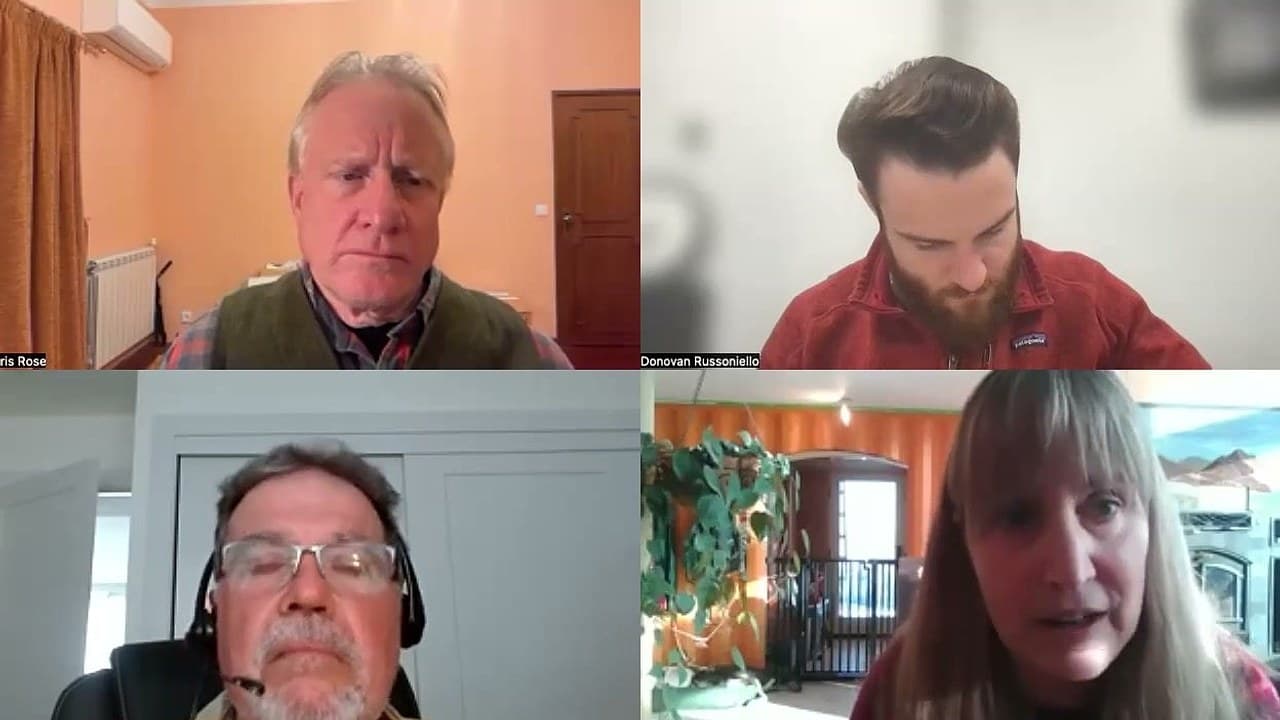
Frame from "REAP: [2026 Fall Energy Speaker Series] Alaska’s Microgrid Innovators" · Photo source
New book on Alaska's microgrids collects stories of the people behind them
A new book about Alaska's microgrids and the people behind them came out this month.
"This book is essentially a lot of oral histories because a lot of the folks profiled are now retiring, moving on," Peter Asmus, the energy consultant who edited "Alaska's Microgrid Innovators," said Wednesday during a Renewable Energy Alaska Project webinar. Two of the book's contributors, Gwen Holdmann and REAP founder Chris Rose, joined him.
Microgrids are small power grids, and most in Alaska are not connected to a larger grid, Asmus said. The book, published by University of Alaska Press, profiles the systems in Kotzebue, Kodiak, Igiugig and Cordova. Renewable energy projects in rural Alaska came about "not due to regulatory fiat but rather to economic necessity," the publisher says.
One person in the book, Diane Carpenter, died in March 2025. Holdmann, chief scientist of the Alaska Center for Energy and Power at the University of Alaska Fairbanks, found Carpenter's letters in the state archives in Juneau while researching how rural villages got electricity. The typed letters argued for what power would mean to village life. Carpenter signed them "Housewife, Stony River, Alaska," Holdmann said.
Carpenter was on the first board of the Alaska Village Electric Cooperative, which was incorporated in 1968. Villages had little cash economy and trouble repaying federal electrification loans, Holdmann said, and forming the cooperative was what it took to get past that.
After that, "her thread just went dark," Holdmann said. Holdmann later found that Carpenter had written a book at about 90 that left out her electrification work, partly because she planned to tell that story separately. Holdmann reached her in Álamos, Mexico, and UAF hired Carpenter as a faculty member at 91 to organize and digitize her papers, Holdmann said. The archive is at UAF, according to the university, and Holdmann said it will be public "pretty soon."
That history is "in some danger of being lost because a lot of our innovators are retiring and leaving and, you know, sadly passing away," Holdmann said. She said Carpenter was inducted into the Alaska Women's Hall of Fame on Tuesday night.
Kodiak's grid is 99% renewable, Asmus said. One reason is a flywheel that supplies short bursts of power when a 2-megawatt crane switches on. Another chapter covers prepaid electricity in small communities, where, Asmus said, the question can be, "Are you gonna shut off Uncle Joe because he didn't pay his bill on time?"
Holdmann and Rose also called for state energy policy as Railbelt utilities weigh three plans to import liquefied natural gas, Alaska News reported. Holdmann will speak about the book at UAF on Monday night.
This article is based on a public meeting of Renewable Energy Alaska Project — REAP: [2026 Fall Energy Speaker Series] Alaska’s Microgrid Innovators ().
Made by our human newsroom with AI. Reviewed by Cale Green. How humans and AI work here · Grow with our newsroom Transcript byLucas Brown
Watch key moments from the source meeting. Click to expand.
Stay informed. Support what matters.
Free, permanent access to local news you can verify. Subscribe to support Bill AlaskaNews and go ad-free.
Related Coverage
Rose, Holdmann say Southcentral gas imports look unavoidable and urge state policy
Alaska News · 19h ago
UAF honors Cordova Electric CEO Clay Koplin for microgrid work in Cordova
Alaska News · 1d ago
Rural Alaska Electricity Costs Run Three to Five Times Urban Rates
Alaska News · 6mo ago
Fifty-nine rural Alaska villages get federal money to defend their power systems from hackers
Alaska News · 2mo ago
A UAF fix for the battery-and-generator clash in village grids
Alaska News · 2mo ago
Comments
Sign in to leave a comment.
No comments yet. Be the first to share your thoughts.