
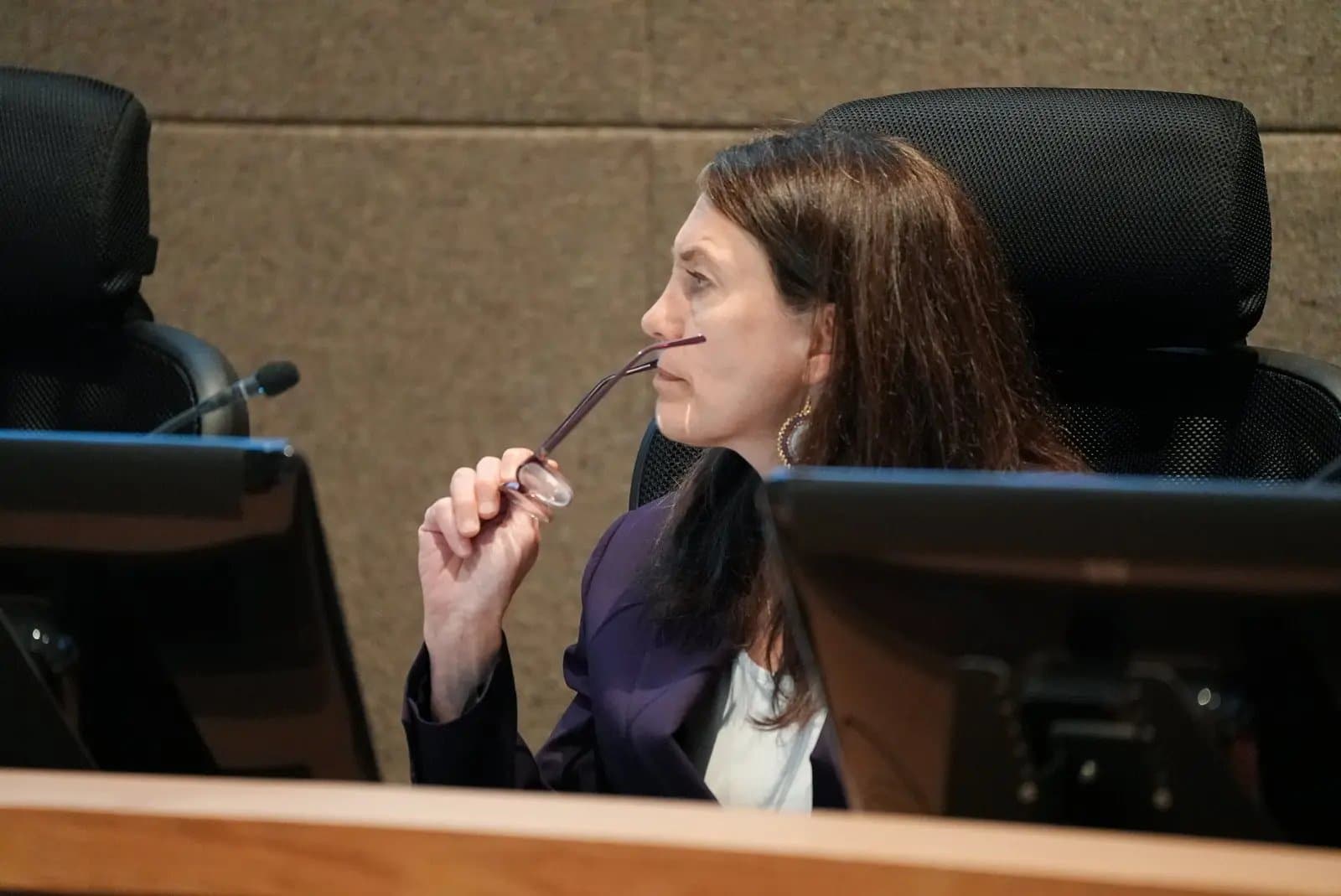
Photo by Cale Green
Anchorage passes surveillance rules, rejects new limits on plate reader searches
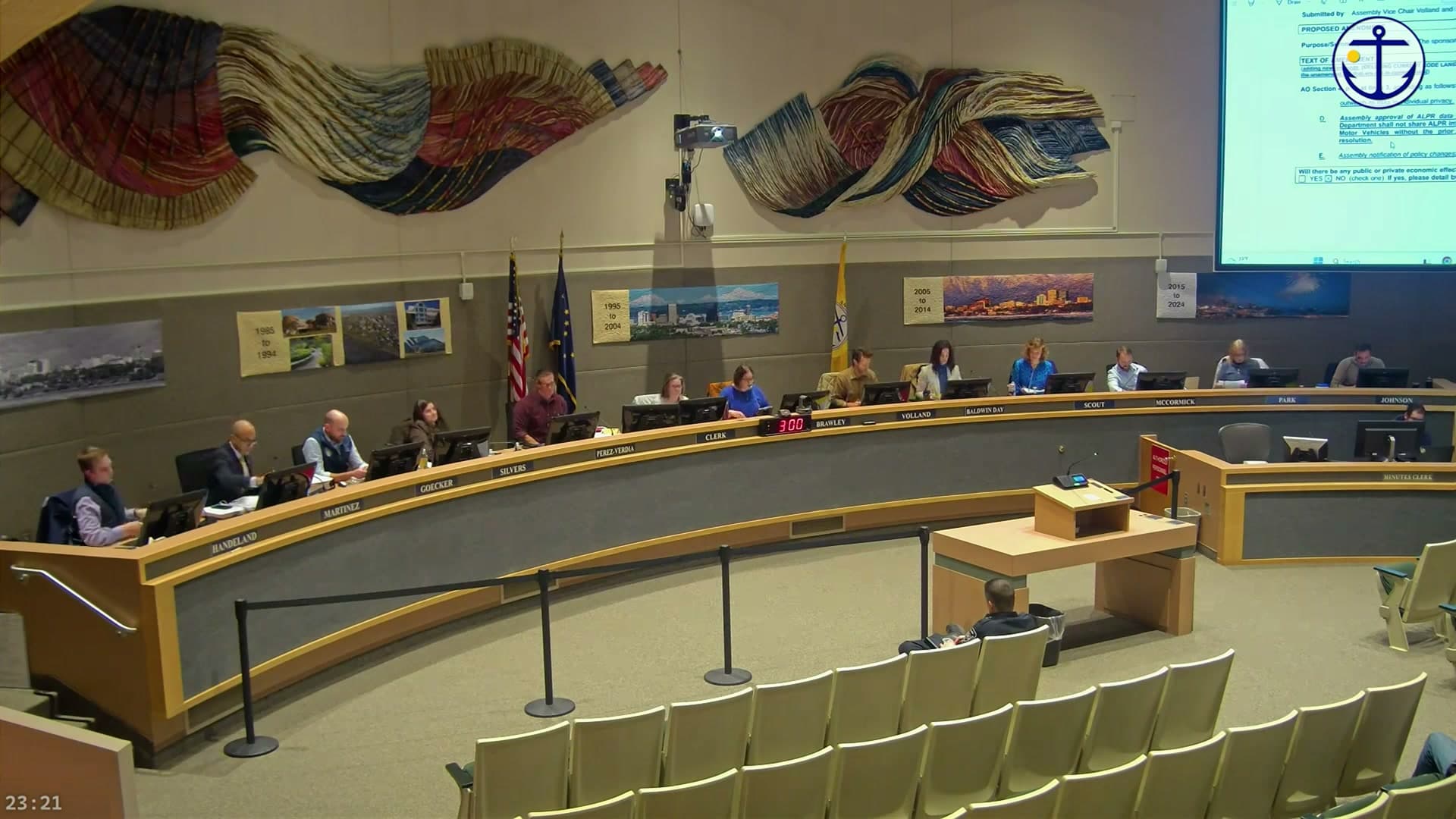
The Anchorage Assembly voted 11-1 late Wednesday to write rules for police license plate readers and the Real-Time Crime Center into city code, after rejecting proposals to limit when police can search plate reader data and to write the department's 14-day limit on keeping it into code.
The version that passed, a substitute from Mayor Suzanne LaFrance and Assembly members Jared Goecker of Chugiak-Eagle River and Yarrow Silvers of East Anchorage, requires the Anchorage Police Department to have written policies on who can use the tools and how long their data is kept. Any contract that would materially expand surveillance capability needs Assembly approval. By June 1 each year, the city must post a public report counting plate reader hits, arrests tied to them and investigations that used them.
The detailed rules for the crime center and plate readers stay in department policy, which the police chief can change without a vote, though the chief will now have to tell the Assembly first. The Assembly approved a five-year, roughly $11.8 million contract with Axon Enterprise in September 2025 that gave police a crime center built to take up to 750 camera feeds, where officers can also monitor plate readers and drones under department policy.
Assembly Member Keith McCormick of South Anchorage, Vice Chair Daniel Volland and Assembly Member Sydney Scout of North Anchorage introduced the original ordinance in August and later offered their own substitute. Members worked from the mayor's version instead. On Oct. 20, before running out of time, the Assembly required a court-issued warrant before police share data in some cases and made it easier to suspend a surveillance tool.
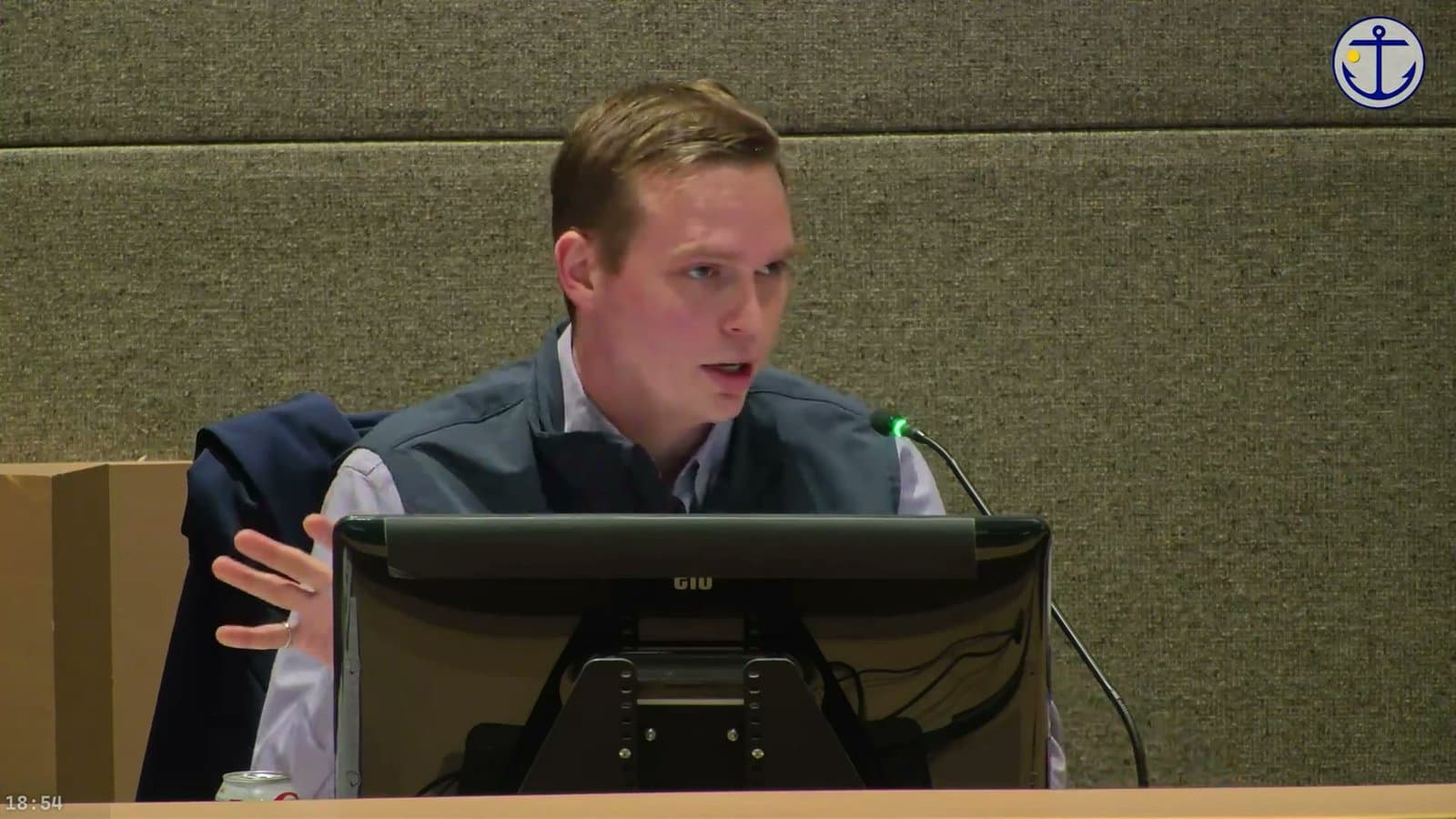
The longest debate on the ordinance Wednesday was over searches. Volland proposed requiring a judicial warrant, or emergency circumstances or probable cause, before police search plate reader data. He cited a federal judge's ruling in Oklahoma this fall, U.S. v. Kyle, that a deputy's warrantless search of about a month of stored plate reader records from multiple states violated the Fourth Amendment. The court found that searching a long, aggregated plate reader history is different from the fleeting look at a car on a public road that older rulings allowed, Volland said.
McCormick called the amendment "the crux of the whole issue." "Without requiring a warrant to search someone's history, this whole debate has been pointless and meaningless because we'll still allow people's rights to be violated," he said.
Municipal Attorney Eva Gardner called the Kyle ruling "an outlier" from a trial court that has not been reviewed on appeal, and said most courts have found that using plate readers is not a search. That case involved a network that shared data across states, she said. Anchorage's readers are on patrol cars only, she said, and are not connected to any other plate reader system.
Asked by McCormick about the Alaska Constitution's privacy protections, which he said courts have found stricter than the Fourth Amendment, Gardner said the Alaska Supreme Court has not taken up plate readers and that she sees little legal risk, given the 14-day retention and searches tied to specific cases. McCormick pointed to an Alaska case, McKelvey, that he said found surveillance can infringe privacy when it pieces together a "mosaic" of someone's life. Gardner later said plate readers capture only what an officer on patrol could already see, just faster.
Police Chief Sean Case said the amendment would have required a warrant for searches in cases such as an FBI bomb threat investigation. McCormick countered that a bomb threat would meet the amendment's emergency exception.
Assembly Member Erin Baldwin Day of Midtown said police can use plate reader searches to build the probable cause needed for a warrant. Requiring "a warrant to get a warrant," she said, "doesn't make any sense to me procedurally."
Assembly Member George Martinez of East Anchorage supported the amendment. "I don't see that the case has been made that this is a hamper," he said. Case answered that the department's readers are mobile rather than fixed, keep data 14 days and are "not a pooled network," and that "we know who's querying it."
The amendment failed 5-7.
So did one from Volland, Scout and McCormick to write a 14-day deletion rule for plate reader and crime center data, with exceptions, into code. Police already delete plate data after 14 days under their own policy unless it is tied to a case. Gardner said a fixed number in code would put the department in violation if a glitch kept data even 12 hours too long. Silvers said the amendment's wording could also sweep in body camera footage that runs through the crime center, which is otherwise kept for years, and that she would likely vote against the whole ordinance if it passed.
The Assembly then voted 12-0 for Baldwin Day's amendment requiring police to notify it before any significant change to those policies, including any change to how long data is kept. Changes required by law can be reported soon after. McCormick called it "a fine compromise."
A proposal from Chair Anna Brawley to make the city disclose vendors' marketing materials with surveillance contracts also failed 5-7.
A proposal to bar sharing plate reader data with the Division of Motor Vehicles without Assembly approval was withdrawn. Scout, its main sponsor, said she worried about enforcement of expired registrations and did not want the technology "to be used to arrest people, to put them in a situation where they are being pressured to self-deport." Case said the system can't connect to the DMV, and Gardner said the ordinance already bars that sharing.
Earlier in the night, the Assembly voted 10-1 to create a yearlong ad hoc committee, chaired by Assembly Member Kameron Perez-Verdia of West Anchorage, to review police policies on use of force, de-escalation and technology, including plate readers.
What did you make of this story? (no account needed)
Made by our human newsroom with AI. Reviewed by Cale Green. How humans and AI work here · Grow with our newsroom · Transcript byLucas Brown
Get Alaska News in your inbox
Create your free account and get the day’s top stories around 6 each morning, in a few minutes’ read.
The day's top stories around 6 each morning. Unsubscribe in one click.
This article is based on a public meeting of Municipality of Anchorage — Anchorage Assembly: Salaries and Emoluments Commission ().
Watch key moments from the source meeting. Click to expand.









Comments
Sign in to leave a comment.
No comments yet. Be the first to share your thoughts.