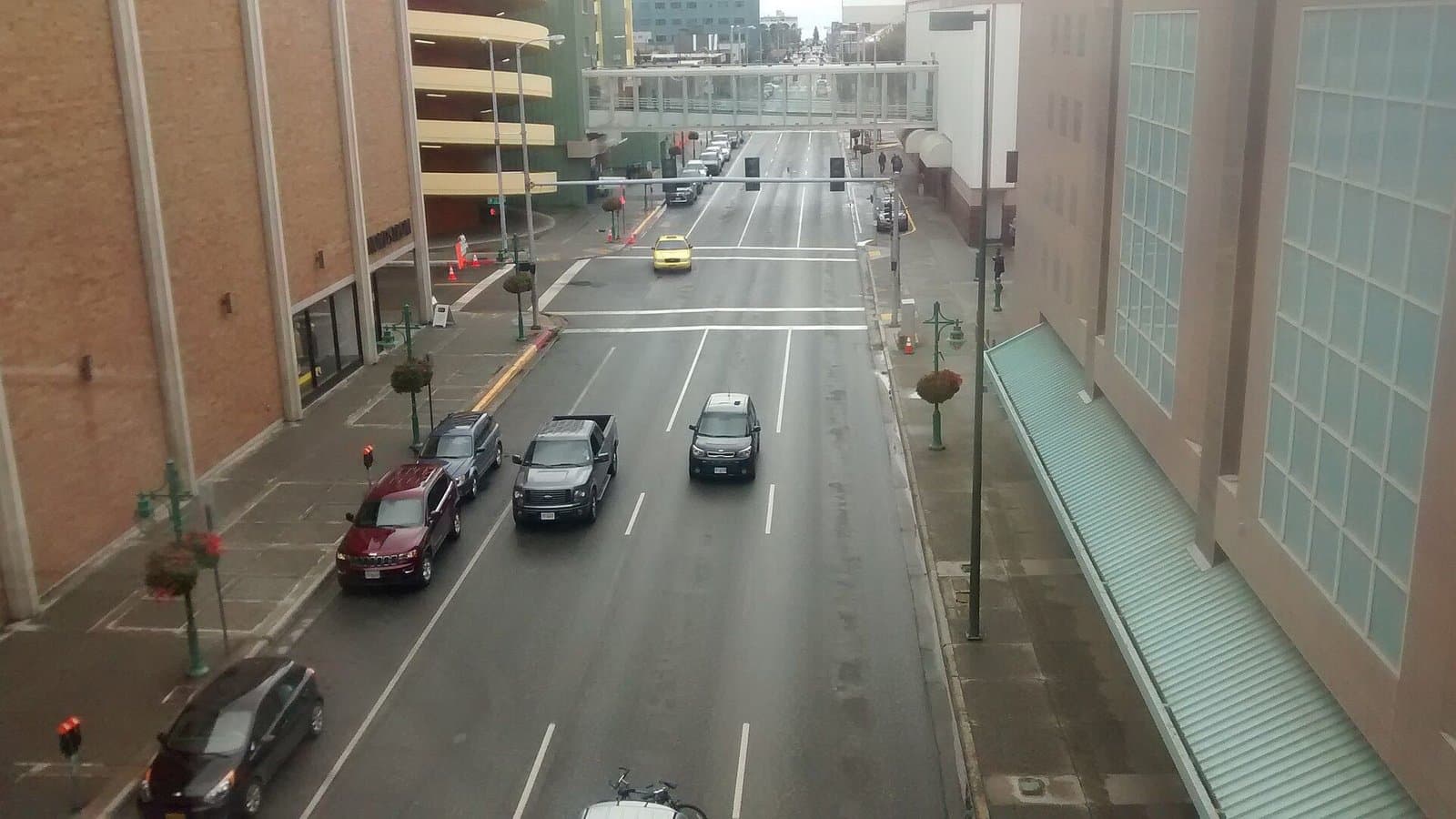
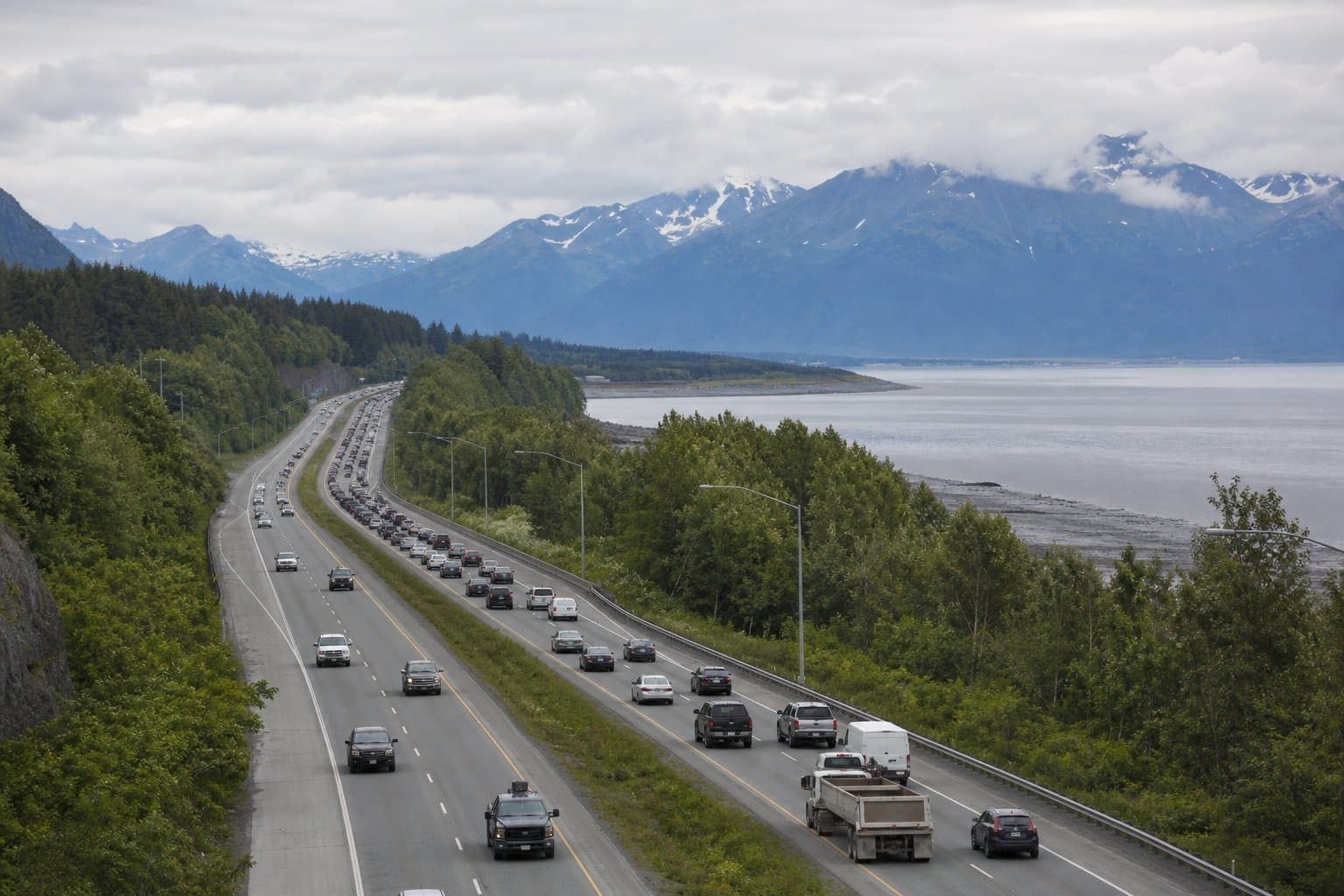
Photo: Mike Linksvayer via Wikimedia Commons · Photo source · CC0
Anchorage road plan keeps contested Seward Highway and downtown rebuilds
The board that sets Anchorage's transportation priorities has kept two contested state road projects in the draft long-range plan it released last month, against its own staff's advice.
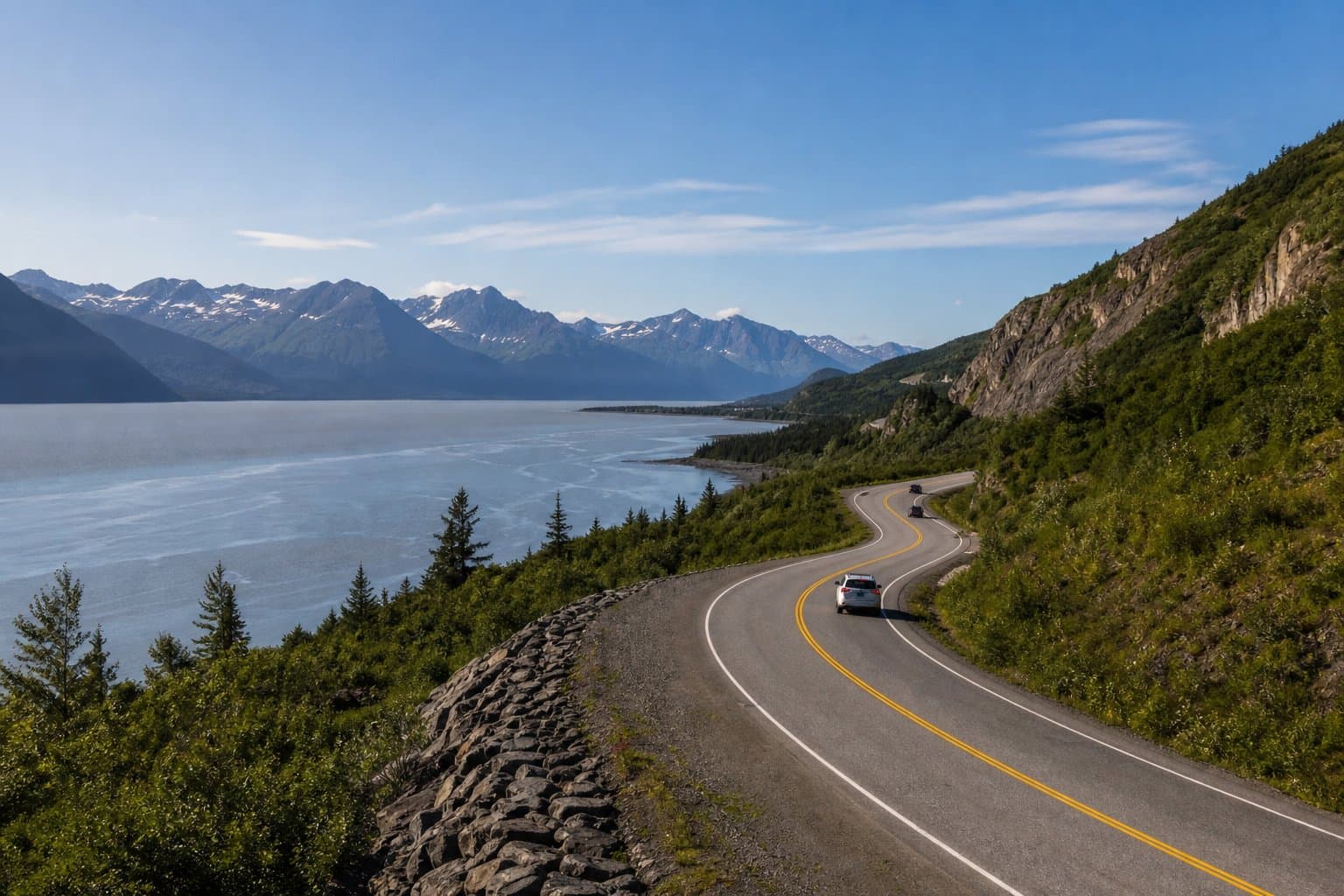
One is the Safer Seward Highway, a roughly $1.6 billion rebuild of about 20 miles of the highway along Turnagain Arm into a divided four-lane road. The other is a $345 million reconstruction of 5th and 6th avenues, mostly downtown, that would remove a lane from each.
To pay for them, the draft plan assumes about $1.9 billion in federal highway money beyond what the Anchorage area has historically received, according to its financial analysis. Staff at AMATS, the joint city-state body that writes the plan, had urged dropping both until the state reconciled highway figures that didn't match its own four-year plan and documented where the downtown money would come from.
State transportation officials say the projects need to stay in. A project left out of the plan can't spend federal money and would shut down, one told planners in October. The board, AMATS's Policy Committee, is scheduled to adopt a final plan in February.
The highway project runs from Potter Marsh, on Anchorage's southern edge, to Bird Flats, south of the community of Bird. Along with the four divided lanes and a separate pathway, the plan lists frontage roads for Bird and Indian, new bridges, rebuilt trailheads and parking areas, and relocation of parts of the railroad tracks. It books money for the work in eight stages, from 2027 to 2040.
The state says the project would reduce crash rates and severity. The stretch became Alaska's first highway safety corridor in 2006, and it had nine fatal crashes and 21 crashes with serious injuries from 2018 to 2022, according to the state, which says overall crash rates have fallen since then but serious crashes haven't. The department has said it intends to pay for the project with federal money without crowding out other work.
Critics, including AMATS's own citizen advisory committee, say the design is too big. AMATS staff comments said it would convert 162.7 acres of Chugach State Park and place up to 105 acres of fill in Turnagain Arm, and staff noted the corridor ranks 55th on the state's list of high-crash locations. The Rabbit Creek Community Council favors a three-lane design.
The Policy Committee put the project back in the plan on a 3-2 vote in July. The plan's figures also differed from the state's draft four-year program released in September: for the fourth of eight stages, the plan lists $343.6 million and the state's draft listed $465 million.
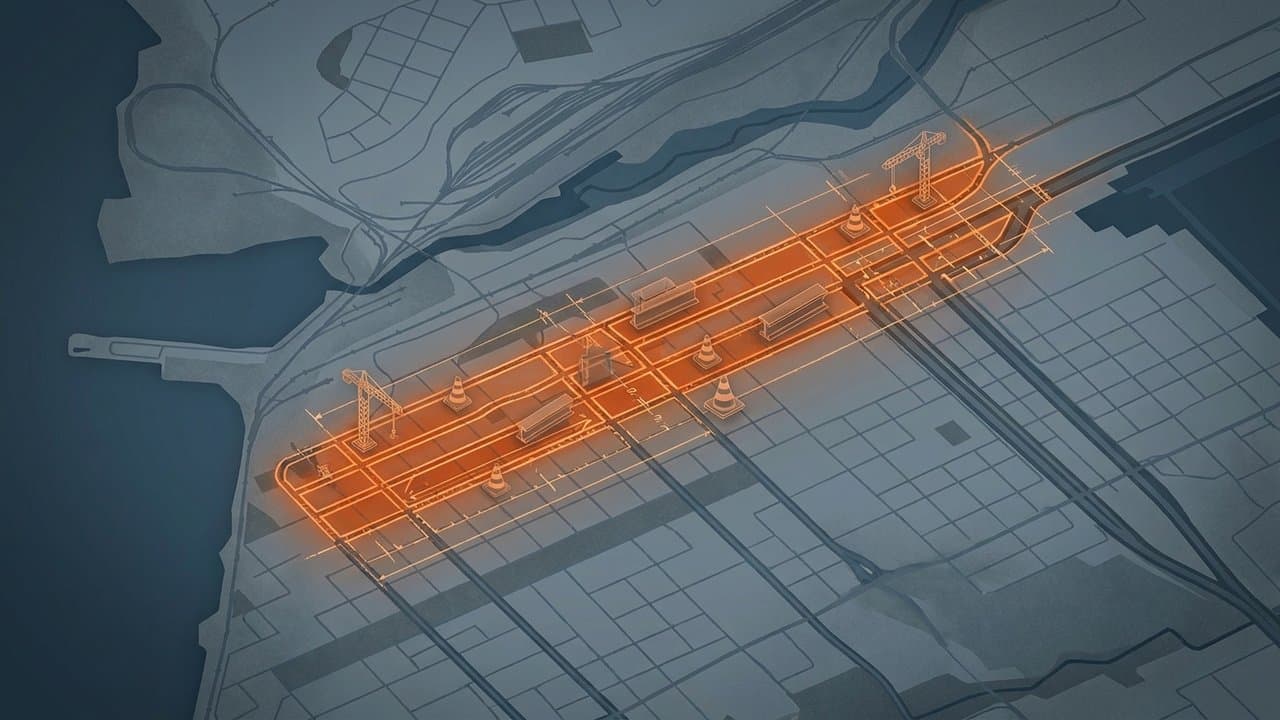
Downtown, 5th and 6th avenues form the one-way pair that carries most traffic through the city center. Between L Street and Gambell Street, the $314.5 million rebuild would remove a lane from each, slow speeds, add protected bike lanes, upgrade pedestrian facilities and include lighting and drainage work. A separate $30.5 million segment east to Airport Heights Drive would come after the Fairview Bypass is finished. Construction downtown is scheduled for 2030 through fall 2032, and the state wants the rebuilt avenues ready for the city to take over.
Mayor Suzanne LaFrance told the Assembly in August that her administration had worked with the state to direct $260 million more in federal money to the project. AMATS Executive Director Aaron Jongenelen told planners Oct. 1 that he may have missed it but couldn't find the project in the state's draft four-year program. According to the minutes, he said it was "like the project does not exist." A state representative said it isn't there because it isn't yet in Anchorage's plan.
The downtown estimate has shifted this year, from $370 million in an August request from the state to $293 million in a technical committee recommendation and the $345 million now in the plan.
Comments on the draft plan are due Dec. 3.
Made by our human newsroom with AI. Reviewed by Cale Green. How humans and AI work here · Grow with our newsroom
Get Alaska News in your inbox
Create your free account and get the day’s top stories around 6 each morning, in a few minutes’ read.
The day's top stories around 6 each morning. Unsubscribe in one click.
Source: AMATS Technical Advisory Committee.




Comments
Sign in to leave a comment.
No comments yet. Be the first to share your thoughts.