Video Clips
Quoted moments from Alaska public meetings, hearings, and press conferences.
Dan Sullivan
“I relentlessly worked on getting a ban on all Russian seafood into the United States of America. This took relentless work.”LIVE: 2026 Alaska Congressional Fisheries Debates · Sep 13, 2026
Dan Sullivan
“And now we are going after China with regard to the same ban. Why? Because Russian trawlers, Chinese trawlers ravage the ocean. They compete unfairly, and they have been, um, going after our markets.”LIVE: 2026 Alaska Congressional Fisheries Debates · Sep 13, 2026
Mary Peltola
“I am very proud of the, uh, trawling bill, the bycatch bill that I introduced when I was in the Congress, the 2 years that I served in Congress in the minority.”LIVE: 2026 Alaska Congressional Fisheries Debates · Sep 13, 2026
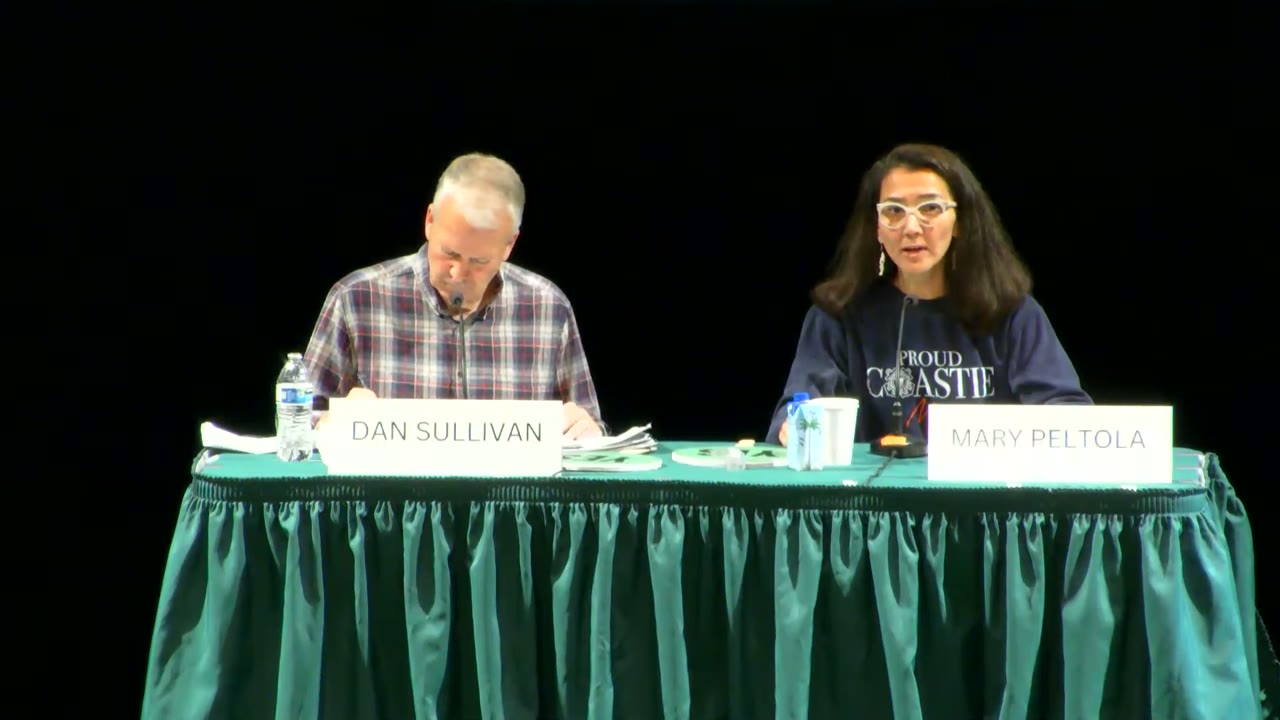
Mary Peltola
“This war in Iran is driving up our gas and diesel prices. Dan Sullivan has voted for the war in Iran over 10 times.”LIVE: 2026 Alaska Congressional Fisheries Debates · Sep 13, 2026
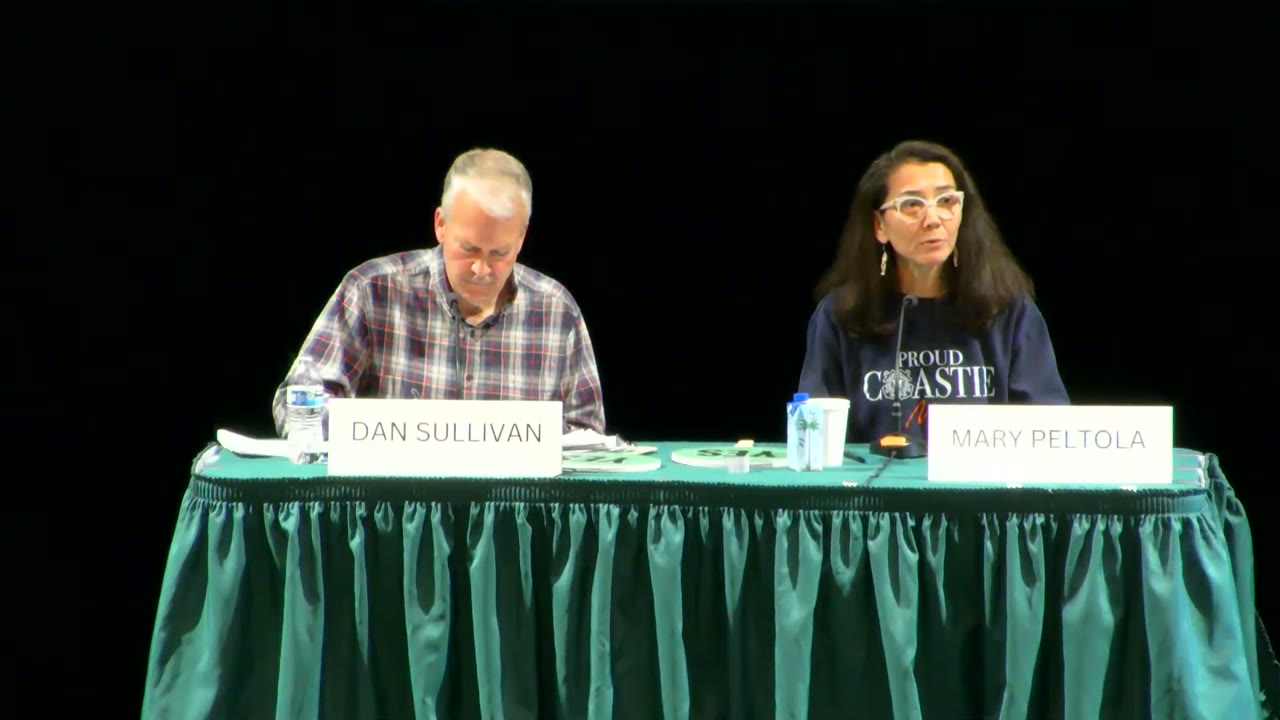
Mary Peltola
“Dan Sullivan voted He went right along with all these dogecuts, mowing down federal employees that we rely on. These agencies weren't fully staffed to begin with. Alaska has taken more cuts on federal employees percentage-wise than any other state”LIVE: 2026 Alaska Congressional Fisheries Debates · Sep 13, 2026
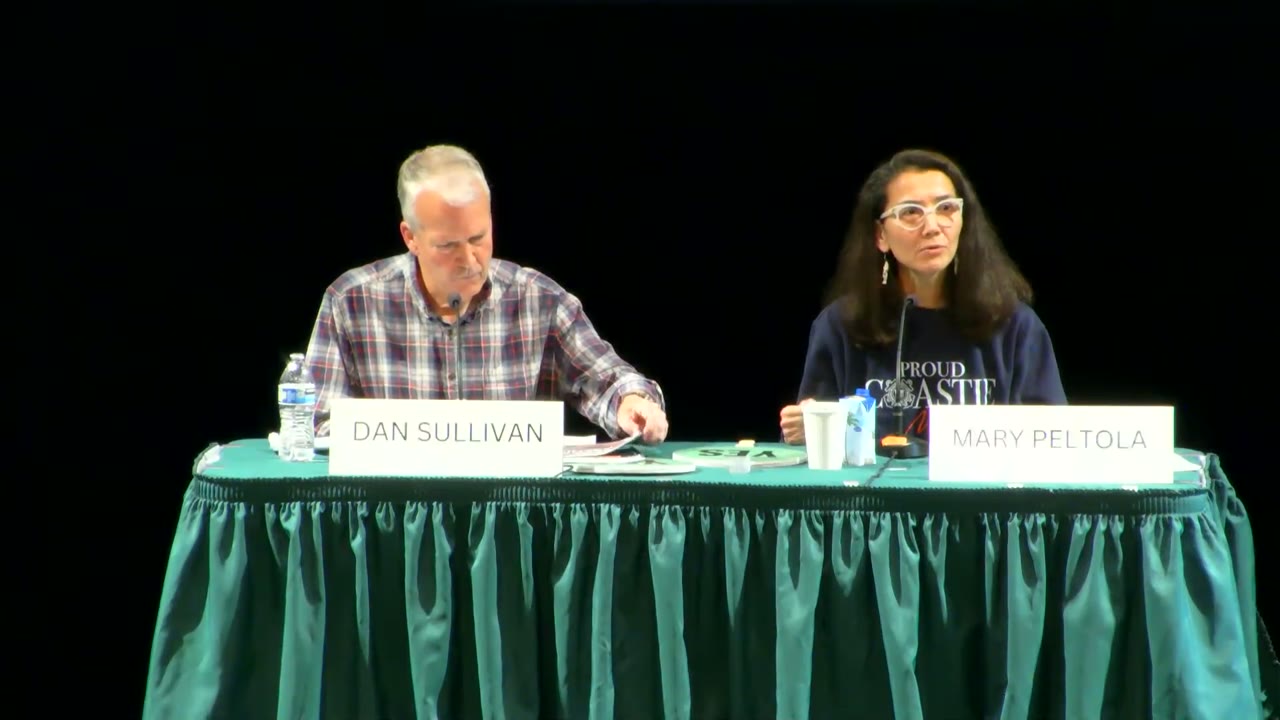
Mary Peltola
“10 times the current senator has voted for this war in Iran.”LIVE: 2026 Alaska Congressional Fisheries Debates · Sep 13, 2026
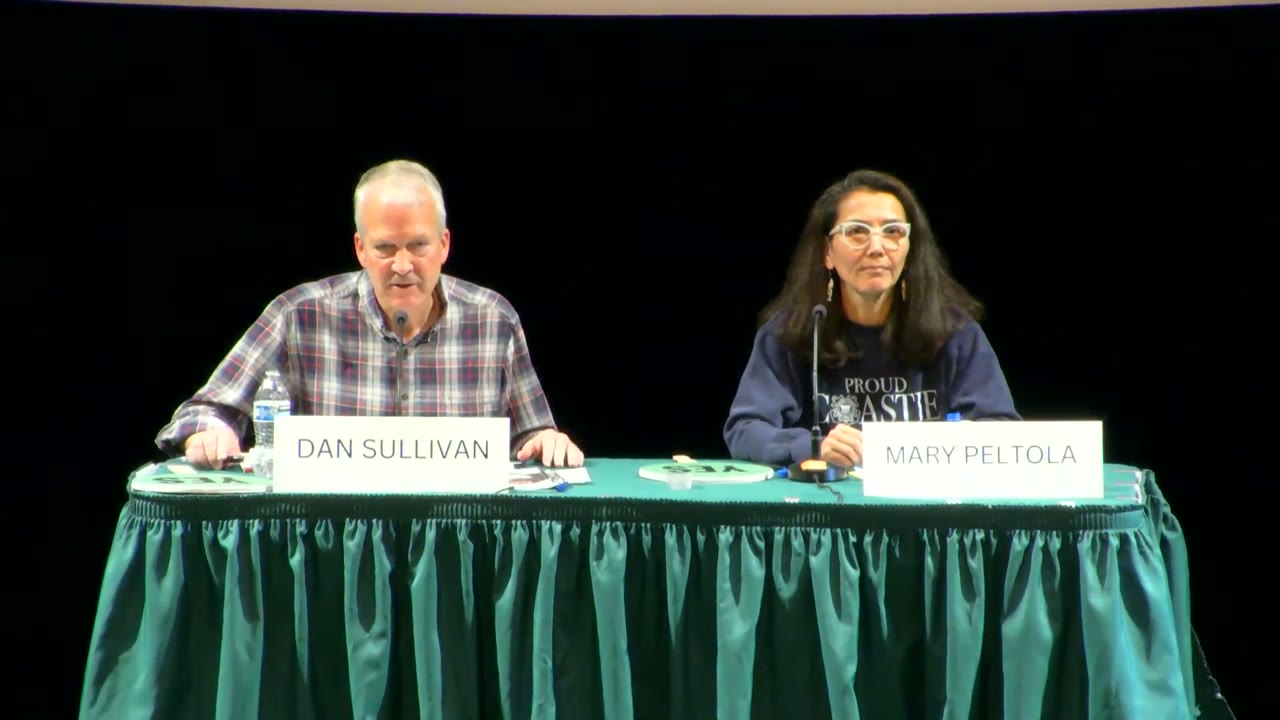
Dan Sullivan
“my opponent has been saying she was against that law, which I think is remarkable.”LIVE: 2026 Alaska Congressional Fisheries Debates · Sep 13, 2026
Mary Peltola
“we've got to make sure that the USDA Office of Seafood doesn't become the Dan Sullivan Office of Farmed Fish.”LIVE: 2026 Alaska Congressional Fisheries Debates · Sep 13, 2026
Mary Peltola
“10 Times he's voted to jack up our prices. This is a direct link to the Strait of Hormuz”LIVE: 2026 Alaska Congressional Fisheries Debates · Sep 13, 2026
Mary Peltola
“Magnuson-Stevens does need to be revised to curtail bycatch, Standards, national standards 4, 8, and 9 do need to be tightened up. We Alaskans, almost all of us agree on this. Alaska Natives should have 1 or 2 seats on the council.”LIVE: 2026 Alaska Congressional Fisheries Debates · Sep 13, 2026
Mary Peltola
“This is the one place where Congress, Alaskans, has an opportunity to say, no, this is a man-made impact. We have the ability to, to address this systemically.”LIVE: 2026 Alaska Congressional Fisheries Debates · Sep 13, 2026
Dan Sullivan
“My opponent would empower a Seattle, Washington-based senator to be the next chairman of the Commerce Committee. Any opportunity to get bycatch bills passed, including mine, would be automatically undermined if you had the chairman of the Commerce Committee being from Washington State. That's who my opponent is looking to empower.”LIVE: 2026 Alaska Congressional Fisheries Debates · Sep 13, 2026
Dan Sullivan
“During my opponent's first term in Congress, she did not introduce one bill dealing with fish. In two terms in Congress, she did not have one bill signed into law. I had 63 signed into law in two terms, many focused on strengthening our fisheries.”LIVE: 2026 Alaska Congressional Fisheries Debates · Sep 13, 2026
Mary Peltola
“Alaskans know the difference between a senator who fights for fish and one who fishes for donations. That's why I've not taken a single dollar from out-of-state corporate trawlers and why I've never owned a share of stock in a farmed fish company.”LIVE: 2026 Alaska Congressional Fisheries Debates · Sep 13, 2026
Dan Sullivan
“When the Congresswoman was in office for 2 terms, she never introduced any bill to, uh, get this into law. She didn't introduce a companion bill of mine. Actually, after she lost in 2024, in December of 2024, she introduced a bill to finally do this. Talk about too late.”LIVE: 2026 Alaska Congressional Fisheries Debates · Sep 13, 2026
Dan Sullivan
“which set the stage for my comprehensive bycatch Bycatch Reduction Act, which we will be bringing to vote on in the Commerce Committee next week. The one way in which we will not get any bycatch legislation done is if the senators from Seattle who support and have fundraised for my opponent become the chairman of the Commerce Committee.”LIVE: 2026 Alaska Congressional Fisheries Debates · Sep 13, 2026
Austin Esterbrooks
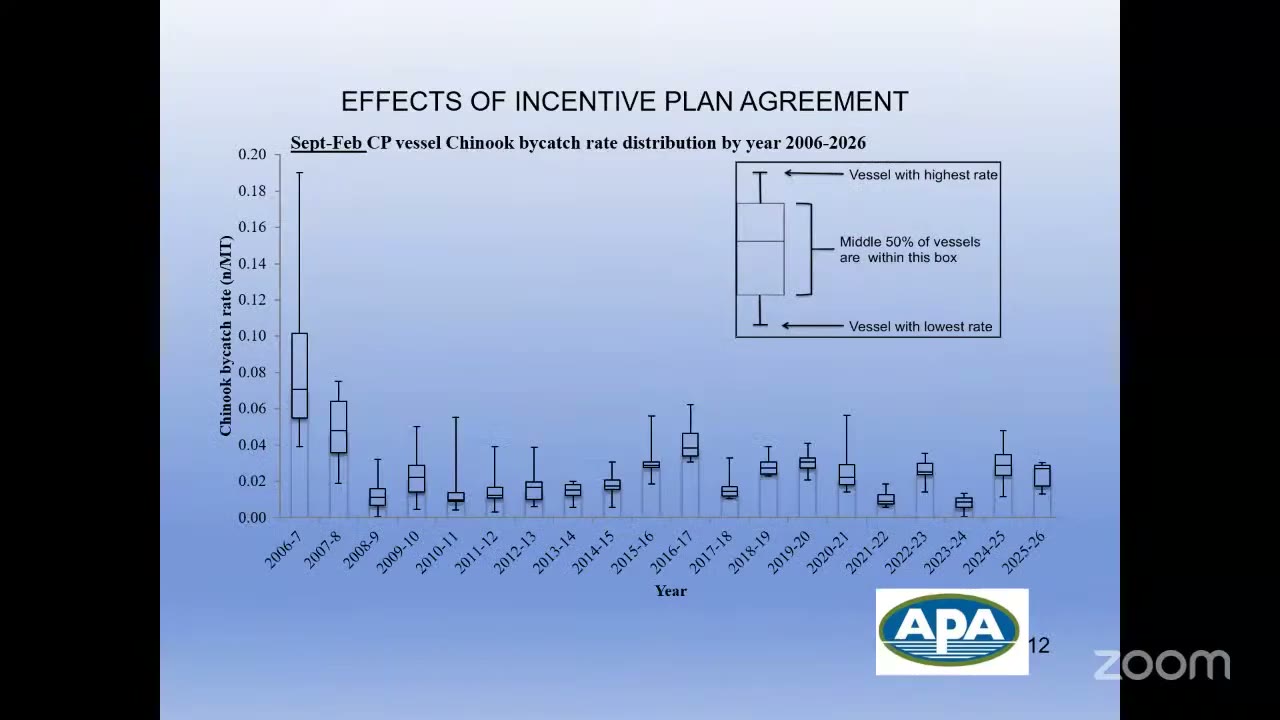
“prior to the IPA years, you can see the extremely broad distribution of individual vessel level bycatch performance on the left-hand side. And then as you move into the post-Amendment 91, 2011, and to the present, the fleet level distribution has become incredibly homogenized, and that continues to hold true in 2025 and 2026.”NPFMC 279 Day 2 - June 5, 2026 · Jun 5, 2026
Austin Esterbrooks
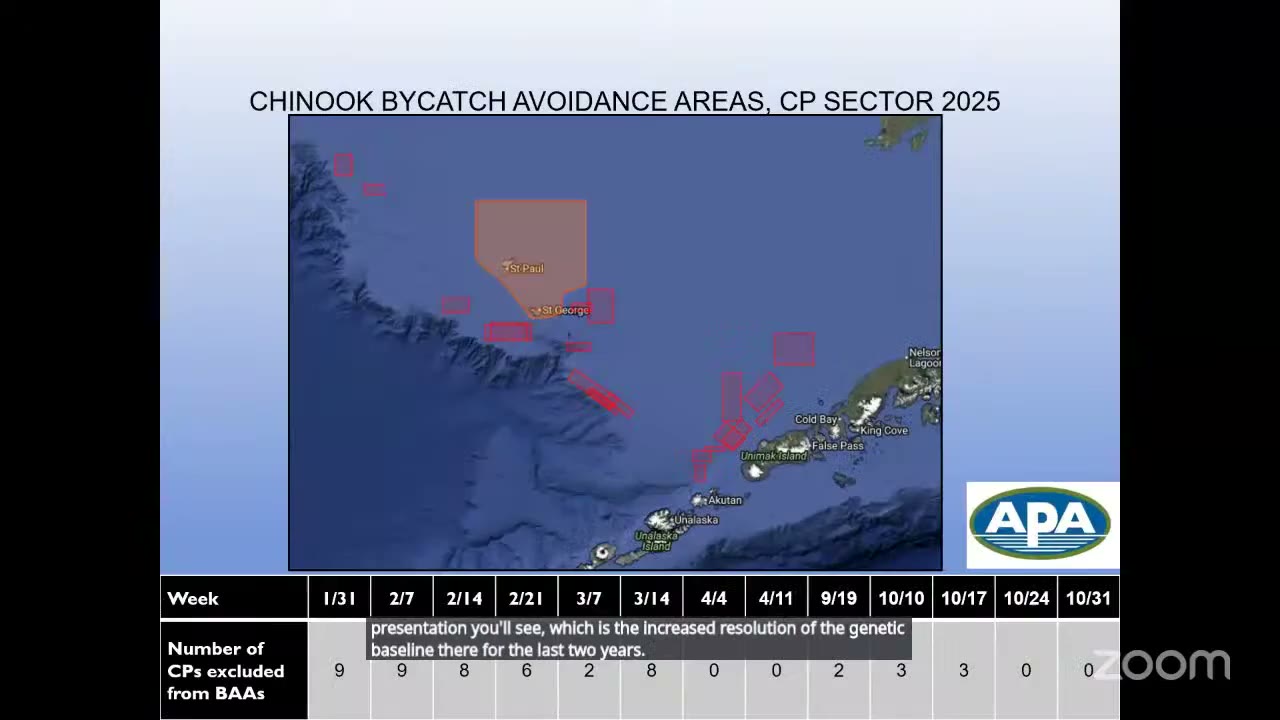
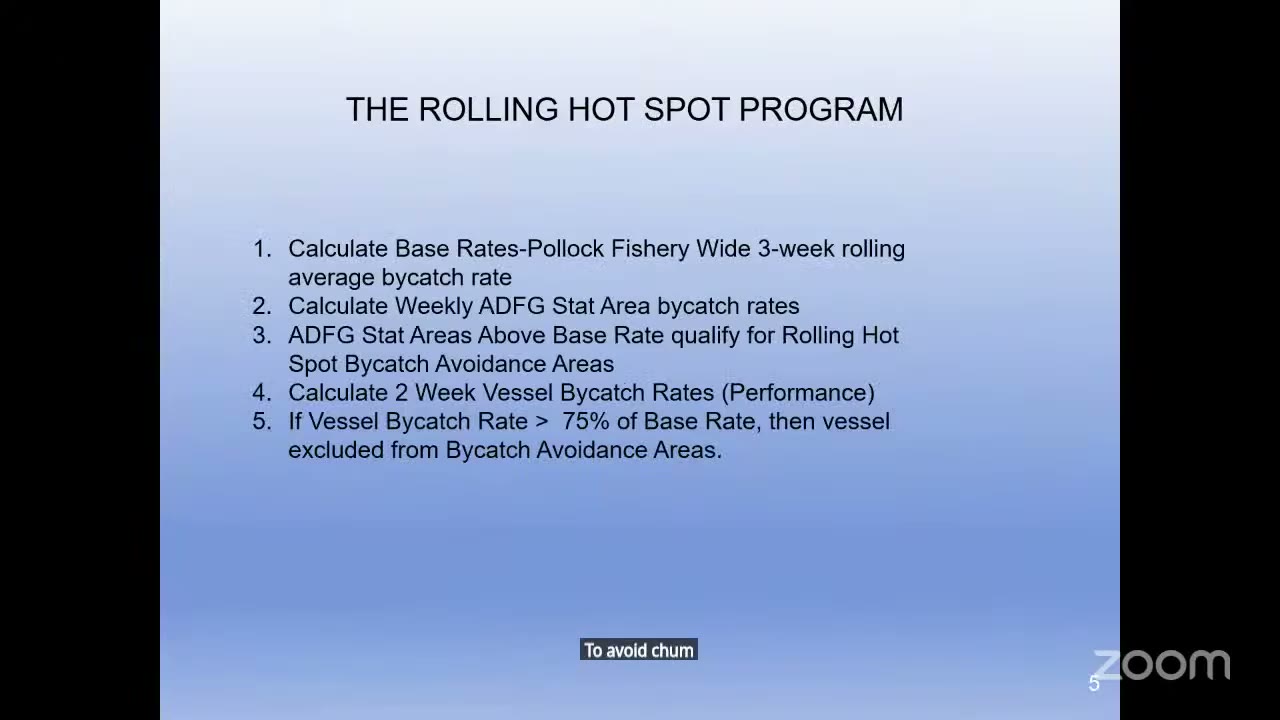
“we had 13 different Chinook bycatch avoidance areas that were identified across the 2025 fishing year.”NPFMC 279 Day 2 - June 5, 2026 · Jun 5, 2026
Austin Esterbrooks
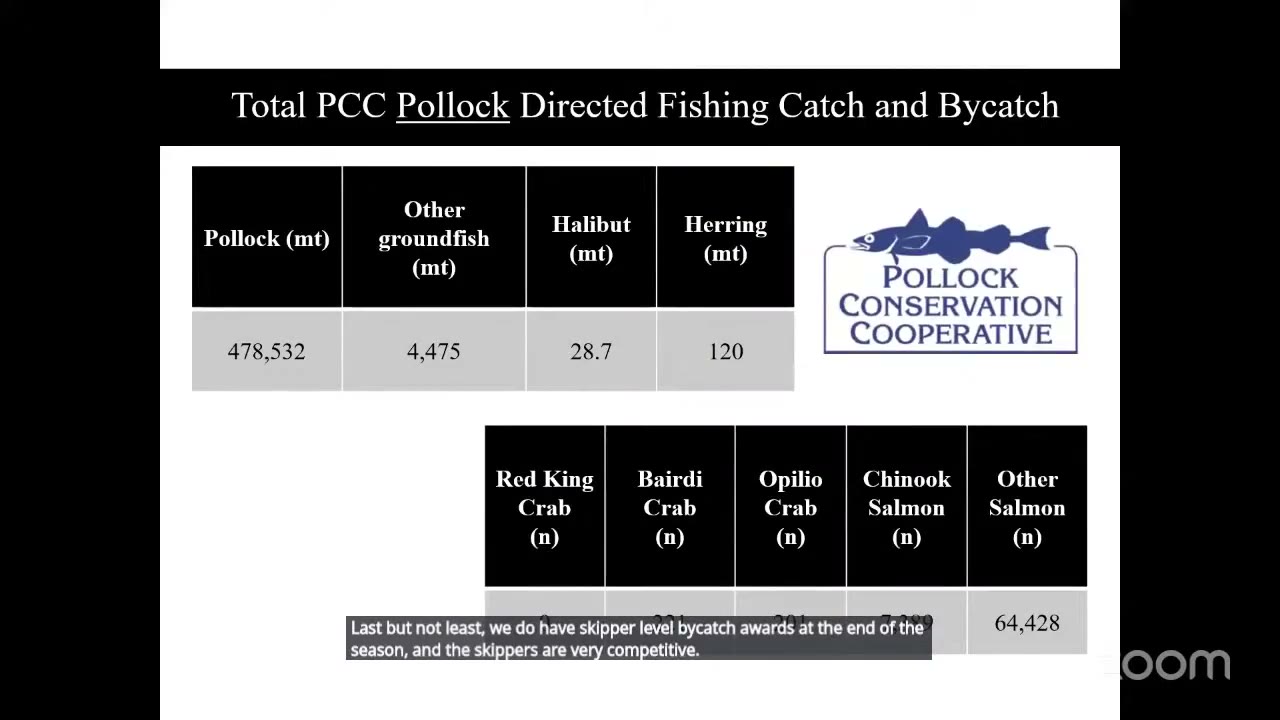
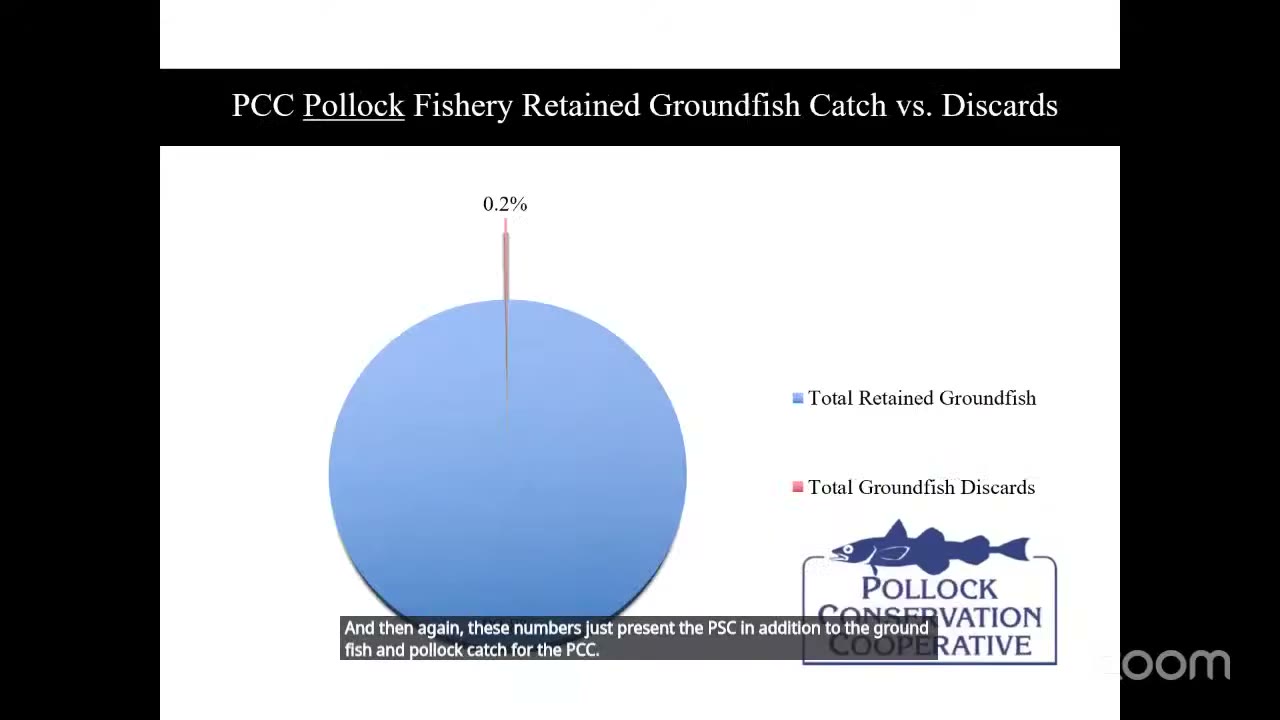
“in 2025, for example, we had a discard— or sorry, a groundfish bycatch ratio of less than 1%. And so this gives you sort of a benchmark of how the fleet performed historically. That longer-term groundfish discard ratio was— is 1.7%. So 2025 was relative to the historical period cleaner on average.”NPFMC 279 Day 2 - June 5, 2026 · Jun 5, 2026
Austin Esterbrooks
“we also track longer-term trends of the retention ratio of the, the groundfish that we catch. And so this is showing you what we keep and use as a saleable product relative to what we catch, and this of the FMP, so the Fisheries Management Plan managed species. And again, it's 99.8%, and this is pretty typical for our fleet over the long-term average. I would say we, we over the long term retain greater than 99.5% of everything that we catch.”NPFMC 279 Day 2 - June 5, 2026 · Jun 5, 2026
Austin Esterbrooks
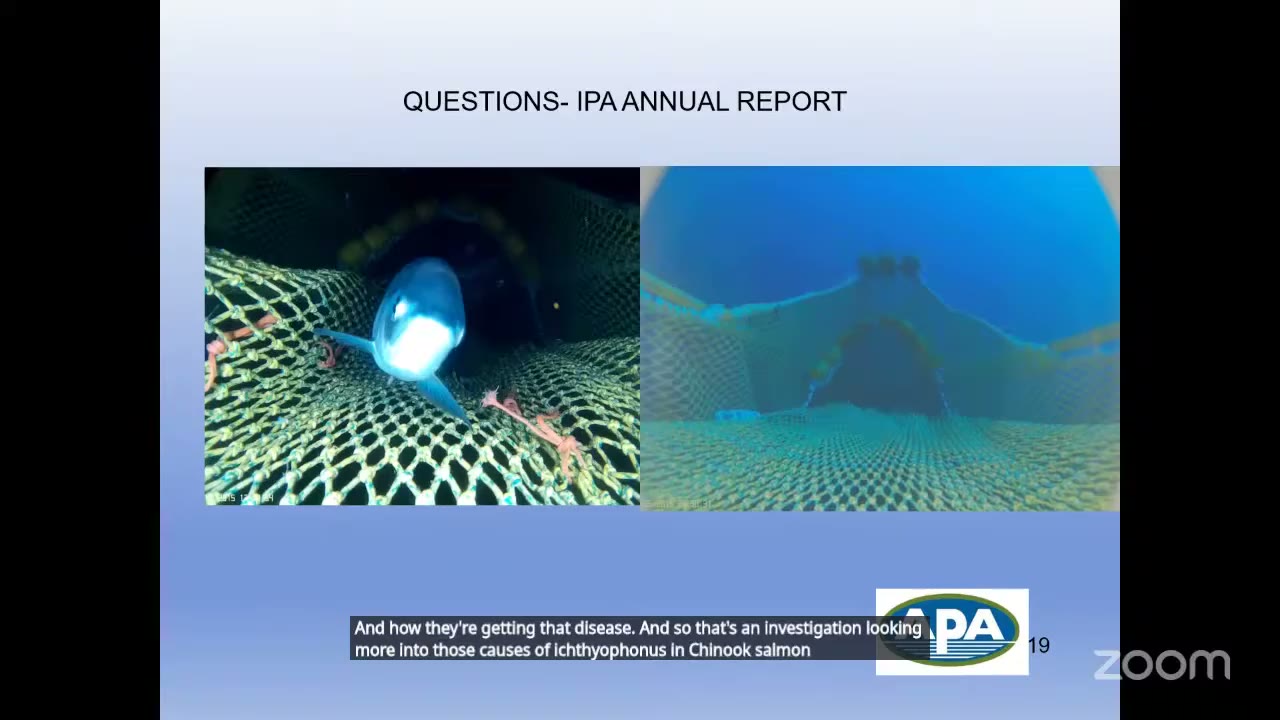
“that project should be scheduled to wrap up, uh, soon. I know it was a 3-year project, uh, off the top of my head. I don't know, they might have had a 1-year extension on that too, um, but she should be wrapping up relatively in the— I mean, in the next year or two.”NPFMC 279 Day 2 - June 5, 2026 · Jun 5, 2026
Austin Esterbrooks
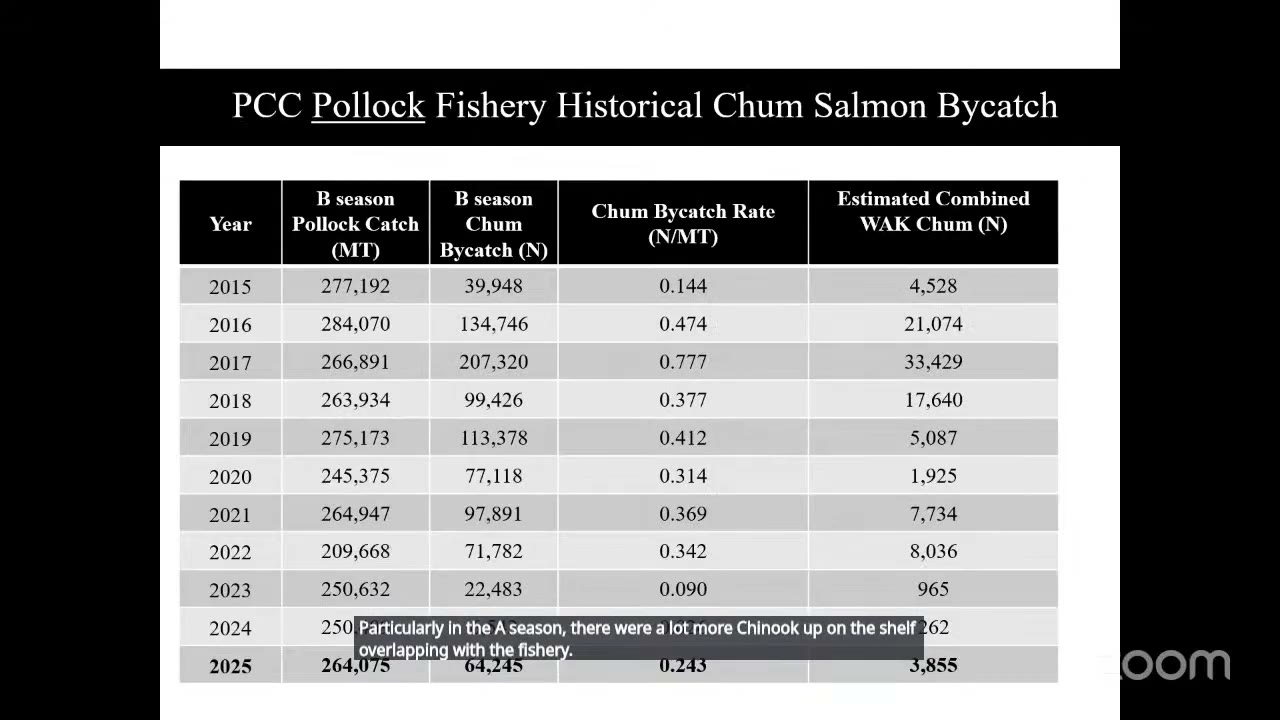
“chum salmon bycatch, again relative to the 2024, um, it was a higher year for chum salmon. And this was again reduced sea ice, typically, uh, causes the pollock and chum distributions in the B season to overlap more extensively because there's less feed on the shelf relative to along the shelf break. And the salmon are primarily basin dwellers, and so in the warmer years, there is more overlap with the fishery and the chum distributions.”NPFMC 279 Day 2 - June 5, 2026 · Jun 5, 2026
Austin Esterbrooks
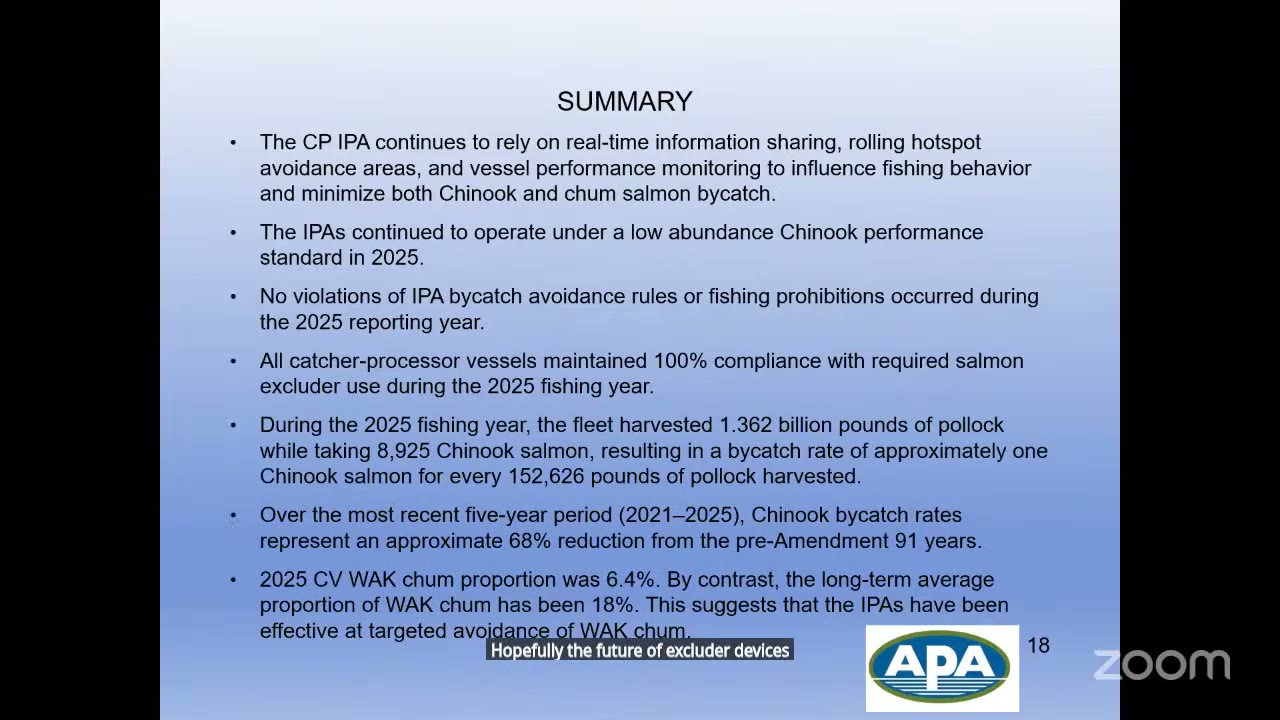
“there were no violations of any of the IPA bycatch avoidance rules or fishing prohibitions in 2025.”NPFMC 279 Day 2 - June 5, 2026 · Jun 5, 2026
Austin Esterbrooks
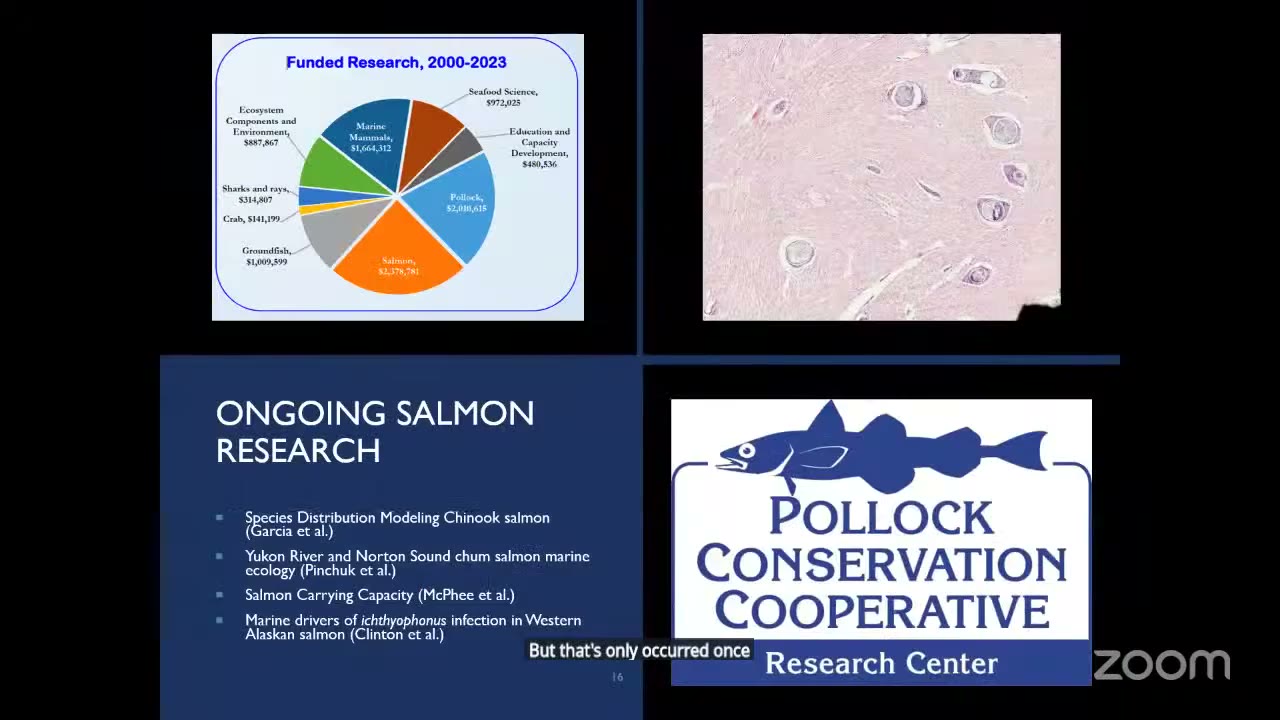
“we funded more with respect to salmon research than any other category of marine research in the last 20, 25 years.”NPFMC 279 Day 2 - June 5, 2026 · Jun 5, 2026
Austin Esterbrooks
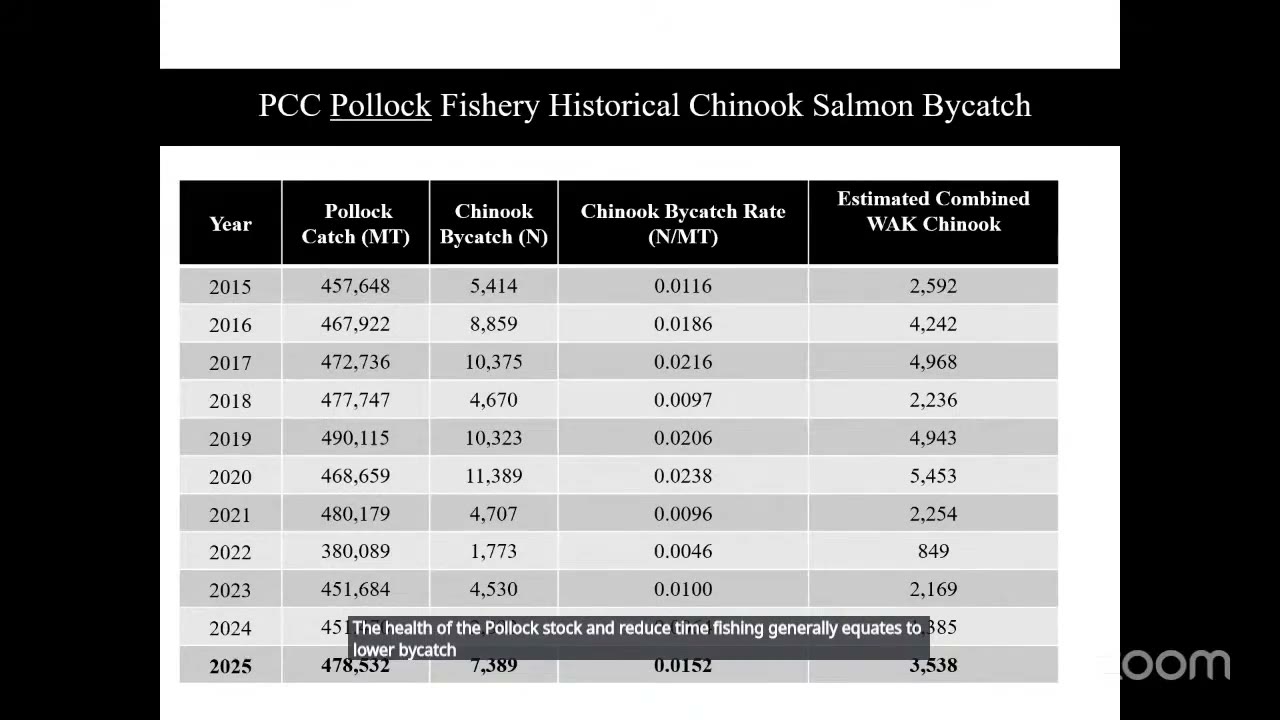
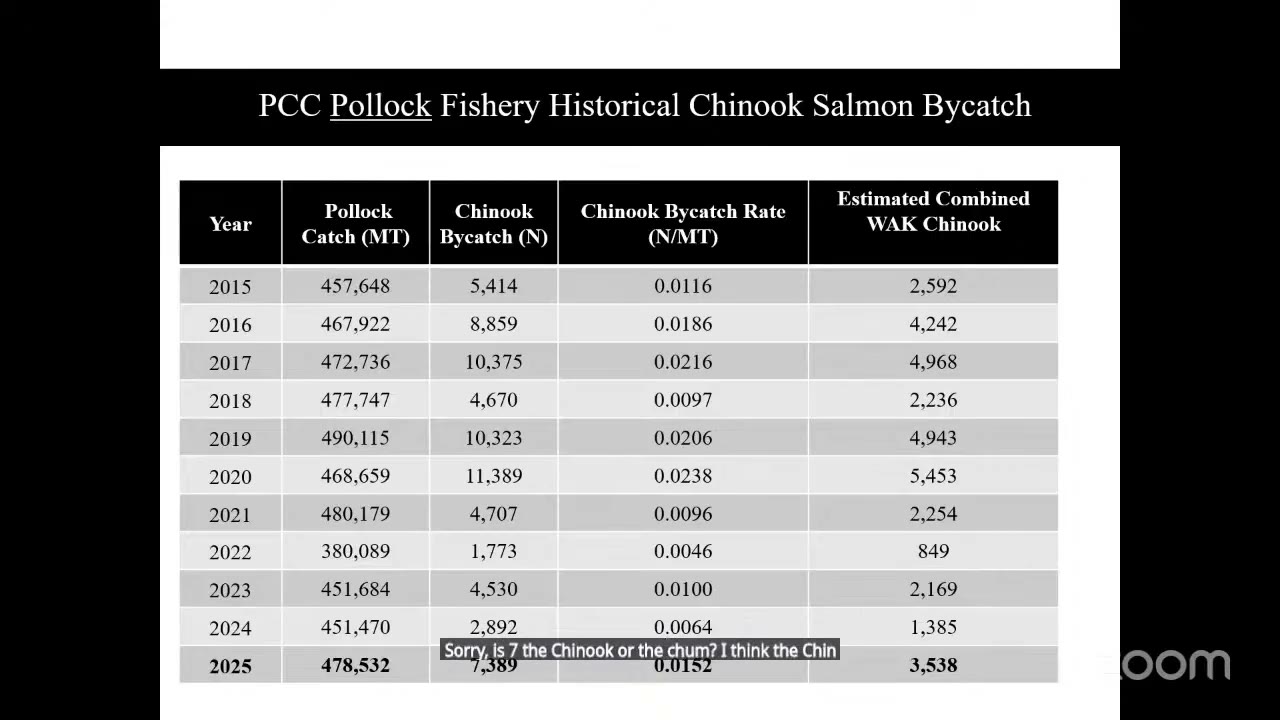
“In terms of the historical Chinook salmon bycatch, 2025 wasn't as good as 2024.”NPFMC 279 Day 2 - June 5, 2026 · Jun 5, 2026
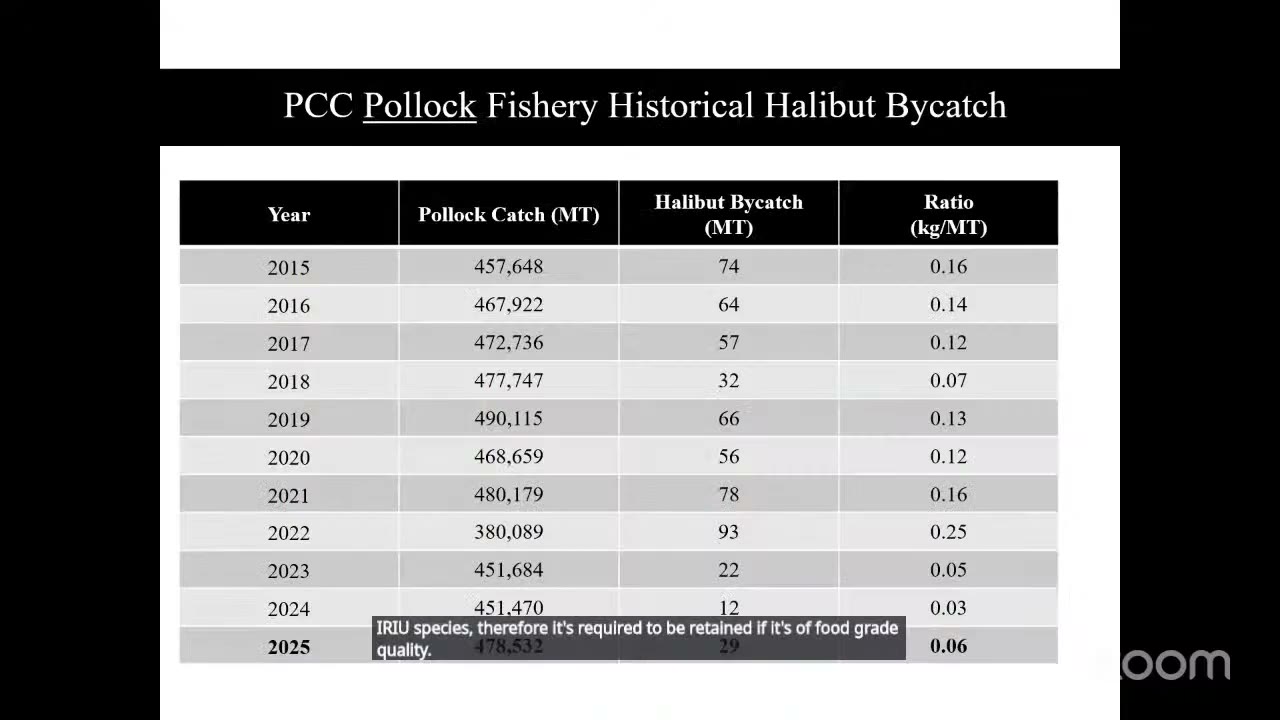
Austin Esterbrooks
“Giving you a brief look at the halibut performance of the fleet last year relative to the longer-term trends, again, it was the, the third best year and I attribute this mostly to, again, the health of the pollock stock and reduced time fishing generally equates to lower bycatch.”NPFMC 279 Day 2 - June 5, 2026 · Jun 5, 2026
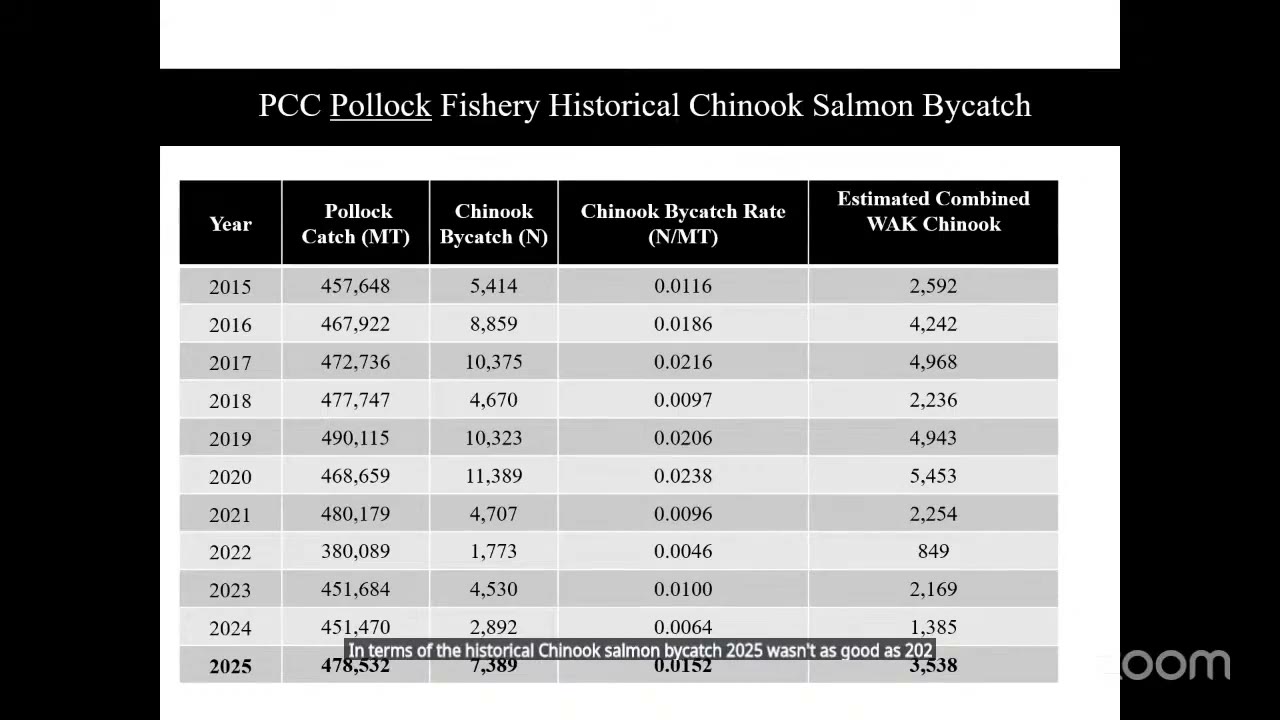
Austin Esterbrooks
“this is typically due to temperature regimes in the Bering Sea. We typically see a lot more Chinook move up onto the shelf and overlap with the pollock distributions when temperatures are warmer. And this held true in 2025, particularly in the A season. There were a lot more Chinook up on the shelf overlapping with the fishery.”NPFMC 279 Day 2 - June 5, 2026 · Jun 5, 2026
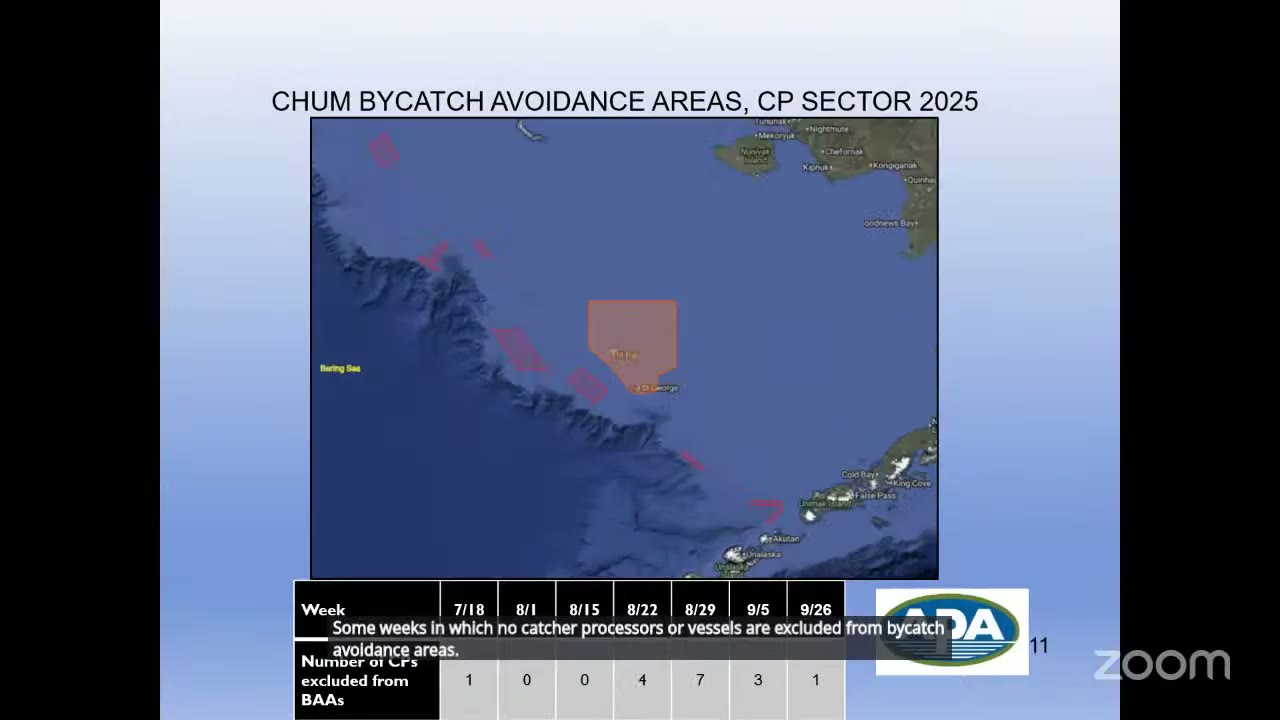
Austin Esterbrooks
“we had 9 chum bycatch avoidance areas that were identified in 2025 across the B season.”NPFMC 279 Day 2 - June 5, 2026 · Jun 5, 2026
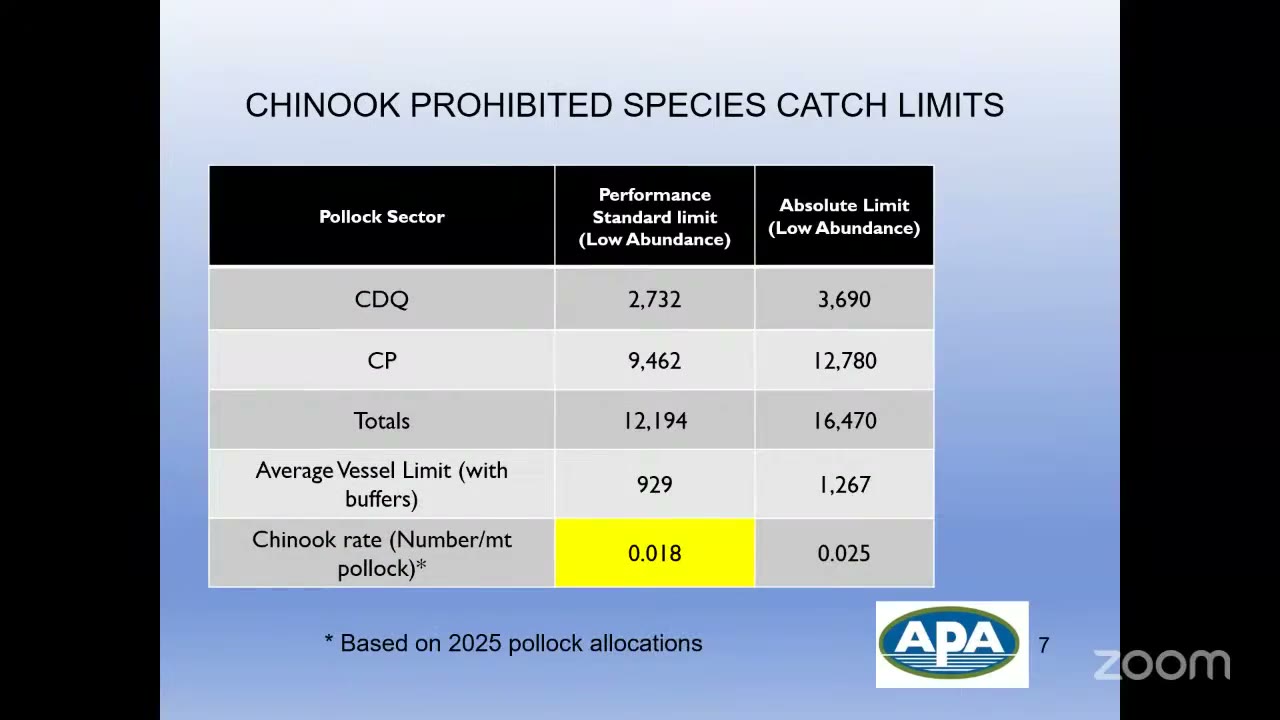
Austin Esterbrooks
“under a low abundance year, which we were under in 2025 and have been for a series of years, the 1.8 or 0.018 number there is what the fleet is striving to achieve. So essentially, if you catch more than 2 Chinook salmon in any given tow over the course of the season, that's too many. And so that, that's the goal at which our fleet is trying to operate across the entire season.”NPFMC 279 Day 2 - June 5, 2026 · Jun 5, 2026
Austin Esterbrooks
“obviously 2018-19 were some of the lower, lower sea ice years on record in the Bering Sea. So, um, 2018, you don't see the effect yet, but 2019 and 2020, there was definitely sort of a lagged effect there in terms of the bycatch.”NPFMC 279 Day 2 - June 5, 2026 · Jun 5, 2026
Anita Kroska
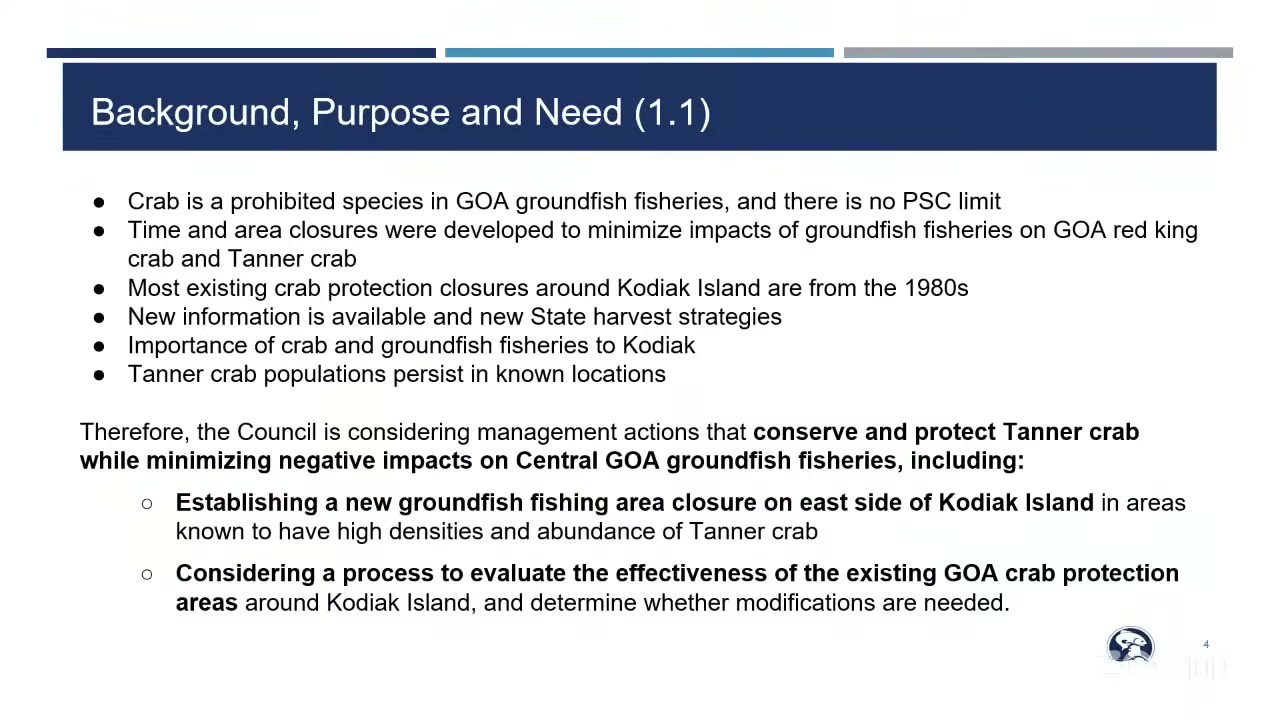
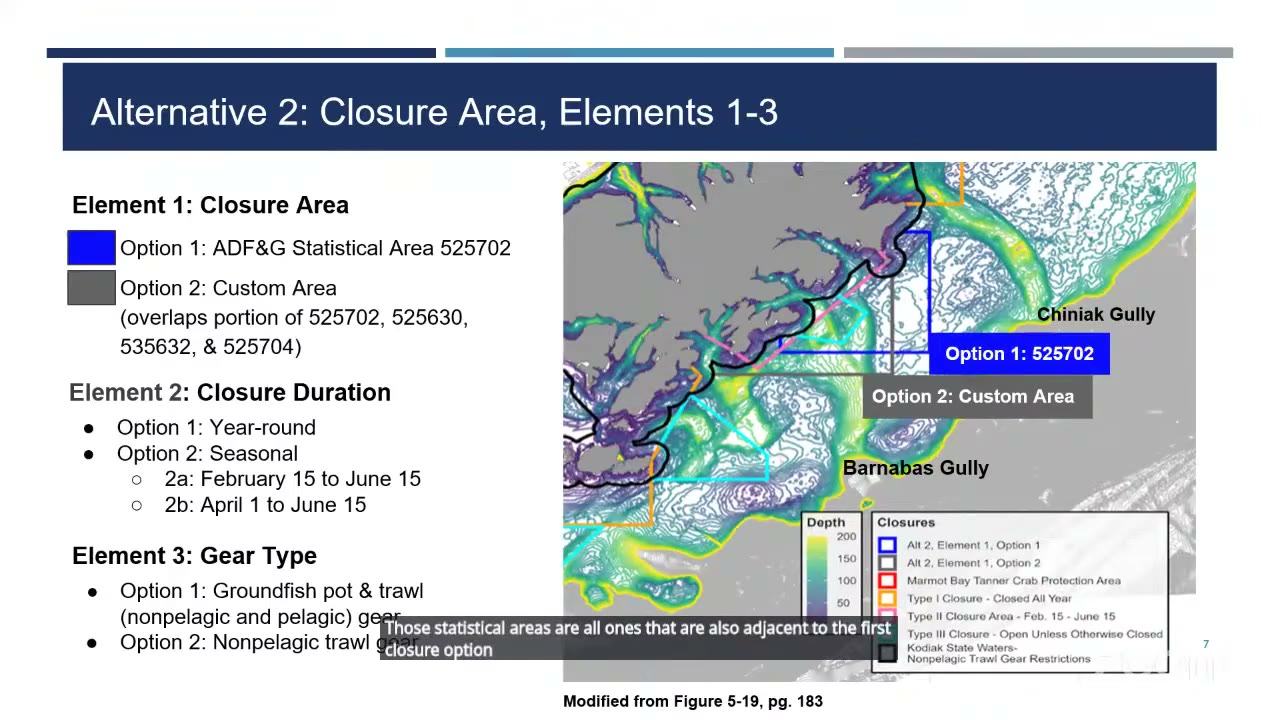
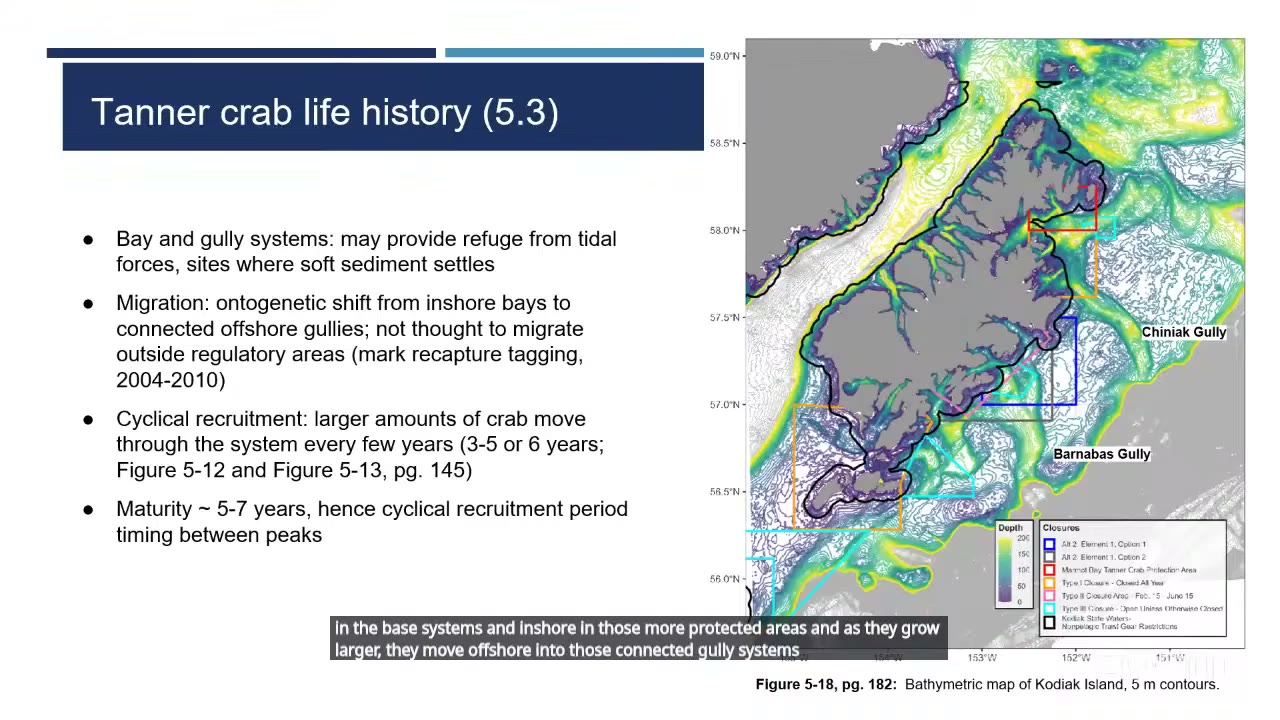
“Option 2 was chosen, that was put forward by the Kodiak Crab Alliance Cooperative, KCAC Group, in the April 2025 council meeting during their testimony as an option for consideration. And their— I think their intention was to draw a boundary option centered around some Tanner crab abundance densities using heat maps provided by Alaska Department of Fish and Game them during that meeting.”NPFMC 279 Day 3 - June 6, 2026 · Jun 6, 2026
Anita Kroska
“this stock since the year 2000 is that they undergo a really cyclical recruitment cycle where a lot of crab move through the system every few years, every 3 to 5 or 6 years.”NPFMC 279 Day 3 - June 6, 2026 · Jun 6, 2026