Austin Esterbrooks
24:34 - 25:08
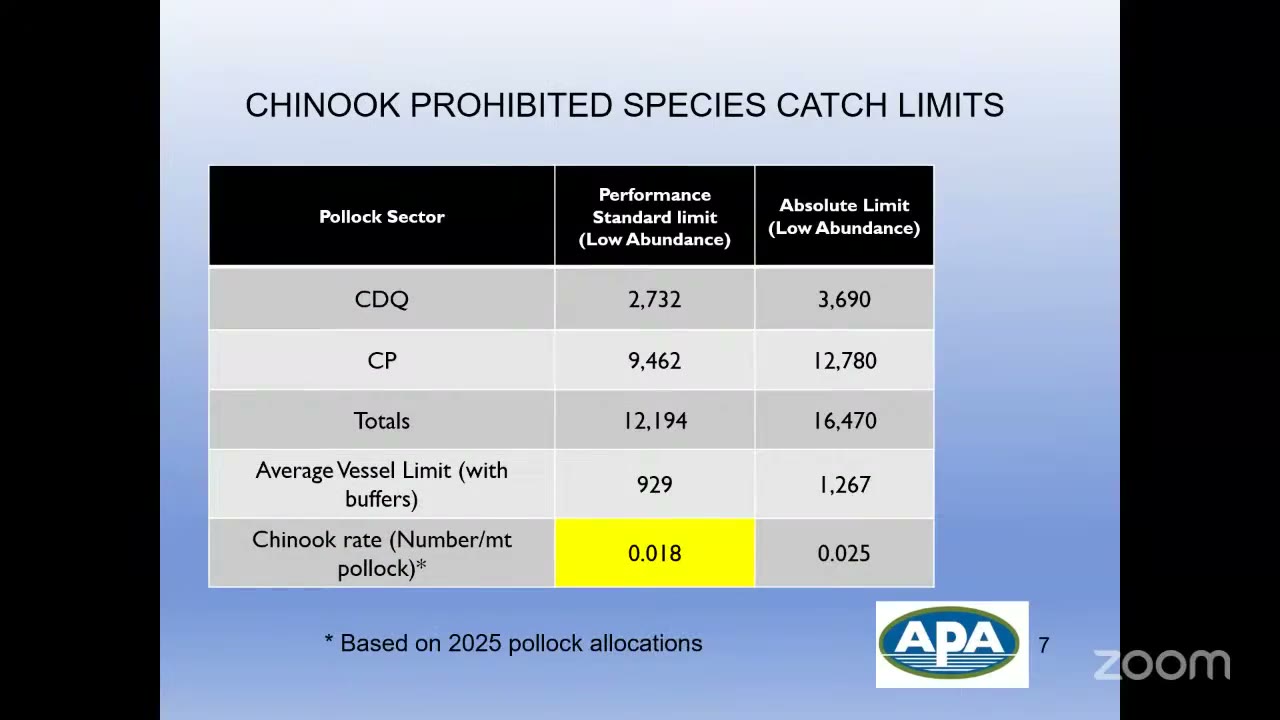
"under a low abundance year, which we were under in 2025 and have been for a series of years, the 1.8 or 0.018 number there is what the fleet is striving to achieve. So essentially, if you catch more than 2 Chinook salmon in any given tow over the course of the season, that's too many. And so that, that's the goal at which our fleet is trying to operate across the entire season."
“under a low abundance year, which we were under in 2025 and have been for a series of years, the 1.8 or 0.018 number there is what the fleet is striving to achieve. So essentially, if you catch more than 2 Chinook salmon in any given tow over the course of the season, that's too many. And so that, that's the goal at which our fleet is trying to operate across the entire season.”
- Speaker
- Austin Esterbrooks
- Timestamp
- 24:34 – 25:08
- Community
- Alaska News
- Captured at
- June 5, 2026
From the transcript
The take-home from this slide is just that under a low abundance year, which we were under in 2025 and have been for a series of years, the 1.8 or 0.018 number there is what the fleet is striving to achieve. So essentially, if you catch more than 2 Chinook salmon in any given tow over the course of the season, that's too many. And so that, that's the goal at which our fleet is trying to operate across the entire season.
Related Coverage
Sablefish fleet faces compliance gap as approved release rule sits in federal limbo until 2028
The North Pacific Fishery Management Council approved a small sablefish release rule in April 2025, but NMFS implementation is not expected until 2028, leaving vessels subject to fines if they release small sablefish under current rules. Industry asked the council to seek NMFS assistance to advance implementation to the 2027 season.
 by Bill AlaskaNewsadded 3mo ago2 min read
Pollock fleet's groundfish bycatch fell below 1% in 2025, but salmon bycatch rose as warm water pushed fish onto the shelf
The Bering Sea pollock fleet posted a groundfish bycatch ratio below 1 percent in 2025, well under the 1.7 percent long-term average, but Chinook and chum salmon bycatch both rose compared to 2024 as record-low sea ice pushed salmon distributions onto the shelf and into direct overlap with the fishery, Austin Esterbrooks told the North Pacific Fishery Management Council on Friday.
by Bill AlaskaNewsadded 3mo ago1 min read
NPFMC directs NOAA to update pollock roe rules after seizure highlighted regulatory gap
The North Pacific Fishery Management Council passed two motions directing NOAA Fisheries to update product recovery rate regulations that no longer match how AFA catcher-processors and motherships measure catch, and to clarify rules governing prohibited species catch disposition, including whether bycatch can be converted to fishmeal.
by Bill AlaskaNewsadded 3mo ago2 min read