Austin Esterbrooks
8:38 - 9:34
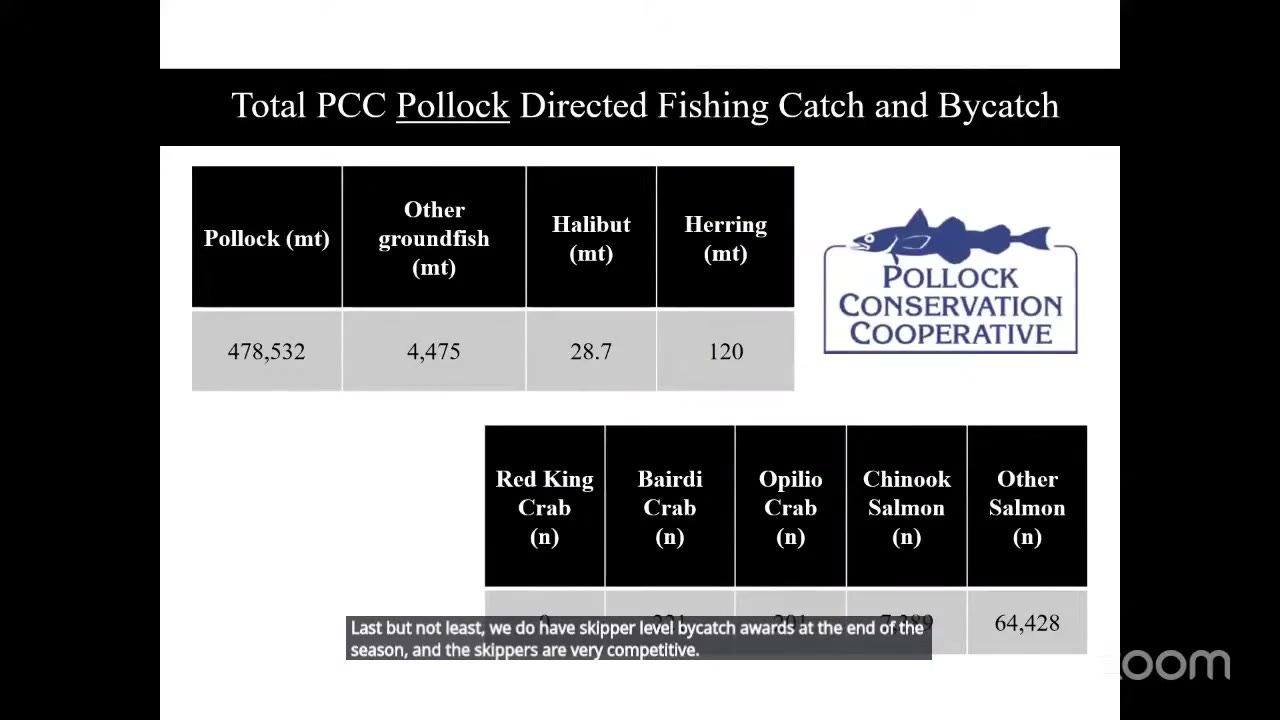
“in 2025, for example, we had a discard— or sorry, a groundfish bycatch ratio of less than 1%. And so this gives you sort of a benchmark of how the fleet performed historically. That longer-term groundfish discard ratio was— is 1.7%. So 2025 was relative to the historical period cleaner on average.”
- Speaker
- Austin Esterbrooks
- Timestamp
- 8:38 – 9:34
- Transcript
- NPFMC 279 Day 2 - June 5, 2026
- Community
- Alaska News
- Captured at
From the transcript
Within the report, we track groundfish discard ratios, and so this slide highlights the longer-term In 2025, for example, we had a discard— or sorry, a groundfish bycatch ratio of less than 1%. And so this gives you sort of a benchmark of how the fleet performed historically. That longer-term groundfish discard ratio was— is 1.7%. So 2025 was relative to the historical period cleaner on average. And then again, these numbers just present the PSC in addition to the, the groundfish and pollock catch for the PCC.
Related Coverage
Sablefish fleet faces compliance gap as approved release rule sits in federal limbo until 2028
A federal rule allowing Alaska sablefish vessels to release undersized fish won't take effect until 2028, leaving crews facing fines for a nearly unavoidable practice.

NPFMC directs NOAA to update pollock roe rules after seizure highlighted regulatory gap
North Pacific Fishery Management Council directed NOAA to update pollock roe rules after a seizure exposed gaps between 1990s regulations and how the fishing industry actually operates today.
Pollock fleet's groundfish bycatch fell below 1% in 2025, but salmon bycatch rose as warm water pushed fish onto the shelf
Pollock fleet's groundfish bycatch hit a 25-year low in 2025, but salmon catches rose as warm water pushed fish onto the shelf, alarming tribal subsistence advocates.