Austin Esterbrooks
9:36 - 10:17
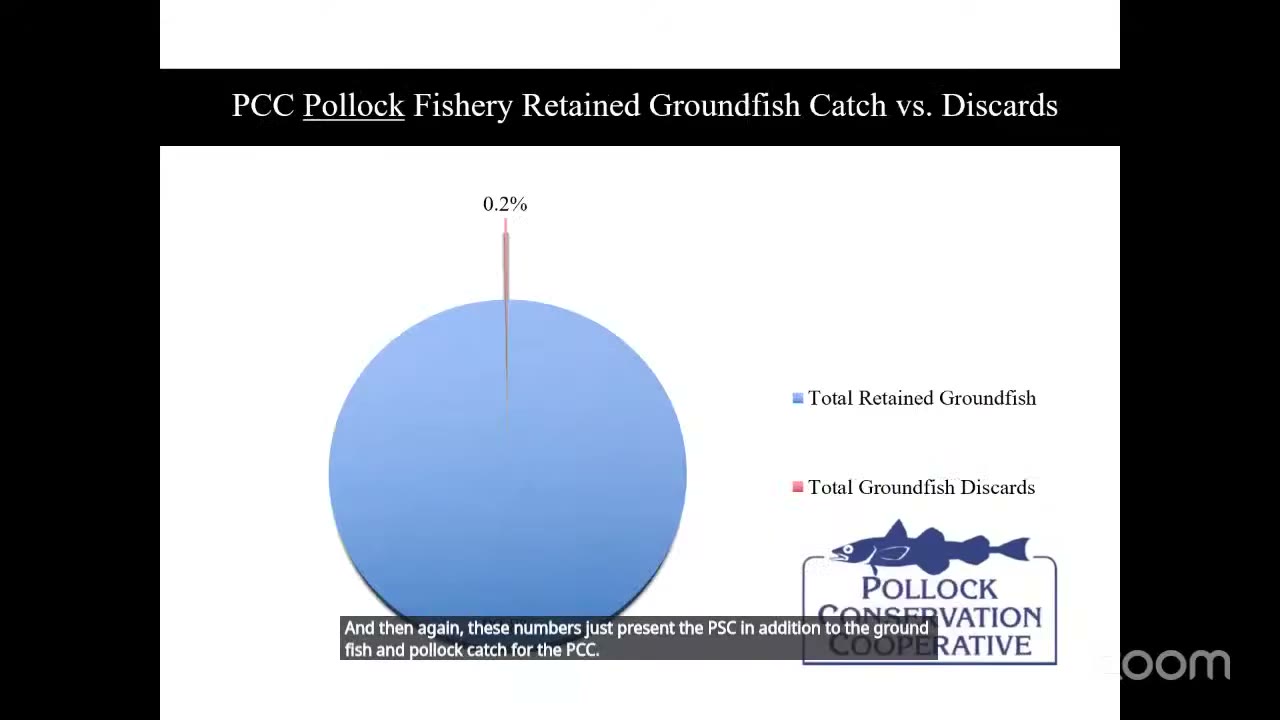
“we also track longer-term trends of the retention ratio of the, the groundfish that we catch. And so this is showing you what we keep and use as a saleable product relative to what we catch, and this of the FMP, so the Fisheries Management Plan managed species. And again, it's 99.8%, and this is pretty typical for our fleet over the long-term average. I would say we, we over the long term retain greater than 99.5% of everything that we catch.”
- Speaker
- Austin Esterbrooks
- Timestamp
- 9:36 – 10:17
- Transcript
- NPFMC 279 Day 2 - June 5, 2026
- Community
- Alaska News
- Captured at
From the transcript
Relatively speaking, we also track longer-term trends of the retention ratio of the, the groundfish that we catch. And so this is showing you what we keep and use as a saleable product relative to what we catch, and this of the FMP, so the Fisheries Management Plan managed species. And again, it's 99.8%, and this is pretty typical for our fleet over the long-term average. I would say we, we over the long term retain greater than 99.5% of everything that we catch.
Related Coverage
Sablefish fleet faces compliance gap as approved release rule sits in federal limbo until 2028
A federal rule allowing Alaska sablefish vessels to release undersized fish won't take effect until 2028, leaving crews facing fines for a nearly unavoidable practice.

NPFMC directs NOAA to update pollock roe rules after seizure highlighted regulatory gap
North Pacific Fishery Management Council directed NOAA to update pollock roe rules after a seizure exposed gaps between 1990s regulations and how the fishing industry actually operates today.
Pollock fleet's groundfish bycatch fell below 1% in 2025, but salmon bycatch rose as warm water pushed fish onto the shelf
Pollock fleet's groundfish bycatch hit a 25-year low in 2025, but salmon catches rose as warm water pushed fish onto the shelf, alarming tribal subsistence advocates.