Anita Kroska
503:58 - 504:50
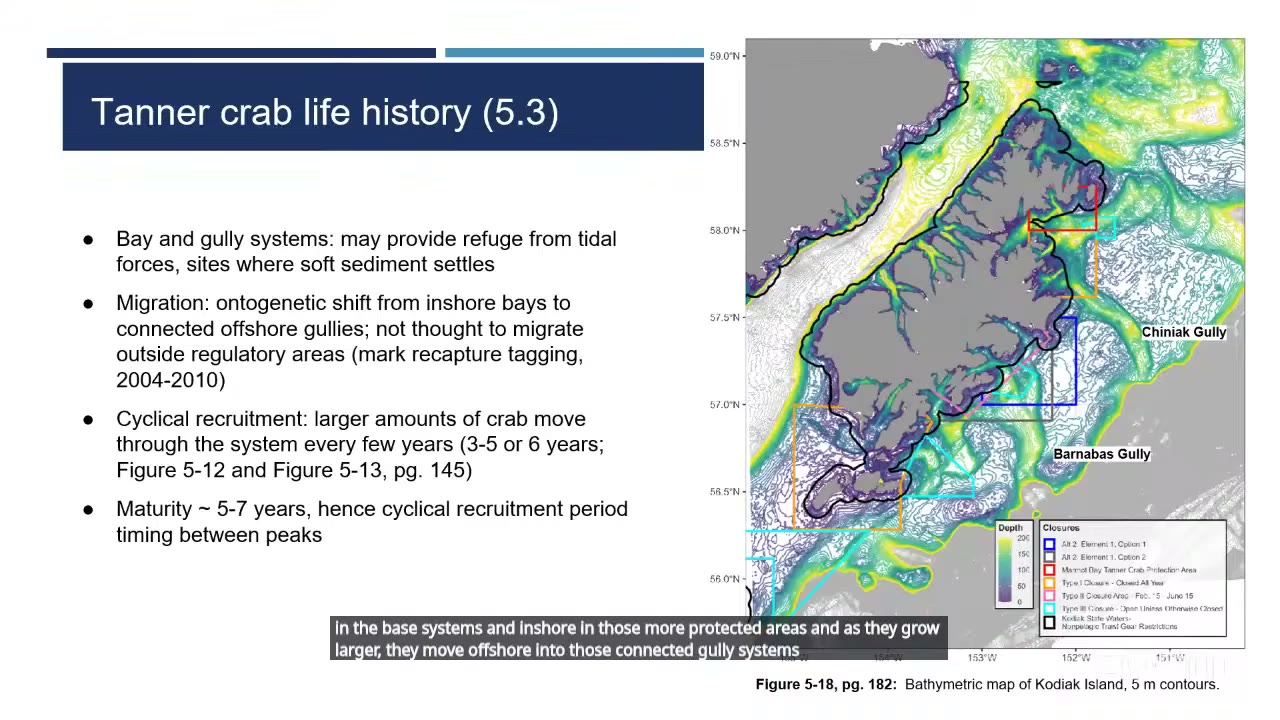
"this stock since the year 2000 is that they undergo a really cyclical recruitment cycle where a lot of crab move through the system every few years, every 3 to 5 or 6 years."
“this stock since the year 2000 is that they undergo a really cyclical recruitment cycle where a lot of crab move through the system every few years, every 3 to 5 or 6 years.”
- Speaker
- Anita Kroska
- Timestamp
- 503:58 – 504:50
- Community
- Alaska News
- Location
- Alaska
- Captured at
- June 6, 2026
From the transcript
So there's some connectivity there, but not necessarily connectivity from that region to other gully systems around the island. Another thing to note that is, has been apparent with this stock since the year 2000 is that they undergo a really cyclical recruitment cycle where a lot of crab move through the system every few years, every 3 to 5 or 6 years. And if you look at the figures in the document 512 and 513, you can also see that reflected in the general pulses of the population, both at the Kodiak District level and at the combined district level across the broader region. And this kind of matches, um, what we know about their maturity cycle, um, which is thought to be between 5 and 7 years.
Related Coverage
North Pacific council demands OLE justify enforcement fees billed to Alaska catch-share programs
The North Pacific Fishery Management Council passed motions Friday requiring NOAA's Office of Law Enforcement to document each investigation billed to Alaska's catch-share programs by regulation, hours, and apportionment formula, responding to years of industry complaints that OLE charges exceed the legal incremental-cost standard under the Magnuson-Stevens Act.
 by Bill AlaskaNews2mo ago2 min read