Austin Esterbrooks
11:47 - 12:25
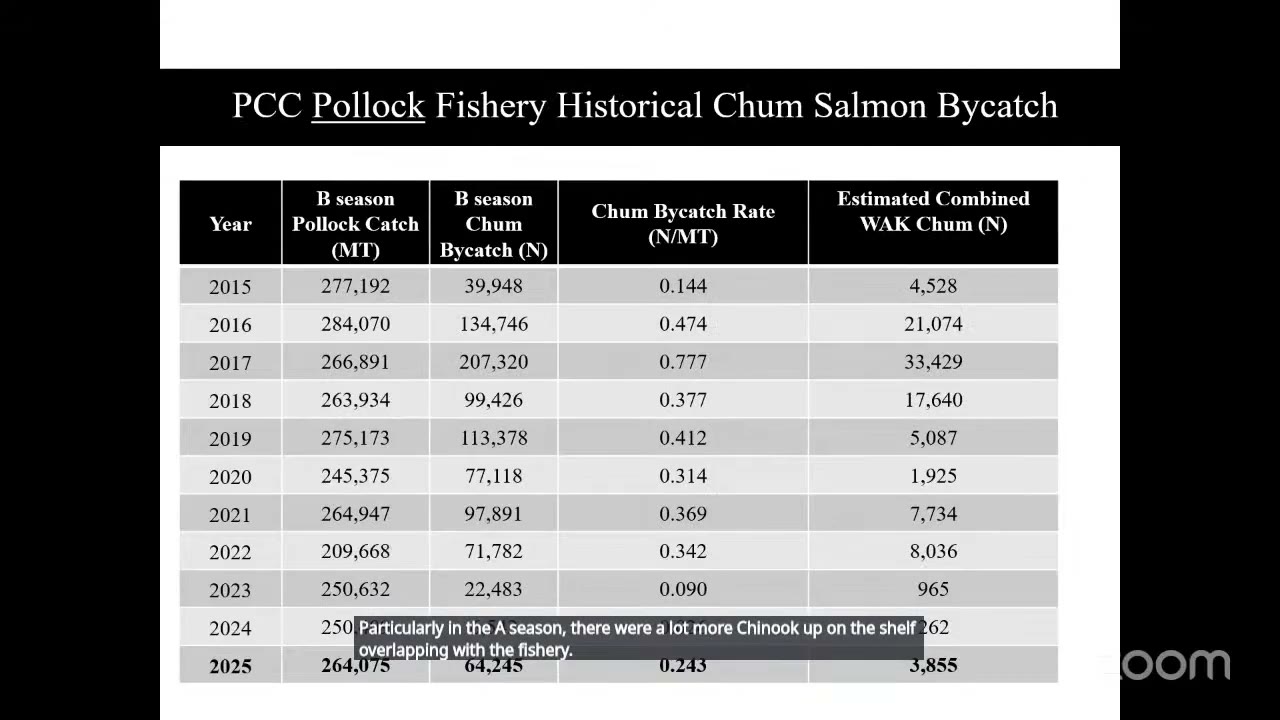
“chum salmon bycatch, again relative to the 2024, um, it was a higher year for chum salmon. And this was again reduced sea ice, typically, uh, causes the pollock and chum distributions in the B season to overlap more extensively because there's less feed on the shelf relative to along the shelf break. And the salmon are primarily basin dwellers, and so in the warmer years, there is more overlap with the fishery and the chum distributions.”
- Speaker
- Austin Esterbrooks
- Timestamp
- 11:47 – 12:25
- Transcript
- NPFMC 279 Day 2 - June 5, 2026
- Community
- Alaska News
- Captured at
From the transcript
Uh, chum salmon bycatch, again relative to the 2024, um, it was a higher year for chum salmon. And this was again reduced sea ice, typically, uh, causes the pollock and chum distributions in the B season to overlap more extensively because there's less feed on the shelf relative to along the shelf break. And the salmon are primarily basin dwellers, and so in the warmer years, there is more overlap with the fishery and the chum distributions.
Related Coverage
Sablefish fleet faces compliance gap as approved release rule sits in federal limbo until 2028
A federal rule allowing Alaska sablefish vessels to release undersized fish won't take effect until 2028, leaving crews facing fines for a nearly unavoidable practice.

NPFMC directs NOAA to update pollock roe rules after seizure highlighted regulatory gap
North Pacific Fishery Management Council directed NOAA to update pollock roe rules after a seizure exposed gaps between 1990s regulations and how the fishing industry actually operates today.
Pollock fleet's groundfish bycatch fell below 1% in 2025, but salmon bycatch rose as warm water pushed fish onto the shelf
Pollock fleet's groundfish bycatch hit a 25-year low in 2025, but salmon catches rose as warm water pushed fish onto the shelf, alarming tribal subsistence advocates.