Photo by Cale Green
Wright and Dunleavy insist the Alaska LNG project is alive
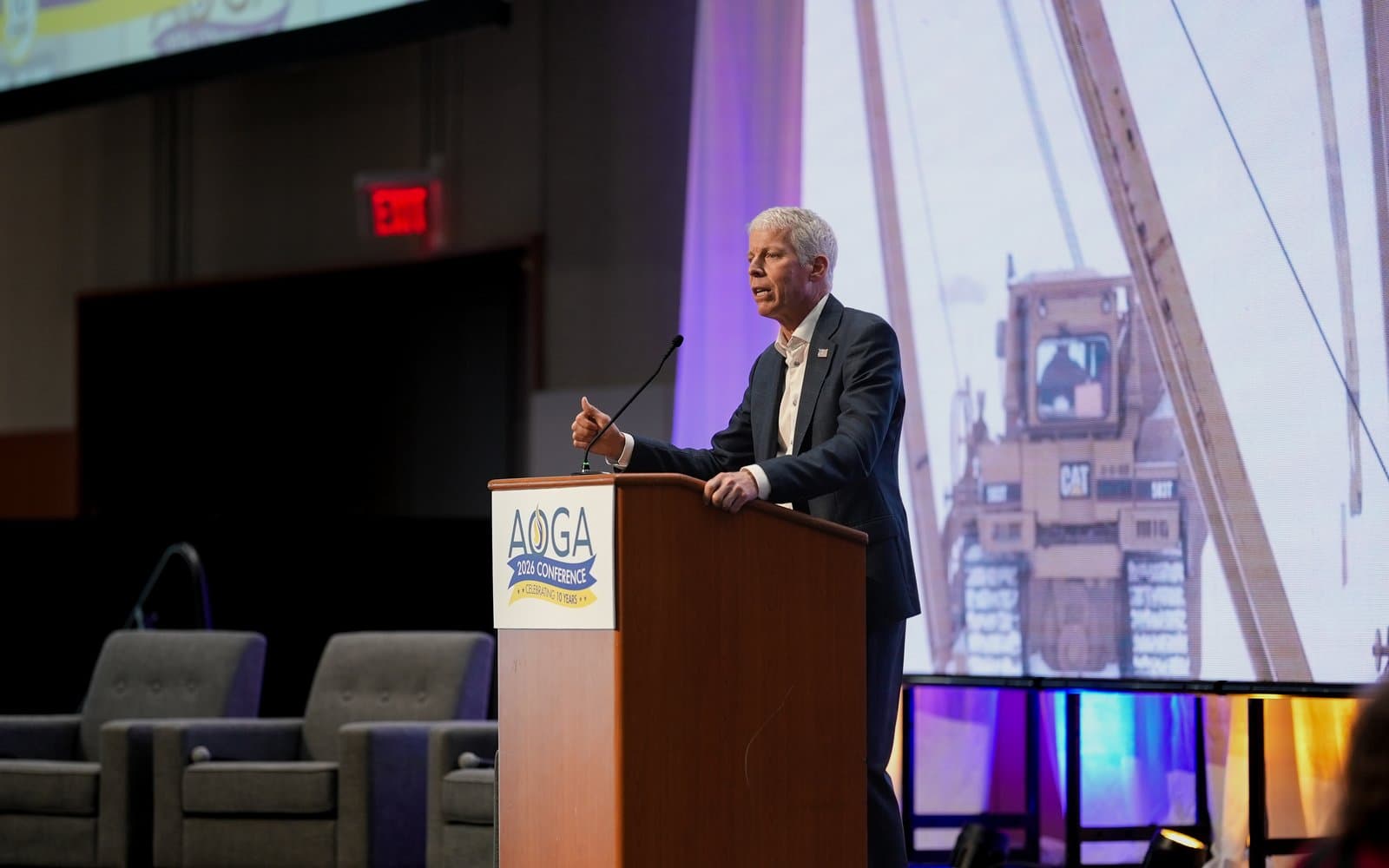
The long-promised Alaska LNG project is behind schedule and still without the investment decision on its first phase that would clear the way for major construction. But at the Alaska Oil and Gas Association conference in Anchorage on Thursday, U.S. Energy Secretary Chris Wright and Gov. Mike Dunleavy both insisted it is moving — while pointing at different obstacles.
Wright said the project — long estimated at roughly $44 billion, though recent figures run higher — remains a top Trump administration priority, and rebutted what he called fabricated rumors that Washington has moved on. But he conceded it has slipped. "I'm disappointed that I'm sitting here right now and we're not talking about shovels in the ground," he said, having expected a faster timeline. "We will get it done," he added, saying the administration is willing "to be creative in financing and offtakes."
Kara Moriarty, the Interior Department's senior adviser for Alaska affairs and a former AOGA president, said the pipeline is the last big item on the administration's Alaska to-do list: about 47 of 52 tasks from President Trump's Alaska executive order are done, "but there's one big one that's not off the list yet, and that's AKLNG."
The project's main permits are in hand and buyers want the gas, Dunleavy said; what's blocking investment is the state's own 20-mill property tax on the project, equal to 2 percent of assessed value. "Our property tax is way too high for investors to come in here and take a serious look at this for the long run," he said. His bill to swap that tax for a volumetric tax on the gas moving through the line went unresolved before the Legislature's latest special session expired Tuesday, and Dunleavy — who leaves office after this year's election — said the decision now falls to the next governor and lawmakers. He warned Alaska could end up importing gas long-term "because of policy decisions."
A final investment decision on the first phase — the domestic pipeline — still hasn't been announced. Glenfarne said in May it had lined up enough North Slope gas commitments to support that decision, but financing and the state's tax structure remain unresolved. To finance the export phase, Glenfarne wants to lock in 16 million tonnes a year, 80 percent of the planned LNG plant's capacity, and the roughly 13 million tonnes committed so far are covered by preliminary long-term agreements with buyers in Asia and Europe. Officials in India, Pakistan and elsewhere want more Pacific LNG, Wright said, and the Alaska line would sit closer to that market than any other U.S. export project.
The $44 billion estimate is already outdated. Glenfarne told state lawmakers this year the full project could cost $44.5 billion to $54.5 billion, with some legislators arguing the eventual cost could be higher still.
Asked whether the pipeline would displace Cook Inlet gas — a live worry amid warnings from Southcentral utilities and producers that existing Cook Inlet supply will eventually fall short — Wright said he doesn't expect it to. "I don't see a mass replacement," he said, calling new supply additive rather than a substitute.
This article is based on a public meeting — AOGA 2026.08.27 Panel Sullivan, Secretary of Energy, Nick Begich, Mike Dunleavy ().
Made by our human newsroom with AI. How humans and AI work here · Grow with our newsroom Transcript byLucas Brown
Stay informed. Support what matters.
Free, permanent access to local news you can verify. Subscribe to support Bill AlaskaNews and go ad-free.
Watch the short version
Related Coverage
Dunleavy says Alaska gas pipeline depends on property tax overhaul
Alaska News · 5mo ago
Alaska Energy Conference Highlights Gas Pipeline Progress Amid Legislative Tax Debate
Alaska News · 4mo ago
Alaska LNG Tax Bill Stalls as Lawmakers Demand Project Cost Data
Alaska News · 5mo ago
Alaska's gas-line tax bill stalls in committee
Alaska News · 3mo ago
Hilcorp says opposing the tax isn't opposing the gas line
Alaska News · 2mo ago
Comments
Sign in to leave a comment.
No comments yet. Be the first to share your thoughts.