AI image
UAF will study the landslides thawing under Alaska's pipeline
As Alaska's permafrost thaws, the ground it once held firm is starting to slide — and a University of Alaska Fairbanks researcher is digging into why, in the hope of protecting the state's most critical infrastructure, from the Trans-Alaska Pipeline to its highways.
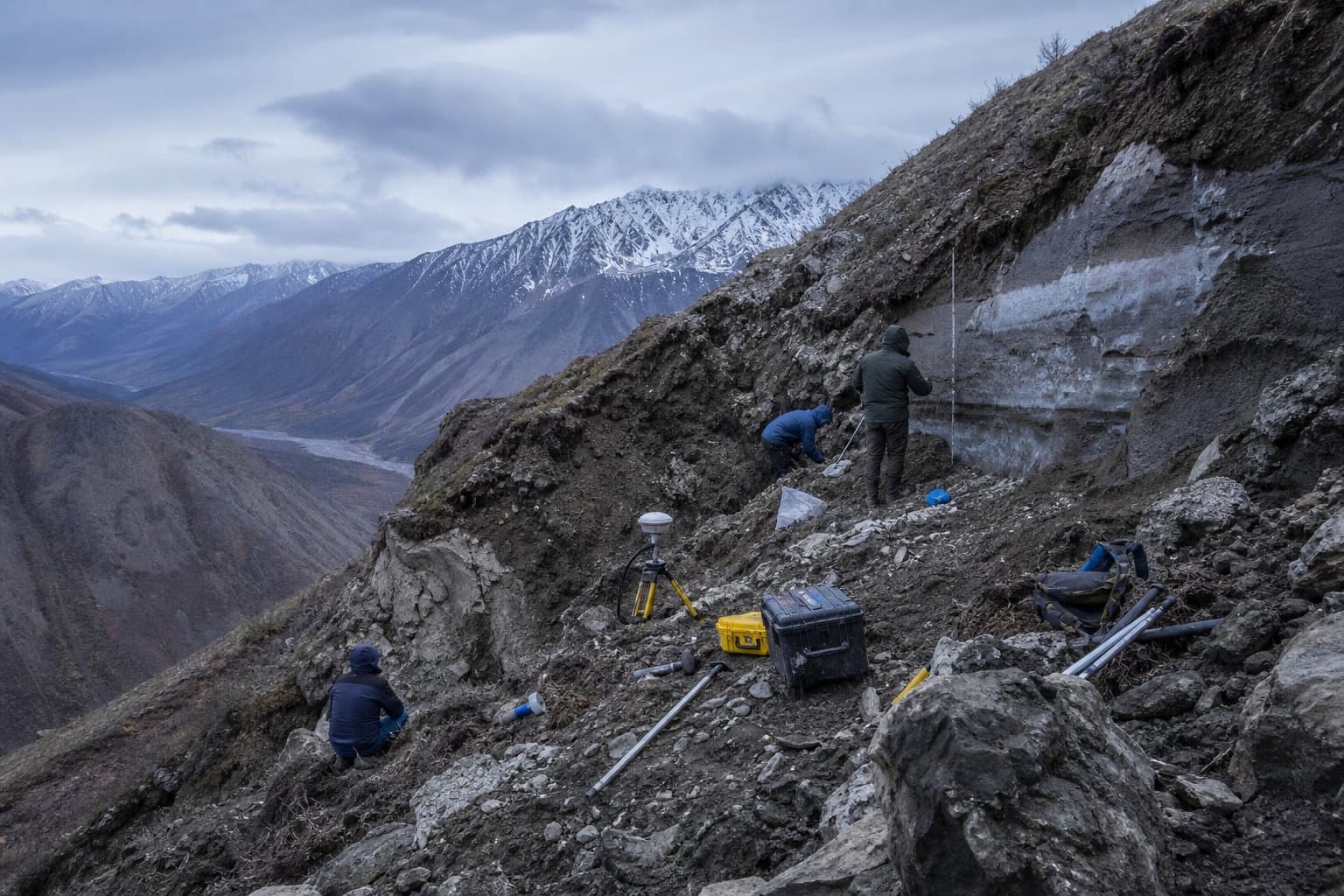
Louise Farquharson, a research assistant professor at the UAF Geophysical Institute, will study how landslides begin deep underground — 20 to 120 meters down — in the thawing permafrost of the central Alaska Range. The work pairs thermal modeling and field coring of active landslide headwalls with lab testing done alongside Demian Saffer at the University of Texas at Austin, using two techniques the grant notes aren't currently available in Alaska — pressurized nuclear magnetic resonance, which measures how much water in frozen ground stays liquid, and X-ray-transparent testing that lets scientists watch fractures spread. The National Science Foundation is funding it with a $294,141 fellowship, aimed at states that get little federal research money.
The pipeline runs through exactly this kind of ground. The last federal environmental review of the TAPS right-of-way, in 2002, flagged roughly 50 slopes with landslide potential — including about four miles of pipeline near Gulkana buried in thaw-unstable permafrost — and called earthquake-triggered landslides a credible, if unlikely, threat that warming could worsen. That assessment is now 24 years old. Separately, researchers have mapped 43 "frozen debris lobes" — slow-moving permafrost landslides — in the Dalton Highway and pipeline corridor.
The project, which runs through 2028, also trains one graduate student. Farquharson, who has already produced a preliminary permafrost hazard map for the Fairbanks area, has said thawing permafrost and the ground settlement that follows "pose significant hazards to northern communities and industry."
Source: National Science Foundation, National Science Foundation: NSF Award [EPSCoR RII: EPSCoR Research Fe] → University of Alaska Fairbanks Campus: EPSCoR Research Fellows: NSF: Mechanistic Controls on Permafrost‑Influenced Deep‑Seated Landslides in Alaska – Geome.
AI-assisted. How we use AI
Stay informed. Support what matters.
Free, permanent access to local news you can verify. Subscribe to support Melinda Communities.News and go ad-free.
Related Coverage
NSF awards UAF $1.77 million to build AI geohazard forecasting tools
Alaska News · 2mo ago
As Alaska's glaciers retreat, new carbon-storing bogs are forming behind them
Alaska News · 1mo ago
UAF scientist gets $300K to unlock permafrost's carbon time bomb
Alaska News · 4mo ago
As melting ice opens the Arctic to more ships, a UAA scientist studies how a spill would behave
Alaska News · 1mo ago
A $1.6 million grant to help Alaska burn on purpose, before wildfire does
Alaska News · 1mo ago
Comments
Sign in to leave a comment.
No comments yet. Be the first to share your thoughts.