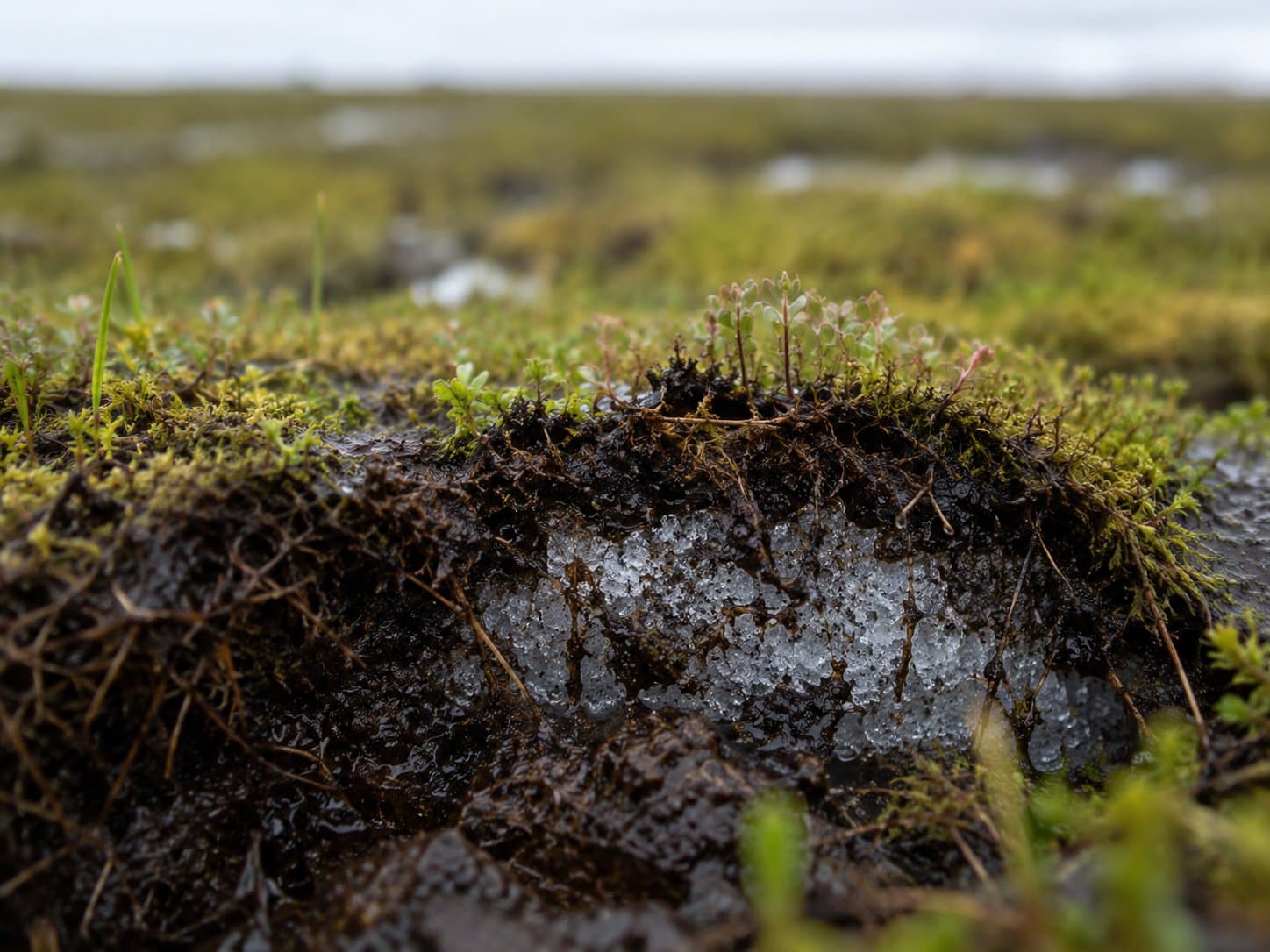
Photo by Cale Green
UAF scientist gets $300K to unlock permafrost's carbon time bomb
The National Science Foundation has awarded $299,972 to University of Alaska Fairbanks Assistant Professor Mario E. Muscarella to identify which microorganisms become active when permafrost thaws.
Permafrost stores twice as much carbon as the atmosphere. When it thaws, the microorganisms inside wake up. What they do with the carbon remains unknown.
Muscarella will develop molecular biology tools using quantitative stable isotope probing to track which microbes become active during thaw events. The research will characterize the composition of active microbial populations in permafrost samples across a range of ages and explore methods for quantifying the metabolic potential of bacterial populations.
Alaska News previously reported that permafrost thaw in Alaska uplands has released unexpected methane. A 2021 study co-authored by Muscarella examined how microbial populations and protozoa respond to repeated freeze-thaw cycles in permafrost-related soils, offering evidence of how Arctic microbes activate under environmental stress.
The work is conducted in collaboration with Northern Arizona University. Muscarella serves as an Assistant Professor of Microbiology jointly appointed in the Institute of Arctic Biology and the Department of Biology and Wildlife at UAF.
The methods developed will also apply to microbial activity following wildfires. The project will train STEM graduate and undergraduate researchers.
The EPSCoR Research Fellows program supports early- and mid-career investigators in eligible jurisdictions to develop collaborations at the nation's private, government, or academic research institutions.
Understanding the diversity and activity of microbial communities after thaw events will help assess the risk of carbon release from Alaska's frozen soils.
Source: Award Details - NSF Award Search.
Made by our human newsroom with AI. How humans and AI work here · Grow with our newsroom
Stay informed. Support what matters.
Free, permanent access to local news you can verify. Subscribe to support Maggie AlaskaNews and go ad-free.
Related Coverage
As Alaska's glaciers retreat, new carbon-storing bogs are forming behind them
Alaska News · 2mo ago
UAF will study the landslides thawing under Alaska's pipeline
Alaska News · 1mo ago
NSF awards UAF $877,501 for mass spectrometer to support fisheries and minerals research
Alaska News · 2mo ago
Permafrost Thaw Releases Unexpected Methane in Alaska Uplands
Alaska News · 5mo ago
A $1.6 million grant to help Alaska burn on purpose, before wildfire does
Alaska News · 2mo ago
Comments
Sign in to leave a comment.
No comments yet. Be the first to share your thoughts.