AI image
As melting ice opens the Arctic to more ships, a UAA scientist studies how a spill would behave
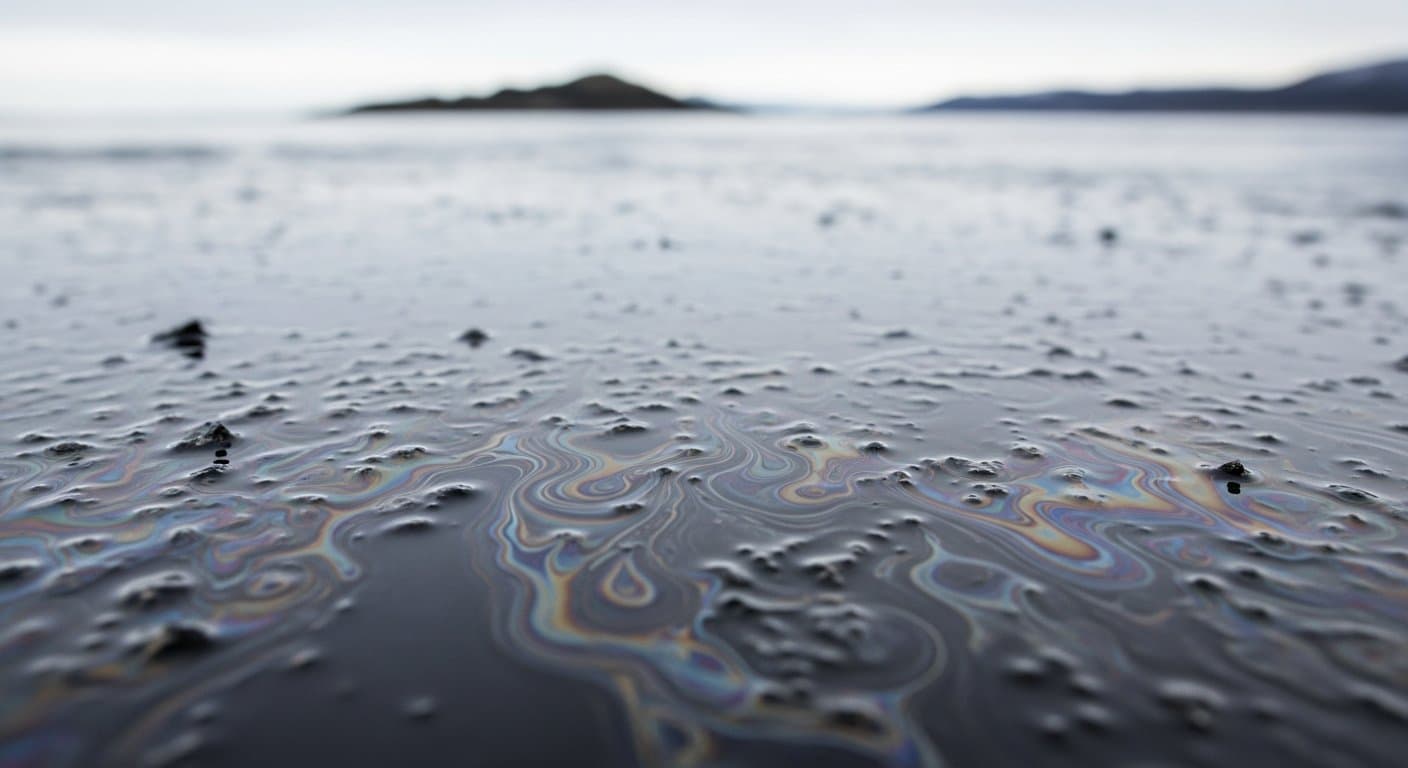
More ships are moving through Arctic waters as the sea ice retreats, and with them comes a rising risk of an oil spill in a place scientists still don't fully understand. A University of Alaska Anchorage researcher just landed a $364,999 federal grant to help close that gap — studying what sunlight does to the toxic compounds crude oil and fuel leave behind as they weather in cold, salty water.
Those breakdown products are known to be toxic, but little is documented about how they degrade, especially in the frigid, brackish conditions of Alaska's coast. UAA professor Zachary Redman will measure how temperature and salinity change the process, and work to identify chemical fingerprints that could tell spill residue apart from natural material after a release.
That forensic detail is what spill responders in the Arctic need to make good calls, and it matters most to the coastal and Indigenous communities whose subsistence waters are affected both by a spill and by whatever is used to clean it up.
Source: National Science Foundation, National Science Foundation: NSF Award [OFFICE OF MULTIDISCIPLINARY AC, Environmental Chemical Science] → University of Alaska Anchorage Campus: RUI: Aquatic Photochemical Pathways and Transformation Products of OPAHs at High Lat ().
Drafted with AI. Edited by Cale Green (1 revision). No full editor review is on record. Who is accountable.
Stay informed. Support what matters.
Free, permanent access to local news you can verify. Subscribe to support Melinda Communities.News and go ad-free.
Related Coverage
UAF scientist leads $36K Antarctic sea ice study amid record lows
Alaska News · 3mo ago
UAF will study the landslides thawing under Alaska's pipeline
Alaska News · 1mo ago
How bubbles can throw off the sound Alaska uses to count its fish
Alaska News · 2mo ago
As Alaska's permafrost thaws, its rivers are running rusty.
Alaska News · 2mo ago
A $1.6 million grant to help Alaska burn on purpose, before wildfire does
Alaska News · 1mo ago
Comments
Sign in to leave a comment.
No comments yet. Be the first to share your thoughts.