AI image
UAF grant aims to read what a volcano is doing while it does it
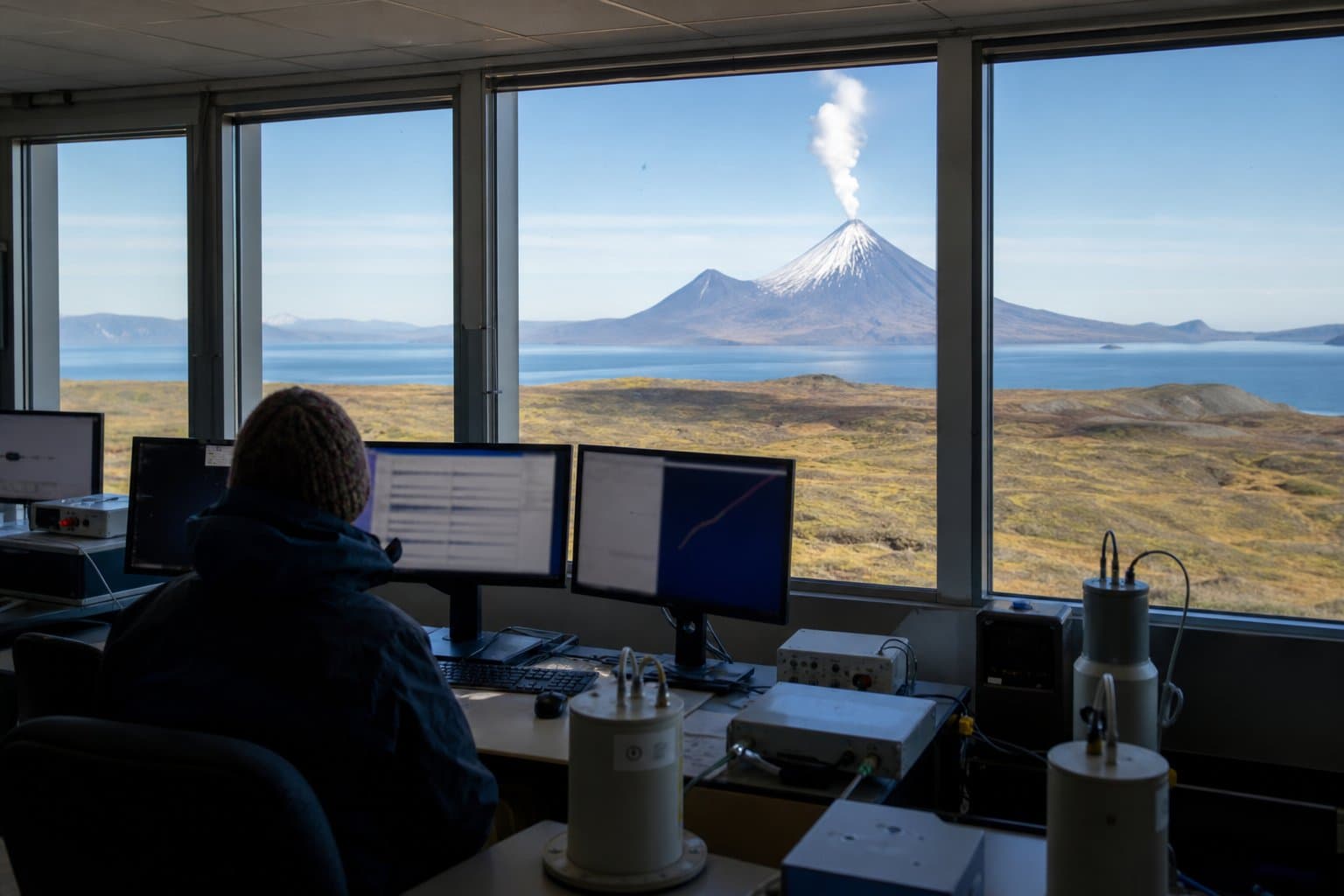
When an Aleutian volcano erupts, scientists mostly know it is happening, not how hard. A new federal grant funds an attempt to close that gap: turning the shaking and low-frequency sound an eruption gives off into a live measure of what it is actually doing.
The National Science Foundation awarded the University of Alaska Fairbanks $360,443 for the three-year study, led by David Fee, who coordinates Shishaldin monitoring at the Alaska Volcano Observatory. The team will compare Shishaldin, on Unimak Island, with Mount Etna in Sicily, and run a field experiment at Etna. The working idea is that how a volcano vents gas drives both the signals it produces and how violently it erupts, which would let researchers estimate things like gas flow rate from the seismic and acoustic record.
The payoff is aviation. Some 70,000 passengers and millions of pounds of cargo cross the North Pacific daily, and Aleutian ash plumes have shut down air traffic and dusted communities before. Shishaldin sits at advisory status now, watched by seismic and infrasound sensors, cameras and GPS.
The grant pays for research, not an operational change. Whether these models reach the observatory's real-time work is an open question.
Source: National Science Foundation, National Science Foundation: NSF Award [CESEV-Chem Evo of Earth & Volc] → University of Alaska Fairbanks Campus: Determining Eruption Source Processes at Explosive Basaltic Stratovolcanoes (PI: David Fee) ($360,443) ().
AI-assisted. No editor review is on record for this article. Who is accountable.
Stay informed. Support what matters.
Free, permanent access to local news you can verify. Subscribe to support Melinda Communities.News and go ad-free.
Related Coverage
How bubbles can throw off the sound Alaska uses to count its fish
Alaska News · 2mo ago
NSF awards UAF $1.77 million to build AI geohazard forecasting tools
Alaska News · 2mo ago
A $1.6 million grant to help Alaska burn on purpose, before wildfire does
Alaska News · 1mo ago
UAF will study the landslides thawing under Alaska's pipeline
Alaska News · 4w ago
A federal minerals program is funding science on the seafloor mining wants to dig
Alaska News · 1mo ago
Comments
Sign in to leave a comment.
No comments yet. Be the first to share your thoughts.